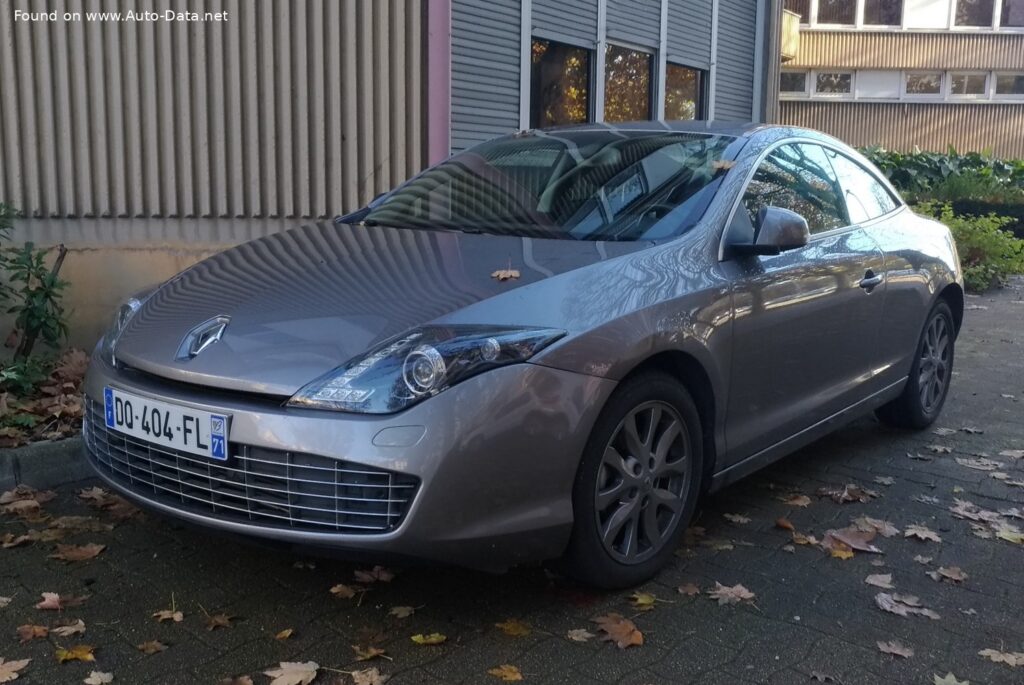
The Renault Laguna Coupe (Phase II) represents a distinctive chapter in the French automaker’s pursuit of a sophisticated grand touring experience. Produced between 2012 and 2015, this elegant two-door, four-seat coupe was a refined iteration of the third-generation Laguna, specifically designed to appeal to the European market with its blend of style, comfort, and dynamic performance. Unlike many Renault models, the Laguna Coupe was never officially imported to the United States, cementing its status as a European exclusive. However, its technical prowess and design philosophy offer valuable insights into the global automotive landscape. This particular variant, equipped with the potent 3.5-liter V6 engine and a smooth automatic transmission, stood as the performance flagship of the Laguna Coupe lineup, offering a compelling alternative to more conventional sedans and hatchbacks, and aiming to challenge established premium coupes in its segment.
Powertrain and Dynamic Performance of the Renault Laguna Coupe (Phase II)
The Potent 3.5-liter V6 Engine
At the heart of the Renault Laguna Coupe (Phase II) 3.5 V6 Automatic lies a robust and well-regarded V6 engine, designated as the V4Y. This naturally aspirated 3.5-liter (3498 cm³ or 213.46 cu. in.) powerplant was a staple in various Nissan and Renault vehicles, known for its smooth power delivery and reliability. In this application, it produces a healthy 238 horsepower at 6000 rpm, providing ample motivation for the stylish coupe. The engine’s architecture features a V-configuration with six cylinders, each equipped with four valves, totaling 24 valves for efficient breathing. Fuel is delivered via a multi-port manifold injection system, a proven technology that contributes to its responsive character. With a compression ratio of 10.3:1, the engine is tuned for a balance of performance and everyday usability. The maximum torque output stands at 243.4 lb.-ft. (330 Nm), available at a relatively accessible 4400 rpm, ensuring strong mid-range acceleration and effortless highway cruising. This combination of power and torque results in a weight-to-power ratio of 6.4 kg/Hp and a weight-to-torque ratio of 4.6 kg/Nm, indicative of its capable performance.
Smooth Automatic Transmission and Driving Dynamics
Power from the V6 engine is channeled to the front wheels through a sophisticated 6-speed automatic transmission. This drivetrain architecture, with the engine mounted transversely at the front, prioritizes packaging efficiency and traction for the front-wheel-drive setup. The automatic gearbox is engineered for smooth, seamless shifts, enhancing the Laguna Coupe’s appeal as a comfortable grand tourer. Performance figures are respectable for a vehicle of its class and era: the Laguna Coupe 3.5 V6 can accelerate from 0 to 60 mph in a swift 7 seconds (or 0-100 km/h in 7.4 seconds), and reach a maximum speed of 151.61 mph (244 km/h). These figures underscore its ability to cover long distances with ease and confidence. Despite its performance capabilities, Renault also focused on efficiency for its segment. The combined fuel consumption is rated at 23.5 US mpg (10 l/100 km), with extra-urban figures reaching 31.8 US mpg (7.4 l/100 km), making it a relatively economical choice for its engine size. CO2 emissions are 238 g/km, adhering to the Euro 4 emission standard, reflecting its environmental compliance during its production run.
Design and Ergonomics of the Renault Laguna Coupe (Phase II)
Elegant Coupe Styling and Exterior Dimensions
The Renault Laguna Coupe (Phase II) distinguishes itself with a sleek, elegant design that truly embodies the spirit of a modern European coupe. Its two-door, four-seat configuration is wrapped in a body measuring 182.8 inches (4643 mm) in length, 71.34 inches (1812 mm) in width, and 55.04 inches (1398 mm) in height. The substantial 106.06-inch (2694 mm) wheelbase contributes to its poised stance and stable ride. The design is characterized by flowing lines, a distinctive front fascia with a prominent grille, and a gracefully sloping roofline that culminates in a short, muscular rear deck. The overall aesthetic is one of understated sophistication, aiming to project a premium image without excessive ornamentation. A low drag coefficient of 0.30 Cd further enhances its aerodynamic efficiency and contributes to its quiet cabin at speed. The choice of 17-inch or 18-inch wheel rims, paired with tire sizes like 215/50 R17 or 225/45 R18, complements its sporty yet refined appearance, filling the wheel arches effectively and contributing to its planted look.
Interior Comfort and Practicality
Inside, the Laguna Coupe (Phase II) offers a well-appointed cabin designed for four occupants, emphasizing comfort and a driver-centric experience. While featuring a sporty ambiance, it retains the practicality expected of a grand tourer. The trunk (boot) space is a respectable 14.94 cu. ft. (423 liters), ample for weekend getaways or daily errands, a commendable volume for a coupe. The interior materials and finishes reflect Renault’s efforts to position the Laguna Coupe in a more premium segment, with attention to tactile quality and ergonomic layout. Standard features for its era would typically include automatic climate control, a comprehensive infotainment system, and comfortable seating, often with leather upholstery options. The focus was on creating an inviting and refined atmosphere, suitable for long journeys. The cabin also benefited from effective sound insulation, contributing to the quiet and serene driving experience characteristic of a premium coupe.
Chassis, Suspension, and Advanced Safety Systems
The driving experience of the Laguna Coupe (Phase II) is underpinned by a well-engineered chassis and suspension system. The front suspension employs an independent McPherson strut setup, known for its balance of comfort and handling precision. At the rear, a semi-independent, coil spring arrangement provides a robust and compact solution. This combination ensures a comfortable ride while maintaining capable road holding. Braking performance is handled by ventilated discs at the front and solid discs at the rear, providing strong and consistent stopping power. An Anti-lock Braking System (ABS) is a standard assisting system, enhancing control during emergency braking maneuvers. Steering is managed by a hydraulic rack and pinion system, offering tactile feedback and a direct connection to the road. This hydraulic power steering system provides a more traditional and often preferred steering feel compared to newer electric systems. The vehicle’s minimum turning circle, ranging from 35.43 to 38.71 feet (10.8-11.8 meters), indicates good maneuverability for a vehicle of its size, aiding in urban driving and parking. With a kerb weight of 3355.44 lbs. (1522 kg) and a maximum permissible weight of 4303.42 lbs. (1952 kg), the Laguna Coupe is a solid and substantial vehicle, contributing to its stable and secure road presence.
Technical Specifications: Renault Laguna Coupe (Phase II) 3.5 V6 (238 Hp) Automatic
| Brand | Renault |
| Model | Laguna |
| Generation | Laguna Coupe (Phase II) |
| Type (Engine) | 3.5 V6 (238 Hp) Automatic |
| Start of production | 2012 year |
| End of production | 2015 year |
| Powertrain Architecture | Internal Combustion engine |
| Body type | Coupe |
| Seats | 4 |
| Doors | 2 |
| Fuel consumption (economy) – urban | 15 l/100 km, 15.7 US mpg, 18.8 UK mpg, 6.7 km/l |
| Fuel consumption (economy) – extra urban | 7.4 l/100 km, 31.8 US mpg, 38.2 UK mpg, 13.5 km/l |
| Fuel consumption (economy) – combined | 10 l/100 km, 23.5 US mpg, 28.2 UK mpg, 10 km/l |
| CO2 emissions | 238 g/km |
| Fuel Type | Petrol (Gasoline) |
| Acceleration 0 – 100 km/h | 7.4 sec |
| Acceleration 0 – 62 mph | 7.4 sec |
| Acceleration 0 – 60 mph (Calculated by Auto-Data.net) | 7 sec |
| Maximum speed | 244 km/h, 151.61 mph |
| Emission standard | Euro 4 |
| Weight-to-power ratio | 6.4 kg/Hp, 156.4 Hp/tonne |
| Weight-to-torque ratio | 4.6 kg/Nm, 216.8 Nm/tonne |
| Power | 238 Hp @ 6000 rpm. |
| Power per litre | 68 Hp/l |
| Torque | 330 Nm @ 4400 rpm, 243.4 lb.-ft. @ 4400 rpm. |
| Maximum engine speed | 6500 rpm. |
| Engine layout | Front, Transverse |
| Engine Model/Code | V4Y |
| Engine displacement | 3498 cm³, 213.46 cu. in. |
| Number of cylinders | 6 |
| Engine configuration | V-engine |
| Cylinder Bore | 95.5 mm, 3.76 in. |
| Piston Stroke | 81.4 mm, 3.2 in. |
| Compression ratio | 10.3:1 |
| Number of valves per cylinder | 4 |
| Fuel injection system | Multi-port manifold injection |
| Engine aspiration | Naturally aspirated engine |
| Engine oil capacity | 5 l, 5.28 US qt | 4.4 UK qt |
| Coolant | 8.5 l, 8.98 US qt | 7.48 UK qt |
| Kerb Weight | 1522 kg, 3355.44 lbs. |
| Max. weight | 1952 kg, 4303.42 lbs. |
| Max load | 430 kg, 947.99 lbs. |
| Trunk (boot) space – minimum | 423 l, 14.94 cu. ft. |
| Fuel tank capacity | 66 l, 17.44 US gal | 14.52 UK gal |
| Permitted trailer load with brakes (12%) | 1500 kg, 3306.93 lbs. |
| Permitted trailer load without brakes | 650 kg, 1433 lbs. |
| Length | 4643 mm, 182.8 in. |
| Width | 1812 mm, 71.34 in. |
| Width including mirrors | 2082 mm, 81.97 in. |
| Height | 1398 mm, 55.04 in. |
| Wheelbase | 2694 mm, 106.06 in. |
| Front track | 1548 mm, 60.94 in. |
| Rear (Back) track | 1542 mm, 60.71 in. |
| Front overhang | 1022 mm, 40.24 in. |
| Rear overhang | 927 mm, 36.5 in. |
| Ride height (ground clearance) | 120 mm, 4.72 in. |
| Drag coefficient (Cd) | 0.30 |
| Minimum turning circle (turning diameter) | 10.8-11.8 m, 35.43 – 38.71 ft. |
| Drivetrain Architecture | The Internal combustion engine (ICE) drives the front wheels of the vehicle. |
| Drive wheel | Front wheel drive |
| Number of gears and type of gearbox | 6 gears, automatic transmission |
| Front suspension | Independent type McPherson |
| Rear suspension | Semi-independent, coil spring |
| Front brakes | Ventilated discs |
| Rear brakes | Disc |
| Assisting systems | ABS (Anti-lock braking system) |
| Steering type | Steering rack and pinion |
| Power steering | Hydraulic Steering |
| Tires size | 215/50 R17; 225/45 R18 |
| Wheel rims size | 17; 18 |