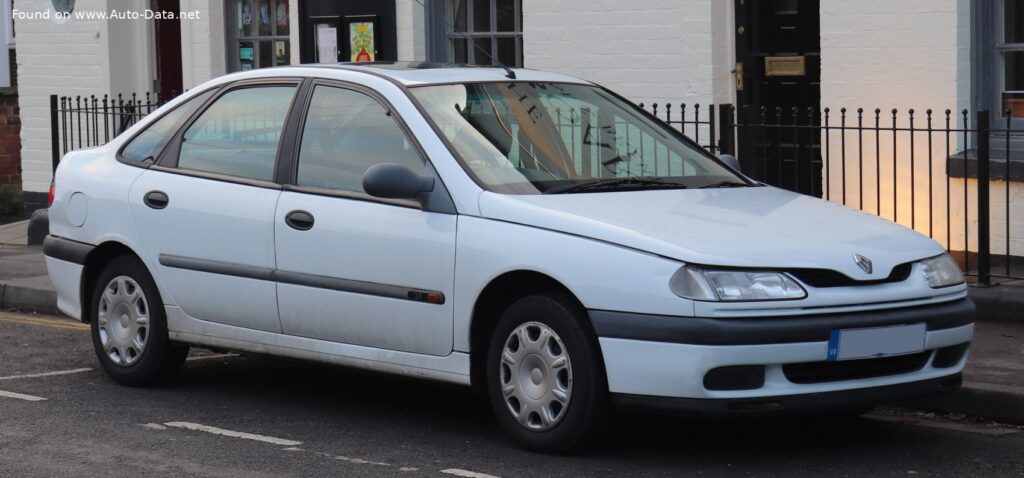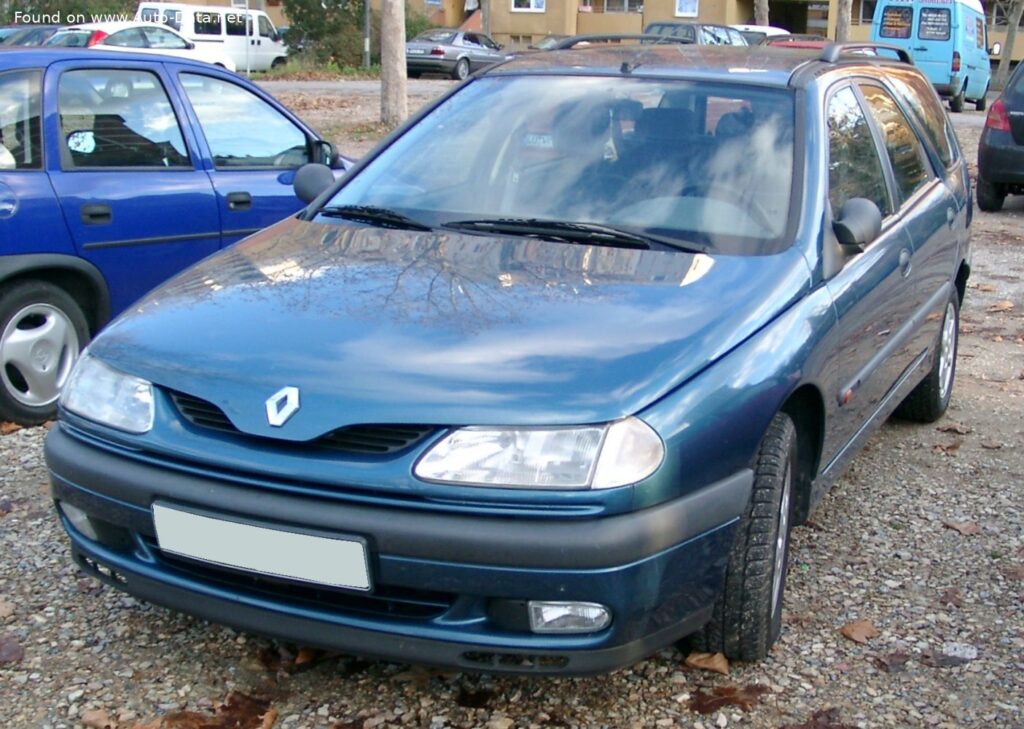
The Renault Laguna Grandtour 1.9 dCi (109 Hp), produced between 1999 and 2001, represents a significant offering from the French automaker in the competitive European D-segment. As part of the first-generation Laguna’s refreshed lineup, this particular model, the Grandtour, emphasized practicality, versatility, and efficiency, catering to families and business users who required ample cargo space without compromising on driving comfort or fuel economy. While never officially sold in the United States, the Laguna Grandtour was a common sight on European roads, embodying Renault’s approach to delivering a comfortable, safe, and economically viable vehicle for the masses. Its diesel powertrain, a staple in the European market, highlighted a growing trend towards high-efficiency engines that offered substantial torque for everyday driving.
The Renault Laguna Grandtour 1.9 dCi (109 Hp): A European Workhorse
The first-generation Renault Laguna, launched in 1994, quickly established itself as a strong contender in the mid-size segment across Europe. The Grandtour, its station wagon variant, arrived shortly after, offering enhanced utility. The 1999-2001 iteration, specifically the 1.9 dCi (109 Hp) model, arrived during a period of intense focus on diesel technology in Europe. This particular model benefited from Renault’s robust engineering, aiming to provide a refined driving experience coupled with the inherent advantages of diesel power. Its design blended aerodynamic efficiency with a practical, spacious interior, making it a popular choice for long-distance travel and family duties. The Laguna Grandtour’s role was crucial in solidifying Renault’s presence in a segment dominated by other European manufacturers like Volkswagen, Ford, and Opel, offering a distinct French alternative known for its comfort-oriented suspension and innovative features for its time.
Engine and Performance
At the heart of the Renault Laguna Grandtour 1.9 dCi (109 Hp) lies the venerable F9Q engine, a 1.9-liter (1870 cm3) inline four-cylinder diesel unit. This engine, a staple in Renault’s powertrain lineup for many years, was renowned for its balance of power, efficiency, and reliability. Equipped with a common rail direct fuel injection system and a turbocharger, it produced a respectable 109 horsepower at 4000 rpm. More significantly for a diesel, it delivered a robust 184.39 lb.-ft. (250 Nm) of torque at a remarkably low 1750 rpm. This low-end torque was a key characteristic, providing strong acceleration from a standstill and excellent pulling power, particularly beneficial when the car was fully loaded or navigating urban environments. The engine’s OHC (Overhead Camshaft) valvetrain with two valves per cylinder further contributed to its efficient operation and straightforward maintenance.
Mated to a precise 5-speed manual transmission, the Laguna Grandtour 1.9 dCi channeled its power to the front wheels, a common and effective drivetrain architecture for family vehicles of this era. This combination allowed the vehicle to achieve a top speed of 113.09 mph (182 km/h), a respectable figure for a diesel-powered station wagon. However, where this powertrain truly shone was in its fuel economy. The common rail technology, relatively advanced for its time, enabled impressive efficiency figures: an urban consumption of 30.9 US mpg (7.6 l/100 km) and an even more remarkable extra-urban consumption of 49 US mpg (4.8 l/100 km). These figures underscored the economic benefits of choosing a diesel engine, a primary driver for its popularity in European markets where fuel prices were a significant consideration. The engine’s compression ratio of 18.3:1 further optimized the diesel combustion process, maximizing energy extraction from the fuel. With an engine oil capacity of 4.86 US quarts (4.6 liters), the F9Q was designed for longevity and consistent performance.
Design and Features
The Renault Laguna Grandtour 1.9 dCi (109 Hp) adopted the practical and elegant styling typical of European station wagons of its era. Measuring 181.89 inches (4620 mm) in length, 68.82 inches (1748 mm) in width, and 57.01 inches (1448 mm) in height, with a generous wheelbase of 105.12 inches (2670 mm), the Grandtour offered a substantial road presence and a spacious interior. Its five-door, five-seat configuration made it an ideal family vehicle, providing easy access for passengers and cargo alike. The design prioritized functionality, with a large tailgate opening to reveal a highly adaptable load bay.
Cargo capacity was a standout feature, offering a minimum trunk space of 18.36 cubic feet