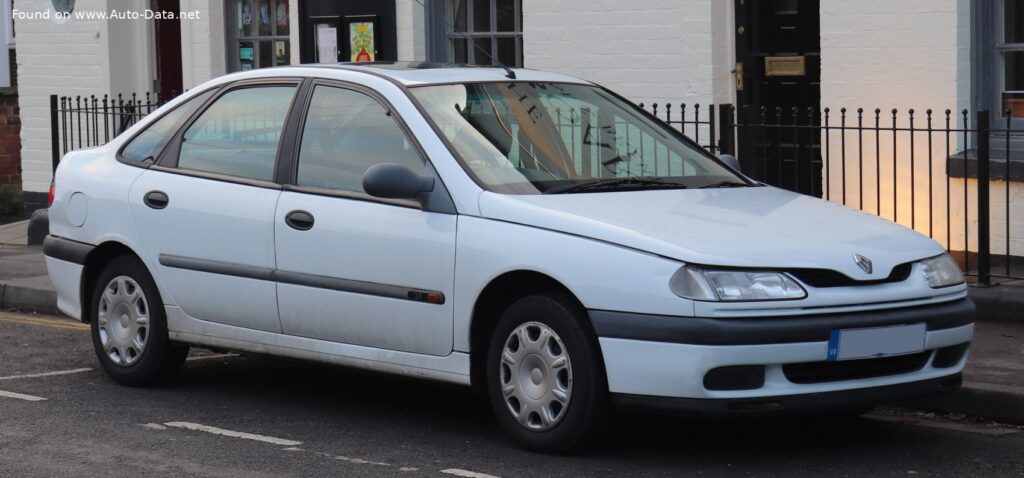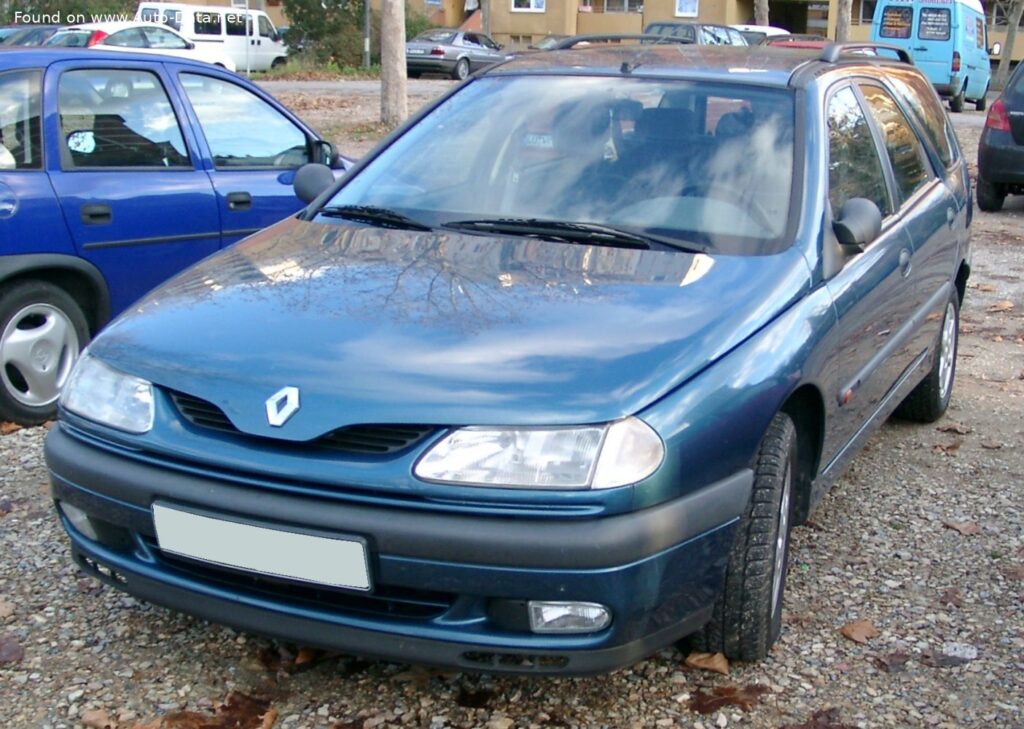
The Renault Laguna Grandtour 1.9 dTi (98 Hp) represents a significant offering from the French automaker Renault within the D-segment, particularly for the European market, during its production run from 1997 to 2001. This model, part of the first-generation Laguna’s extended lifecycle, was specifically conceived as a practical and efficient family estate. The “Grandtour” designation underscored its focus on spaciousness and utility, appealing to consumers prioritizing cargo capacity and comfortable long-distance travel. Positioned as a direct competitor to other European mid-size wagons, the Laguna Grandtour aimed to blend Renault’s characteristic design language of the era with robust, economical diesel powertrain technology, making it a popular choice for families and business users across the continent where diesel engines held a strong market share. Its introduction marked Renault’s continued commitment to offering versatile vehicles, ensuring the Laguna range catered to a broad spectrum of needs beyond the standard sedan.
Engine and Performance of the Renault Laguna Grandtour 1.9 dTi (98 Hp)
At the heart of the Renault Laguna Grandtour 1.9 dTi (98 Hp) lies a robust 1.9-liter (1870 cm3 or 114.11 cu. in.) F9Q inline-four diesel engine. This powertrain architecture, featuring a front, transverse layout, was a testament to Renault’s engineering focus on efficiency and practical power delivery for everyday driving. The engine employed direct injection technology, a significant advancement for diesel engines of its time, coupled with a turbocharger to enhance both power output and fuel economy. With a compression ratio of 18.3:1, the engine was optimized for diesel combustion, providing a peak power output of 98 horsepower at 4000 rpm. Its strength, however, was truly evident in its torque delivery, generating a substantial 200 Newton-meters (147.51 lb-ft) at a low 2000 rpm. This ample low-end torque was crucial for a family estate, facilitating effortless acceleration from a standstill and strong pulling power, particularly when the vehicle was loaded with passengers or cargo.
Mated to a 5-speed manual transmission, the 1.9 dTi engine channeled its power to the front wheels, a common and efficient drivetrain setup for vehicles in this segment. This combination allowed the Laguna Grandtour to achieve a 0 to 60 mph acceleration time of a respectable 12.4 seconds, with 0 to 100 km/h completed in 13 seconds. While not a performance car, these figures were competitive for a diesel estate of its vintage, providing sufficient pace for highway merging and overtaking. The maximum speed was rated at 177 km/h (109.98 mph). More importantly for its target audience, the vehicle delivered impressive fuel economy figures. In combined driving conditions, the Laguna Grandtour 1.9 dTi achieved approximately 5.5 liters per 100 kilometers, translating to an excellent 42.8 US mpg or 51.4 UK mpg. Urban consumption stood at 7.4 l/100 km (31.8 US mpg), while extra-urban driving saw figures as low as 4.8 l/100 km (49 US mpg), underscoring its long-distance cruising efficiency. These consumption figures, combined with a 52-liter (13.74 US gallons) fuel tank, granted the Laguna Grandtour a commendable cruising range, a desirable trait for European drivers covering significant distances.
The engine’s valvetrain featured a DOHC (Double Overhead Camshaft) configuration, utilizing two valves per cylinder. This design, while not employing the multi-valve setups seen in some gasoline engines, was effective for the robust and high-torque characteristics of a diesel powerplant, contributing to its durability and consistent performance. With an engine oil capacity of 5.5 liters and a coolant capacity of 7.5 liters, the F9Q engine was designed for longevity and ease of maintenance. The power-to-weight ratio of 13.9 kg/Hp (72.1 Hp/tonne) and a torque-to-weight ratio of 6.8 kg/Nm (147.1 Nm/tonne) further illustrate the balanced engineering, providing a practical blend of performance and economy for a vehicle with a kerb weight of 1360 kg (2998.29 lbs).
Design and Features
The Renault Laguna Grandtour 1.9 dTi (98 Hp) adopted the highly practical and versatile station wagon (estate) body type, a design choice that was immensely popular in European markets for its blend of passenger comfort and cargo utility. Measuring 4620 mm (181.89 in) in length, 1748 mm (68.82 in) in width, and 1448 mm (57.01 in) in height, the Laguna Grandtour presented a substantial yet aerodynamically styled profile typical of late 1990s European sedans and wagons. Its design language was characterized by smooth lines and a rounded aesthetic, moving away from the sharper angles of earlier decades. The long wheelbase of 2670 mm (105.12 in) contributed significantly to interior space and ride comfort, providing ample legroom for both front and rear passengers across its five seats.
The core appeal of the Grandtour lay in its expansive and highly flexible cargo area. With the rear seats in place, the trunk (boot) offered an impressive minimum volume of 1782 liters (62.93 cu. ft.). This maximum figure suggests that the rear seats could be folded flat or removed to create a truly cavernous load bay, making it ideal for hauling luggage, sports equipment, or even small furniture. The practical five-door configuration, including the large rear tailgate, facilitated easy loading and unloading of bulky items, further enhancing its utility. The vehicle’s kerb weight of 1360 kg (2998.29 lbs) and a maximum permissible weight of 1955 kg (4310.04 lbs) allowed for a substantial maximum load capacity of 595 kg (1311.75 lbs), reinforcing its capability as a workhorse family vehicle.
In terms of chassis and safety, the Laguna Grandtour was equipped with features considered standard or advanced for its era. The front suspension utilized a wishbone design, offering a good balance of handling and ride comfort, while the rear featured a torsion beam setup, a space-efficient solution that contributed to the generous cargo volume. Braking was handled by ventilated discs at the front, providing effective stopping power, complemented by drum brakes at the rear. An Anti-lock Braking System (ABS) was an important assisting system, enhancing safety by preventing wheel lock-up during hard braking. Steering was managed by a rack and pinion system with hydraulic power steering, providing a direct feel and ease of maneuverability, especially in urban environments, as indicated by its minimum turning circle of 11.5 meters (37.73 ft). The vehicle rode on 195/65 R15 tires mounted on 15-inch wheel rims, a common specification that balanced ride comfort, grip, and affordability for replacement. Overall, the Laguna Grandtour’s design prioritized functionality, safety, and comfort, establishing it as a highly competent and practical choice in its segment.
Technical Specifications: Renault Laguna Grandtour 1.9 dTi (98 Hp)
| Brand | Renault |
| Model | Laguna |
| Generation | Laguna Grandtour |
| Type (Engine) | 1.9 dTi (98 Hp) |
| Start of Production | 1997 year |
| End of Production | 2001 year |
| Powertrain Architecture | Internal Combustion engine |
| Body Type | Station wagon (estate) |
| Seats | 5 |
| Doors | 5 |
| Fuel Type | Diesel |
| Fuel Consumption (Urban) | 7.4 l/100 km (31.8 US mpg) |
| Fuel Consumption (Extra Urban) | 4.8 l/100 km (49 US mpg) |
| Fuel Consumption (Combined) | 5.5 l/100 km (42.8 US mpg) |
| Acceleration 0 – 60 mph | 12.4 sec |
| Acceleration 0 – 100 km/h | 13 sec |
| Maximum Speed | 177 km/h (109.98 mph) |
| Power | 98 Hp @ 4000 rpm |
| Power per Liter | 52.4 Hp/l |
| Torque | 200 Nm @ 2000 rpm (147.51 lb-ft @ 2000 rpm) |
| Engine Layout | Front, Transverse |
| Engine Model/Code | F9Q |
| Engine Displacement | 1870 cm3 (114.11 cu. in.) |
| Number of Cylinders | 4 |
| Engine Configuration | Inline |
| Cylinder Bore | 80 mm (3.15 in.) |
| Piston Stroke | 93 mm (3.66 in.) |
| Compression Ratio | 18.3:1 |
| Number of Valves per Cylinder | 2 |
| Fuel Injection System | Direct injection |
| Engine Aspiration | Turbocharger |
| Valvetrain | DOHC |
| Engine Oil Capacity | 5.5 l (5.81 US qt) |
| Coolant Capacity | 7.5 l (7.93 US qt) |
| Kerb Weight | 1360 kg (2998.29 lbs) |
| Max. Weight | 1955 kg (4310.04 lbs) |
| Max Load | 595 kg (1311.75 lbs) |
| Trunk (Boot) Space – Minimum | 1782 l (62.93 cu. ft.) |
| Trunk (Boot) Space – Maximum | 1782 l (62.93 cu. ft.) |
| Fuel Tank Capacity | 52 l (13.74 US gal) |
| Length | 4620 mm (181.89 in.) |
| Width | 1748 mm (68.82 in.) |
| Height | 1448 mm (57.01 in.) |
| Wheelbase | 2670 mm (105.12 in.) |
| Front Track | 1480 mm (58.27 in.) |
| Rear (Back) Track | 1460 mm (57.48 in.) |
| Minimum Turning Circle | 11.5 m (37.73 ft) |
| Drivetrain Architecture | ICE drives front wheels |
| Drive Wheel | Front wheel drive |
| Number of Gears and Type of Gearbox | 5 gears, manual transmission |
| Front Suspension | Wishbone |
| Rear Suspension | Torsion |
| Front Brakes | Ventilated discs |
| Rear Brakes | Drum |
| Assisting Systems | ABS (Anti-lock braking system) |
| Steering Type | Steering rack and pinion |
| Power Steering | Hydraulic Steering |
| Tires Size | 195/65 R15 |
| Wheel Rims Size | 15 |