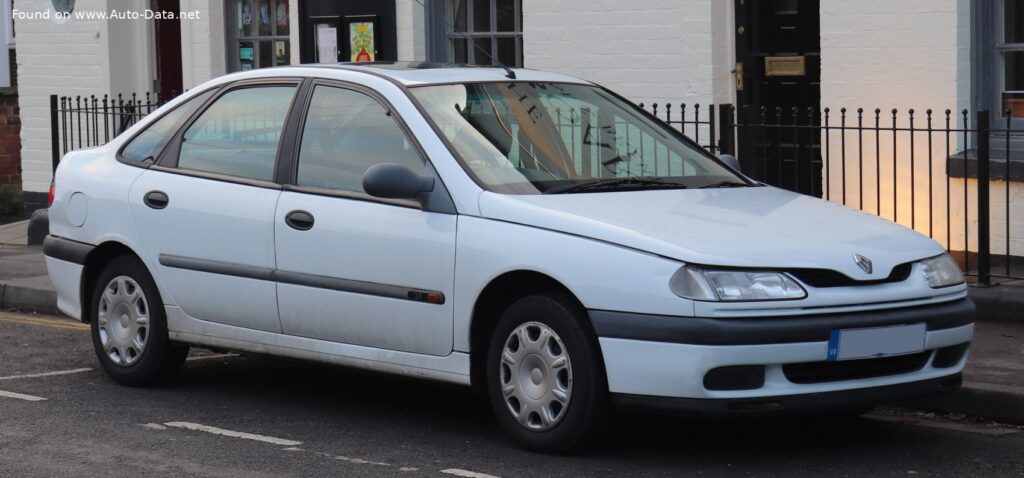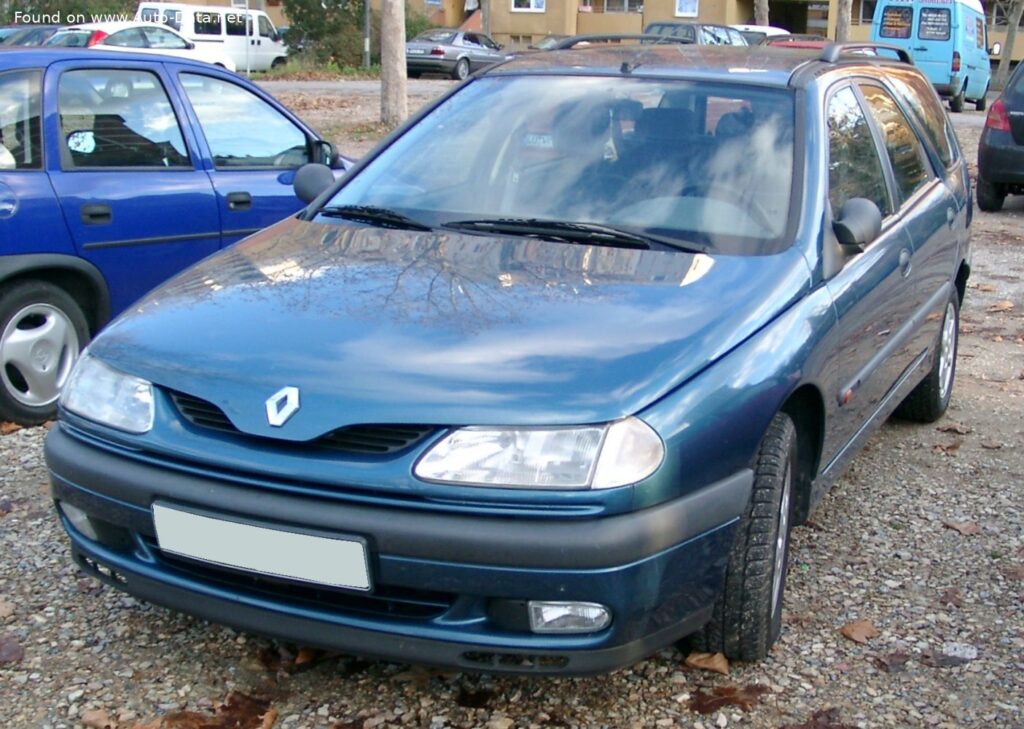
The Renault Laguna Grandtour 2.0 (113 Hp) represents a cornerstone of the European D-segment during the latter half of the 1990s, embodying Renault’s commitment to providing practical, comfortable, and well-engineered family vehicles. Introduced in 1995 as part of the first-generation Laguna lineup, the Grandtour variant specifically catered to the burgeoning demand for spacious and versatile station wagons across the continent. While never officially sold in the United States, this particular model was a common sight on European roads, offering a compelling blend of performance, economy, and cargo capacity. It stood as a direct competitor to other popular family estates from manufacturers like Peugeot, Opel (Vauxhall in the UK), and Ford, establishing itself as a reliable and practical choice for families and business users alike.
Performance and Engineering of the Renault Laguna Grandtour 2.0 (113 Hp)
At the heart of the 1995-2000 Renault Laguna Grandtour 2.0 (113 Hp) lay a robust and dependable 2.0-liter (1998 cm3 or 121.93 cu. in.) naturally aspirated inline-four petrol engine, designated with the F3R code. This powerplant was transversely mounted at the front, driving the front wheels through a 5-speed manual transmission, a common and efficient setup for family cars of its era. The engine featured an Overhead Camshaft (OHC) valvetrain with two valves per cylinder, a design choice that prioritized reliability and low-end torque delivery over high-revving performance, making it well-suited for daily driving conditions and hauling cargo. Fuel delivery was managed by a multi-port manifold injection system, ensuring efficient combustion and consistent power output.
The engine produced a respectable 113 horsepower at 5250 rpm, translating to a power-per-liter output of 56.6 Hp/l. Torque figures were equally practical, peaking at 123.91 lb.-ft. (168 Nm) at a relatively low 3500 rpm. This accessible torque curve meant that the Laguna Grandtour felt responsive in everyday driving, whether navigating city streets or cruising on the highway, even when loaded. Performance metrics for the 2.0-liter model were competitive for its class: acceleration from 0 to 60 mph was achieved in a calculated 10.8 seconds, while the vehicle could reach a maximum speed of 118.06 mph (190 km/h). These figures underscored its capability as a competent long-distance cruiser and a capable family hauler.
Fuel economy for the Laguna Grandtour 2.0 was rated at a combined 26.7 US mpg (8.8 l/100 km), which was a commendable figure for a mid-size station wagon of its time, especially considering the absence of widespread advanced engine technologies like direct injection or turbocharging in this segment during the mid-90s. The fuel tank capacity of 17.44 US gallons (66 liters) provided a substantial cruising range, further enhancing its appeal for families undertaking longer journeys. The engine oil capacity was 5.5 liters (5.81 US quarts), and it utilized a 9-liter (9.51 US quarts) coolant system, indicative of its conventional and maintainable engineering.
Design, Practicality, and Safety Features
The Renault Laguna Grandtour’s design prioritized practicality and understated elegance, characteristic of European family cars of the period. Its station wagon (estate) body type, featuring five doors and seating for five occupants, was specifically engineered to maximize interior volume and cargo flexibility. With a length of 181.89 inches (4620 mm), a width of 68.98 inches (1752 mm), and a height of 57.01 inches (1448 mm), the Laguna Grandtour presented a substantial yet manageable footprint. The wheelbase of 105.12 inches (2670 mm) contributed to a stable ride and generous passenger space, particularly for rear-seat occupants.
One of the Grandtour’s most compelling attributes was its cargo capacity. The minimum trunk space stood at a generous 18.36 cu. ft. (520 liters), easily accommodating family luggage or grocery runs. When the rear seats were folded, this expanded dramatically to an impressive 62.93 cu. ft. (1782 liters), transforming the vehicle into a highly capable load-carrier for anything from DIY projects to outdoor equipment. This versatility was a key selling point in the European market, where station wagons were, and continue to be, highly valued for their multi-purpose utility.
In terms of chassis and handling, the Laguna Grandtour employed a conventional but effective setup. The front suspension utilized a wishbone design, providing a good balance of comfort and control, while the rear featured a torsion beam setup, known for its compact packaging and robustness, which is ideal for a vehicle designed to carry varying loads. Braking duties were handled by ventilated discs at the front for improved heat dissipation and drum brakes at the rear, a common configuration for the segment at the time. An important safety enhancement for the era was the inclusion of ABS (Anti-lock Braking System) as an assisting system, which helped prevent wheel lock-up under hard braking, maintaining steering control. The steering system was a rack and pinion type, augmented by hydraulic power steering, ensuring ease of maneuverability at low speeds and a stable feel on the highway. The vehicle rode on 185/65 R14 tires fitted to 14-inch wheel rims, a practical choice that balanced ride comfort, grip, and replacement cost.
With a curb weight of 3031.36 lbs. (1375 kg) and a maximum permissible weight of 4453.34 lbs. (2020 kg), allowing for a maximum load of 1421.98 lbs. (645 kg), the Renault Laguna Grandtour 2.0 (113 Hp) was engineered to be a workhorse for families. Its combination of a spacious interior, adaptable cargo area, reliable powertrain, and essential safety features made it a highly practical and competitive offering in the European market during its production run from 1995 to 2000.
Technical Specifications: Renault Laguna Grandtour 2.0 (113 Hp) (1995-2000)
| Brand | Renault |
| Model | Laguna |
| Generation | Laguna Grandtour |
| Type (Engine) | 2.0 (113 Hp) |
| Start of production | 1995 year |
| End of production | 2000 year |
| Powertrain Architecture | Internal Combustion engine |
| Body type | Station wagon (estate) |
| Seats | 5 |
| Doors | 5 |
| Fuel consumption (economy) – combined | 8.8 l/100 km | 26.7 US mpg | 32.1 UK mpg |
| Fuel Type | Petrol (Gasoline) |
| Acceleration 0 – 60 mph | 10.8 sec |
| Acceleration 0 – 100 km/h | 11.4 sec |
| Maximum speed | 190 km/h | 118.06 mph |
| Weight-to-power ratio | 12.2 kg/Hp | 82.2 Hp/tonne |
| Weight-to-torque ratio | 8.2 kg/Nm | 122.2 Nm/tonne |
| Power | 113 Hp @ 5250 rpm |
| Power per litre | 56.6 Hp/l |
| Torque | 168 Nm @ 3500 rpm | 123.91 lb.-ft. @ 3500 rpm |
| Engine layout | Front, Transverse |
| Engine Model/Code | F3R |
| Engine displacement | 1998 cm3 | 121.93 cu. in. |
| Number of cylinders | 4 |
| Engine configuration | Inline |
| Cylinder Bore | 82.7 mm | 3.26 in. |
| Piston Stroke | 93 mm | 3.66 in. |
| Compression ratio | 9.8:1 |
| Number of valves per cylinder | 2 |
| Fuel injection system | Multi-port manifold injection |
| Engine aspiration | Naturally aspirated engine |
| Valvetrain | OHC |
| Engine oil capacity | 5.5 l | 5.81 US qt |
| Coolant | 9 l | 9.51 US qt |
| Kerb Weight | 1375 kg | 3031.36 lbs. |
| Max. weight | 2020 kg | 4453.34 lbs. |
| Max load | 645 kg | 1421.98 lbs. |
| Trunk (boot) space – minimum | 520 l | 18.36 cu. ft. |
| Trunk (boot) space – maximum | 1782 l | 62.93 cu. ft. |
| Fuel tank capacity | 66 l | 17.44 US gal |
| Length | 4620 mm | 181.89 in. |
| Width | 1752 mm | 68.98 in. |
| Height | 1448 mm | 57.01 in. |
| Wheelbase | 2670 mm | 105.12 in. |
| Front track | 1481 mm | 58.31 in. |
| Rear (Back) track | 1460 mm | 57.48 in. |
| Drivetrain Architecture | The Internal combustion engine (ICE) drives the front wheels of the vehicle. |
| Drive wheel | Front wheel drive |
| Number of gears and type of gearbox | 5 gears, manual transmission |
| Front suspension | Wishbone |
| Rear suspension | Torsion |
| Front brakes | Ventilated discs |
| Rear brakes | Drum |
| Assisting systems | ABS (Anti-lock braking system) |
| Steering type | Steering rack and pinion |
| Power steering | Hydraulic Steering |
| Tires size | 185/65 R14 |
| Wheel rims size | 14 |