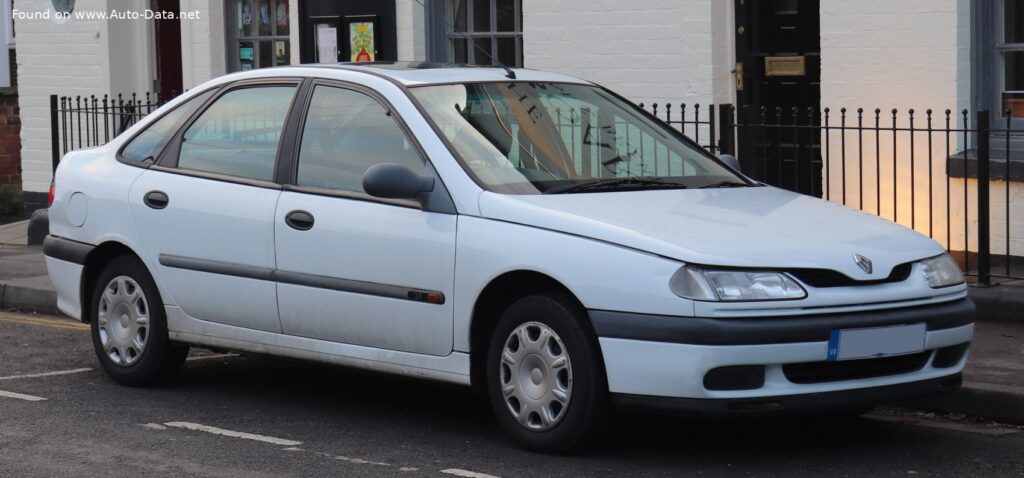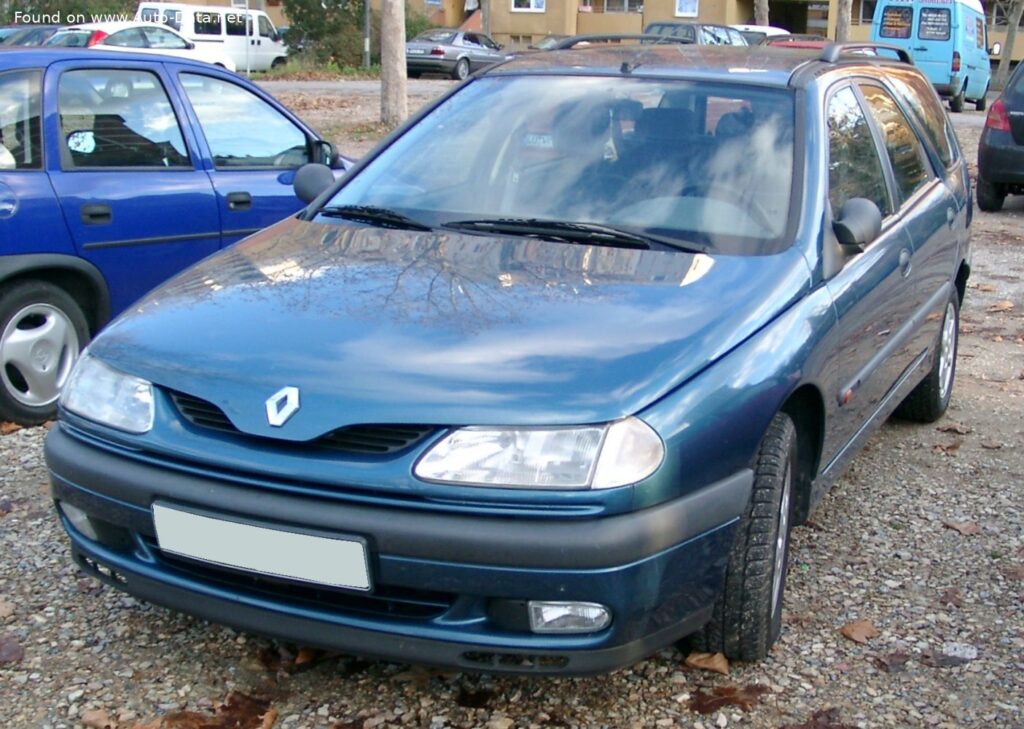
The Renault Laguna Grandtour 2.2 D (83 Hp) represents a significant offering from the French automaker in the mid-1990s European D-segment. Produced from 1995 to 2000, this first-generation Laguna station wagon, known as an ‘estate’ in Europe, was engineered to provide practical, economical, and comfortable family transportation across the continent. While never officially sold in the United States, the Laguna Grandtour played a crucial role in Renault’s strategy to capture the burgeoning European market for versatile family vehicles, combining spaciousness with the then-growing popularity of diesel powertrains for their fuel efficiency and robust torque characteristics. This particular variant, powered by a 2.2-liter naturally aspirated diesel engine, exemplifies the pragmatic approach to motoring that defined much of the European automotive landscape during this era, prioritizing reliability and cost-effectiveness over outright performance.
Renault Laguna Grandtour 2.2 D (83 Hp): Engineering and Powertrain
Engine and Performance
At the heart of the Renault Laguna Grandtour 2.2 D (83 Hp) lies a robust, naturally aspirated 2.2-liter (2188 cm3 or 133.52 cu. in.) inline four-cylinder diesel engine, bearing the internal code G8T. This powerplant, a staple of Renault’s offerings in the mid-90s, was designed for durability and efficiency, delivering a modest but practical 83 horsepower at 4500 revolutions per minute. More critical for a family wagon of its type was the torque output, peaking at 142 Nm (104.73 lb.-ft.) at a relatively low 2250 rpm. This low-end torque was instrumental in providing accessible pulling power, essential for carrying passengers and cargo, especially in varied European driving conditions.
The engine’s architecture featured an overhead camshaft (OHC) valvetrain with three valves per cylinder, a configuration chosen for its balance of efficiency and manufacturing simplicity. Fuel delivery was managed by a precombustion chamber injection system, a common technology for naturally aspirated diesels of the period, known for its ability to promote smoother combustion and reduce noise compared to direct injection systems of the time, albeit at a slight trade-off in ultimate efficiency. With a high compression ratio of 23:1, the engine was optimized for diesel fuel combustion. The engine oil capacity was 6.5 liters (6.87 US qt), and the cooling system held 9 liters (9.51 US qt) of coolant, indicating a well-engineered thermal management system for sustained operation.
Performance figures for the Laguna Grandtour 2.2 D (83 Hp) reflect its utilitarian nature. Acceleration from 0 to 60 mph was achieved in approximately 14 seconds, with 0-100 km/h taking 14.7 seconds. The maximum speed reached 116.2 mph (187 km/h). While not a performance car, these figures were entirely adequate for daily driving and highway cruising. Fuel economy was a strong suit, with combined consumption rated between 42.8 and 33.6 US mpg (5.5-7.0 l/100 km). Urban driving yielded 36.2 – 33.6 US mpg (6.5-7.0 l/100 km), and extra-urban figures were impressive at 52.3 – 42.8 US mpg (4.5-5.5 l/100 km), underscoring its economical appeal to European families and businesses alike. The vehicle’s weight-to-power ratio stood at 17.9 kg/Hp, or 55.9 Hp/tonne, further illustrating its focus on reliable, everyday utility.
Drivetrain and Chassis
The Renault Laguna Grandtour 2.2 D (83 Hp) employed a conventional front-wheel-drive (FWD) powertrain architecture, with the internal combustion engine mounted transversely at the front. This configuration is widely adopted for its efficiency in packaging, maximizing interior space, and providing predictable handling characteristics. Power was transmitted to the front wheels via a robust 5-speed manual transmission, offering the driver direct control over gear selection and contributing to the vehicle’s overall fuel efficiency.
The chassis was designed to balance ride comfort with stable handling, crucial for a family-oriented wagon. The front suspension utilized a wishbone setup, known for its ability to provide good wheel control and absorption of road imperfections. At the rear, a torsion beam suspension system was implemented, a compact and cost-effective solution that also contributed to maximizing cargo space. Braking duties were handled by ventilated discs at the front, offering superior heat dissipation for consistent stopping power, complemented by solid disc brakes at the rear. An Anti-lock Braking System (ABS) was a significant safety feature for the era, helping drivers maintain steering control during emergency braking maneuvers. Steering was managed by a rack and pinion system, assisted by hydraulic power steering, providing a comfortable and responsive feel for maneuvering in urban environments and on the open road. The vehicle rode on 185/65 R14 tires, fitted to 6.5J x 14 wheel rims, a common and practical size for the period, balancing grip, ride comfort, and replacement cost.
Design, Utility, and Features of the Renault Laguna Grandtour 2.2 D (83 Hp)
Exterior and Interior Design
The Renault Laguna Grandtour, as a first-generation model, showcased a design language that was characteristic of mid-1990s European family cars: understated, aerodynamic, and highly functional. Its station wagon (or ‘estate’) body type, with five doors and five seats, emphasized practicality and versatility. The overall length of 181.89 inches (4620 mm) and a width of 68.98 inches (1752 mm) provided a substantial road presence while remaining manageable for European city streets and parking. The height of 57.01 inches (1448 mm) contributed to a relatively low center of gravity, aiding stability, while the 105.12-inch (2670 mm) wheelbase offered a stable ride and generous interior volume.
Inside, the Laguna Grandtour was designed with family needs in mind. The five-seat configuration offered comfortable accommodation for adults and children, with a focus on durable materials and ergonomic controls. While not equipped with the advanced infotainment systems of modern vehicles, the interior provided all necessary amenities for comfortable long-distance travel, including practical storage solutions and good visibility. The design prioritized ease of use and functionality, reflecting the pragmatic demands of its target audience.
Practicality and Safety
Utility was a defining characteristic of the Laguna Grandtour. The station wagon body offered exceptional cargo capacity, a primary reason for its popularity among European families. With the rear seats in place, the trunk (boot) provided a generous 18.36 cubic feet (520 liters) of space. When the rear seats were folded down, this capacity expanded dramatically to 62.93 cubic feet (1782 liters), allowing for the transport of large items, luggage for extended trips, or even sports equipment. This impressive versatility made it an ideal choice for active families and those requiring substantial hauling capability.
Safety features, while not as comprehensive as today’s standards, were progressive for the mid-90s. The inclusion of an Anti-lock Braking System (ABS) was a significant advantage, enhancing vehicle control during emergency stops. The robust chassis construction and inherent stability of the Laguna’s platform also contributed to passive safety. With a maximum permissible weight (GVWR) of 4640.73 lbs (2105 kg) and a substantial maximum payload capacity of 1366.87 lbs (620 kg), the vehicle was engineered to safely carry its full complement of passengers and cargo. The 17.44 US gallon (66 liter) fuel tank capacity, combined with its excellent diesel fuel economy, ensured a significant cruising range, making it well-suited for cross-country journeys across Europe.
Technical Specifications: Renault Laguna Grandtour 2.2 D (83 Hp)
| Brand | Renault |
| Model | Laguna |
| Generation | Laguna Grandtour |
| Type (Engine) | 2.2 D (83 Hp) |
| Start of production | 1995 year |
| End of production | 2000 year |
| Powertrain Architecture | Internal Combustion engine |
| Body type | Station wagon (estate) |
| Seats | 5 |
| Doors | 5 |
| Fuel consumption (economy) – urban | 6.5-7.0 l/100 km (36.2 – 33.6 US mpg) |
| Fuel consumption (economy) – extra urban | 4.5-5.5 l/100 km (52.3 – 42.8 US mpg) |
| Fuel consumption (economy) – combined | 5.5-7.0 l/100 km (42.8 – 33.6 US mpg) |
| Fuel Type | Diesel |
| Acceleration 0 – 100 km/h | 14.7 sec |
| Acceleration 0 – 62 mph | 14.7 sec |
| Acceleration 0 – 60 mph (Calculated) | 14 sec |
| Maximum speed | 187 km/h (116.2 mph) |
| Weight-to-power ratio | 17.9 kg/Hp (55.9 Hp/tonne) |
| Weight-to-torque ratio | 10.5 kg/Nm (95.6 Nm/tonne) |
| Power | 83 Hp @ 4500 rpm |
| Power per liter | 37.9 Hp/l |
| Torque | 142 Nm @ 2250 rpm (104.73 lb.-ft.) |
| Engine layout | Front, Transverse |
| Engine Model/Code | G8T |
| Engine displacement | 2188 cm3 (133.52 cu. in.) |
| Number of cylinders | 4 |
| Engine configuration | Inline |
| Cylinder Bore | 87 mm (3.43 in.) |
| Piston Stroke | 92 mm (3.62 in.) |
| Compression ratio | 23:1 |
| Number of valves per cylinder | 3 |
| Fuel injection system | Precombustion chamber injection |
| Engine aspiration | Naturally aspirated engine |
| Valvetrain | OHC |
| Engine oil capacity | 6.5 l (6.87 US qt) |
| Engine oil specification | Not Specified |
| Coolant | 9 l (9.51 US qt) |
| Kerb Weight | 1485 kg (3273.86 lbs) |
| Max. weight (GVWR) | 2105 kg (4640.73 lbs) |
| Max load | 620 kg (1366.87 lbs) |
| Trunk (boot) space – minimum | 520 l (18.36 cu. ft.) |
| Trunk (boot) space – maximum | 1782 l (62.93 cu. ft.) |
| Fuel tank capacity | 66 l (17.44 US gal) |
| Length | 4620 mm (181.89 in.) |
| Width | 1752 mm (68.98 in.) |
| Height | 1448 mm (57.01 in.) |
| Wheelbase | 2670 mm (105.12 in.) |
| Front track | 1481 mm (58.31 in.) |
| Rear (Back) track | 1460 mm (57.48 in.) |
| Drivetrain Architecture | Front wheel drive (ICE drives front wheels) |
| Drive wheel | Front wheel drive |
| Number of gears and type of gearbox | 5 gears, manual transmission |
| Front suspension | Wishbone |
| Rear suspension | Torsion |
| Front brakes | Ventilated discs |
| Rear brakes | Disc |
| Assisting systems | ABS (Anti-lock braking system) |
| Steering type | Steering rack and pinion |
| Power steering | Hydraulic Steering |
| Tires size | 185/65 R14 |
| Wheel rims size | 6.5J x 14 |