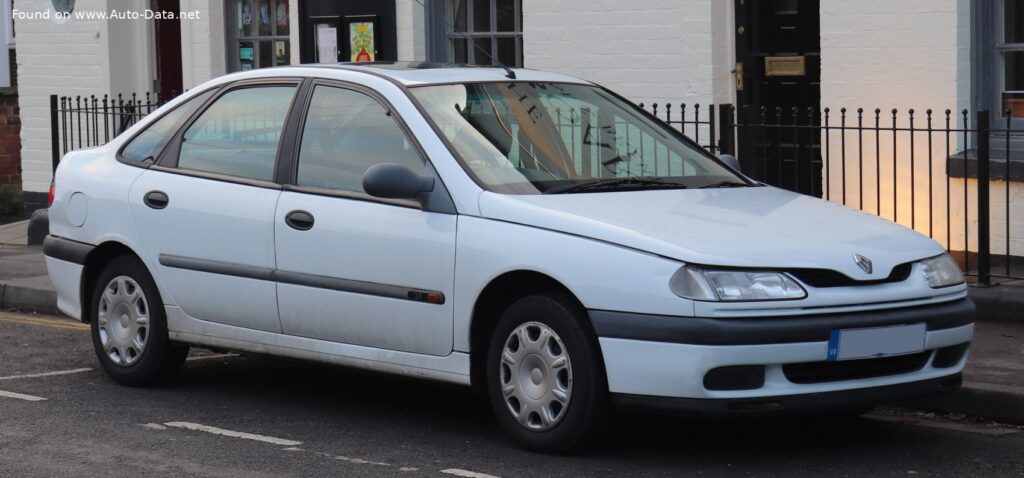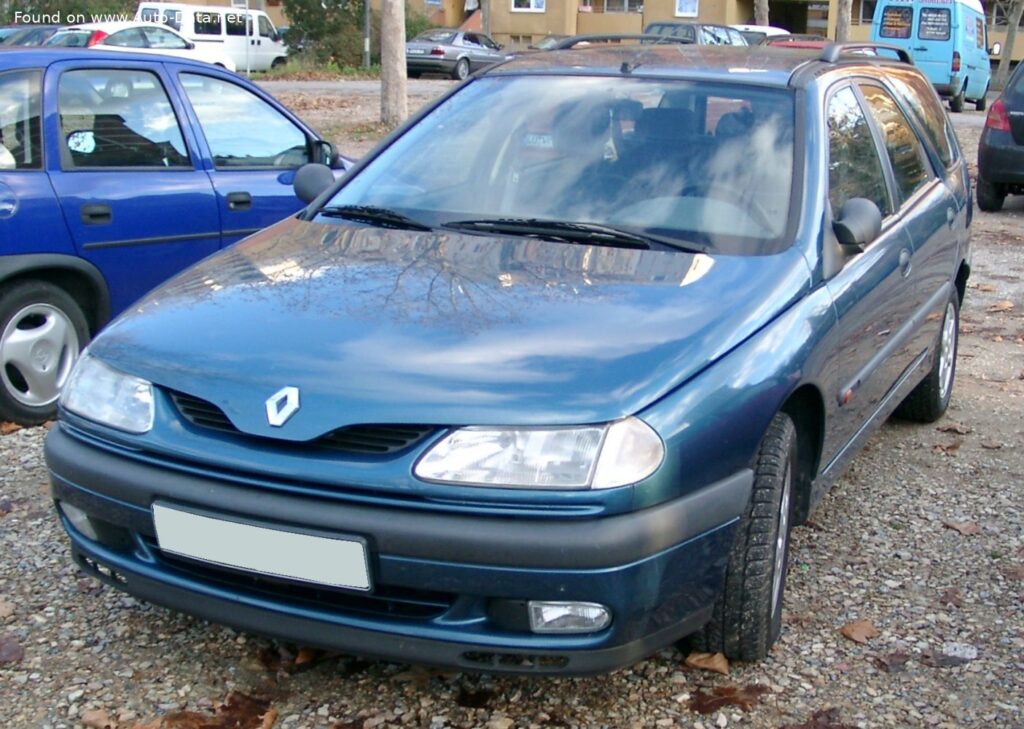
The Renault Laguna Grandtour, specifically the 2.9 24V (190 Hp) variant produced between 1997 and 2000, represented a compelling offering in the competitive European D-segment for mid-size family vehicles. While never officially imported or sold in the United States, this particular model garnered significant attention in its primary European markets for its blend of practicality, comfort, and surprisingly robust performance. As a second-generation Laguna, the Grandtour sought to build on the success of its predecessor by offering enhanced safety, improved driving dynamics, and a more refined powertrain lineup. This particular iteration, with its potent 2.9-liter V6 engine, positioned the Renault Laguna Grandtour 2.9 24V (190 Hp) as a top-tier choice for families who desired not only generous cargo capacity and passenger comfort but also a spirited driving experience often reserved for more premium or sport-oriented sedans.
Engine and Performance: The Renault Laguna Grandtour 2.9 24V (190 Hp)
At the heart of this formidable station wagon lay a transversely mounted, front-engine, front-wheel-drive powertrain architecture designed for both efficiency and engaging performance. The engine itself, identified by the code L7X, was a sophisticated 2.9-liter (2946 cm3 or 179.78 cu. in.) V6 unit. This configuration, featuring six cylinders arranged in a ‘V’ shape, was relatively advanced for a mainstream family vehicle of its era. It boasted a Double Overhead Camshaft (DOHC) valvetrain with four valves per cylinder, totaling 24 valves, which allowed for optimal breathing and combustion efficiency. Fuel delivery was managed by a multi-port manifold injection system, ensuring precise fuel metering, while the engine remained naturally aspirated, relying solely on atmospheric pressure for air intake rather than forced induction.
This V6 powerplant generated a respectable 190 horsepower at 5750 revolutions per minute, delivering a power-per-liter output of 64.5 HP/l. Torque figures were equally impressive for a vehicle of this class, peaking at 267 Nm (196.93 lb.-ft.) at 4000 rpm. This substantial torque, available across a broad rev range, translated into robust acceleration and effortless cruising capability. Mated to a precise 5-speed manual transmission, the Laguna Grandtour 2.9 24V could sprint from 0 to 60 mph in a brisk 7.5 seconds, with 0-100 km/h achieved in 7.9 seconds. Its top speed was electronically limited to 225 km/h (139.81 mph), making it one of the faster family wagons available in its segment.
Despite its performance leanings, the engine maintained a compression ratio of 10.5:1, balancing power with reasonable fuel efficiency for its size and output. Fuel consumption was rated at 16.2 l/100 km (14.5 US mpg) in urban conditions, dropping to a more economical 8.3 l/100 km (28.3 US mpg) during extra-urban driving. These figures, while higher than smaller, less powerful engines, were competitive for a V6-powered vehicle of its weight and performance capabilities in the late 1990s. The kerb weight of 3152.61 lbs (1430 kg) contributed to a weight-to-power ratio of 7.5 kg/Hp (132.9 Hp/tonne) and a weight-to-torque ratio of 5.4 kg/Nm (186.7 Nm/tonne), indicating a well-balanced power-to-weight characteristic for a vehicle designed to carry passengers and cargo.
Design and Features of the Laguna Grandtour
The Renault Laguna Grandtour was designed first and foremost as a practical and versatile station wagon, a body type highly favored in European markets for its blend of sedan-like driving dynamics with SUV-like cargo capacity. Measuring 181.89 inches (4620 mm) in length, 68.9 inches (1750 mm) in width, and 57.09 inches (1450 mm) in height, it presented a substantial yet elegant profile. The 105.12-inch (2670 mm) wheelbase provided a stable ride and generous interior space for five occupants across two rows of seating. With five doors, access to both the passenger compartment and the expansive rear cargo area was convenient.
One of the Grandtour’s most compelling features was its exceptional cargo capacity. With the rear seats in place, the trunk offered a substantial 890 liters (31.43 cu. ft.) of space, easily accommodating luggage, groceries, or sports equipment. For larger items, the rear seats could be folded down, expanding the cargo volume to an impressive 1850 liters (65.33 cu. ft.), transforming the vehicle into a highly capable hauler. This versatility made it an ideal choice for families, small businesses, or anyone requiring significant, adaptable storage.
In terms of chassis and driving dynamics, the Laguna Grandtour featured a robust suspension setup. The front utilized a wishbone system, known for its ability to provide precise handling and a comfortable ride by effectively managing wheel movement. The rear suspension employed a torsion beam, a common and effective design for front-wheel-drive vehicles of the era, balancing ride comfort with packaging efficiency for the large cargo area. Steering was managed by a rack and pinion system with hydraulic power assist, offering direct feedback and ease of maneuverability at low speeds. Safety features, increasingly important in the late 1990s, included Anti-lock Braking System (ABS) as standard, enhancing driver control during emergency braking by preventing wheel lock-up. The braking system itself comprised ventilated discs at the front for improved heat dissipation and disc brakes at the rear, providing consistent stopping power. The vehicle rode on 195/65 R15 tires mounted on 15-inch wheel rims, a common specification for family cars of its generation, offering a good balance of comfort and grip.
Technical Specifications
| Brand | Renault |
| Model | Laguna |
| Generation | Laguna Grandtour |
| Type (Engine) | 2.9 24V (190 Hp) |
| Start of production | 1997 year |
| End of production | 2000 year |
| Powertrain Architecture | Internal Combustion engine |
| Body type | Station wagon (estate) |
| Seats | 5 |
| Doors | 5 |
| Fuel consumption (economy) – urban | 16.2 l/100 km (14.5 US mpg) |
| Fuel consumption (economy) – extra urban | 8.3 l/100 km (28.3 US mpg) |
| Fuel Type | Petrol (Gasoline) |
| Acceleration 0 – 100 km/h | 7.9 sec |
| Acceleration 0 – 62 mph | 7.9 sec |
| Acceleration 0 – 60 mph | 7.5 sec |
| Maximum speed | 225 km/h (139.81 mph) |
| Weight-to-power ratio | 7.5 kg/Hp (132.9 Hp/tonne) |
| Weight-to-torque ratio | 5.4 kg/Nm (186.7 Nm/tonne) |
| Power | 190 Hp @ 5750 rpm. |
| Power per litre | 64.5 Hp/l |
| Torque | 267 Nm @ 4000 rpm. (196.93 lb.-ft. @ 4000 rpm.) |
| Engine layout | Front, Transverse |
| Engine Model/Code | L7X |
| Engine displacement | 2946 cm3 (179.78 cu. in.) |
| Number of cylinders | 6 |
| Engine configuration | V-engine |
| Cylinder Bore | 87 mm (3.43 in.) |
| Piston Stroke | 82.6 mm (3.25 in.) |
| Compression ratio | 10.5:1 |
| Number of valves per cylinder | 4 |
| Fuel injection system | Multi-port manifold injection |
| Engine aspiration | Naturally aspirated engine |
| Valvetrain | DOHC |
| Engine oil capacity | 5.4 l (5.71 US qt) |
| Engine oil specification | Not specified |
| Coolant | 7 l (7.4 US qt) |
| Kerb Weight | 1430 kg (3152.61 lbs.) |
| Max. weight | 1965 kg (4332.08 lbs.) |
| Max load | 535 kg (1179.47 lbs.) |
| Trunk (boot) space – minimum | 890 l (31.43 cu. ft.) |
| Trunk (boot) space – maximum | 1850 l (65.33 cu. ft.) |
| Fuel tank capacity | 66 l (17.44 US gal) |
| Length | 4620 mm (181.89 in.) |
| Width | 1750 mm (68.9 in.) |
| Height | 1450 mm (57.09 in.) |
| Wheelbase | 2670 mm (105.12 in.) |
| Front track | 1480 mm (58.27 in.) |
| Rear (Back) track | 1460 mm (57.48 in.) |
| Drivetrain Architecture | The Internal combustion engine (ICE) drives the front wheels of the vehicle. |
| Drive wheel | Front wheel drive |
| Number of gears and type of gearbox | 5 gears, manual transmission |
| Front suspension | Wishbone |
| Rear suspension | Torsion |
| Front brakes | Ventilated discs |
| Rear brakes | Disc |
| Assisting systems | ABS (Anti-lock braking system) |
| Steering type | Steering rack and pinion |
| Power steering | Hydraulic Steering |
| Tires size | 195/65 R15 |
| Wheel rims size | 15 |