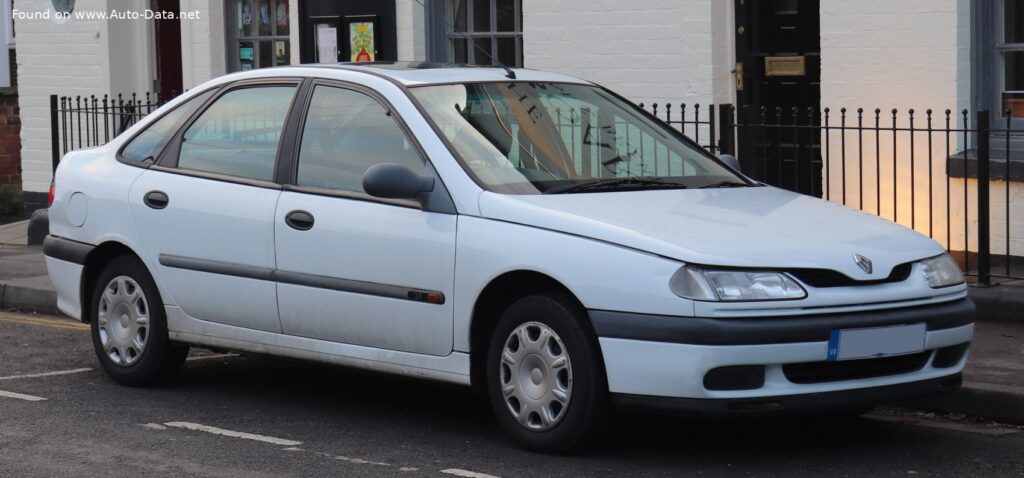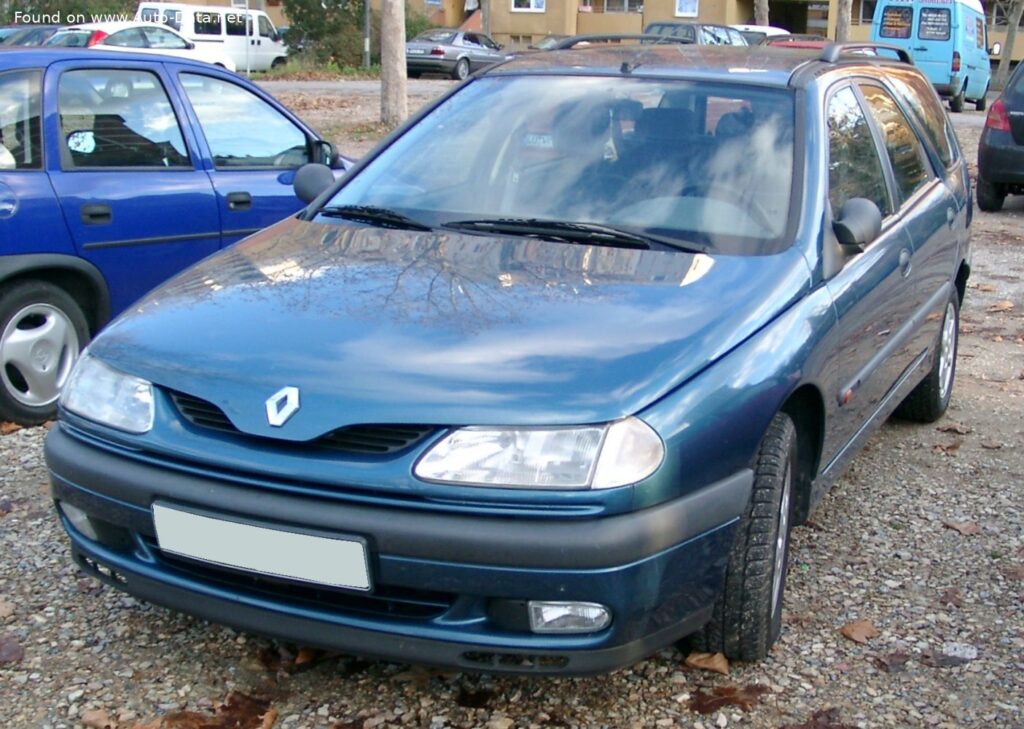
The Renault Laguna Grandtour 3.0 (167 Hp) represents a significant offering from the French automaker in the European D-segment during its production run from 1996 to 2000. As the estate variant of the first-generation Renault Laguna, this model was designed to cater to families and professionals who demanded a versatile vehicle combining passenger comfort, substantial cargo capacity, and a refined driving experience. Unlike many of its counterparts sold in the United States, the Laguna Grandtour was primarily targeted at the competitive European market, where station wagons, or estates as they are known there, held a strong presence as practical and stylish alternatives to traditional sedans. This particular iteration, equipped with a potent 3.0-liter V6 engine, aimed to elevate the driving dynamics of an otherwise utilitarian body style, positioning it as a capable long-distance cruiser with respectable performance credentials for its era.
The Renault Laguna Grandtour 3.0 (167 Hp): A European Mid-Size Estate
The Renault Laguna, first introduced in 1994 as a replacement for the aging Renault 21, quickly established itself as a cornerstone of Renault’s lineup in Europe. The Grandtour, or station wagon (estate), version, launched in 1996, extended the Laguna’s appeal by offering enhanced practicality without compromising on the car’s contemporary design and comfortable ride. The 3.0-liter V6 variant, in particular, was positioned at the upper end of the range, offering a blend of performance and luxury that was highly sought after in the European market. This vehicle was a direct competitor to other mid-size European wagons such as the Opel Vectra Caravan, Ford Mondeo Estate, and Volkswagen Passat Variant, distinguishing itself with its distinctive French styling and emphasis on ride quality and interior ergonomics.
The first-generation Laguna Grandtour was admired for its smooth lines and aerodynamic profile, which contributed to both its aesthetic appeal and its efficiency. Renault aimed to create a vehicle that was not just a load-hauler but also a comfortable and engaging car to drive. The Grandtour body style, with its five doors and five seats, was inherently practical, designed to accommodate diverse needs from daily commuting to long family vacations. Its market success underscored the enduring popularity of the station wagon in Europe, a segment that prioritized versatility and driving dynamics over the burgeoning SUV trend that was beginning to take hold in other markets. The Laguna Grandtour 3.0 (167 Hp) thus stands as a testament to Renault’s commitment to delivering well-rounded, segment-appropriate vehicles tailored for the discerning European consumer.
Engine and Performance Characteristics
At the heart of the Renault Laguna Grandtour 3.0 (167 Hp) lies a robust 2,963 cubic inch (3.0-liter) V6 engine, designated by the internal code Z7X. This naturally aspirated powerplant was engineered to deliver a smooth and responsive driving experience, producing a healthy 167 horsepower at 5500 rpm. The power output of 56.4 Hp per liter was competitive for a V6 engine of its time, providing ample thrust for highway cruising and confident overtaking maneuvers. Torque figures were equally impressive, peaking at 173.33 lb.-ft. at 4500 rpm, which contributed significantly to the vehicle’s strong mid-range acceleration and overall drivability. The engine’s layout was front, transverse, driving the front wheels, a common and efficient configuration for D-segment vehicles.
The powertrain architecture featured an Internal Combustion Engine (ICE) that drove the front wheels through a 5-speed manual transmission. This combination allowed for engaging driver control and efficient power delivery. Performance figures for the Laguna Grandtour 3.0 (167 Hp) were quite respectable: acceleration from 0 to 60 mph was achieved in an estimated 9.4 seconds, with 0 to 62 mph (100 km/h) taking 9.9 seconds. The maximum speed was rated at 130.49 mph (210 km/h), making it a capable performer on unrestricted European highways. Fuel efficiency, while not the primary focus for a V6-powered family wagon, was rated at a combined 19.6 US mpg (12 liters per 100 km), which was a reasonable figure for a vehicle of its size and engine capacity in the late 1990s.
The engine utilized a Multi-port manifold injection system and an OHC (Overhead Camshaft) valvetrain with two valves per cylinder, a proven setup for reliability and efficiency. With a compression ratio of 9.6:1, the engine was designed to run on gasoline. The engine oil capacity stood at 7 US quarts, and the cooling system held 10.57 US quarts of coolant, indicating a well-engineered thermal management system. The weight-to-power ratio of 9.1 kg/Hp (109.5 Hp/tonne) and a weight-to-torque ratio of 6.5 kg/Nm (154.1 Nm/tonne) further underscore the balanced performance capabilities of this particular Laguna Grandtour model, showcasing its ability to move its 3362.05 lbs (1525 kg) curb weight with authority.
Design, Ergonomics, and Features
The Renault Laguna Grandtour 3.0 (167 Hp) was designed as a practical and comfortable station wagon (estate), prioritizing interior space and versatility. Its exterior dimensions measured 182.09 inches in length, 68.98 inches in width, and 57.87 inches in height, with a wheelbase of 105.12 inches. These dimensions contributed to a stable ride and a spacious cabin, characteristic of European D-segment vehicles. The design aesthetic of the first-generation Laguna Grandtour was marked by smooth, flowing lines and a cohesive appearance that integrated the extended rear section seamlessly with the front. This not only enhanced its visual appeal but also contributed to improved aerodynamics.
Inside, the Laguna Grandtour offered seating for five occupants across two rows, accessible via five doors. The interior was conceived with ergonomics and comfort in mind, offering a pleasant environment for long journeys. A standout feature was its generous cargo capacity, a hallmark of any good station wagon. The trunk (boot) space ranged from a minimum of 18.36 cubic feet (520 liters) with all seats in place, expanding significantly to a cavernous 62.93 cubic feet (1782 liters) when the rear seats were folded down. This flexibility made it an ideal choice for families, outdoor enthusiasts, or anyone requiring ample cargo volume.
In terms of vehicle dynamics and safety, the Laguna Grandtour 3.0 (167 Hp) incorporated features that were considered advanced for its time. The drivetrain architecture featured front-wheel drive, which provided predictable handling and good traction in various conditions. The suspension system utilized a wishbone setup at the front and a torsion beam at the rear, a combination designed to offer a comfortable ride while maintaining competent handling characteristics. Braking performance was handled by ventilated discs at the front and disc brakes at the rear, further enhanced by an Anti-lock Braking System (ABS), a crucial safety feature that improved stopping control during emergency situations. The steering system was a hydraulic rack and pinion setup, providing direct and responsive feedback to the driver. The vehicle was fitted with 205/60 R15 tires on 15-inch wheel rims, balancing grip, comfort, and durability for everyday driving.
Technical Specifications
| Brand | Renault |
| Model | Laguna |
| Generation | Laguna Grandtour |
| Type (Engine) | 3.0 (167 Hp) |
| Start of production | 1996 year |
| End of production | 2000 year |
| Powertrain Architecture | Internal Combustion engine |
| Body type | Station wagon (estate) |
| Seats | 5 |
| Doors | 5 |
| Fuel consumption (economy) – combined | 12 l/100 km / 19.6 US mpg |
| Fuel Type | Petrol (Gasoline) |
| Acceleration 0 – 60 mph | 9.4 sec |
| Acceleration 0 – 62 mph (0-100 km/h) | 9.9 sec |
| Maximum speed | 210 km/h / 130.49 mph |
| Weight-to-power ratio | 9.1 kg/Hp, 109.5 Hp/tonne |
| Weight-to-torque ratio | 6.5 kg/Nm, 154.1 Nm/tonne |
| Power | 167 Hp @ 5500 rpm |
| Power per liter | 56.4 Hp/l |
| Torque | 235 Nm @ 4500 rpm / 173.33 lb.-ft. @ 4500 rpm |
| Engine layout | Front, Transverse |
| Engine Model/Code | Z7X |
| Engine displacement | 2963 cm3 / 180.81 cu. in. |
| Number of cylinders | 6 |
| Engine configuration | V-engine |
| Cylinder Bore | 93 mm / 3.66 in. |
| Piston Stroke | 72.7 mm / 2.86 in. |
| Compression ratio | 9.6:1 |
| Number of valves per cylinder | 2 |
| Fuel injection system | Multi-port manifold injection |
| Engine aspiration | Naturally aspirated engine |
| Valvetrain | OHC |
| Engine oil capacity | 7 l / 7.4 US qt |
| Coolant | 10 l / 10.57 US qt |
| Kerb Weight | 1525 kg / 3362.05 lbs |
| Max. weight | 1975 kg / 4354.13 lbs |
| Max load | 450 kg / 992.08 lbs |
| Trunk (boot) space – minimum | 520 l / 18.36 cu. ft. |
| Trunk (boot) space – maximum | 1782 l / 62.93 cu. ft. |
| Fuel tank capacity | 66 l / 17.44 US gal |
| Length | 4625 mm / 182.09 in. |
| Width | 1752 mm / 68.98 in. |
| Height | 1470 mm / 57.87 in. |
| Wheelbase | 2670 mm / 105.12 in. |
| Front track | 1481 mm / 58.31 in. |
| Rear (Back) track | 1466 mm / 57.72 in. |
| Drivetrain Architecture | The Internal combustion engine (ICE) drives the front wheels of the vehicle. |
| Drive wheel | Front wheel drive |
| Number of gears and type of gearbox | 5 gears, manual transmission |
| Front suspension | Wishbone |
| Rear suspension | Torsion |
| Front brakes | Ventilated discs |
| Rear brakes | Disc |
| Assisting systems | ABS (Anti-lock braking system) |
| Steering type | Steering rack and pinion |
| Power steering | Hydraulic Steering |
| Tires size | 205/60 R15 |
| Wheel rims size | 15 |