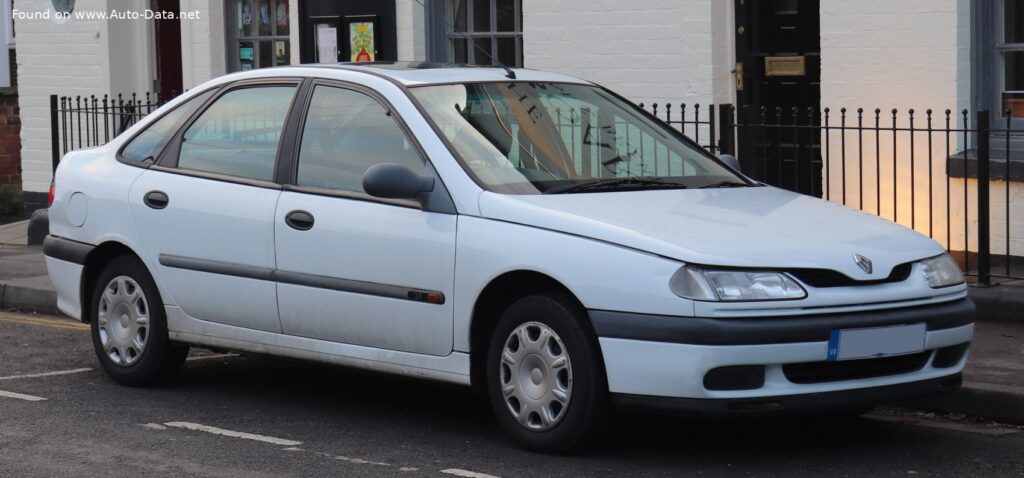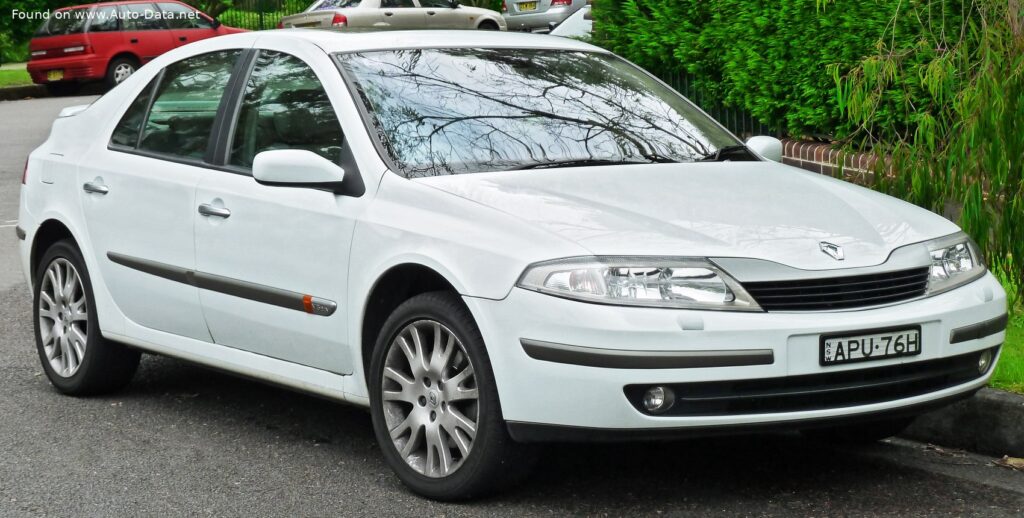
The Renault Laguna II 1.6 i 16V (107 Hp) represents a significant chapter in the history of Renault’s D-segment offerings, serving as a cornerstone for family and executive transportation across Europe from its introduction in 2001 until the conclusion of its production run in 2007. This second-generation Laguna, a five-door hatchback, was a pivotal model for the French automaker, aiming to build upon the success of its predecessor while introducing a host of technological advancements and a more sophisticated design language. While never officially sold in the United States, the Laguna II was a ubiquitous sight on European roads, embodying Renault’s commitment to safety, comfort, and innovative features for the mainstream market. The 1.6 i 16V variant, with its 107 horsepower engine, was positioned as an accessible entry point into the Laguna lineup, offering a balance of efficiency and adequate performance for daily driving and longer journeys, making it a popular choice for budget-conscious families and fleet operators alike.
The Renault Laguna II 1.6 i 16V (107 Hp): A European Mainstay
The Renault Laguna II, particularly in its 1.6 i 16V (107 Hp) configuration, was conceived as a highly competitive vehicle within the crowded European D-segment. Launched in 2001, it quickly garnered attention for its bold styling, improved driving dynamics, and a strong emphasis on passenger safety, becoming one of the first vehicles to achieve a coveted five-star Euro NCAP safety rating. This particular variant, powered by the K4M engine, was a testament to Renault’s strategy of offering a range of powertrains to suit diverse market needs. It provided a compelling blend of practicality, modern aesthetics, and a comfortable ride, characteristics that resonated well with European consumers seeking a versatile family car that could also handle long-distance travel with ease. Its lifespan, spanning from 2001 to 2007, saw the Laguna II undergo minor revisions, but the core appeal of its engineering and design remained consistent, solidifying its reputation as a reliable and feature-rich option in its class.
Engine & Performance
At the heart of the Renault Laguna II 1.6 i 16V (107 Hp) lies the robust K4M engine, a naturally aspirated inline four-cylinder powerplant that displaces 1598 cubic centimeters (97.52 cubic inches). This engine, configured with a DOHC (Double Overhead Camshaft) valvetrain and four valves per cylinder, was engineered for smooth operation and efficiency, delivering a respectable 107 horsepower at 5750 rpm. Torque output stands at 148 Nm (109.16 lb.-ft.) at a relatively accessible 3750 rpm, providing sufficient pulling power for city driving and maintaining momentum on highways. The engine’s multi-port manifold injection system ensures precise fuel delivery, contributing to its balanced performance characteristics.
Power is transmitted to the front wheels via a five-speed manual transmission, a common and reliable setup for vehicles in this segment during its production era. This drivetrain architecture, coupled with the engine’s output, allows the Laguna II 1.6 i 16V to accelerate from 0 to 60 mph in a calculated 10.9 seconds (0-100 km/h in 11.5 seconds), with a maximum speed of 121.17 mph (195 km/h). While not a performance-oriented model, these figures underscore its capability as a competent and practical family car.
Fuel economy was a key consideration, reflecting the European market’s emphasis on efficiency. The Laguna II 1.6 i 16V achieves an urban fuel consumption of 9.9 liters per 100 kilometers (23.8 US mpg), an extra-urban figure of 5.7 l/100 km (41.3 US mpg), and a combined rating of 7.3 l/100 km (32.2 US mpg). These figures highlight its ability to deliver economical operation, especially during longer journeys. The engine’s compression ratio of 10:1 further optimizes combustion efficiency, utilizing gasoline as its fuel type. With an engine oil capacity of 4.8 liters and a coolant capacity of 6.5 liters, the K4M engine was designed for straightforward maintenance, contributing to the overall cost-effectiveness of owning the vehicle.
Design & Features
The Renault Laguna II marked a significant departure from its first-generation predecessor in terms of design, adopting Renault’s new corporate styling language characterized by softer lines, a more aerodynamic profile, and distinctive headlamps. The five-door hatchback body type offered a versatile and practical solution for families, combining the sleek appearance of a sedan with the enhanced utility of a large tailgate and flexible cargo space. Measuring 180.16 inches in length, 69.76 inches in width, and 56.26 inches in height, with a generous wheelbase of 107.87 inches, the Laguna II provided a spacious and comfortable cabin for its five occupants.
Inside, the Laguna II was praised for its comfortable seating and a well-appointed interior, reflecting Renault’s focus on passenger well-being. The trunk space offered a practical minimum of 430 liters (15.19 cubic feet), which could be expanded dramatically to 1330 liters (46.97 cubic feet) by folding down the rear seats, making it highly adaptable for carrying luggage, groceries, or larger items. The car’s kerb weight of 2965.22 lbs (1345 kg) contributed to a stable and composed ride, complemented by a maximum load capacity of 1080.27 lbs (490 kg).
Safety was a paramount concern for the Laguna II. It featured a robust chassis and was equipped with assisting systems like ABS (Anti-lock Braking System) as standard, enhancing control during emergency braking maneuvers. The front suspension utilized a spring strut design, while the rear featured coil springs, providing a balanced ride quality that absorbed road imperfections effectively. Braking power came from ventilated discs at the front and disc brakes at the rear, ensuring confident stopping performance. The steering system employed a hydraulic rack and pinion setup, offering precise and responsive control. The vehicle rode on 195/65 R15 tires mounted on 15-inch wheel rims, a common specification for its class, balancing grip, comfort, and replacement cost. The 70-liter (18.49 US gallons) fuel tank capacity provided an impressive cruising range, further enhancing its suitability for long-distance European travel.
Technical Specifications
| Brand | Renault |
| Model | Laguna |
| Generation | Laguna II |
| Type (Engine) | 1.6 i 16V (107 Hp) |
| Start of production | 2001 year |
| End of production | 2007 year |
| Powertrain Architecture | Internal Combustion engine |
| Body type | Hatchback |
| Seats | 5 |
| Doors | 5 |
| Fuel consumption (economy) – urban | 9.9 l/100 km (23.8 US mpg) |
| Fuel consumption (economy) – extra urban | 5.7 l/100 km (41.3 US mpg) |
| Fuel consumption (economy) – combined | 7.3 l/100 km (32.2 US mpg) |
| Fuel Type | Petrol (Gasoline) |
| Acceleration 0 – 100 km/h | 11.5 sec |
| Acceleration 0 – 62 mph | 11.5 sec |
| Acceleration 0 – 60 mph (Calculated) | 10.9 sec |
| Maximum speed | 195 km/h (121.17 mph) |
| Weight-to-power ratio | 12.6 kg/Hp, 79.6 Hp/tonne |
| Weight-to-torque ratio | 9.1 kg/Nm, 110 Nm/tonne |
| Power | 107 Hp @ 5750 rpm |
| Power per liter | 67 Hp/l |
| Torque | 148 Nm @ 3750 rpm (109.16 lb.-ft. @ 3750 rpm) |
| Engine layout | Front, Transverse |
| Engine Model/Code | K4M |
| Engine displacement | 1598 cm3 (97.52 cu. in.) |
| Number of cylinders | 4 |
| Engine configuration | Inline |
| Cylinder Bore | 79.5 mm (3.13 in.) |
| Piston Stroke | 80.5 mm (3.17 in.) |
| Compression ratio | 10:1 |
| Number of valves per cylinder | 4 |
| Fuel injection system | Multi-port manifold injection |
| Engine aspiration | Naturally aspirated engine |
| Valvetrain | DOHC |
| Engine oil capacity | 4.8 l (5.07 US qt) |
| Coolant | 6.5 l (6.87 US qt) |
| Kerb Weight | 1345 kg (2965.22 lbs) |
| Max. weight | 1835 kg (4045.48 lbs) |
| Max load | 490 kg (1080.27 lbs) |
| Trunk (boot) space – minimum | 430 l (15.19 cu. ft.) |
| Trunk (boot) space – maximum | 1330 l (46.97 cu. ft.) |
| Fuel tank capacity | 70 l (18.49 US gal) |
| Length | 4576 mm (180.16 in.) |
| Width | 1772 mm (69.76 in.) |
| Height | 1429 mm (56.26 in.) |
| Wheelbase | 2740 mm (107.87 in.) |
| Front track | 1525 mm (60.04 in.) |
| Rear (Back) track | 1480 mm (58.27 in.) |
| Drivetrain Architecture | Front wheel drive, Internal Combustion engine |
| Drive wheel | Front wheel drive |
| Number of gears and type of gearbox | 5 gears, manual transmission |
| Front suspension | Spring Strut |
| Rear suspension | Coil spring |
| Front brakes | Ventilated discs |
| Rear brakes | Disc |
| Assisting systems | ABS (Anti-lock braking system) |
| Steering type | Steering rack and pinion |
| Power steering | Hydraulic Steering |
| Tires size | 195/65 R15 |
| Wheel rims size | 15 |