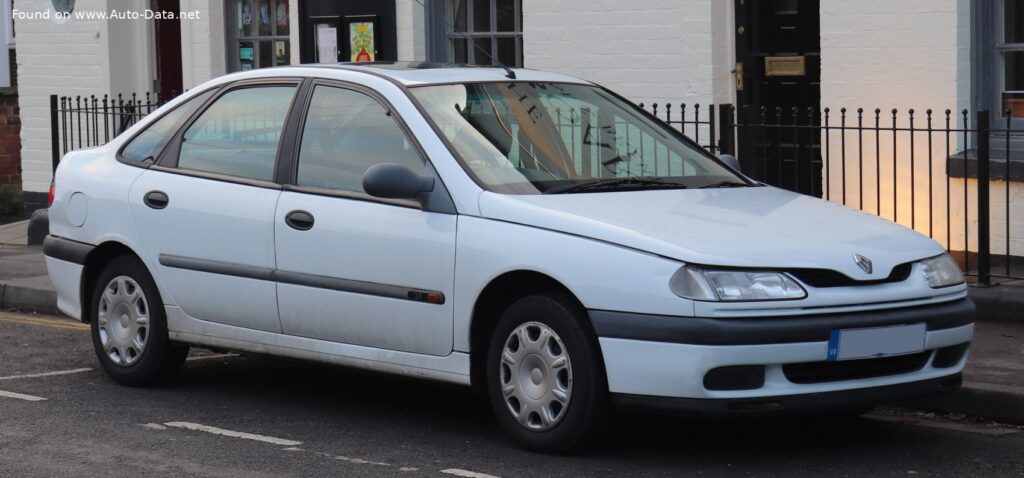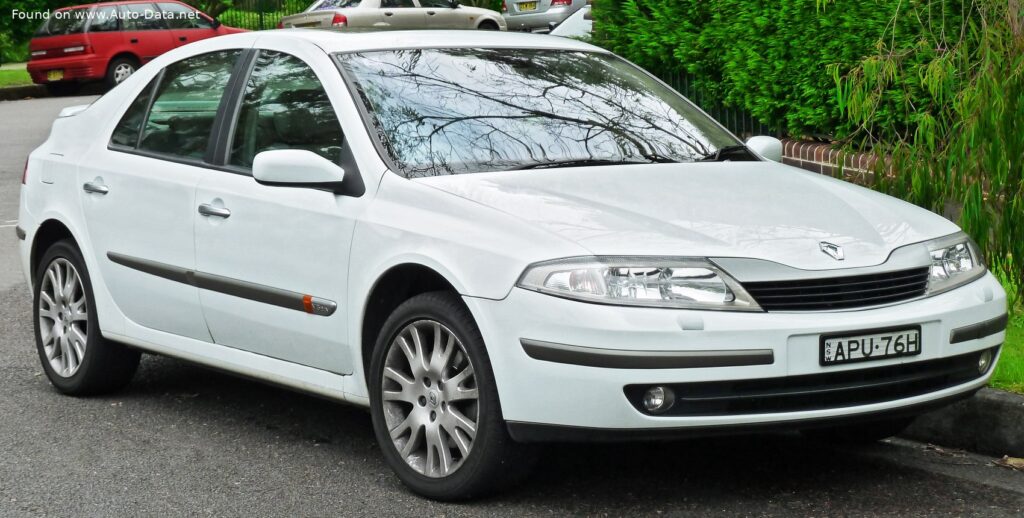
The Renault Laguna II 1.6 i 16V (112 Hp) represents a significant iteration within the second generation of Renault’s mid-size family car, produced between 2005 and 2007. As a pivotal offering in the highly competitive European D-segment, the Laguna II was designed to appeal to a broad spectrum of buyers seeking a blend of comfort, safety, and practicality. Unlike many vehicles available in the North American market, the Laguna II was specifically tailored for European tastes, emphasizing refined driving dynamics, advanced safety features for its time, and efficient powertrains. This particular variant, equipped with the 1.6-liter 16-valve engine, served as an accessible entry point into the Laguna lineup, providing a competent balance of performance and fuel economy for daily commuting and family travel across the continent.
Engine and Performance: The Heart of the Renault Laguna II 1.6 i 16V (112 Hp)
At the core of the Renault Laguna II 1.6 i 16V (112 Hp) is the robust K4M engine, a 1.6-liter (1598 cm3 or 97.52 cu. in.) naturally aspirated inline-four cylinder unit. This engine, featuring a DOHC (Double Overhead Camshaft) valvetrain with four valves per cylinder, was engineered for smooth power delivery and reliability. It produces a respectable 112 horsepower at 6000 rpm, translating to a power-per-liter output of 70.1 Hp/l, a competitive figure for a non-turbocharged engine of its displacement during its production years. Torque stands at 151 Nm (111.37 lb.-ft.) delivered at 4250 rpm, providing adequate pulling power for city driving and highway cruising.
The powertrain architecture features an internal combustion engine mounted transversely at the front, driving the front wheels through a 5-speed manual transmission. This front-wheel-drive setup is a common and efficient configuration for family cars, offering predictable handling characteristics. Performance figures for the Laguna II 1.6 i 16V (112 Hp) indicate a 0 to 60 mph acceleration time of 10.9 seconds, with a maximum speed of 122.41 mph (197 km/h). While not a performance-oriented variant, these figures underscore its capability as a confident and capable daily driver within its segment.
Fuel efficiency was a key consideration for European consumers, and the Laguna II 1.6 i 16V delivered reasonable economy for its class. Urban fuel consumption is rated at 10 liters per 100 km (23.5 US mpg), while extra-urban driving achieves an impressive 5.9 liters per 100 km (39.9 US mpg). The combined cycle would typically fall between these figures, making it an economical choice for families. The engine’s multi-port manifold injection system ensures precise fuel delivery, contributing to both efficiency and lower emissions, which were increasingly important environmental factors in Europe during the mid-2000s.
Design and Features of the Laguna II Hatchback
The Renault Laguna II, particularly in its 2005-2007 facelifted form, embraced a sleek and aerodynamic hatchback body type. With five doors and seating for five occupants, it offered a versatile and practical solution for families. Its exterior dimensions – a length of 180.16 inches (4576 mm), a width of 69.76 inches (1772 mm), and a height of 56.26 inches (1429 mm) – positioned it firmly in the mid-size segment. The long wheelbase of 107.87 inches (2740 mm) contributed significantly to interior space and ride comfort, a hallmark of Renault vehicles.
The design philosophy of the Laguna II aimed for a sophisticated yet approachable aesthetic, characterized by smooth lines and a relatively uncluttered profile. The hatchback design provided excellent cargo flexibility, with a minimum trunk space of 430 liters (15.19 cu. ft.), expandable to a generous 1330 liters (46.97 cu. ft.) with the rear seats folded down. This adaptability made it highly suitable for a range of uses, from weekly shopping to family vacations.
Inside, the Laguna II focused on comfort and ergonomics. While specific interior features aren’t detailed in the raw data, the model was generally known for its comfortable seating, intuitive controls, and a high level of standard equipment for its class. Safety was a paramount concern for Renault, and the Laguna II was one of the first cars to achieve a full five-star rating in Euro NCAP crash tests. The 1.6 i 16V variant came equipped with essential safety systems like ABS (Anti-lock Braking System) as standard, enhancing braking stability. The steering system utilized a hydraulic power-assisted rack and pinion setup, providing a good balance of road feel and ease of maneuverability, particularly in urban environments.
The vehicle’s suspension system featured a spring strut design at the front and coil springs at the rear, a conventional but effective setup for balancing ride comfort and handling stability. Braking duties were handled by ventilated discs at the front and solid discs at the rear, providing reliable stopping power. The car rode on 205/55 R16 tires, mounted on 16-inch wheel rims, offering a good compromise between grip, ride quality, and visual appeal.
Technical Specifications: Renault Laguna II 1.6 i 16V (112 Hp)
| Brand | Renault |
| Model | Laguna |
| Generation | Laguna II |
| Type (Engine) | 1.6 i 16V (112 Hp) |
| Start of production | 2005 year |
| End of production | 2007 year |
| Powertrain Architecture | Internal Combustion engine |
| Body type | Hatchback |
| Seats | 5 |
| Doors | 5 |
| Performance Specs | |
| Fuel consumption (urban) | 10 l/100 km (23.5 US mpg) |
| Fuel consumption (extra urban) | 5.9 l/100 km (39.9 US mpg) |
| Fuel Type | Petrol (Gasoline) |
| Acceleration 0 – 60 mph | 10.9 sec |
| Maximum speed | 197 km/h (122.41 mph) |
| Weight-to-power ratio | 11.3 kg/Hp (88.2 Hp/tonne) |
| Weight-to-torque ratio | 8.4 kg/Nm (118.9 Nm/tonne) |
| Engine Specs | |
| Power | 112 Hp @ 6000 rpm |
| Power per liter | 70.1 Hp/l |
| Torque | 151 Nm @ 4250 rpm (111.37 lb.-ft. @ 4250 rpm) |
| Engine layout | Front, Transverse |
| Engine Model/Code | K4M |
| Engine displacement | 1598 cm3 (1.6 l / 97.52 cu. in.) |
| Number of cylinders | 4 |
| Engine configuration | Inline |
| Cylinder Bore | 79.5 mm (3.13 in.) |
| Piston Stroke | 80.5 mm (3.17 in.) |
| Compression ratio | 9.8:1 |
| Number of valves per cylinder | 4 |
| Fuel injection system | Multi-port manifold injection |
| Engine aspiration | Naturally aspirated engine |
| Valvetrain | DOHC |
| Engine oil capacity | 4.8 l (5.07 US qt) |
| Coolant capacity | 6.5 l (6.87 US qt) |
| Space, Volume and Weights | |
| Kerb Weight | 1270 kg (2799.87 lbs.) |
| Max. weight | 1900 kg (4188.78 lbs.) |
| Max load | 630 kg (1388.91 lbs.) |
| Trunk (boot) space – minimum | 430 l (15.19 cu. ft.) |
| Trunk (boot) space – maximum | 1330 l (46.97 cu. ft.) |
| Fuel tank capacity | 70 l (18.49 US gal) |
| Dimensions | |
| Length | 4576 mm (180.16 in.) |
| Width | 1772 mm (69.76 in.) |
| Height | 1429 mm (56.26 in.) |
| Wheelbase | 2740 mm (107.87 in.) |
| Front track | 1525 mm (60.04 in.) |
| Rear (Back) track | 1480 mm (58.27 in.) |
| Drivetrain, Brakes and Suspension Specs | |
| Drivetrain Architecture | Front wheel drive, Internal Combustion engine |
| Drive wheel | Front wheel drive |
| Number of gears and type of gearbox | 5 gears, manual transmission |
| Front suspension | Spring Strut |
| Rear suspension | Coil spring |
| Front brakes | Ventilated discs |
| Rear brakes | Disc |
| Assisting systems | ABS (Anti-lock braking system) |
| Steering type | Steering rack and pinion |
| Power steering | Hydraulic Steering |
| Tires size | 205/55 R16 |
| Wheel rims size | 16 inches |