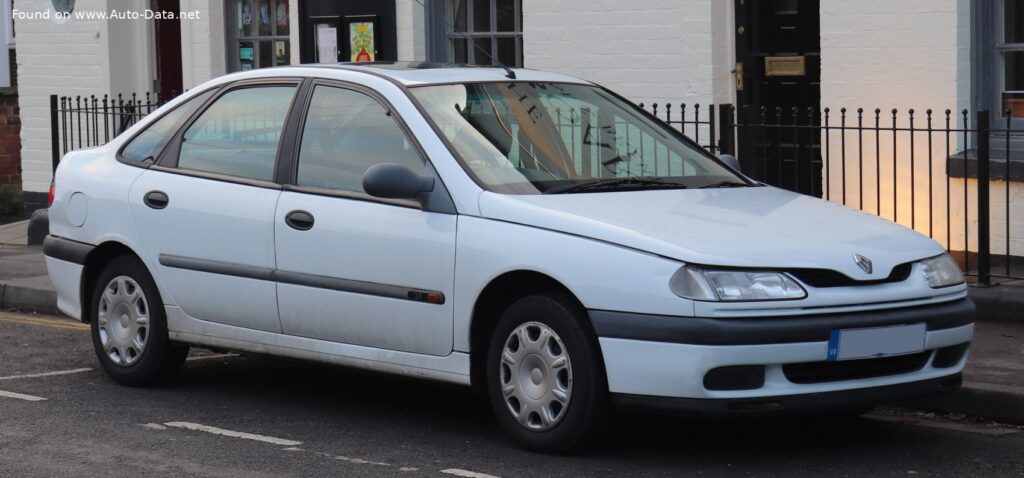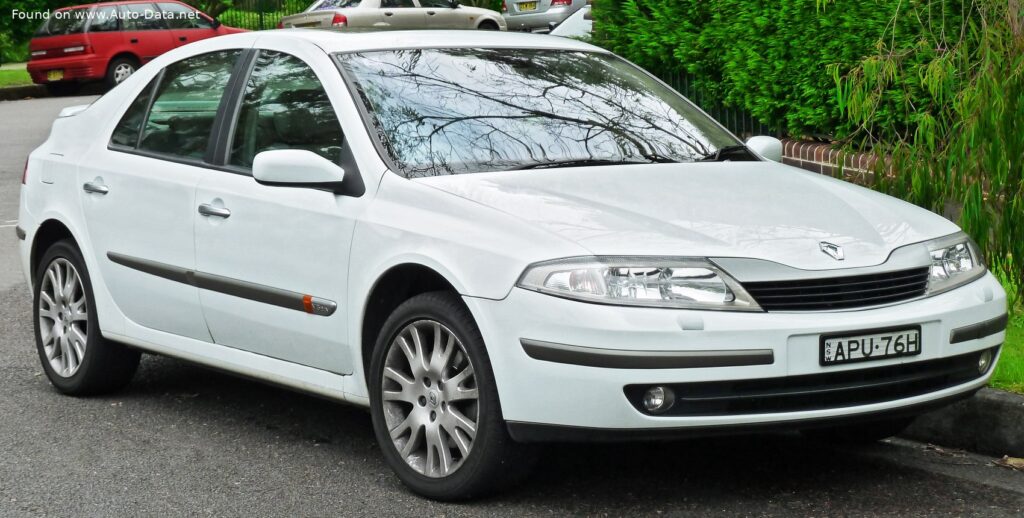
The Renault Laguna II, specifically the 1.9 dCi (100 Hp) variant, represents a significant chapter in the European D-segment (mid-size family car) market during its production run from 2002 to 2007. As a successor to the first-generation Laguna, the Laguna II aimed to push boundaries in terms of design, safety, and technological sophistication for a mainstream family vehicle. While never officially sold in the United States, this French-engineered hatchback played a crucial role in Renault’s strategy to compete with established rivals across Europe, offering a compelling blend of practicality, comfort, and efficiency, particularly with its popular diesel powertrains. The 1.9 dCi (100 Hp) model, a key offering in the diesel lineup, was tailored to meet the demands of European drivers who prioritized fuel economy and robust low-end torque for both urban commutes and long-distance travel. Its design ethos and technical specifications reflect the prevailing automotive trends of the early 21st century in its primary market, emphasizing a balance of everyday usability and modern amenities.
Engine & Performance: The Renault Laguna II 1.9 dCi (100 Hp)
At the heart of the Renault Laguna II 1.9 dCi (100 Hp) lies a robust and efficient 1.9-liter (1870 cm³ or 114.11 cu. in.) F9Q inline-four diesel engine, positioned transversely at the front of the vehicle. This powertrain architecture is characteristic of many front-wheel-drive vehicles, optimizing space and weight distribution. Equipped with a common rail direct fuel injection system, a turbocharger, and an intercooler, the engine was engineered to deliver a balance of power, torque, and notable fuel efficiency. It generates a peak power output of 100 HP at 4000 rpm, which, while not designed for outright performance, provides ample thrust for everyday driving. More critically for a diesel, it produces a substantial 147.51 lb.-ft. (200 Nm) of torque, available at a remarkably low 1500 rpm. This characteristic low-end torque is a hallmark of modern diesel engines, contributing to strong acceleration from a standstill and reduced need for frequent gear changes, enhancing drivability in varying conditions, from city traffic to winding rural roads.
The powertrain is paired with a five-speed manual transmission, directing power to the front wheels. This tried-and-true setup allows the Laguna II 1.9 dCi (100 Hp) to achieve a 0 to 60 mph acceleration time of 12.4 seconds, with a maximum speed of 114.95 mph. These figures underscore its role as a practical family car rather than a performance-oriented machine, focusing instead on reliable and economical transport. Fuel economy was a significant selling point, with the vehicle achieving an impressive combined rating of 43.6 US mpg (5.4 l/100 km). In urban driving, it delivered 32.7 US mpg (7.2 l/100 km), while on the extra-urban cycle, it could reach an outstanding 53.5 US mpg (4.4 l/100 km). This efficiency, coupled with a generous 18.49 US gallon (70 l) fuel tank, provided excellent cruising range, making it a favorite for long-distance European travel and a cost-effective option for daily commutes. The engine’s compression ratio of 19:1 and OHC valvetrain further contributed to its efficiency and durability, aligning with the expectations for a modern diesel powerplant of its era.
Design & Features
The Renault Laguna II, in its 1.9 dCi (100 Hp) hatchback configuration, presented a distinctive and modern aesthetic for its time. With its sleek, aerodynamic profile and five-door, five-seat layout, it was designed with practicality and passenger comfort at the forefront. Measuring 180.16 inches in length, 69.76 inches in width, and 56.26 inches in height, with a wheelbase of 107.87 inches, the Laguna II offered a spacious cabin for its segment. The design emphasized smooth lines and a cohesive appearance, moving away from the more angular styling of its predecessor and embracing a softer, more contemporary look. The five-door hatchback body type was particularly popular in Europe, offering a versatile cargo area. The trunk (boot) space ranged from a substantial 15.19 cu. ft. (430 l) with all seats in place, expanding to an impressive 46.97 cu. ft. (1330 l) when the rear seats were folded, providing ample room for luggage, groceries, or larger items, making it ideal for family trips or hauling duties.
Beyond its physical dimensions, the Laguna II was notable for its focus on advanced features and safety, aiming to set new standards in its class. It was one of the first cars to achieve a full five-star rating in Euro NCAP crash tests, a significant achievement that underscored Renault’s commitment to passenger protection and market leadership in safety. While specific luxury features might vary by trim, standard safety provisions included an Anti-lock Braking System (ABS), which was becoming increasingly common but still a highlight for its effectiveness in preventing wheel lock-up during emergency braking. The vehicle featured a conventional steering rack and pinion system, enhanced by hydraulic power steering, providing a comfortable and responsive driving experience that felt connected to the road. The suspension system comprised a spring strut design at the front and coil springs at the rear, engineered to provide a comfortable ride quality, absorbing road imperfections effectively while maintaining stable handling characteristics. Braking performance was handled by ventilated discs at the front and solid discs at the rear, ensuring confident stopping power. The car rode on 195/65 R15 H tires mounted on 15-inch wheel rims, a practical choice offering a good balance of grip, comfort, and cost-effectiveness for replacement. With a curb weight of 2932.15 lbs. (1330 kg) and a maximum permissible weight of 4144.69 lbs. (1880 kg), the Laguna II 1.9 dCi (100 Hp) was a substantial yet manageable vehicle, designed to cater to the diverse needs of European families seeking a reliable, safe, and economical mode of transport.
Technical Specifications: Renault Laguna II 1.9 dCi (100 Hp)
| Brand | Renault |
| Model | Laguna |
| Generation | Laguna II |
| Type (Engine) | 1.9 dCi (100 Hp) |
| Start of production | 2002 year |
| End of production | 2007 year |
| Powertrain Architecture | Internal Combustion engine |
| Body type | Hatchback |
| Seats | 5 |
| Doors | 5 |
| Fuel consumption (economy) – urban | 7.2 l/100 km (32.7 US mpg) |
| Fuel consumption (economy) – extra urban | 4.4 l/100 km (53.5 US mpg) |
| Fuel consumption (economy) – combined | 5.4 l/100 km (43.6 US mpg) |
| Fuel Type | Diesel |
| Acceleration 0 – 60 mph | 12.4 sec |
| Maximum speed | 185 km/h (114.95 mph) |
| Weight-to-power ratio | 13.3 kg/Hp, 75.2 Hp/tonne |
| Weight-to-torque ratio | 6.7 kg/Nm, 150.4 Nm/tonne |