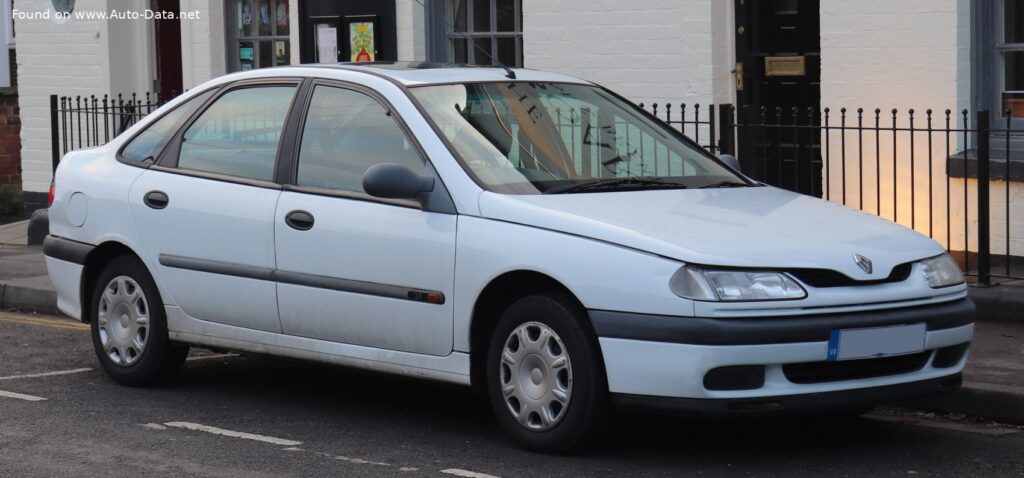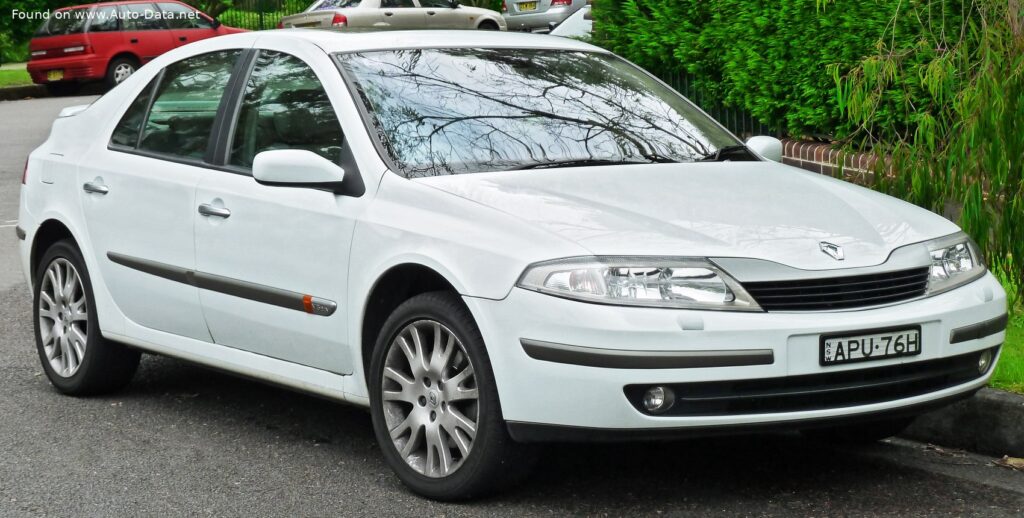
The Renault Laguna II, a distinctive entry in the European D-segment for mid-size family cars, represented a significant evolution for the French automaker, building upon the foundations laid by its predecessor. Launched in 2001, the second generation of the Laguna aimed to blend sophisticated design with advanced safety features and a refined driving experience. The particular variant under scrutiny, the Renault Laguna II 2.0 i 16V GT (204 Hp), produced between 2005 and 2007, stood out as a performance-oriented model within the lineup, offering a compelling blend of power and practicality in a 5-door hatchback body style. While never officially sold in the United States, the Laguna II was a prominent player in its primary European markets, where it competed against established rivals with its focus on comfort, technology, and, in this GT guise, engaging performance. This model was a testament to Renault’s ambition to infuse a sporty character into its mainstream offerings, providing an alternative for drivers seeking more dynamic capabilities without sacrificing everyday usability.
Engine and Performance: The Dynamic Heart of the Renault Laguna II 2.0 i 16V GT (204 Hp)
At the core of the Laguna II 2.0 i 16V GT’s spirited performance lies its robust F4R engine, a 2.0-liter (1998 cm³ or 121.93 cu. in.) inline-four powerplant. This 16-valve unit, configured with a Double Overhead Camshaft (DOHC) valvetrain, was engineered for efficiency and power, utilizing a multi-port manifold injection system. What truly set this engine apart in the Laguna lineup was its advanced forced induction system, comprising a turbocharger complemented by an intercooler. This sophisticated setup enabled the engine to produce a remarkable 204 horsepower at 5000 revolutions per minute, yielding an impressive power-per-liter figure of 102.1 Hp/l. Torque delivery was equally compelling, peaking at 221.27 lb.-ft. (300 Nm) at a relatively low 3000 rpm, ensuring strong acceleration and flexible in-gear performance.
The marriage of this potent engine with a precise 6-speed manual transmission provided drivers with direct control over the power delivery. The drivetrain architecture was a conventional front-wheel-drive setup, with the internal combustion engine positioned transversely at the front. This configuration, combined with the vehicle’s modest kerb weight of 2910.1 lbs. (1320 kg), resulted in an impressive weight-to-power ratio of 6.5 kg/Hp (154.5 Hp/tonne) and a weight-to-torque ratio of 4.4 kg/Nm (227.3 Nm/tonne). These figures translated into genuinely brisk performance for a family hatchback of its time. The Laguna II GT could sprint from 0 to 60 mph in a swift 6.8 seconds, with the 0-100 km/h acceleration rated at 7.2 seconds. Its top speed was an autobahn-friendly 146.02 mph (235 km/h), firmly placing it among the more performance-oriented options in its segment.
Despite its performance credentials, Renault also paid attention to fuel efficiency, especially for a turbocharged gasoline engine from the mid-2000s. The official fuel consumption figures indicated an urban economy of 20.1 US mpg (11.7 l/100 km), while extra-urban driving could yield up to 35.6 US mpg (6.6 l/100 km). With a generous 18.49 US gallon (70 l) fuel tank, the Laguna II GT offered a practical cruising range, making it suitable for both daily commutes and longer journeys across Europe. The engine’s internals, including a cylinder bore of 3.26 inches (82.7 mm) and a piston stroke of 3.66 inches (93 mm), along with a compression ratio of 9:1, were optimized for the turbocharged application, ensuring durability and consistent performance.
Design and Features: Practicality Meets Sportiness
The Renault Laguna II 2.0 i 16V GT (204 Hp) adopted the distinctive 5-door hatchback body style, a popular choice in European markets for its blend of sedan-like comfort and wagon-like versatility. The design of the Laguna II, while initially polarizing for some, was characterized by its smooth, organic lines and a clear departure from the more angular designs of the past. The GT variant likely featured subtle aesthetic enhancements to underscore its performance focus, such as unique alloy wheels, possibly a slightly more aggressive front fascia, and chrome accents.
Measuring 180.16 inches (4576 mm) in length, 69.76 inches (1772 mm) in width, and 56.26 inches (1429 mm) in height, the Laguna II offered a substantial footprint for its class. The generous wheelbase of 107.87 inches (2740 mm) was instrumental in providing a comfortable ride and ample interior space for five occupants. The front track of 60.04 inches (1525 mm) and a rear track of 58.27 inches (1480 mm) contributed to the vehicle’s stable road manners. Practicality was a key selling point, with a minimum trunk (boot) space of 15.19 cu. ft. (430 l) that could be expanded to a substantial 46.97 cu. ft. (1330 l) with the rear seats folded, catering to the diverse needs of a family car.
On the dynamic front, the Laguna II GT was equipped with a robust suspension system featuring spring struts at the front and coil springs at the rear, designed to balance ride comfort with agile handling. Braking power was provided by ventilated discs at the front and solid discs at the rear, complemented by an Anti-lock Braking System (ABS) for enhanced safety during emergency stops. The steering system utilized a precise rack and pinion setup with hydraulic power steering, offering tactile feedback to the driver. The vehicle rode on 17-inch wheel rims fitted with 225/45 R17 tires, providing excellent grip and contributing to its sporty demeanor. While specific interior features for the GT trim are not detailed, models of this era and segment typically offered a range of amenities including automatic climate control, power windows, and a comprehensive audio system, with the GT likely featuring sportier seating and trim accents to enhance the driving experience.
Technical Specifications: Renault Laguna II 2.0 i 16V GT (204 Hp)
| Brand | Renault |
| Model | Laguna |
| Generation | Laguna II |
| Type (Engine) | 2.0 i 16V GT (204 Hp) |
| Start of production | 2005 year |
| End of production | 2007 year |
| Powertrain Architecture | Internal Combustion engine |
| Body type | Hatchback |
| Seats | 5 |
| Doors | 5 |
| Fuel consumption (economy) – urban | 11.7 l/100 km (20.1 US mpg) |
| Fuel consumption (economy) – extra urban | 6.6 l/100 km (35.6 US mpg) |
| Fuel Type | Petrol (Gasoline) |
| Acceleration 0 – 60 mph | 6.8 sec |
| Maximum speed | 235 km/h (146.02 mph) |
| Weight-to-power ratio | 6.5 kg/Hp (154.5 Hp/tonne) |
| Weight-to-torque ratio | 4.4 kg/Nm (227.3 Nm/tonne) |
| Power | 204 Hp @ 5000 rpm |
| Power per litre | 102.1 Hp/l |
| Torque | 300 Nm @ 3000 rpm (221.27 lb.-ft.) |
| Engine layout | Front, Transverse |
| Engine Model/Code | F4R |
| Engine displacement | 1998 cm³ (121.93 cu. in.) |
| Number of cylinders | 4 |
| Engine configuration | Inline |
| Cylinder Bore | 82.7 mm (3.26 in.) |
| Piston Stroke | 93 mm (3.66 in.) |
| Compression ratio | 9:1 |
| Number of valves per cylinder | 4 |
| Fuel injection system | Multi-port manifold injection |
| Engine aspiration | Turbocharger, Intercooler |
| Valvetrain | DOHC |
| Engine oil capacity | 5.4 l (5.71 US qt) |
| Coolant | 6.5 l (6.87 US qt) |
| Kerb Weight | 1320 kg (2910.1 lbs.) |
| Max. weight | 1950 kg (4299.01 lbs.) |
| Max load | 630 kg (1388.91 lbs.) |
| Trunk (boot) space – minimum | 430 l (15.19 cu. ft.) |
| Trunk (boot) space – maximum | 1330 l (46.97 cu. ft.) |
| Fuel tank capacity | 70 l (18.49 US gal) |
| Length | 4576 mm (180.16 in.) |
| Width | 1772 mm (69.76 in.) |
| Height | 1429 mm (56.26 in.) |
| Wheelbase | 2740 mm (107.87 in.) |
| Front track | 1525 mm (60.04 in.) |
| Rear (Back) track | 1480 mm (58.27 in.) |
| Drivetrain Architecture | The Internal combustion engine (ICE) drives the front wheels of the vehicle. |
| Drive wheel | Front wheel drive |
| Number of gears and type of gearbox | 6 gears, manual transmission |
| Front suspension | Spring Strut |
| Rear suspension | Coil spring |
| Front brakes | Ventilated discs |
| Rear brakes | Disc |
| Assisting systems | ABS (Anti-lock braking system) |
| Steering type | Steering rack and pinion |
| Power steering | Hydraulic Steering |
| Tires size | 225/45 R17 |
| Wheel rims size | 17 |