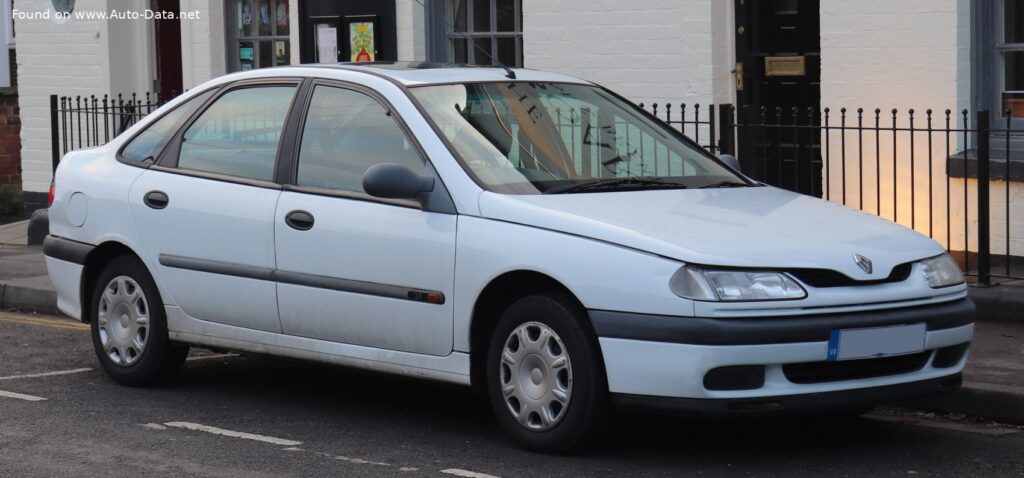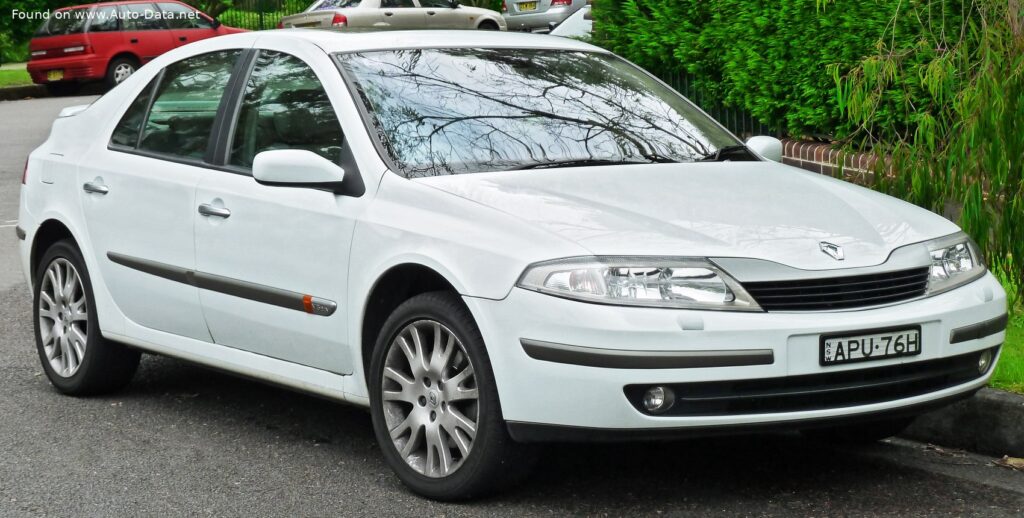
The Renault Laguna II 2.0 IDE 16V (140 Hp) represents a significant chapter in the history of Renault’s mid-size family car offerings, particularly within the competitive European market. Launched in 2002 as part of the second generation of the Laguna series, this specific variant, powered by an advanced 2.0-liter gasoline direct injection engine, aimed to blend performance, efficiency, and comfort in a practical hatchback package. The Laguna II was a pivotal model for Renault, introducing a new design language and a host of technological advancements for its segment, firmly positioning itself as a strong contender against rivals across the continent until its production concluded in 2005.
Engineering and Performance of the Renault Laguna II 2.0 IDE 16V (140 Hp)
At the heart of the Renault Laguna II 2.0 IDE 16V (140 Hp) lies its sophisticated F4R engine, a 1998 cm3 (121.93 cu. in.) inline four-cylinder unit featuring a DOHC (Double Overhead Camshaft) valvetrain with four valves per cylinder. The “IDE” designation, standing for “Injection Directe Essence” (Gasoline Direct Injection), was a notable technological highlight for its time, allowing for more precise fuel delivery directly into the combustion chamber. This system contributed to both enhanced fuel economy and improved power output compared to conventional port-injected engines.
The naturally aspirated engine generates a robust 140 horsepower at 5500 rpm, translating to a respectable power-per-liter output of 70.1 Hp/l. Torque figures are equally impressive for a non-turbocharged engine of this displacement, peaking at 200 Nm (147.51 lb.-ft.) at 4250 rpm. These figures underscore the engine’s capability to deliver a balanced driving experience, suitable for both urban commuting and longer highway journeys typical of European driving conditions. The engine’s layout is front, transverse, driving the front wheels through a 5-speed manual transmission, a common and reliable configuration for vehicles in this class.
Performance metrics for the Laguna II 2.0 IDE 16V (140 Hp) illustrate its dynamic capabilities. The car accelerates from 0 to 60 mph in an estimated 9.3 seconds, with a 0-100 km/h sprint completed in 9.8 seconds. Its maximum speed reaches 210 km/h (130.49 mph), allowing for comfortable cruising at higher speeds on autobahns and motorways. The weight-to-power ratio stands at 9.3 kg/Hp (107.7 Hp/tonne), while the weight-to-torque ratio is 6.5 kg/Nm (153.8 Nm/tonne), indicating an efficient use of its power and torque in relation to its curb weight of 1300 kg (2866.01 lbs.).
Fuel efficiency was a key selling point for the IDE engine. The Laguna II 2.0 IDE 16V (140 Hp) achieved an urban fuel consumption of 10.4 l/100 km (22.6 US mpg), while extra-urban consumption was significantly better at 6.1 l/100 km (38.6 US mpg). These figures, while measured under European standards, demonstrate the efficiency benefits of direct injection technology, particularly in varied driving conditions. The vehicle operates on petrol (gasoline) and is equipped with a substantial 70-liter (18.49 US gal) fuel tank, providing an ample cruising range.
Design and Features
The Renault Laguna II, available as a five-door hatchback, marked a departure from the more conservative styling of its predecessor. Its design was characterized by smoother lines, a more aerodynamic profile, and a contemporary aesthetic that aimed to project an image of sophistication and modernity. The hatchback body style, a practical choice for European families, offered a versatile interior with seating for five occupants and a generous trunk capacity.
From a utility standpoint, the Laguna II provided significant cargo flexibility. The trunk (boot) space ranged from a minimum of 430 liters (15.19 cu. ft.) with all seats in place, expanding dramatically to 1330 liters (46.97 cu. ft.) when the rear seats were folded down. This adaptability made it a highly practical vehicle for a variety of uses, from daily commuting to family vacations.
Dimensions of the vehicle were optimized for its segment, with a length of 4575 mm (180.12 in.), a width of 1772 mm (69.76 in.), and a height of 1429 mm (56.26 in.). The wheelbase of 2740 mm (107.87 in.) contributed to a comfortable ride and stable handling. The front track measured 1525 mm (60.04 in.), with a rear track of 1480 mm (58.27 in.), ensuring a confident stance on the road.
In terms of safety and driving dynamics, the Laguna II 2.0 IDE 16V (140 Hp) was equipped with a robust chassis and advanced systems for its era. The drivetrain architecture featured the internal combustion engine driving the front wheels, a standard setup for efficiency and packaging. Suspension components included a spring strut system at the front and coil springs at the rear, designed to provide a compliant ride quality while maintaining control. Braking was handled by ventilated discs at the front and solid discs at the rear, augmented by an Anti-lock Braking System (ABS), a crucial safety feature that prevents wheel lock-up during hard braking, enhancing vehicle control. Steering was managed by a hydraulic rack and pinion system, offering tactile feedback to the driver. The vehicle rode on 205/55 R16 tires mounted on 16-inch wheel rims, providing a good balance of grip and ride comfort.
The Laguna II was also known for pioneering keyless entry and start systems in the mainstream market, although specific details for this variant are not provided in the technical data. Overall, the Renault Laguna II 2.0 IDE 16V (140 Hp) was engineered to deliver a comprehensive package of performance, practicality, and safety, making it a compelling choice for consumers in its European target market during its production years.
Technical Specifications: Renault Laguna II 2.0 IDE 16V (140 Hp)
| Brand | Renault |
| Model | Laguna |
| Generation | Laguna II |
| Type (Engine) | 2.0 IDE 16V (140 Hp) |
| Start of production | 2002 year |
| End of production | 2005 year |
| Powertrain Architecture | Internal Combustion engine |
| Body type | Hatchback |
| Seats | 5 |
| Doors | 5 |
| Fuel consumption (economy) – urban | 10.4 l/100 km (22.6 US mpg) |
| Fuel consumption (economy) – extra urban | 6.1 l/100 km (38.6 US mpg) |
| Fuel Type | Petrol (Gasoline) |
| Acceleration 0 – 60 mph | 9.3 sec |
| Acceleration 0 – 100 km/h | 9.8 sec |
| Maximum speed | 210 km/h (130.49 mph) |
| Weight-to-power ratio | 9.3 kg/Hp, 107.7 Hp/tonne |
| Weight-to-torque ratio | 6.5 kg/Nm, 153.8 Nm/tonne |
| Power | 140 Hp @ 5500 rpm |
| Power per litre | 70.1 Hp/l |
| Torque | 200 Nm @ 4250 rpm (147.51 lb.-ft. @ 4250 rpm) |
| Engine layout | Front, Transverse |
| Engine Model/Code | F4R |
| Engine displacement | 1998 cm3 (121.93 cu. in.) |
| Number of cylinders | 4 |
| Engine configuration | Inline |
| Cylinder Bore | 82.7 mm (3.26 in.) |
| Piston Stroke | 93 mm (3.66 in.) |
| Compression ratio | 10:1 |
| Number of valves per cylinder | 4 |
| Fuel injection system | Direct injection |
| Engine aspiration | Naturally aspirated engine |
| Valvetrain | DOHC |
| Engine oil capacity | 5.4 l (5.71 US qt) |
| Engine oil specification | Not specified |
| Coolant | 6.8 l (7.19 US qt) |
| Kerb Weight | 1300 kg (2866.01 lbs.) |
| Max. weight | 1885 kg (4155.71 lbs.) |
| Max load | 585 kg (1289.7 lbs.) |
| Trunk (boot) space – minimum | 430 l (15.19 cu. ft.) |
| Trunk (boot) space – maximum | 1330 l (46.97 cu. ft.) |
| Fuel tank capacity | 70 l (18.49 US gal) |
| Length | 4575 mm (180.12 in.) |
| Width | 1772 mm (69.76 in.) |
| Height | 1429 mm (56.26 in.) |
| Wheelbase | 2740 mm (107.87 in.) |
| Front track | 1525 mm (60.04 in.) |
| Rear (Back) track | 1480 mm (58.27 in.) |
| Drivetrain Architecture | The Internal combustion engine (ICE) drives the front wheels of the vehicle. |
| Drive wheel | Front wheel drive |
| Number of gears and type of gearbox | 5 gears, manual transmission |
| Front suspension | Spring Strut |
| Rear suspension | Coil spring |
| Front brakes | Ventilated discs |
| Rear brakes | Disc |
| Assisting systems | ABS (Anti-lock braking system) |
| Steering type | Steering rack and pinion |
| Power steering | Hydraulic Steering |
| Tires size | 205/55 R16 |
| Wheel rims size | 16 |