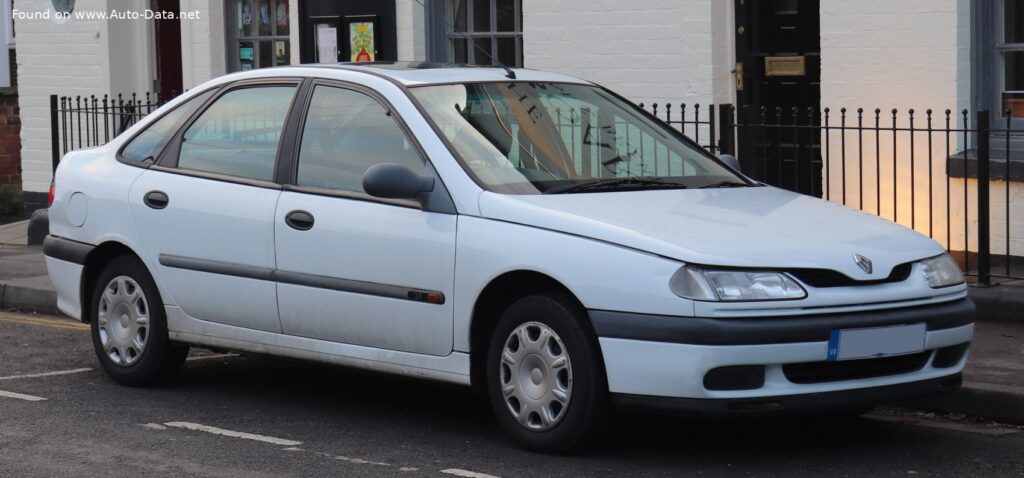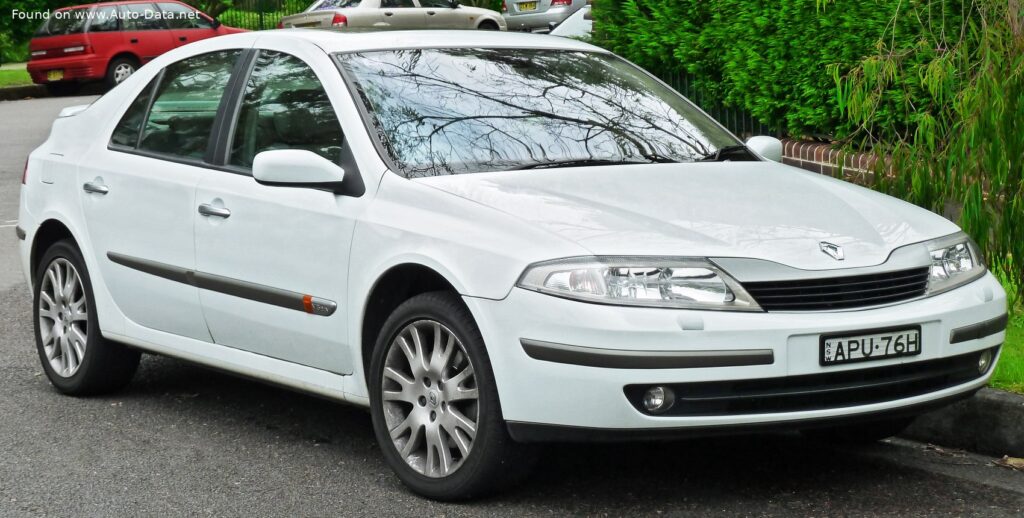
The Renault Laguna II 2.0i 16V (136 Hp) represents a significant chapter in the European D-segment, offering a compelling blend of practicality, comfort, and advanced features for its era. Launched in 2002 as part of the second generation of the Laguna series, this particular variant, with its 2.0-liter 16-valve engine, was a popular choice for families and business users across Europe. Unlike many of its counterparts from other continents, the Laguna II was not officially sold in the United States, cementing its role primarily within the European and select Asian markets. It built upon the foundation of its predecessor, aiming to elevate standards in safety, refinement, and technological integration, becoming one of the first cars to achieve a 5-star Euro NCAP safety rating.
Powertrain and Dynamic Capabilities of the Renault Laguna II 2.0i 16V (136 Hp)
At the heart of the Renault Laguna II 2.0i 16V (136 Hp) lies the robust F4R engine, a naturally aspirated 2.0-liter (121.93 cubic inches) inline-four cylinder unit, transversely mounted at the front of the vehicle. This engine, known for its balance of performance and reliability, features a DOHC (Double Overhead Camshaft) valvetrain with four valves per cylinder, optimizing airflow for efficient combustion. It delivers a respectable 136 horsepower at 5500 revolutions per minute (rpm), making it a capable performer for everyday driving and longer journeys. The power per liter stands at 68.1 horsepower per liter, indicating a well-tuned engine for its displacement.
Equally important to its performance is the torque output. The engine produces 191 Nm, which translates to 140.87 lb.-ft. of torque, peaking at 3750 rpm. This broad torque band ensures responsive acceleration and flexibility in various driving conditions, reducing the need for frequent gear changes. Power is channeled to the front wheels via a precise 5-speed manual transmission, offering an engaging driving experience. This powertrain architecture, driving the front wheels, is characteristic of many European family cars, prioritizing traction and packaging efficiency.
From a standing start, the Laguna II 2.0i 16V can accelerate from 0 to 60 mph in an estimated 9.4 seconds, and reach 0 to 62 mph (100 km/h) in 9.9 seconds. These figures place it competitively within its segment for its time, offering ample performance for merging onto highways or overtaking. The maximum speed achieved by this variant is 127.38 mph (205 km/h). The vehicle’s weight-to-power ratio is 9.8 kg/Hp (102.3 Hp/tonne), and its weight-to-torque ratio is 7 kg/Nm (143.6 Nm/tonne), indicating a well-balanced power-to-weight characteristic for its intended purpose.
Fuel efficiency, a critical consideration for European consumers, was a strong point for the Laguna II. It boasts an urban fuel consumption of 10.7 liters per 100 km (22 US mpg) and an impressive extra-urban figure of 6.3 liters per 100 km (37.3 US mpg). With a generous 70-liter (18.49 US gallon) fuel tank capacity, the Laguna II offered a substantial range between fill-ups, making it suitable for long-distance travel across the continent.
Design Philosophy and Practicality
The Renault Laguna II generation was a departure from its predecessor’s more conventional styling, embracing a smoother, more aerodynamic silhouette that characterized many early 2000s European designs. This specific model is a 5-door hatchback, a highly practical body style popular in Europe for its versatility. The design language emphasized flowing lines and a cohesive aesthetic that aimed for a premium feel within the mainstream segment.
Exterior and Dimensions
Measuring 180.16 inches (4576 mm) in length, 69.76 inches (1772 mm) in width, and 56.26 inches (1429 mm) in height, the Laguna II occupied a comfortable footprint on European roads. Its wheelbase of 107.87 inches (2740 mm) contributed to a stable ride and a spacious cabin. The front track width was 60.04 inches (1525 mm), while the rear track measured 58.27 inches (1480 mm), ensuring good road holding and handling characteristics. The standard tire size for this variant was 205/55 R16, mounted on 16-inch wheel rims, providing a good balance between ride comfort and grip.
Interior and Features
Inside, the Laguna II was designed to comfortably accommodate five occupants across its two rows of seating. Renault placed a strong emphasis on interior comfort and ergonomics. The hatchback body style translated into significant cargo flexibility. The trunk (boot) space offered a minimum of 15.19 cubic feet (430 liters), which could be expanded dramatically to a maximum of 46.97 cubic feet (1330 liters) by folding down the rear seats, making it highly adaptable for carrying luggage or larger items.
Chassis and Safety
The vehicle’s chassis featured a front suspension utilizing a Spring Strut design, a common and effective setup for front-wheel-drive vehicles, providing a good blend of handling and ride comfort. The rear suspension employed coil springs, further contributing to a composed ride. Braking performance was managed by ventilated discs at the front and disc brakes at the rear, complemented by an Anti-lock Braking System (ABS) as a standard assisting system. This was a crucial safety feature for the era, preventing wheel lock-up under hard braking and maintaining steering control. Steering was managed by a rack and pinion system with hydraulic power steering, offering direct feedback and ease of maneuverability.
The kerb weight of the Laguna II 2.0i 16V (136 Hp) was 2932.15 lbs (1330 kg), with a maximum permissible weight of 4188.78 lbs (1900 kg), allowing for a substantial maximum load of 1256.63 lbs (570 kg) including passengers and cargo. Overall, the Renault Laguna II 2.0i 16V (136 Hp) was a well-rounded and technologically advanced offering for its time, embodying Renault’s commitment to safety, comfort, and practical design within the competitive European market.
Technical Specifications
| Brand | Renault |
| Model | Laguna |
| Generation | Laguna II |
| Type (Engine) | 2.0i 16V (136 Hp) |
| Start of production | 2002 year |
| End of production | 2007 year |
| Powertrain Architecture | Internal Combustion engine |
| Body type | Hatchback |
| Seats | 5 |
| Doors | 5 |
| Fuel consumption (economy) – urban | 10.7 l/100 km (22 US mpg, 26.4 UK mpg) |
| Fuel consumption (economy) – extra urban | 6.3 l/100 km (37.3 US mpg, 44.8 UK mpg) |
| Fuel Type | Petrol (Gasoline) |
| Acceleration 0 – 100 km/h | 9.9 sec |
| Acceleration 0 – 62 mph | 9.9 sec |
| Acceleration 0 – 60 mph (Calculated by Auto-Data.net) | 9.4 sec |
| Maximum speed | 205 km/h (127.38 mph) |
| Weight-to-power ratio | 9.8 kg/Hp (102.3 Hp/tonne) |
| Weight-to-torque ratio | 7 kg/Nm (143.6 Nm/tonne) |
| Power | 136 Hp @ 5500 rpm. |
| Power per litre | 68.1 Hp/l |
| Torque | 191 Nm @ 3750 rpm. (140.87 lb.-ft. @ 3750 rpm.) |
| Engine layout | Front, Transverse |
| Engine Model/Code | F4R |
| Engine displacement | 1998 cm3 (121.93 cu. in.) |
| Number of cylinders | 4 |
| Engine configuration | Inline |
| Cylinder Bore | 82.7 mm (3.26 in.) |
| Piston Stroke | 93 mm (3.66 in.) |
| Compression ratio | 9.8:1 |
| Number of valves per cylinder | 4 |
| Fuel injection system | Multi-port manifold injection |
| Engine aspiration | Naturally aspirated engine |
| Valvetrain | DOHC |
| Engine oil capacity | 5.4 l (5.71 US qt | 4.75 UK qt) |
| Coolant | 6.5 l (6.87 US qt | 5.72 UK qt) |
| Kerb Weight | 1330 kg (2932.15 lbs.) |
| Max. weight | 1900 kg (4188.78 lbs.) |
| Max load | 570 kg (1256.63 lbs.) |
| Trunk (boot) space – minimum | 430 l (15.19 cu. ft.) |
| Trunk (boot) space – maximum | 1330 l (46.97 cu. ft.) |
| Fuel tank capacity | 70 l (18.49 US gal | 15.4 UK gal) |
| Length | 4576 mm (180.16 in.) |
| Width | 1772 mm (69.76 in.) |
| Height | 1429 mm (56.26 in.) |
| Wheelbase | 2740 mm (107.87 in.) |
| Front track | 1525 mm (60.04 in.) |
| Rear (Back) track | 1480 mm (58.27 in.) |
| Drivetrain Architecture | The Internal combustion engine (ICE) drives the front wheels of the vehicle. |
| Drive wheel | Front wheel drive |
| Number of gears and type of gearbox | 5 gears, manual transmission |
| Front suspension | Spring Strut |
| Rear suspension | Coil spring |
| Front brakes | Ventilated discs |
| Rear brakes | Disc |
| Assisting systems | ABS (Anti-lock braking system) |
| Steering type | Steering rack and pinion |
| Power steering | Hydraulic Steering |
| Tires size | 205/55 R16 |
| Wheel rims size | 16 |