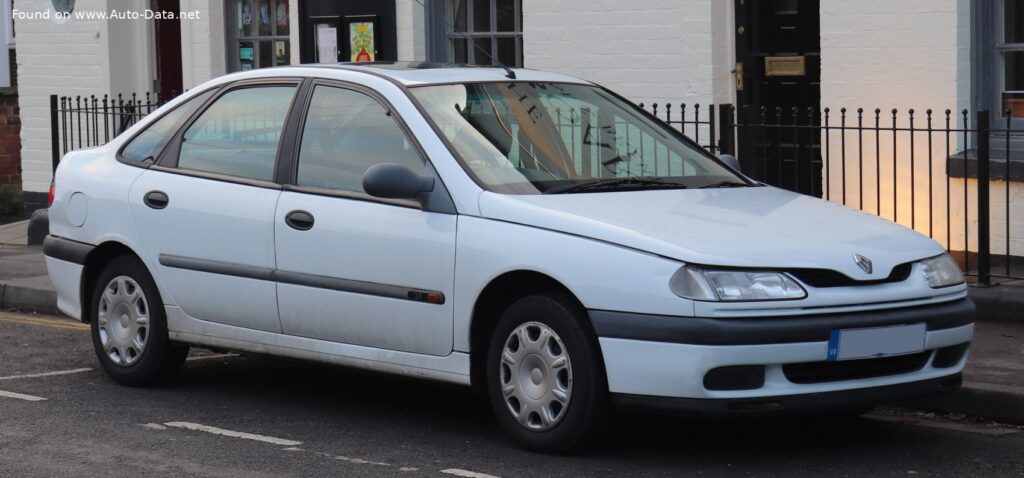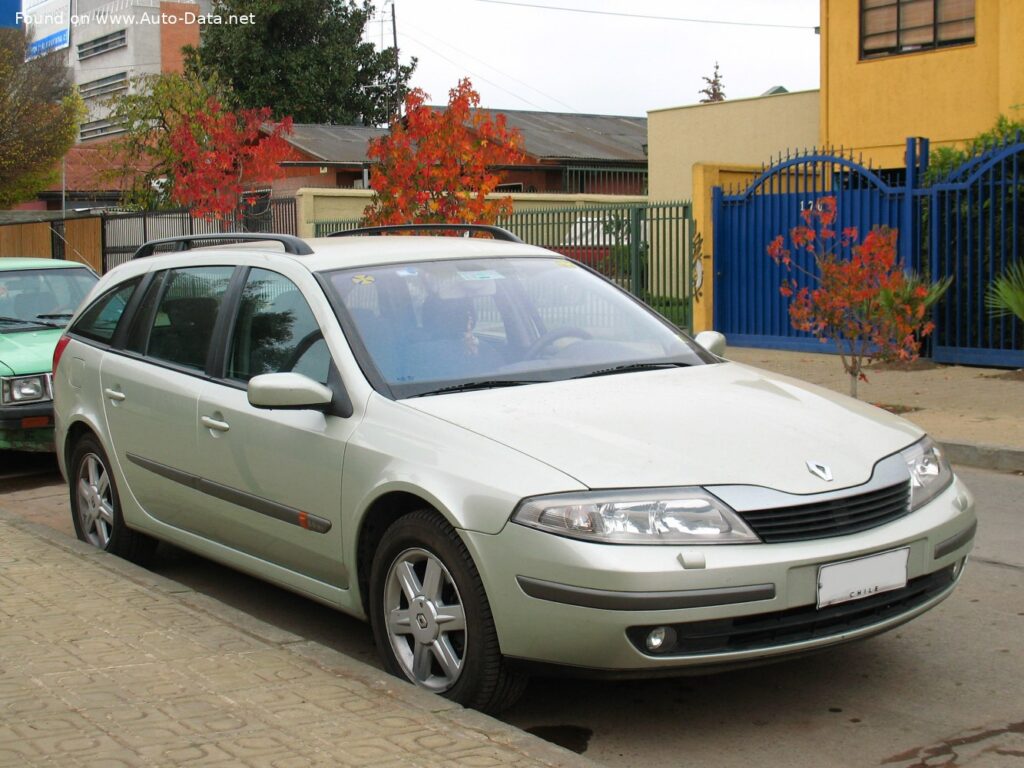
The Renault Laguna II Grandtour 1.6 i 16V, produced between 2001 and 2005, represents Renault’s offering in the mid-size family car segment, specifically the station wagon (estate) body style. As a successor to the original Laguna, the II generation aimed to improve upon its predecessor’s shortcomings in terms of build quality and refinement. While not officially sold in the United States, the Laguna was a popular choice in Europe, competing with vehicles like the Ford Mondeo, Volkswagen Passat, and Peugeot 406. The Grandtour designation signifies the estate version, offering increased cargo capacity and practicality compared to the standard hatchback.
Renault Laguna II Grandtour: An Overview
The Laguna II was a significant model for Renault, representing a step forward in design and engineering. It was available with a range of engines, including petrol and diesel options, catering to diverse customer preferences. The 1.6-liter 16V engine, producing 107 horsepower, was positioned as an entry-level option, prioritizing fuel economy and affordability. The Grandtour body style, with its extended roofline and larger rear opening, was particularly popular with families and those requiring substantial load-carrying capabilities. The Laguna II also introduced several new technologies for its time, focusing on safety and comfort.
Engine & Performance
The Renault Laguna II Grandtour 1.6 i 16V is powered by a 1.6-liter inline four-cylinder petrol engine, designated the K4M. This naturally aspirated engine delivers 107 horsepower at 5750 rpm and 148 Nm (109.16 lb-ft) of torque at 3750 rpm. The engine features a multi-port fuel injection system and a double overhead camshaft (DOHC) valvetrain, contributing to its relatively efficient operation. Performance figures include a 0-100 km/h (0-62 mph) acceleration time of 11.7 seconds and a maximum speed of 188 km/h (116.82 mph). While not a performance-oriented model, the 1.6-liter engine provides adequate power for everyday driving and cruising. The engine’s power-to-weight ratio is 77.5 horsepower per tonne, and the torque-to-weight ratio is 107.2 Nm per tonne. The engine has a displacement of 1598 cm³ (97.52 cu. in.) with a bore of 79.5 mm (3.13 in.) and a stroke of 80.5 mm (3.17 in.).
Design & Features
The Laguna II Grandtour boasts a contemporary station wagon design for its era, characterized by flowing lines and a relatively spacious interior. The five-door body style provides easy access for passengers and cargo. Inside, the vehicle offers seating for five occupants and a generous trunk space ranging from 475 liters (16.77 cu. ft.) with the rear seats up to 1500 liters (52.97 cu. ft.) with the rear seats folded down. Key features included hydraulic power steering, ventilated front disc brakes, and disc brakes on the rear axle. Safety features, important for the time, included an Anti-lock Braking System (ABS). The vehicle’s dimensions are 4695 mm (184.84 in.) in length, 1772 mm (69.76 in.) in width, and 1443 mm (56.81 in.) in height, with a wheelbase of 2740 mm (107.87 in.). The car rides on 205/55 R16 tires mounted on 16-inch wheel rims.
Technical Specifications
| Brand | Renault |
| Model | Laguna |
| Generation | Laguna II Grandtour |
| Type (Engine) | 1.6 i 16V (107 Hp) |
| Start of production | 2001 |
| End of production | 2005 |
| Powertrain Architecture | Internal Combustion engine |
| Body type | Station wagon (estate) |
| Seats | 5 |
| Doors | 5 |
| Fuel consumption (urban) | 10 l/100 km (23.5 US mpg, 28.2 UK mpg, 10 km/l) |
| Fuel consumption (extra urban) | 5.9 l/100 km (39.9 US mpg, 47.9 UK mpg, 16.9 km/l) |
| Fuel consumption (combined) | 7.5 l/100 km (31.4 US mpg, 37.7 UK mpg, 13.3 km/l) |
| Fuel Type | Petrol (Gasoline) |
| Acceleration 0 – 100 km/h | 11.7 sec |
| Acceleration 0 – 62 mph | 11.7 sec |
| Acceleration 0 – 60 mph | 11.1 sec |
| Maximum speed | 188 km/h (116.82 mph) |
| Weight-to-power ratio | 12.9 kg/Hp |
| Weight-to-torque ratio | 9.3 kg/Nm |
| Power | 107 Hp @ 5750 rpm |
| Torque | 148 Nm @ 3750 rpm (109.16 lb.-ft. @ 3750 rpm) |
| Engine layout | Front, Transverse |
| Engine Model/Code | K4M |
| Engine displacement | 1598 cm3 (97.52 cu. in.) |
| Number of cylinders | 4 |
| Engine configuration | Inline |
| Cylinder Bore | 79.5 mm (3.13 in.) |
| Piston Stroke | 80.5 mm (3.17 in.) |
| Compression ratio | 10:1 |
| Number of valves per cylinder | 4 |
| Fuel injection system | Multi-port manifold injection |
| Engine aspiration | Naturally aspirated engine |
| Valvetrain | DOHC |
| Engine oil capacity | 4.8 l (5.07 US qt | 4.22 UK qt) |
| Coolant capacity | 6.5 l (6.87 US qt | 5.72 UK qt) |
| Kerb Weight | 1380 kg (3042.38 lbs.) |
| Max. weight | 1870 kg (4122.64 lbs.) |
| Max load | 490 kg (1080.27 lbs.) |
| Trunk (boot) space – minimum | 475 l (16.77 cu. ft.) |
| Trunk (boot) space – maximum | 1500 l (52.97 cu. ft.) |
| Fuel tank capacity | 70 l (18.49 US gal | 15.4 UK gal) |
| Length | 4695 mm (184.84 in.) |
| Width | 1772 mm (69.76 in.) |
| Height | 1443 mm (56.81 in.) |
| Wheelbase | 2740 mm (107.87 in.) |
| Front track | 1525 mm (60.04 in.) |
| Rear track | 1480 mm (58.27 in.) |
| Drivetrain | Front wheel drive |
| Number of gears | 5 gears, manual transmission |
| Front suspension | Spring Strut |
| Rear suspension | Coil spring |
| Front brakes | Ventilated discs |
| Rear brakes | Disc |
| Assisting systems | ABS (Anti-lock braking system) |
| Steering type | Steering rack and pinion |
| Power steering | Hydraulic Steering |
| Tires size | 205/55 R16 |
| Wheel rims size | 16 |
The Renault Laguna II Grandtour 1.6 i 16V, while not a high-performance vehicle, offered a practical and reasonably efficient option for families and individuals seeking a spacious and comfortable station wagon in the early 2000s. Its blend of practicality, affordability, and contemporary design contributed to its popularity in the European market.