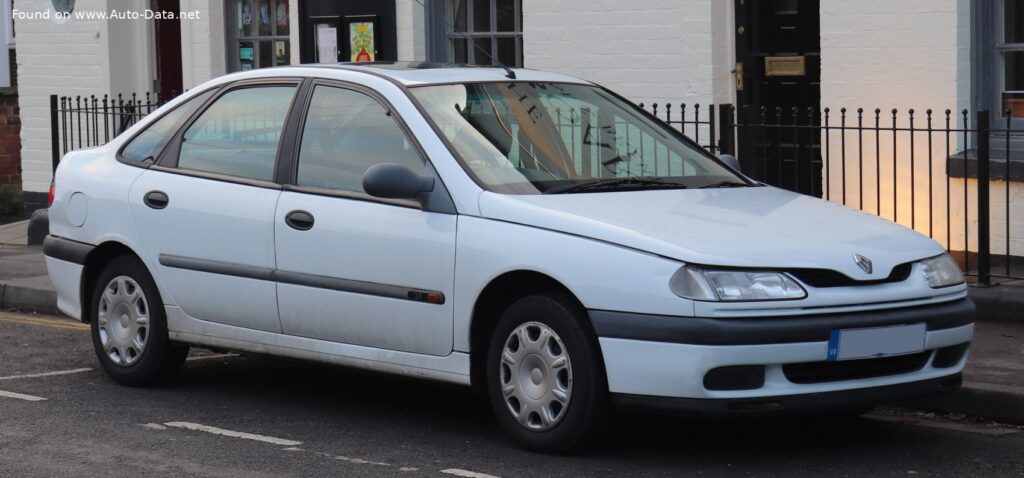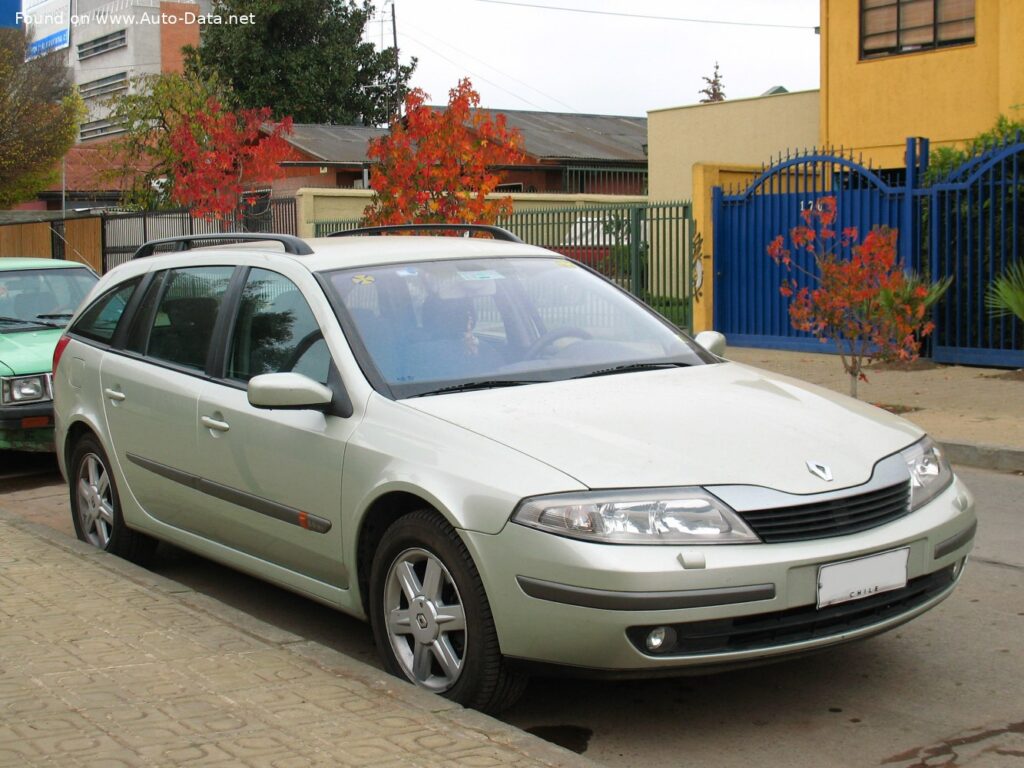
The Renault Laguna II Grandtour 1.9 dCi (120 hp) is a station wagon that was produced by the French manufacturer Renault between 2001 and 2005. Part of the second generation of the Laguna line, the Grandtour variant offered increased practicality and cargo space compared to the hatchback model. Primarily sold in Europe, the Laguna II aimed to compete with established family cars like the Ford Mondeo, Vauxhall/Opel Vectra, and Peugeot 406. It represented Renault’s attempt to move upmarket, offering a more refined and technologically advanced package than its predecessors.
Renault Laguna II Grandtour 1.9 dCi: An Overview
The Laguna II Grandtour was positioned as a mid-size family car, offering a balance of comfort, practicality, and performance. The “Grandtour” designation specifically identifies the estate (station wagon) body style, which was popular in European markets for its enhanced cargo capacity. The 1.9 dCi engine variant was a key offering, providing a blend of fuel efficiency and respectable power output, making it a popular choice for long-distance drivers and families.
Engine & Performance
The heart of the Laguna II Grandtour 1.9 dCi is a 1.9-liter inline-four cylinder diesel engine, designated the F9Q. This engine produces 120 horsepower at 4,000 rpm and 270 Nm (199.14 lb.-ft.) of torque at 2,000 rpm. The engine utilizes a turbocharger with an intercooler to enhance performance and efficiency. A diesel commonrail fuel injection system delivers precise fuel metering, contributing to improved combustion and reduced emissions. The engine’s 19:1 compression ratio is typical for a diesel engine of this era, maximizing energy extraction from the fuel.
Power is delivered to the front wheels via a six-speed manual transmission. This configuration allows for a good balance between acceleration and fuel economy. Performance figures include a 0-100 km/h (0-62 mph) acceleration time of 10.7 seconds, and a 0-60 mph time of approximately 10.2 seconds. The vehicle has a maximum speed of 197 km/h (122.41 mph). The weight-to-power ratio of 12.2 kg/Hp and weight-to-torque ratio of 5.4 kg/Nm indicate a reasonably efficient powertrain for its time.
Design & Features
The Laguna II Grandtour features a contemporary station wagon design for the early 2000s. Its elongated roofline extends to the rear, maximizing cargo space. The vehicle offers seating for five passengers and boasts a generous trunk capacity of 475 liters (16.77 cu. ft.) with the rear seats up, expanding to 1500 liters (52.97 cu. ft.) when the rear seats are folded down.
Safety features included ABS (Anti-lock Braking System) as standard equipment. While not as comprehensive as modern safety suites, ABS was a significant advancement for the time, improving braking performance and stability. The Laguna II also featured hydraulic power steering for ease of maneuverability. Interior features focused on comfort and practicality, with a focus on providing a pleasant driving experience for families. The vehicle’s dimensions – 4695 mm (184.84 in.) in length, 1772 mm (69.76 in.) in width, and 1443 mm (56.81 in.) in height – positioned it squarely within the mid-size segment.
Technical Specifications
| Brand | Renault |
| Model | Laguna |
| Generation | Laguna II Grandtour |
| Type (Engine) | 1.9 dCi (120 Hp) |
| Start of production | 2001 |
| End of production | 2005 |
| Powertrain Architecture | Internal Combustion engine |
| Body type | Station wagon (estate) |
| Seats | 5 |
| Doors | 5 |
| Fuel consumption (urban) | 7.2 l/100 km (32.7 US mpg) |
| Fuel consumption (extra urban) | 4.8 l/100 km (49 US mpg) |
| Fuel consumption (combined) | 5.7 l/100 km (41.3 US mpg) |
| Fuel Type | Diesel |
| Acceleration 0 – 100 km/h | 10.7 sec |
| Acceleration 0 – 62 mph | 10.7 sec |
| Acceleration 0 – 60 mph | 10.2 sec |
| Maximum speed | 197 km/h (122.41 mph) |
| Weight-to-power ratio | 12.2 kg/Hp |
| Weight-to-torque ratio | 5.4 kg/Nm |
| Power | 120 Hp @ 4000 rpm |
| Torque | 270 Nm @ 2000 rpm (199.14 lb.-ft. @ 2000 rpm) |
| Engine layout | Front, Transverse |
| Engine Model/Code | F9Q |
| Engine displacement | 1870 cm3 (114.11 cu. in.) |
| Number of cylinders | 4 |
| Engine configuration | Inline |
| Cylinder Bore | 80 mm (3.15 in.) |
| Piston Stroke | 93 mm (3.66 in.) |
| Compression ratio | 19:1 |
| Number of valves per cylinder | 2 |
| Fuel injection system | Diesel Commonrail |
| Engine aspiration | Turbocharger, Intercooler |
| Valvetrain | OHC |
| Engine oil capacity | 4.6 l (4.86 US qt | 4.05 UK qt) |
| Coolant | 7 l (7.4 US qt | 6.16 UK qt) |
| Kerb Weight | 1460 kg (3218.75 lbs.) |
| Max. weight | 1970 kg (4343.11 lbs.) |
| Max load | 510 kg (1124.36 lbs.) |
| Trunk (boot) space – minimum | 475 l (16.77 cu. ft.) |
| Trunk (boot) space – maximum | 1500 l (52.97 cu. ft.) |
| Fuel tank capacity | 70 l (18.49 US gal | 15.4 UK gal) |
| Length | 4695 mm (184.84 in.) |
| Width | 1772 mm (69.76 in.) |
| Height | 1443 mm (56.81 in.) |
| Wheelbase | 2740 mm (107.87 in.) |
| Front track | 1525 mm (60.04 in.) |
| Rear (Back) track | 1480 mm (58.27 in.) |
| Drivetrain Architecture | Front wheel drive |
| Number of gears and type of gearbox | 6 gears, manual transmission |
| Front suspension | Spring Strut |
| Rear suspension | Coil spring |
| Front brakes | Ventilated discs |
| Rear brakes | Disc |
| Assisting systems | ABS (Anti-lock braking system) |
| Steering type | Steering rack and pinion |
| Power steering | Hydraulic Steering |
| Tires size | 205/55 R16 |
| Wheel rims size | 16 |
The Renault Laguna II Grandtour 1.9 dCi represented a significant step forward for Renault in the mid-size family car segment. Its combination of practicality, fuel efficiency, and reasonable performance made it a popular choice for European buyers. While now superseded by newer models, the Laguna II Grandtour remains a testament to Renault’s engineering capabilities of the early 2000s.