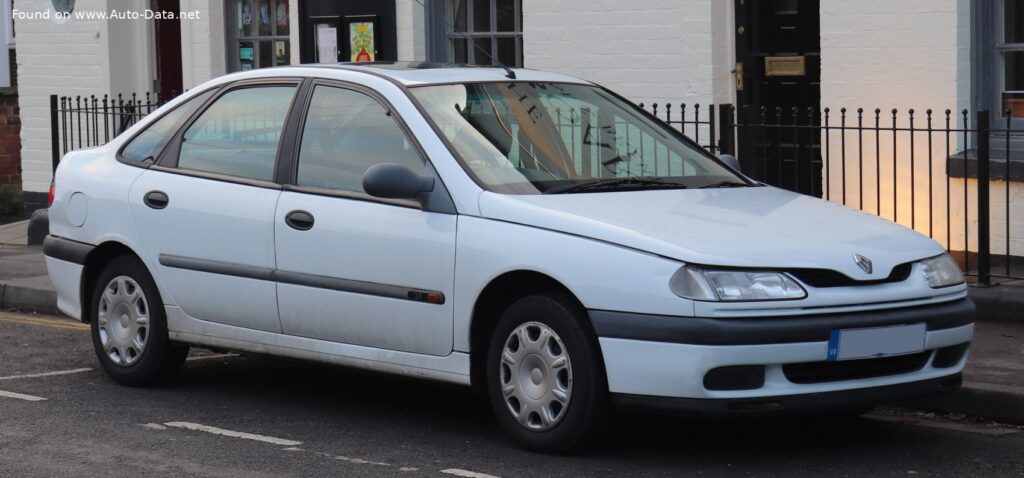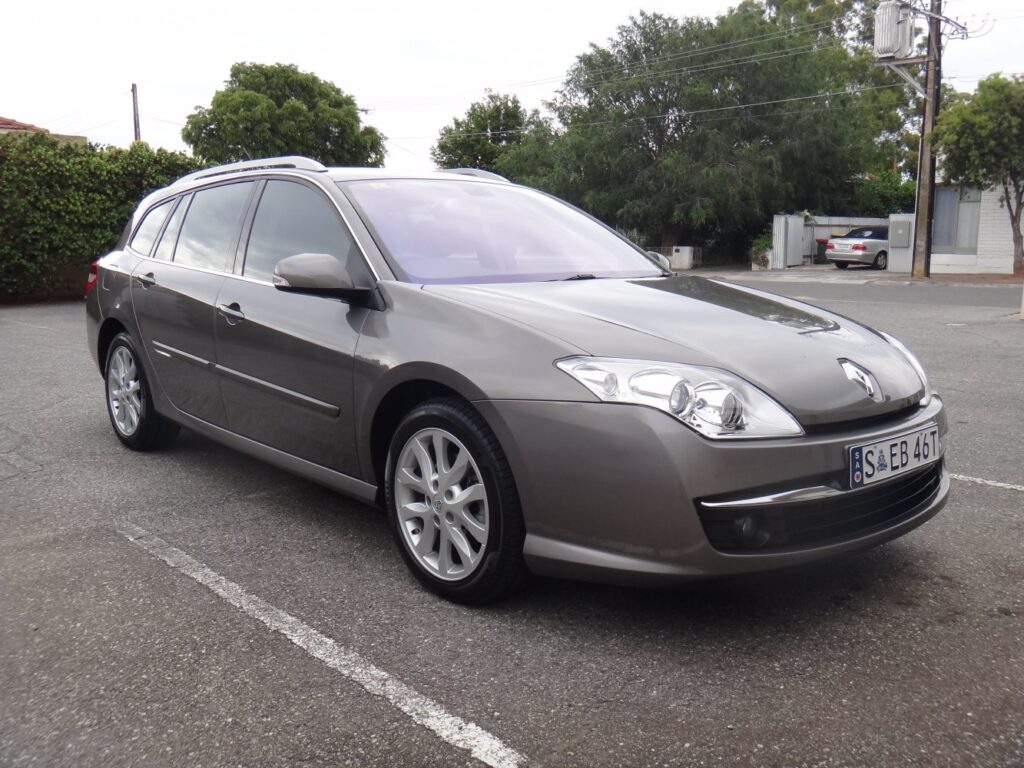
The Renault Laguna III Grandtour 2.0 dCi FAP (150 Hp) Automatic is a station wagon (estate) that was produced between 2007 and 2010. Representing the third generation of the Laguna, the Grandtour variant offered increased practicality compared to the hatchback model. While the Laguna was never officially sold in the United States, it was a significant vehicle in the European mid-size car segment, competing with models like the Ford Mondeo, Volkswagen Passat, and Peugeot 407. The Grandtour specifically targeted buyers needing a versatile vehicle with ample cargo space, blending comfort, technology, and reasonable fuel efficiency.
Renault Laguna III Grandtour: An Overview
The Laguna III, launched in 2007, marked a substantial improvement over its predecessors, particularly in terms of interior quality and technological features. The Grandtour body style, the station wagon version, was a key component of the Laguna lineup, appealing to families and those requiring a larger load capacity. The 2.0 dCi FAP engine, paired with an automatic transmission, was a popular choice, offering a balance between performance and economy. The “FAP” designation indicates the presence of a Diesel Particulate Filter, a crucial component for meeting increasingly stringent European emission standards.
Engine & Performance
The Renault Laguna III Grandtour 2.0 dCi FAP is powered by a 1995 cc (121.74 cu. in.) inline-four cylinder diesel engine. This engine, designated M9R, produces 150 horsepower (Hp) at 4000 rpm and 340 Newton-meters (250.77 lb.-ft.) of torque at 2000 rpm. The engine utilizes a turbocharger and intercooler to enhance performance and efficiency. Power is delivered to the front wheels via a six-speed automatic transmission. Acceleration from 0 to 100 km/h (0-62 mph) takes approximately 10 seconds, while the 0-60 mph sprint is achieved in around 9.5 seconds. The vehicle has a maximum speed of 203 km/h (126.14 mph). The engine’s specific output is 75.2 Hp per liter, demonstrating a relatively efficient design for its time. The weight-to-power ratio is 10.8 kg/Hp, and the weight-to-torque ratio is 4.7 kg/Nm.
Design & Features
The Laguna III Grandtour features a contemporary station wagon design, characterized by its elongated roofline and spacious cargo area. The vehicle offers seating for five passengers and provides 508 liters (17.94 cu. ft.) of trunk space, expandable with the rear seats folded down. Key features included ABS (Anti-lock Braking System), ventilated front disc brakes, and disc brakes on the rear axle. The steering system is a hydraulic power-assisted rack and pinion setup. The vehicle rides on 17-inch wheels with 215/50 R17 tires. Safety features were becoming increasingly important during this period, and the Laguna III incorporated features designed to protect occupants in the event of a collision. The interior focused on providing a comfortable and refined experience, with a focus on ergonomics and build quality, a marked improvement over previous Laguna generations. The Grandtour’s design prioritized practicality without sacrificing aesthetic appeal, making it a competitive offering in the European market.
Technical Specifications
| Brand | Renault |
| Model | Laguna |
| Generation | Laguna III Grandtour |
| Type (Engine) | 2.0 dCi FAP (150 Hp) Automatic |
| Start of production | 2007 |
| End of production | 2010 |
| Powertrain Architecture | Internal Combustion engine |
| Body type | Station wagon (estate) |
| Seats | 5 |
| Doors | 5 |
| Fuel consumption (urban) | 9.6 l/100 km (24.5 US mpg, 29.4 UK mpg, 10.4 km/l) |
| Fuel consumption (extra urban) | 5.7 l/100 km (41.3 US mpg, 49.6 UK mpg, 17.5 km/l) |
| Fuel consumption (combined) | 7.1 l/100 km (33.1 US mpg, 39.8 UK mpg, 14.1 km/l) |
| Fuel Type | Diesel |
| Acceleration 0 – 100 km/h | 10 sec |
| Acceleration 0 – 62 mph | 10 sec |
| Acceleration 0 – 60 mph | 9.5 sec |
| Maximum speed | 203 km/h (126.14 mph) |
| Emission standard | Euro 4 |
| Weight-to-power ratio | 10.8 kg/Hp |
| Weight-to-torque ratio | 4.7 kg/Nm |
| Power | 150 Hp @ 4000 rpm |
| Torque | 340 Nm @ 2000 rpm (250.77 lb.-ft. @ 2000 rpm) |
| Engine layout | Front, Transverse |
| Engine Model/Code | M9R |
| Engine displacement | 1995 cm3 (121.74 cu. in.) |
| Number of cylinders | 4 |
| Engine configuration | Inline |
| Fuel injection system | Diesel Commonrail |
| Engine oil capacity | 6.6 l (6.97 US qt | 5.81 UK qt) |
| Coolant capacity | 7.8 l (8.24 US qt | 6.86 UK qt) |
| Kerb Weight | 1613 kg (3556.06 lbs.) |
| Max. weight | 2055 kg (4530.5 lbs.) |
| Max load | 442 kg (974.44 lbs.) |
| Trunk (boot) space – minimum | 508 l (17.94 cu. ft.) |
| Fuel tank capacity | 66 l (17.44 US gal | 14.52 UK gal) |
| Length | 4803 mm (189.09 in.) |
| Width | 1811 mm (71.3 in.) |
| Height | 1445 mm (56.89 in.) |
| Wheelbase | 2756 mm (108.5 in.) |
| Drivetrain Architecture | Front wheel drive |
| Number of gears and type of gearbox | 6 gears, automatic transmission |
| Front suspension | Spring Strut |
| Rear suspension | Coil spring |
| Front brakes | Ventilated discs |
| Rear brakes | Disc |
| Tires size | 215/50 R17 |
| Wheel rims size | 17 |
The Renault Laguna III Grandtour 2.0 dCi FAP Automatic represented a significant step forward for Renault in the mid-size segment. Its blend of practicality, comfort, and technology made it a popular choice for European buyers seeking a versatile and efficient station wagon. While not sold in the US market, it exemplifies the engineering and design trends prevalent in European automotive manufacturing during the late 2000s.