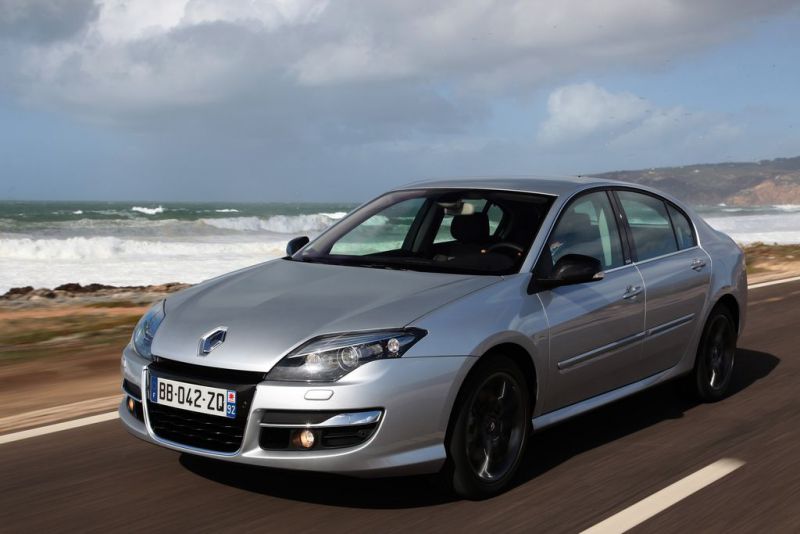
The Renault Laguna III (Phase II) 2.0 16V, produced from 2010 to 2015, represents a significant evolution in Renault’s mid-size family car offering. Positioned as a competitor to vehicles like the Ford Mondeo, Opel/Vauxhall Insignia, and Peugeot 508, the Laguna III aimed to provide a blend of comfort, practicality, and technology. While not officially sold in the United States, the Laguna was a popular choice in Europe, known for its distinctive styling and relatively affordable price point. The Phase II update brought refinements to the exterior design, interior materials, and engine options, enhancing the overall appeal of the vehicle.
Renault Laguna III (Phase II): An Overview
The Laguna III, launched in 2007, was Renault’s attempt to move upmarket and challenge established players in the D-segment. The Phase II revision, beginning in January 2010, focused on improving the car’s perceived quality and addressing some criticisms of the original model. The 2.0 16V variant, producing 140 horsepower, was a common engine choice, offering a balance between performance and fuel economy. This model primarily served the European market, where hatchbacks and station wagons (the Laguna Estate) were preferred over traditional sedans.
Engine & Performance
The Renault Laguna III (Phase II) 2.0 16V is powered by a naturally aspirated 2.0-liter inline-four cylinder engine, designated the M4R. This engine produces 140 horsepower at 6000 rpm and 195 Nm (143.82 lb.-ft.) of torque at 3750 rpm. The engine utilizes multi-port fuel injection and boasts a power-to-liter ratio of 70.1 hp/l. Power is delivered to the front wheels via a six-speed manual transmission. Performance figures include a 0-100 km/h (0-62 mph) acceleration time of 9.1 seconds, and a 0-60 mph time of approximately 8.6 seconds. The vehicle achieves a maximum speed of 210 km/h (130.49 mph). Fuel consumption is rated at 7.5 l/100 km (31.4 US mpg, 37.7 UK mpg) on a combined cycle, with urban consumption at 10.1 l/100 km (23.3 US mpg, 28 UK mpg) and extra-urban consumption at 6.1 l/100 km (38.6 US mpg, 46.3 UK mpg). The engine meets Euro 5 emission standards, with CO2 emissions of 173 g/km.
Design & Features
The Laguna III (Phase II) is a five-door hatchback, offering a practical and spacious interior for passengers and cargo. The exterior design features Renault’s signature styling cues of the era, including a prominent front grille and sculpted body lines. The Phase II update included revised headlights and taillights, as well as a redesigned front bumper. Inside, the cabin was designed with comfort and functionality in mind. Standard features typically included air conditioning, power windows, central locking, and a basic audio system. Higher trim levels offered features such as leather upholstery, automatic climate control, and a navigation system. Safety features were a key focus, with the Laguna III equipped with ABS (Anti-lock Braking System) as standard. The vehicle’s dimensions are 4695 mm (184.84 in.) in length, 1811 mm (71.3 in.) in width, and 1445 mm (56.89 in.) in height, with a wheelbase of 2756 mm (108.5 in.). Kerb weight is 1302 kg (2870.42 lbs), with a maximum permissible weight of 1919 kg (4230.67 lbs) and a maximum load capacity of 617 kg (1360.25 lbs).
Technical Specifications
| Brand | Renault |
| Model | Laguna |
| Generation | Laguna III (Phase II) |
| Type (Engine) | 2.0 16V (140 Hp) |
| Start of production | January, 2010 |
| End of production | July, 2015 |
| Powertrain Architecture | Internal Combustion engine |
| Body type | Hatchback |
| Seats | 5 |
| Doors | 5 |
| Fuel consumption (urban) | 10.1 l/100 km (23.3 US mpg, 28 UK mpg) |
| Fuel consumption (extra urban) | 6.1 l/100 km (38.6 US mpg, 46.3 UK mpg) |
| Fuel consumption (combined) | 7.5 l/100 km (31.4 US mpg, 37.7 UK mpg) |
| CO2 emissions | 173 g/km |
| Fuel Type | Petrol (Gasoline) |
| Acceleration 0 – 100 km/h | 9.1 sec |
| Acceleration 0 – 62 mph | 9.1 sec |
| Acceleration 0 – 60 mph | 8.6 sec |
| Maximum speed | 210 km/h (130.49 mph) |
| Emission standard | Euro 5 |
| Weight-to-power ratio | 9.3 kg/Hp |
| Weight-to-torque ratio | 6.7 kg/Nm |
| Power | 140 Hp @ 6000 rpm |
| Torque | 195 Nm @ 3750 rpm (143.82 lb.-ft. @ 3750 rpm) |
| Engine layout | Front, Transverse |
| Engine Model/Code | M4R |
| Engine displacement | 1997 cm3 (121.86 cu. in.) |
| Number of cylinders | 4 |
| Engine configuration | Inline |
| Number of valves per cylinder | 4 |
| Fuel injection system | Multi-port manifold injection |
| Engine oil capacity | 4.4 l (4.65 US qt | 3.87 UK qt) |
| Coolant capacity | 7.2 l (7.61 US qt | 6.34 UK qt) |
| Kerb Weight | 1302 kg (2870.42 lbs.) |
| Max. weight | 1919 kg (4230.67 lbs.) |
| Max load | 617 kg (1360.25 lbs.) |
| Fuel tank capacity | 66 l (17.44 US gal | 14.52 UK gal) |
| Length | 4695 mm (184.84 in.) |
| Width | 1811 mm (71.3 in.) |
| Height | 1445 mm (56.89 in.) |
| Wheelbase | 2756 mm (108.5 in.) |
| Front track | 1557 mm (61.3 in.) |
| Rear track | 1512 mm (59.53 in.) |
| Drive wheel | Front wheel drive |
| Number of gears | 6 gears, manual transmission |
| Front brakes | Ventilated discs |
| Rear brakes | Disc |
The Renault Laguna III (Phase II) 2.0 16V, while not a groundbreaking vehicle, represented a solid offering in the competitive mid-size segment. Its blend of practicality, comfort, and reasonable performance made it a popular choice for families and individuals seeking a versatile and reliable hatchback in the European market.