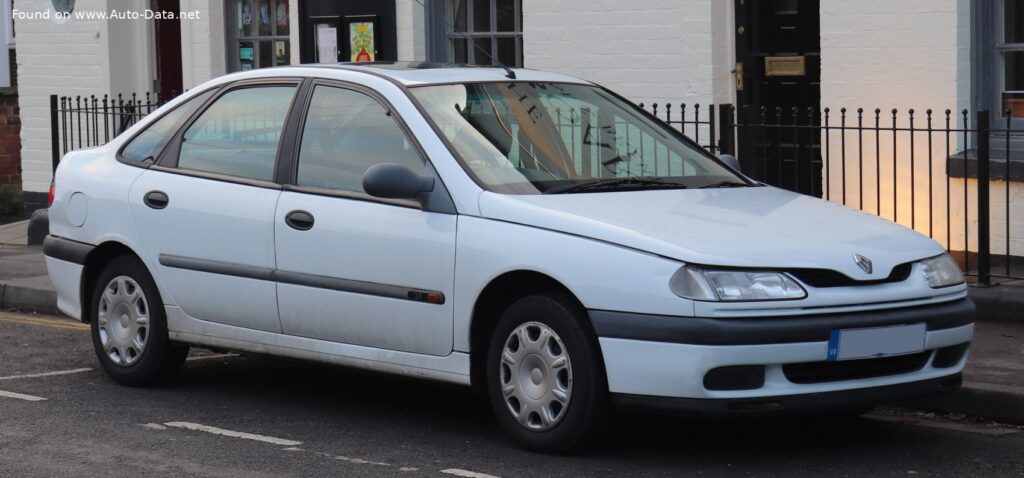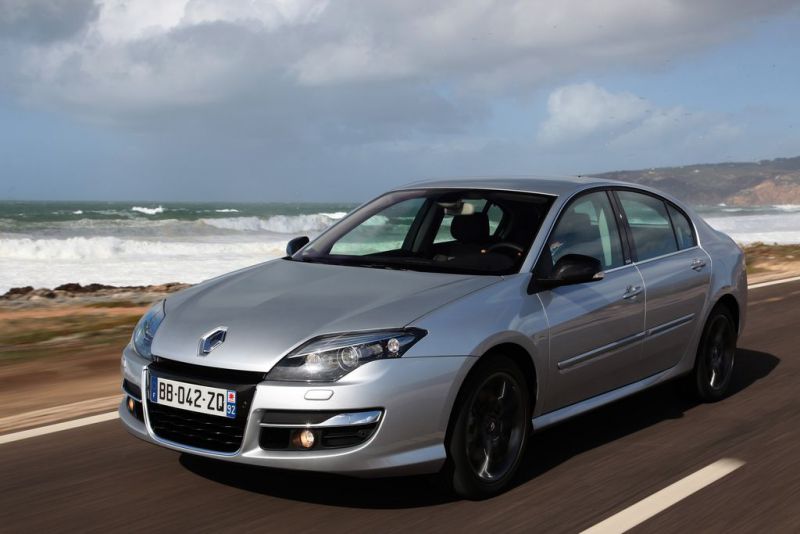
The Renault Laguna III (Phase II) 2.0 dCi 130 Hp start&stop is a front-wheel-drive compact executive car produced by the French manufacturer Renault from 2013 to 2015. Representing the second major refresh of the third-generation Laguna, this model aimed to refine the vehicle’s appeal with improved efficiency and technology. While the Laguna was never officially sold in the United States, it was a significant competitor in the European market, vying for sales against vehicles like the Ford Mondeo, Volkswagen Passat, and Opel/Vauxhall Insignia. The Phase II updates focused on enhancing the car’s fuel economy and reducing emissions, making it a more attractive option in an increasingly environmentally conscious automotive landscape.
Renault Laguna III (Phase II) 2.0 dCi: An Overview
The Laguna III, launched in 2007, was Renault’s attempt to elevate its presence in the competitive mid-size car segment. The Phase II revision, introduced in 2013, brought styling tweaks, interior upgrades, and crucially, a new range of more efficient engines. The 2.0 dCi variant, producing 130 horsepower, was a popular choice for buyers prioritizing fuel economy and reasonable performance. The inclusion of a Start&Stop system further emphasized Renault’s commitment to reducing the car’s environmental impact. The Laguna was available as a hatchback and an estate (wagon) body style, offering versatility to potential customers.
Engine & Performance
The heart of the Laguna III (Phase II) 2.0 dCi is a 1995 cc inline four-cylinder diesel engine, designated the M9R. This engine utilizes a turbocharger and intercooler to deliver a power output of 130 horsepower (97 kW) and 320 Nm (236 lb-ft) of torque. The engine employs a diesel commonrail fuel injection system, contributing to its efficiency and refined operation. Power is delivered to the front wheels via a six-speed manual transmission. Acceleration from 0 to 100 km/h (0-62 mph) takes 10.5 seconds, while the top speed is rated at 206 km/h (128 mph). The engine’s design prioritizes fuel efficiency, achieving a combined fuel consumption of 4.5 liters per 100 kilometers (52.3 US mpg), and CO2 emissions of 118 g/km, meeting Euro 5 emission standards. The weight-to-power ratio of 11.5 kg/Hp and weight-to-torque ratio of 4.7 kg/Nm demonstrate a reasonable balance between performance and efficiency.
Design & Features
The Renault Laguna III (Phase II) is a five-door hatchback, offering a practical and spacious interior for five occupants. The exterior design features a revised front fascia with a larger Renault logo and updated headlights, giving the car a more modern appearance. The rear of the vehicle also received subtle styling changes. Inside, the cabin benefits from improved materials and a redesigned dashboard. Key features included air conditioning, power windows, central locking, and an audio system. Safety features were also a priority, with standard equipment including ABS (Anti-lock Braking System), electronic stability control, and multiple airbags. The Laguna’s trunk offers a useful 450 liters of space, which can be expanded to 1377 liters with the rear seats folded down, providing ample room for luggage and cargo. The vehicle’s turning circle is 11.05 meters (36.25 ft), making it relatively maneuverable in urban environments.
Technology and Efficiency
The inclusion of the Start&Stop system in the 2.0 dCi variant was a key technological feature. This system automatically shuts off the engine when the vehicle is stationary, such as at traffic lights, and restarts it instantly when the driver depresses the clutch pedal. This feature contributes to reduced fuel consumption and lower emissions, particularly in urban driving conditions. The engine also incorporates a particulate filter to further minimize harmful emissions. The Laguna III (Phase II) represented Renault’s efforts to integrate fuel-saving technologies into mainstream vehicles, appealing to environmentally conscious buyers.
Technical Specifications
| Brand | Renault |
| Model | Laguna |
| Generation | Laguna III (Phase II) |
| Type (Engine) | 2.0 dCi (130 Hp) start&stop |
| Start of production | June, 2013 |
| End of production | July, 2015 |
| Powertrain Architecture | Internal Combustion engine |
| Body type | Hatchback |
| Seats | 5 |
| Doors | 5 |
| Fuel consumption (urban) | 5.5 l/100 km (42.8 US mpg, 51.4 UK mpg, 18.2 km/l) |
| Fuel consumption (extra urban) | 4 l/100 km (58.8 US mpg, 70.6 UK mpg, 25 km/l) |
| Fuel consumption (combined) | 4.5 l/100 km (52.3 US mpg, 62.8 UK mpg, 22.2 km/l) |
| CO2 emissions | 118 g/km |
| Fuel Type | Diesel |
| Acceleration 0 – 100 km/h | 10.5 sec |
| Acceleration 0 – 62 mph | 10.5 sec |
| Acceleration 0 – 60 mph | 10 sec |
| Maximum speed | 206 km/h (128 mph) |
| Emission standard | Euro 5 |
| Weight-to-power ratio | 11.5 kg/Hp, 87.1 Hp/tonne |
| Weight-to-torque ratio | 4.7 kg/Nm, 214.3 Nm/tonne |
| Power | 130 Hp |
| Power per litre | 65.2 Hp/l |
| Torque | 320 Nm (236.02 lb.-ft.) |
| Engine layout | Front, Transverse |
| Engine Model/Code | M9R |
| Engine displacement | 1995 cm3 (121.74 cu. in.) |
| Engine configuration | Inline |
| Fuel injection system | Diesel Commonrail |
| Engine aspiration | Turbocharger, Intercooler |
| Engine oil capacity | 6.6 l (6.97 US qt | 5.81 UK qt) |
| Coolant | 7.8 l (8.24 US qt | 6.86 UK qt) |
| Kerb Weight | 1493 kg (3291.5 lbs.) |
| Max. weight | 2025 kg (4464.36 lbs.) |
| Max load | 532 kg (1172.86 lbs.) |
| Trunk (boot) space – minimum | 450 l (15.89 cu. ft.) |
| Trunk (boot) space – maximum | 1377 l (48.63 cu. ft.) |
| Fuel tank capacity | 66 l (17.44 US gal | 14.52 UK gal) |
| Length | 4695 mm (184.84 in.) |
| Width | 1811 mm (71.3 in.) |
| Minimum turning circle | 11.05 m (36.25 ft.) |
| Drivetrain | Front wheel drive |
| Number of gears | 6 gears, manual transmission |
| Front brakes | Ventilated discs |
| Rear brakes | Disc |
| Tires size | 215/50 R17 |
| Wheel rims size | 17 |
The Renault Laguna III (Phase II) 2.0 dCi 130 Hp start&stop, while not sold in the US market, represented a significant offering in the European compact executive car segment. Its blend of fuel efficiency, practicality, and technology made it a competitive choice for buyers seeking a well-rounded vehicle.