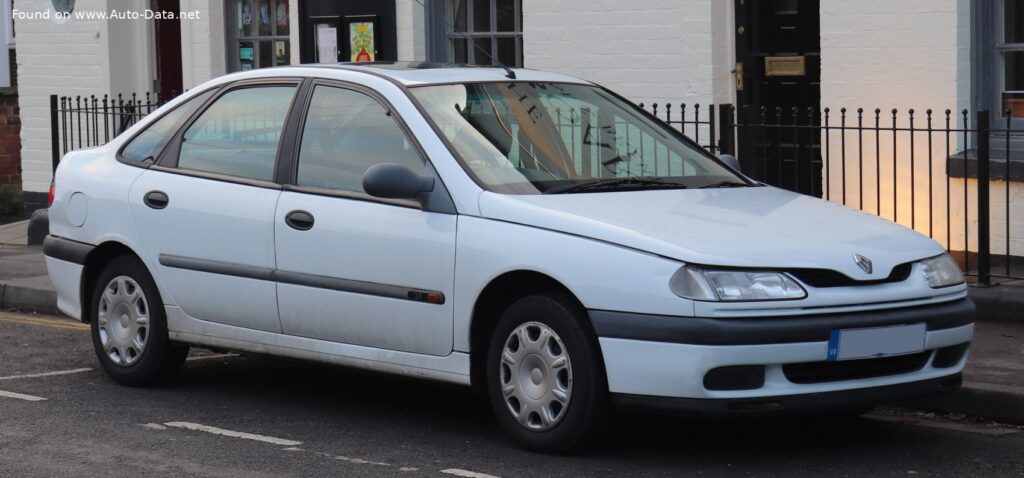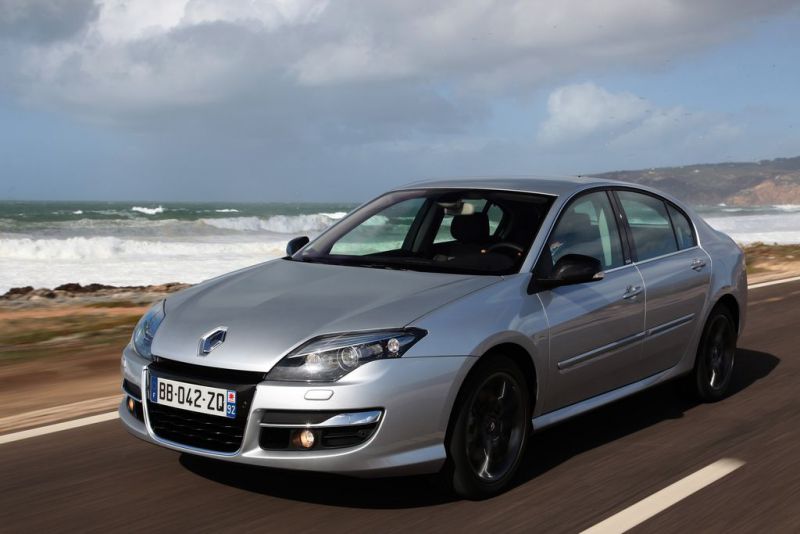
The Renault Laguna III (Phase II) GT 2.0 dCi, produced from 2010 to 2015, represents a significant evolution in Renault’s mid-size family car offering. Positioned as a competitor to vehicles like the Ford Mondeo, Opel/Vauxhall Insignia, and Peugeot 508, the Laguna III aimed to provide a blend of comfort, practicality, and dynamic performance. The “Phase II” designation indicates a substantial refresh of the third-generation Laguna, introducing revised styling, enhanced interior quality, and updated engine options, including the 2.0 dCi diesel engine featured here. While the Laguna was never officially sold in the United States, understanding its role in the European market provides insight into Renault’s engineering and design philosophies during this period.
Renault Laguna III (Phase II) GT 2.0 dCi: Overview
The Laguna III, and specifically the Phase II iteration, was designed to elevate Renault’s image in the competitive D-segment. The GT trim level, as exemplified by the 2.0 dCi model, focused on providing a more engaging driving experience with sport-tuned suspension and distinctive styling cues. The introduction of the Start&Stop system highlighted Renault’s commitment to improving fuel efficiency and reducing emissions, aligning with increasingly stringent European regulations. This model was primarily sold in Europe, where hatchbacks and station wagons (Estate) are more popular body styles than sedans.
Engine & Performance
At the heart of the Laguna III GT 2.0 dCi lies Renault’s M9R engine, a 1995cc inline four-cylinder diesel powerplant. This engine produces 173 horsepower (Hp) and 380 Newton-meters (280.27 lb.-ft.) of torque. The use of a turbocharger and intercooler significantly enhances performance, delivering strong acceleration and responsive power delivery. The engine’s common rail direct fuel injection system contributes to both efficiency and reduced emissions. Acceleration from 0 to 100 km/h (0-62 mph) takes 8.8 seconds, while 0-60 mph is achieved in a calculated 8.4 seconds. The Laguna GT 2.0 dCi boasts a maximum speed of 210 km/h (130.49 mph). The inclusion of a Start&Stop system further optimizes fuel economy, particularly in urban driving conditions. Fuel consumption figures are rated at 5.5 l/100 km (42.8 US mpg) urban, 4.0 l/100 km (58.8 US mpg) extra-urban, and 4.5 l/100 km (52.3 US mpg) combined, with CO2 emissions of 118 g/km, meeting Euro 5 emission standards.
Design & Features
The Laguna III Phase II is a five-door hatchback, offering a practical and versatile body style. The GT trim level distinguishes itself with unique styling elements, including a more aggressive front bumper, side skirts, and rear diffuser. Inside, the cabin features supportive sports seats, aluminum pedals, and a leather-wrapped steering wheel. Key features include ABS (Anti-lock Braking System) for enhanced safety, ventilated front disc brakes and rear discs for reliable stopping power, and a steering rack and pinion system for precise handling. The Laguna III also offers a generous amount of interior space, with a trunk (boot) capacity ranging from 450 liters (15.89 cu. ft.) with the rear seats up to 1377 liters (48.63 cu. ft.) with the seats folded down. The vehicle’s kerb weight is 1493 kg (3291.5 lbs), with a maximum permissible weight of 2025 kg (4464.36 lbs).
Technical Specifications
| Brand | Renault |
| Model | Laguna |
| Generation | Laguna III (Phase II) |
| Type (Engine) | GT 2.0 dCi (173 Hp) start&stop |
| Start of production | January, 2010 |
| End of production | 2015 |
| Powertrain Architecture | Internal Combustion engine |
| Body type | Hatchback |
| Seats | 5 |
| Doors | 5 |
| Fuel consumption (urban) | 5.5 l/100 km (42.8 US mpg) |
| Fuel consumption (extra urban) | 4 l/100 km (58.8 US mpg) |
| Fuel consumption (combined) | 4.5 l/100 km (52.3 US mpg) |
| CO2 emissions | 118 g/km |
| Fuel Type | Diesel |
| Acceleration 0 – 100 km/h | 8.8 sec |
| Acceleration 0 – 62 mph | 8.8 sec |
| Acceleration 0 – 60 mph | 8.4 sec |
| Maximum speed | 210 km/h (130.49 mph) |
| Emission standard | Euro 5 |
| Weight-to-power ratio | 8.6 kg/Hp |
| Weight-to-torque ratio | 3.9 kg/Nm |
| Power | 173 Hp |
| Torque | 380 Nm (280.27 lb.-ft.) |
| Engine layout | Front, Transverse |
| Engine Model/Code | M9R |
| Engine displacement | 1995 cm3 (121.74 cu. in.) |
| Engine configuration | Inline |
| Fuel injection system | Diesel Commonrail |
| Engine oil capacity | 7.4 l (7.82 US qt | 6.51 UK qt) |
| Coolant capacity | 7.8 l (8.24 US qt | 6.86 UK qt) |
| Kerb Weight | 1493 kg (3291.5 lbs.) |
| Max. weight | 2025 kg (4464.36 lbs.) |
| Max load | 532 kg (1172.86 lbs.) |
| Trunk (boot) space – minimum | 450 l (15.89 cu. ft.) |
| Trunk (boot) space – maximum | 1377 l (48.63 cu. ft.) |
| Fuel tank capacity | 66 l (17.44 US gal | 14.52 UK gal) |
| Length | 4695 mm (184.84 in.) |
| Width | 1811 mm (71.3 in.) |
| Minimum turning circle | 10.3 m (33.79 ft.) |
| Drivetrain | Front wheel drive |
| Number of gears | 6 gears, manual transmission |
| Front brakes | Ventilated discs |
| Rear brakes | Disc |
| Tires size | 225/45 R18 |
| Wheel rims size | 18 |
The Renault Laguna III (Phase II) GT 2.0 dCi represented a compelling offering in the European D-segment, combining a refined driving experience with practical features and efficient diesel power. While not sold in the US market, it exemplifies Renault’s engineering capabilities and its commitment to delivering vehicles that meet the evolving needs of European drivers.