The Renault Megane II Classic: An Overview
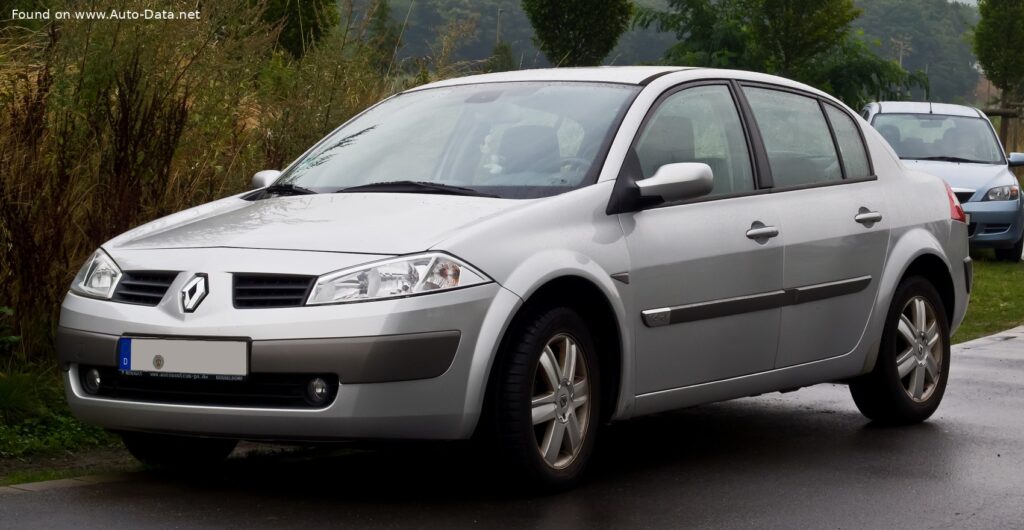
The Renault Megane II Classic 1.5 dCi (86 Hp) represents a significant offering in the European C-segment during the mid-2000s. Launched in 2005, this particular variant was part of the second generation of the Renault Megane, a critically acclaimed and commercially successful compact car line from the French automaker. While the Megane II hatchback garnered considerable attention for its distinctive, avant-garde styling, particularly its “bustle-back” rear, the Megane II Classic presented a more conventional sedan body style designed to appeal to a broader market segment, especially in regions where traditional three-box sedans were preferred over hatchbacks.
Produced primarily for markets outside North America, the Megane II Classic emphasized practicality, comfort, and fuel efficiency, hallmarks of European compact family vehicles. The 1.5 dCi engine, a cornerstone of Renault’s diesel powertrain offerings, was particularly vital for its economic operation and lower emissions, aligning with the evolving environmental standards and consumer preferences in Europe at the time. This specific model, with its 86 horsepower output, was positioned as an accessible and economical choice within the Megane II sedan lineup, offering a balance of performance suitable for daily commuting and long-distance travel without compromising on running costs.
Engine and Performance of the Renault Megane II Classic 1.5 dCi (86 Hp)
At the heart of the Renault Megane II Classic 1.5 dCi (86 Hp) lies Renault’s well-regarded K9K series diesel engine. This 1.5-liter (1461 cm³ or 89.16 cu. in.) inline four-cylinder unit is a prime example of a modern common rail diesel (dCi) engine from its era. Equipped with a turbocharger and intercooler, it was engineered to deliver a compelling blend of power and remarkable fuel economy. The engine generates 86 horsepower at 3750 revolutions per minute, providing sufficient motivation for the vehicle’s intended purpose as a family sedan.
More impressive than its peak horsepower, especially for a diesel, is its torque output. The 1.5 dCi engine produces a robust 200 Nm (147.51 lb.-ft.) of torque, available at a low 1900 rpm. This characteristic low-end torque is crucial for responsive acceleration in urban driving conditions and for maintaining highway speeds with ease, even when the car is fully loaded. The powertrain architecture features a front, transverse engine layout, driving the front wheels through a precise 5-speed manual transmission, a common and efficient setup for compact cars of this class.
Performance figures for the Megane II Classic 1.5 dCi underscore its economical nature rather than outright speed. The car accelerates from 0 to 60 mph in a respectable 12.2 seconds, with a top speed of 108.74 mph (175 km/h). These numbers are entirely adequate for everyday driving in Europe, where the emphasis is often on efficiency and practicality. Fuel economy is a standout feature, with a combined rating of 50 US mpg (4.7 l/100 km). Urban driving yields approximately 41.3 US mpg (5.7 l/100 km), while extra-urban (highway) driving can achieve an impressive 56 US mpg (4.2 l/100 km). With CO2 emissions of just 125 g/km, the vehicle met the Euro 4 emission standard, demonstrating its environmental consciousness for its time.
Design and Features
The design of the Renault Megane II Classic adopted a more conservative and universally appealing aesthetic compared to its hatchback sibling. It retained the Megane II’s distinctive front fascia but transitioned to a traditional three-box sedan profile. This four-door sedan configuration provided seating for five occupants and a generous trunk capacity, making it a practical choice for families. The exterior dimensions, with a length of 177.09 inches (4498 mm), a width of 69.96 inches (1777 mm), and a height of 57.48 inches (1460 mm), positioned it firmly within the compact sedan segment.
Inside, the Megane II Classic focused on comfort, ergonomics, and functionality. While specific trim levels varied by market, the general interior philosophy emphasized soft-touch materials, clear instrumentation, and intuitive controls. Storage solutions were thoughtfully integrated, contributing to its family-friendly appeal. A significant feature for a compact sedan was its impressive trunk space, offering 18.36 cubic feet (520 liters) of volume, which was competitive within its class and a key differentiator from many hatchbacks.
Safety features for the 2005 model year included an Anti-lock Braking System (ABS) as standard, a crucial active safety component. The car featured ventilated disc brakes at the front and disc brakes at the rear, providing reliable stopping power. The suspension system comprised an independent McPherson strut setup at the front and a torsion beam axle at the rear, a common and cost-effective arrangement that delivered a comfortable ride quality suitable for varied road conditions. Steering was managed by a rack and pinion system with electric power steering, offering light and precise control, particularly beneficial for urban maneuvering. The vehicle was offered with tire sizes including 195/65 R15 and 205/55 R16, mounted on 6.5J x 15 or 6.5J x 16 wheel rims.
Technical Specifications
| Category | Specification |
|---|---|
| Brand | Renault |
| Model | Megane II Classic |
| Type (Engine) | 1.5 dCi (86 Hp) |
| Production Years | 2005 – 2005 |
| Body Type | Sedan |
| Seats | 5 |
| Doors | 4 |
| Fuel Type | Diesel |
| Fuel Consumption (Urban) | 5.7 l/100 km (41.3 US mpg) |
| Fuel Consumption (Extra Urban) | 4.2 l/100 km (56 US mpg) |
| Fuel Consumption (Combined) | 4.7 l/100 km (50 US mpg) |
| CO2 Emissions | 125 g/km |
| Emission Standard | Euro 4 |
| Acceleration 0-60 mph | 12.2 sec |
| Maximum Speed | 108.74 mph (175 km/h) |
| Power | 86 Hp @ 3750 rpm |
| Power per liter | 58.9 Hp/l |
| Torque | 200 Nm (147.51 lb.-ft.) @ 1900 rpm |
| Engine Layout | Front, Transverse |
| Engine Model/Code | K9K |
| Engine Displacement | 1461 cm³ (89.16 cu. in.) |
| Number of Cylinders | 4 (Inline) |
| Valves per Cylinder | 2 |
| Fuel Injection System | Diesel Commonrail |
| Engine Aspiration | Turbocharger, Intercooler |
| Compression Ratio | 18.8:1 |
| Engine Oil Capacity | 4.5 l (4.76 US qt) |
| Coolant Capacity | 5.3 l (5.6 US qt) |
| Kerb Weight | 1215 kg (2678.62 lbs) |
| Max. Weight | 1770 kg (3902.18 lbs) |
| Max Load | 555 kg (1223.57 lbs) |
| Trunk (boot) space – minimum | 520 l (18.36 cu. ft.) |
| Fuel Tank Capacity | 60 l (15.85 US gal) |
| Length | 4498 mm (177.09 in.) |
| Width | 1777 mm (69.96 in.) |
| Height | 1460 mm (57.48 in.) |
| Wheelbase | 2686 mm (105.75 in.) |
| Front Track | 1518 mm (59.76 in.) |
| Rear Track | 1514 mm (59.61 in.) |
| Minimum Turning Circle | 10.7 m (35.1 ft.) |
| Drive Wheel | Front Wheel Drive |
| Gearbox | 5 gears, manual transmission |
| Front Suspension | Independent type McPherson |
| Rear Suspension | Torsion |
| Front Brakes | Ventilated discs |
| Rear Brakes | Disc |
| Assisting Systems | ABS (Anti-lock braking system) |
| Steering Type | Steering rack and pinion |
| Power Steering | Electric Steering |
| Tires Size | 195/65 R15; 205/55 R16 |
| Wheel Rims Size | 6.5J x 15; 6.5J x 16 |
Legacy and Market Impact of the Renault Megane II Classic
The Renault Megane II Classic, particularly with its 1.5 dCi engine, played a crucial role in Renault’s strategy for the compact segment in Europe and other international markets where sedans held significant appeal. While the flamboyant hatchback often stole the limelight, the Classic provided a more conservative, yet equally competent, option. It successfully competed against established rivals such as the Ford Focus Sedan, Opel Astra Sedan, Peugeot 307 Sedan, and even the Volkswagen Jetta (known as the Bora in many European markets at the time).
Its reputation was built on several key pillars: exceptional fuel economy, especially with the dCi engines; a comfortable ride quality; and a strong emphasis on safety. The Megane II range, including the Classic, benefited from the hatchback’s groundbreaking 5-star Euro NCAP safety rating, which significantly boosted consumer confidence in Renault’s commitment to passenger protection. The 1.5 dCi engine became particularly synonymous with reliability and low running costs, making it a popular choice for fleet operators and private buyers seeking economical long-term ownership.
The Megane II Classic’s impact was primarily felt in its ability to offer a compelling package of practicality, efficiency, and comfort in a conventional sedan form factor. It catered to a segment of the market that valued traditional trunk space and a more subdued design over the adventurous styling of its hatchback counterpart. Its competitive pricing and low ownership costs made it an attractive proposition, solidifying Renault’s position as a major player in the European compact car market. Although not sold in the United States, its mechanical robustness and widespread adoption of diesel technology in Europe showcased Renault’s engineering prowess and its understanding of the diverse demands of international automotive markets.