The Renault Megane II Classic (Phase II, 2006): A European Compact Sedan Standard
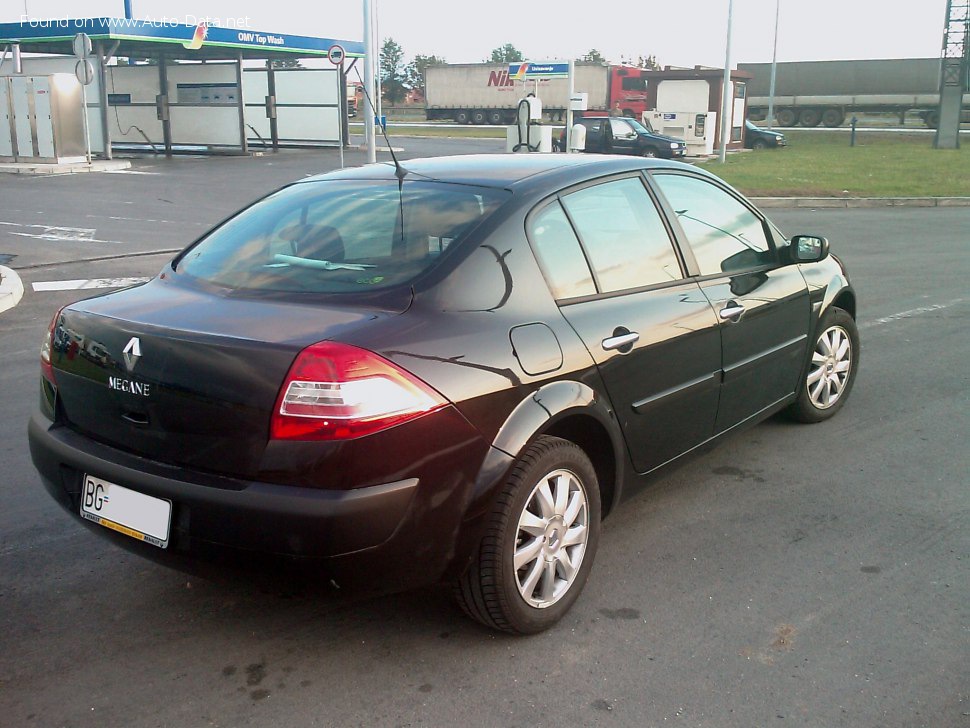
The Renault Megane II Classic (Phase II, 2006) represents a significant iteration of Renault’s popular C-segment vehicle, specifically the sedan variant. Launched as part of the Megane II’s mid-cycle refresh in 2006, this particular model, equipped with the 1.9 dCi (130 Hp) FAP engine, was a cornerstone of Renault’s offerings in Europe and other international markets where a traditional three-box sedan body style remained highly popular. While the Megane II hatchback gained notoriety for its distinctive, somewhat polarizing “bustle-back” design, the Classic sedan offered a more conventional, yet still stylish, alternative, prioritizing practicality and passenger comfort.
The Megane II generation, produced from 2002 to 2009, was a critical success for Renault, earning the prestigious European Car of the Year award in 2003. The Phase II update, introduced for the 2006 model year, brought subtle but effective refinements to the exterior styling, interior appointments, and engine lineup, enhancing the car’s appeal and competitiveness. The Classic sedan, in particular, was designed to appeal to families and fleet buyers seeking a robust, fuel-efficient, and comfortable vehicle for daily use, offering a blend of modern technology and a spacious cabin, all while adhering to stringent European emission standards of the era.
Engine and Performance of the Renault Megane II Classic (Phase II, 2006)
Under the hood, the Renault Megane II Classic (Phase II, 2006) was powered by a highly regarded 1.9-liter dCi (direct common-rail injection) FAP diesel engine. This inline four-cylinder powerplant, identified by the F9Q Turbo engine code, was mounted transversely at the front, driving the front wheels. It was engineered to deliver a compelling balance of performance and exceptional fuel economy, a hallmark of European diesel technology during this period.
The engine produced a robust 130 horsepower at 4000 rpm, coupled with a substantial 221.27 lb.-ft. of torque (300 Nm) available at a low 2000 rpm. This strong torque output made the Megane Classic feel responsive in everyday driving, providing ample power for overtaking and comfortable highway cruising. The power-to-weight ratio stood at a respectable 10 kg per horsepower, or 100.4 horsepower per ton, indicating efficient power delivery for its class.
Performance figures for this variant were quite impressive for a family sedan of its time. It could accelerate from 0 to 60 mph in a brisk 8.6 seconds, with a top speed reaching 124.27 mph (200 km/h). This level of performance was competitive within the compact sedan segment, especially for a diesel-powered model.
Fuel efficiency was a major selling point for the 1.9 dCi engine. The combined fuel consumption was rated at an excellent 43.6 US mpg (5.4 liters per 100 km). Even in urban driving, it achieved 33.1 US mpg (7.1 l/100 km), while extra-urban driving saw figures as high as 53.5 US mpg (4.4 l/100 km). These figures were outstanding for a vehicle of its size and power, making it an economical choice for long-distance travel. Furthermore, the engine complied with Euro 4 emission standards, emitting 149 grams of CO2 per kilometer, and was equipped with a Diesel Particulate Filter (FAP – Filtre à Particules), demonstrating Renault’s commitment to reducing environmental impact.
Power was delivered to the front wheels via a smooth and precise 6-speed manual transmission, allowing the driver to fully exploit the engine’s torque band and further contribute to its impressive fuel economy. The engine’s valvetrain featured an Overhead Camshaft (OHC) design, and fuel was delivered through a common-rail direct injection system, paired with a turbocharger and intercooler for optimal combustion and power output. The compression ratio was a typical 19:1 for a diesel engine, ensuring efficient fuel burn.
Design and Features
The Renault Megane II Classic (Phase II, 2006) maintained the fundamental design language of the Megane II generation but adapted it into a more traditional four-door, five-seat sedan form. While the hatchback’s rear styling was avant-garde, the Classic adopted a more conventional trunk section, appealing to markets that preferred classic sedan proportions and greater cargo capacity. The Phase II update brought subtle enhancements, including revised headlamps, taillamps, and minor trim changes that freshened its appearance.
Measuring 177.09 inches in length, 69.96 inches in width (79.76 inches including mirrors), and 57.48 inches in height, the Megane Classic offered a substantial road presence for a compact car. Its 105.75-inch wheelbase contributed to a comfortable ride and generous interior space for both front and rear passengers. The trunk capacity was a significant highlight, offering 18.36 cubic feet (520 liters) of space, which was highly competitive and practical for families or those needing ample luggage room.
Inside, the Megane II Classic featured a well-appointed cabin with ergonomics designed for comfort and ease of use. Materials were generally of good quality for the segment, and the dashboard design was modern and uncluttered. While specific interior features are not detailed in the raw data, typical amenities for a 2006 European compact sedan would have included air conditioning, power windows, remote central locking, and a CD audio system. Safety was a paramount consideration for Renault, and the Megane II was one of the first cars in its class to achieve a 5-star Euro NCAP safety rating. Standard safety equipment for this model included an Anti-lock Braking System (ABS), and a comprehensive array of airbags would have been fitted.
The chassis featured an independent MacPherson strut setup at the front and a torsion beam axle at the rear, a common and cost-effective solution for compact cars that provides a good balance of ride comfort and handling. Stopping power was provided by ventilated disc brakes at the front and solid disc brakes at the rear, complemented by ABS for enhanced control during emergency braking. The steering system was a rack-and-pinion type with electric power steering, offering light effort at low speeds for easy maneuvering and more feedback at higher speeds. The car offered various tire and wheel size options, from 195/65 R15 to 205/50 R17, allowing for different levels of grip and aesthetic preference.
Technical Specifications
| Category | Specification | Metric / US Equivalent |
|---|---|---|
| General Information | ||
| Brand | Renault | |
| Model | Megane II Classic (Phase II, 2006) | |
| Type (Engine) | 1.9 dCi (130 Hp) FAP | |
| Start of Production | 2006 | |
| End of Production | 2008 | |
| Powertrain Architecture | Internal Combustion Engine | |
| Body Type | Sedan | |
| Seats | 5 | |
| Doors | 4 | |
| Performance Specifications | ||
| Fuel Consumption (Urban) | 7.1 l/100 km | 33.1 US mpg |
| Fuel Consumption (Extra Urban) | 4.4 l/100 km | 53.5 US mpg |
| Fuel Consumption (Combined) | 5.4 l/100 km | 43.6 US mpg |
| CO2 Emissions | 149 g/km | |
| Fuel Type | Diesel | |
| Acceleration 0 – 60 mph | 8.6 sec | |
| Maximum Speed | 200 km/h | 124.27 mph |
| Emission Standard | Euro 4 | |
| Weight-to-Power Ratio | 10 kg/Hp | 100.4 Hp/ton |
| Weight-to-Torque Ratio | 4.3 kg/Nm | 231.7 Nm/ton |
| Engine Specifications | ||
| Power | 130 Hp @ 4000 rpm | |
| Power per Liter | 69.5 Hp/l | |
| Torque | 300 Nm @ 2000 rpm | 221.27 lb.-ft. @ 2000 rpm |
| Engine Layout | Front, Transverse | |
| Engine Model/Code | F9Q Turbo | |
| Engine Displacement | 1870 cm3 | 1.9 Liters (114.11 cu. in.) |
| Number of Cylinders | 4 | |
| Engine Configuration | Inline | |
| Cylinder Bore | 80 mm | 3.15 in. |
| Piston Stroke | 93 mm | 3.66 in. |
| Compression Ratio | 19:1 | |
| Number of Valves per Cylinder | 2 | |
| Fuel Injection System | Diesel Commonrail | |
| Engine Aspiration | Turbocharger, Intercooler | |
| Valvetrain | OHC | |
| Engine Oil Capacity | 4.5 l | 4.76 US qt |
| Coolant Capacity | 7.9 l | 8.35 US qt |
| Engine Systems | Particulate Filter (FAP) | |
| Space, Volume and Weights | ||
| Kerb Weight | 1295 kg | 2854.99 lbs. |
| Max. Weight (GVWR) | 1845 kg | 4067.53 lbs. |
| Max Load | 550 kg | 1212.54 lbs. |
| Trunk (Boot) Space – Minimum | 520 l | 18.36 cu. ft. |
| Fuel Tank Capacity | 60 l | 15.85 US gal |
| Max. Roof Load | 80 kg | 176.37 lbs. |
| Permitted Trailer Load with Brakes (12%) | 1300 kg | 2866.01 lbs. |
| Permitted Trailer Load without Brakes | 650 kg | 1433 lbs. |
| Permitted Towbar Download | 75 kg | 165.35 lbs. |
| Dimensions | ||
| Length | 4498 mm | 177.09 in. |
| Width | 1777 mm | 69.96 in. |
| Width including Mirrors | 2026 mm | 79.76 in. |
| Height | 1460 mm | 57.48 in. |
| Wheelbase | 2686 mm | 105.75 in. |
| Front Track | 1518 mm | 59.76 in. |
| Rear (Back) Track | 1514 mm | 59.61 in. |
| Front Overhang | 842 mm | 33.15 in. |
| Rear Overhang | 970 mm | 38.19 in. |
| Minimum Turning Circle (Turning Diameter) | 10.7 m | 35.1 ft. |
| Drivetrain, Brakes and Suspension Specifications | ||
| Drivetrain Architecture | Internal combustion engine drives the front wheels. | |
| Drive Wheel | Front-wheel drive | |
| Number of Gears and Type of Gearbox | 6 gears, Manual Transmission | |
| Front Suspension | Independent type MacPherson | |
| Rear Suspension | Torsion Beam | |
| Front Brakes | Ventilated Discs | |
| Rear Brakes | Disc | |
| Assisting Systems | ABS (Anti-lock Braking System) | |
| Steering Type | Steering Rack and Pinion | |
| Power Steering | Electric Steering | |
| Tires Size | 195/65 R15; 195/55 R16; 205/50 R17 | |
| Wheel Rims Size | 6.5J x 15; 6.5J x 16; 6.5J x 17 | |
Legacy and Market Impact
The Renault Megane II Classic (Phase II, 2006) 1.9 dCi (130 Hp) FAP played a significant role in Renault’s strategy to cater to diverse market preferences across Europe and beyond. While the distinctive hatchback garnered much attention, the Classic sedan was a workhorse, providing a more conservative and practical option for buyers who valued traditional sedan attributes like a separate trunk and more formal styling. It was particularly successful in markets such as Eastern Europe, Turkey, and other regions where sedans historically dominated the compact segment.
Its reputation was built on several key pillars: robust and efficient diesel powertrains, a comfortable ride, a spacious interior, and a strong emphasis on safety. The 1.9 dCi engine, in particular, was lauded for its blend of performance and outstanding fuel economy, making it a favorite among high-mileage drivers and fleet operators. The inclusion of a Diesel Particulate Filter (FAP) underscored Renault’s commitment to environmental responsibility, a growing concern in the mid-2000s, by reducing harmful emissions.
In its primary markets, the Megane II Classic faced stiff competition from a host of established rivals. These included models like the Ford Focus Sedan, Opel/Vauxhall Astra Sedan, Volkswagen Jetta (or Bora in some markets), Peugeot 307 Sedan, and Citroën C4 Sedan. Despite this crowded segment, the Megane Classic carved out its niche by offering a distinctly French approach to comfort and design, coupled with competitive pricing and a strong dealer network.
Historically, the Megane II generation, including the Classic, is remembered for pushing boundaries in design and safety within the compact class. It helped solidify Renault’s reputation for innovation and for producing vehicles that offered excellent value for money. The 1.9 dCi (130 Hp) FAP variant, specifically, demonstrated how diesel technology could provide a compelling package of power, efficiency, and environmental compliance, setting a benchmark for other manufacturers in the European market. Its continued presence on roads years after its production ceased is a testament to its durability and the enduring appeal of its practical, economical, and comfortable nature.