The Renault Megane II Classic (Phase II, 2006) 1.9 dCi (130 Hp) FAP Automatic: A European Mainstay
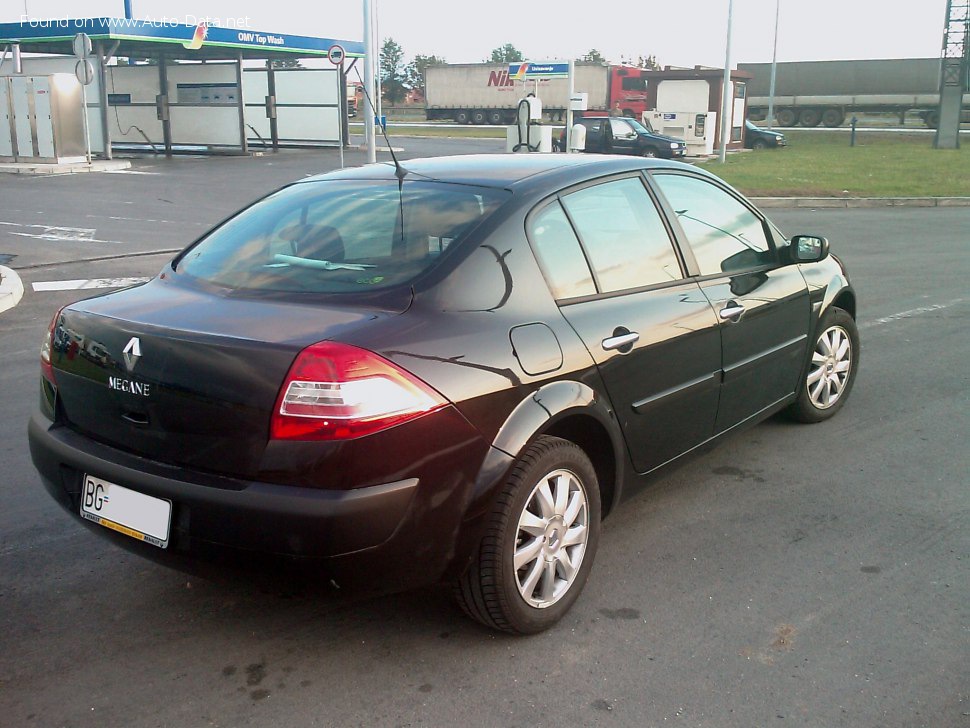
The Renault Megane II Classic (Phase II, 2006) represents a significant iteration of Renault’s popular C-segment offering, specifically targeting European and select Asian markets where traditional sedan body styles held strong appeal. As an international automotive expert, it’s important to recognize that while this model was not available in the United States, its design philosophy and mechanical underpinnings were indicative of the broader trends in the compact family car segment during the mid-2000s. The “Classic” designation refers to the four-door sedan variant, which complemented the more avant-garde hatchback and coupé models of the Megane II lineup. Produced from 2006 to 2008, this Phase II model incorporated refinements over its predecessor, focusing on improved aesthetics, technology, and powertrain efficiency. This particular configuration, featuring the 1.9 dCi (130 Hp) FAP engine paired with an automatic transmission, aimed to deliver a balance of fuel economy, robust performance, and everyday convenience for European families and professionals.
Engine and Performance: The Diesel Advantage
At the heart of the 2006 Renault Megane II Classic 1.9 dCi (130 Hp) FAP Automatic lies a potent and efficient diesel powertrain, a common choice in Europe for its blend of torque and fuel economy. The 1.9-liter (114.11 cu. in.) F9Q Turbo inline four-cylinder engine, equipped with a common rail diesel injection system, was a testament to Renault’s expertise in diesel technology. It delivered a respectable 130 horsepower at 4000 rpm, which was ample for its class, allowing for confident highway cruising and urban maneuverability. More impressively, the engine produced a substantial 221.27 pound-feet of torque at a low 2000 rpm, providing excellent low-end grunt and flexible acceleration, a hallmark of modern turbodiesels.
Power was delivered to the front wheels via a 4-speed automatic transmission. While a 4-speed automatic might seem somewhat dated by today’s standards, even for 2006, it offered a smooth and effortless driving experience, particularly in congested European city traffic. Performance figures were competitive for the segment, with the Megane II Classic accelerating from 0 to 60 mph in an estimated 8.6 seconds and reaching a top speed of 122.41 mph. This made it a capable performer for both daily commutes and longer journeys.
Crucially for the European market, this engine featured a Diesel Particulate Filter (FAP – Filtre à Particules), an early adoption of technology aimed at reducing harmful emissions, allowing it to meet Euro 4 emission standards. This focus on environmental compliance, combined with its impressive fuel economy – achieving an estimated 35.6 US mpg combined – underscored the car’s practical and responsible character. Urban fuel consumption stood at 26.1 US mpg, while extra-urban driving could yield up to 45.2 US mpg, making it a cost-effective choice for many European drivers.
Design and Features: Practicality with European Flair
The Megane II Classic sedan, specifically the Phase II model from 2006, showcased a more conventional yet refined aesthetic compared to the distinctive “bustle-back” design of its hatchback sibling. Measuring 177.09 inches in length, 69.96 inches in width (79.76 inches including mirrors), and 57.48 inches in height, it offered a compact footprint suitable for European roads while maximizing interior space. The 105.75-inch wheelbase contributed to a comfortable ride and stable handling characteristics.
Inside, the Megane II Classic was designed for practicality and comfort, offering seating for five occupants. The interior materials and ergonomics were typical of Renault at the time, prioritizing user-friendliness and a pleasant cabin environment. A key feature for families and travelers was its generous trunk (boot) space, boasting 18.36 cubic feet, which was highly competitive in its segment and a major selling point for the sedan variant. The design emphasized clean lines and a sensible layout, foregoing some of the more radical styling cues of other Megane II variants in favor of broader appeal.
Safety features for the era included standard Anti-lock Braking System (ABS), and a robust chassis designed to offer good passive safety. The vehicle employed an independent McPherson strut front suspension and a torsion beam rear suspension, a common and cost-effective setup that provided a comfortable ride and predictable handling. Steering was managed by an electric power steering system, offering light effort for urban maneuvering and adequate feedback at higher speeds. Ventilated disc brakes up front and solid discs at the rear ensured effective stopping power.
Technical Specifications
| Category | Specification | US Equivalent (where applicable) |
|---|---|---|
| General Information | ||
| Brand | Renault | |
| Model | Megane II Classic (Phase II, 2006) | |
| Engine Type | 1.9 dCi (130 Hp) FAP Automatic | |
| Production Start | 2006 | |
| Production End | 2008 | |
| Body Type | Sedan | |
| Seats / Doors | 5 / 4 | |
| Performance Specs | ||
| Fuel Consumption (Urban) | 9 l/100 km | 26.1 US mpg |
| Fuel Consumption (Extra Urban) | 5.2 l/100 km | 45.2 US mpg |
| Fuel Consumption (Combined) | 6.6 l/100 km | 35.6 US mpg |
| CO2 Emissions | 175 g/km | |
| Fuel Type | Diesel | |
| Acceleration 0-60 mph | 8.6 seconds | |
| Maximum Speed | 197 km/h | 122.41 mph |
| Emission Standard | Euro 4 | |
| Weight-to-Power Ratio | 10.1 kg/Hp | 22.27 lbs/Hp |
| Engine Specs | ||
| Power | 130 Hp @ 4000 rpm | |
| Power per Liter | 69.5 Hp/l | |
| Torque | 300 Nm @ 2000 rpm | 221.27 lb.-ft. @ 2000 rpm |
| Engine Layout | Front, Transverse | |
| Engine Model/Code | F9Q Turbo | |
| Engine Displacement | 1870 cm3 | 114.11 cu. in. |
| Number of Cylinders | 4, Inline | |
| Valves per Cylinder | 2 | |
| Fuel Injection System | Diesel Commonrail | |
| Engine Aspiration | Turbocharger, Intercooler | |
| Valvetrain | OHC | |
| Engine Oil Capacity | 4.5 l | 4.76 US qt |
| Coolant Capacity | 7.9 l | 8.35 US qt |
| Engine Systems | Particulate filter | |
| Space, Volume, and Weights | ||
| Kerb Weight | 1310 kg | 2888.06 lbs. |
| Max. Weight | 1860 kg | 4100.6 lbs. |
| Max Load | 550 kg | 1212.54 lbs. |
| Trunk (Boot) Space – Minimum | 520 l | 18.36 cu. ft. |
| Fuel Tank Capacity | 60 l | 15.85 US gal |
| Max. Roof Load | 80 kg | 176.37 lbs. |
| Permitted Trailer Load (with brakes) | 1300 kg | 2866.01 lbs. |
| Permitted Trailer Load (without brakes) | 650 kg | 1433 lbs. |
| Permitted Towbar Download | 75 kg | 165.35 lbs. |
| Dimensions | ||
| Length | 4498 mm | 177.09 in. |
| Width | 1777 mm | 69.96 in. |
| Width (including mirrors) | 2026 mm | 79.76 in. |
| Height | 1460 mm | 57.48 in. |
| Wheelbase | 2686 mm | 105.75 in. |
| Front Track | 1518 mm | 59.76 in. |
| Rear Track | 1514 mm | 59.61 in. |
| Minimum Turning Circle | 10.7 m | 35.1 ft. |
| Drivetrain, Brakes, and Suspension | ||
| Drivetrain Architecture | Front-wheel drive | |
| Gearbox Type | 4 gears, automatic transmission | |
| Front Suspension | Independent type McPherson | |
| Rear Suspension | Torsion beam | |
| Front Brakes | Ventilated discs | |
| Rear Brakes | Disc | |
| Assisting Systems | ABS (Anti-lock braking system) | |
| Steering Type | Rack and pinion with Electric Power Steering | |
| Tire Sizes | 195/65 R15; 195/55 R16; 205/50 R17 | |
| Wheel Rim Sizes | 6.5J x 15; 6.5J x 16; 6.5J x 17 |
Legacy and Market Impact of the Renault Megane II Classic
The Renault Megane II Classic, particularly in its Phase II iteration from 2006, played a crucial role in Renault’s strategy within the highly competitive European C-segment. While the Megane II hatchback garnered attention for its distinctive styling, the Classic sedan offered a more conservative and practical alternative, appealing to a segment of buyers who preferred traditional three-box designs and larger trunk capacities. Its main competitors in the European market included formidable rivals such as the Opel Astra Sedan, Ford Focus Sedan, Volkswagen Jetta (or Bora, depending on the market), Peugeot 307 Sedan, and the Citroën C4 Sedan.
In a market increasingly moving towards crossovers and SUVs, the Megane II Classic stood as a testament to the enduring appeal of the compact sedan. Its reputation was built on a foundation of comfort, safety (it generally performed well in Euro NCAP crash tests for its era), and cost-effectiveness, particularly with the fuel-efficient dCi diesel engines. For many European families, it represented a sensible and affordable choice, offering a spacious interior and a generous trunk for luggage or groceries, making it a versatile family car.
The 1.9 dCi engine, with its balance of power and exceptional fuel economy, was a significant factor in the car’s market success, especially during a period of fluctuating fuel prices. The inclusion of a Diesel Particulate Filter (FAP) also highlighted Renault’s commitment to meeting evolving emission standards, a critical consideration for European vehicle sales. Although the 4-speed automatic transmission might have been perceived as a slight disadvantage compared to some competitors offering more gears, it contributed to the car’s ease of use and reliability.
Ultimately, the Renault Megane II Classic (Phase II, 2006) 1.9 dCi (130 Hp) FAP Automatic served as a reliable and practical workhorse in its primary markets. It may not have been a groundbreaking vehicle in terms of revolutionary technology or styling, but its consistent performance, strong safety credentials, and excellent fuel efficiency ensured its place as a respected and practical choice for countless European drivers. Its legacy underscores Renault’s ability to cater to diverse market preferences within the compact segment, providing a conventional yet capable option alongside its more daring designs.