Introduction to the Renault Megane II Coupe 1.5 dCi (101 Hp)
The Renault Megane II Coupe 1.5 dCi (101 Hp) represents a significant chapter in the history of compact European automobiles, particularly within the highly competitive C-segment. Launched in 2003 as part of the second-generation Megane lineup, this specific variant offered a compelling blend of distinctive design, a practical coupe body style, and an exceptionally fuel-efficient diesel powertrain. While never officially sold in the United States, the Megane II was a highly influential model in its primary European markets, lauded for its bold styling, strong safety credentials, and a wide array of innovative features for its time. The 1.5 dCi engine, a cornerstone of Renault’s diesel strategy, underlined the brand’s commitment to delivering economical yet capable vehicles to the masses. This particular 3-door coupe model, produced until 2005, carved out a niche for buyers seeking a more stylish and sporty alternative to the conventional hatchback, without sacrificing the crucial aspects of everyday usability and low running costs.
The Distinctive Renault Megane II Coupe Design and Features
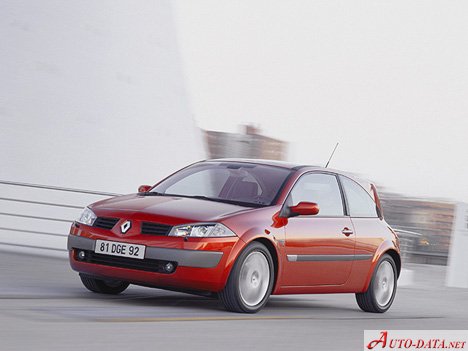
The second-generation Renault Megane, including the Coupe variant, made a dramatic entrance onto the automotive scene with a design language that was nothing short of revolutionary. Penned under the direction of Patrick le Quément, Renault’s then-head of design, the Megane II famously debuted the “bustle-back” rear end on its hatchback sibling, a polarizing but ultimately influential styling cue. The Renault Megane II Coupe, while sharing the same front-end aesthetics, adopted a more conventional yet still distinctly modern profile. It featured a sleek, flowing roofline that terminated in a more integrated rear, offering a sportier stance than its hatchback counterpart. As a 3-door model, it projected a youthful and dynamic image, appealing to a demographic that valued style alongside functionality.
Measuring 165.71 inches in length, 69.96 inches in width, and 57.4 inches in height, with a wheelbase of 103.35 inches, the Megane II Coupe struck a balance between compact maneuverability and interior space. Despite its coupe designation, it was configured with five seats, making it a surprisingly practical option for small families or individuals who occasionally needed to transport more than two passengers. The interior design mirrored the exterior’s modern aesthetic, characterized by clean lines, a digital instrument cluster (a novelty at the time for some trims), and a focus on ergonomic control placement.
Practicality was further enhanced by a respectable trunk capacity, ranging from 11.65 cubic feet with all seats in place to a generous 42.02 cubic feet when the rear seats were folded down. This flexibility underscored Renault’s understanding that even a stylish coupe needed to be versatile for daily life. Key features for the era included power steering, an anti-lock braking system (ABS), and a suite of passive safety features that contributed to the Megane II’s impressive Euro NCAP crash test ratings. The suspension system comprised an independent McPherson strut setup at the front and a torsion beam axle at the rear, a common and effective combination for compact cars, providing a comfortable ride quality with predictable handling characteristics. Braking performance was handled by ventilated discs at the front and solid discs at the rear, ensuring adequate stopping power. The vehicle rolled on 195/65 R15 tires, mounted on 6J x 15-inch wheel rims, a sensible choice balancing grip, comfort, and rolling resistance.
Engine and Performance
At the heart of the Renault Megane II Coupe 1.5 dCi (101 Hp) was the renowned K9K turbodiesel engine. This 1.5-liter (1461 cm³ or 89.16 cubic inches) inline-four power plant was a testament to Renault’s expertise in developing small-displacement diesel engines that delivered exceptional fuel efficiency without completely sacrificing performance. With a compression ratio of 18.8:1, the engine utilized a common rail fuel injection system, which allowed for precise fuel delivery and improved combustion efficiency. Further enhancing its output and efficiency was a turbocharger coupled with an intercooler, ensuring a dense charge of air into the cylinders.
The engine produced a respectable 101 horsepower at 4000 rpm, translating to a power-to-liter ratio of 69.1 horsepower per liter. More critically for a diesel, it generated a robust 147.51 lb.-ft. of torque at a low 1900 rpm. This ample low-end torque was crucial for effortless city driving and relaxed highway cruising, providing a responsive feel despite the modest horsepower figure. Power was channeled to the front wheels via a smooth-shifting 5-speed manual transmission, a common setup for compact cars of this era.
In terms of acceleration, the Megane II Coupe 1.5 dCi (101 Hp) could sprint from 0 to 60 mph in 12.2 seconds, with a top speed of 111.23 mph. While not a performance powerhouse, these figures were perfectly adequate for its intended purpose as an economical daily driver. Where this powertrain truly shined was in its fuel economy. It achieved an impressive 42.8 US mpg in urban driving, 58.8 US mpg on the extra-urban cycle, and a combined average of 52.3 US mpg. These figures were outstanding for the early 2000s, making it a highly attractive option for European motorists facing rising fuel costs. The CO2 emissions were equally commendable at 119 g/km, meeting the Euro 3 emission standard and solidifying its reputation as an environmentally conscious choice for its time. The vehicle’s kerb weight of 2590.43 lbs. contributed to a favorable weight-to-power ratio of 11.6 kg/Hp.
Technical Specifications
| Category | Specification |
|---|---|
| General Information | |
| Brand | Renault |
| Model | Megane II Coupe |
| Engine Type | 1.5 dCi (101 Hp) |
| Production Start | 2003 |
| Production End | 2005 |
| Body Type | Coupe, 3 Doors |
| Seats | 5 |
| Performance Specs | |
| Fuel Consumption (Urban) | 42.8 US mpg (5.5 l/100 km) |
| Fuel Consumption (Extra Urban) | 58.8 US mpg (4.0 l/100 km) |
| Fuel Consumption (Combined) | 52.3 US mpg (4.5 l/100 km) |
| CO2 Emissions | 119 g/km |
| Fuel Type | Diesel |
| Acceleration 0-60 mph | 12.2 sec |
| Maximum Speed | 111.23 mph (179 km/h) |
| Emission Standard | Euro 3 |
| Weight-to-Power Ratio | 11.6 kg/Hp |
| Engine Specs | |
| Power | 101 Hp @ 4000 rpm |
| Torque | 147.51 lb.-ft. @ 1900 rpm (200 Nm) |
| Engine Layout | Front, Transverse |
| Engine Model/Code | K9K |
| Engine Displacement | 1.5 Liters (1461 cm³ / 89.16 cu. in.) |
| Number of Cylinders | 4, Inline |
| Cylinder Bore | 2.99 in. (76 mm) |
| Piston Stroke | 3.17 in. (80.5 mm) |
| Compression Ratio | 18.8:1 |
| Valves per Cylinder | 2 |
| Fuel Injection System | Diesel Commonrail |
| Engine Aspiration | Turbocharger, Intercooler |
| Engine Oil Capacity | 4.76 US qt (4.5 l) |
| Coolant Capacity | 6.87 US qt (6.5 l) |
| Space, Volume & Weights | |
| Kerb Weight | 2590.43 lbs. (1175 kg) |
| Max. Weight (GVWR) | 3802.97 lbs. (1725 kg) |
| Max Load | 1212.54 lbs. (550 kg) |
| Trunk Space (Min/Max) | 11.65 / 42.02 cu. ft. (330 / 1190 l) |
| Fuel Tank Capacity | 15.85 US gal (60 l) |
| Max. Roof Load | 176.37 lbs. (80 kg) |
| Permitted Trailer Load (with brakes) | 2866.01 lbs. (1300 kg) |
| Permitted Trailer Load (without brakes) | 1433 lbs. (650 kg) |
| Permitted Towbar Download | 165.35 lbs. (75 kg) |
| Dimensions | |
| Length | 165.71 in. (4209 mm) |
| Width | 69.96 in. (1777 mm) |
| Height | 57.4 in. (1458 mm) |
| Wheelbase | 103.35 in. (2625 mm) |
| Front Track | 59.76 in. (1518 mm) |
| Rear Track | 59.61 in. (1514 mm) |
| Drag Coefficient (Cd) | 0.35 |
| Minimum Turning Circle | 34.45 ft. (10.5 m) |
| Drivetrain, Brakes & Suspension | |
| Drivetrain Architecture | Front-wheel drive, Internal Combustion engine |
| Drive Wheel | Front Wheel Drive |
| Gearbox | 5 gears, Manual Transmission |
| Front Suspension | Independent type McPherson |
| Rear Suspension | Torsion Beam |
| Front Brakes | Ventilated Discs |
| Rear Brakes | Discs |
| Assisting Systems | ABS (Anti-lock braking system) |
| Steering Type | Steering rack and pinion |
| Power Steering | Electric Steering |
| Tire Size | 195/65 R15 |
| Wheel Rims Size | 6J x 15 |
Legacy and Market Impact of the Renault Megane II Coupe
The Renault Megane II, and by extension the Megane II Coupe 1.5 dCi (101 Hp), left an indelible mark on the European automotive landscape. Its audacious styling was a clear departure from the conservative designs that often dominated the compact segment, helping Renault to stand out and attract attention. The Megane II was not just about looks; it also garnered significant praise for its safety, becoming one of the first cars in its class to achieve a five-star Euro NCAP crash test rating, a major selling point in safety-conscious Europe.
In its primary European market, the Megane II Coupe competed against a strong field of rivals, including the Volkswagen Golf (particularly the 3-door variant), Ford Focus, Opel Astra, and Peugeot 307. What set the Megane II Coupe 1.5 dCi apart was its unique combination of distinctive style, remarkable fuel economy, and a surprisingly practical interior for a coupe. The 1.5 dCi engine, in particular, was a major draw. It was lauded for its refinement, low running costs, and impressive range, making it a favorite among commuters and company car drivers who valued efficiency above outright speed. This engine became a staple across many Renault and Nissan models, testifying to its reliability and widespread acceptance.
Renault, having withdrawn from the North American market in the late 1980s, did not offer the Megane II Coupe or any other Megane variant in the United States. This was primarily due to the different market preferences, where compact cars, especially diesel-powered ones, held a much smaller share compared to larger sedans, SUVs, and gasoline-powered vehicles. However, its success in Europe demonstrated Renault’s ability to innovate and capture market share in a fiercely competitive environment.
The Megane II Coupe’s legacy is that of a stylish, safe, and incredibly economical compact car that pushed design boundaries. It highlighted the growing importance of diesel technology in achieving low emissions and high fuel efficiency during the early 2000s, long before widespread electrification. It remains a testament to Renault’s design daring and engineering prowess, offering a distinctive option for European buyers who wanted a car that was both practical and aesthetically engaging, without compromising on efficiency. Its impact paved the way for future generations of the Megane, which continued to evolve the brand’s design language and technological offerings.