The Renault Megane II Coupe 1.9 dCi (120 Hp): A European Diesel Icon of the Mid-2000s
The Renault Megane II Coupe 1.9 dCi (120 Hp) represents a distinctive chapter in the history of compact European automobiles.
Produced between 2004 and 2005, this specific variant of the second-generation Megane was a testament to Renault’s
commitment to offering a stylish, efficient, and performance-oriented vehicle within the highly competitive C-segment.
While never officially sold in the United States, the Megane II, particularly in its unique coupe form and with a robust
diesel powertrain, carved out a significant niche in European markets, blending unconventional design with practical
everyday usability and impressive fuel economy. This particular model, equipped with the 1.9-liter dCi engine,
offered a compelling package for drivers prioritizing low running costs and strong torque delivery.
The Megane II generation itself was a radical departure from its predecessor, introducing a bold,
controversial, yet ultimately influential design language that earned it the European Car of the Year award in 2003.
The Coupe variant further accentuated this design philosophy, transforming the popular hatchback’s lines into a
sportier, three-door silhouette. This article delves into the technical prowess, design philosophy, and market
impact of the Renault Megane II Coupe 1.9 dCi (120 Hp),
analyzing its place within the European automotive landscape of the early to mid-2000s.
Engine and Performance: The Heart of the Renault Megane II Coupe 1.9 dCi (120 Hp)
Under the hood of the Renault Megane II Coupe 1.9 dCi (120 Hp) resided a formidable 1.9-liter (1870 cm³, or 114.11 cu. in.)
inline-four turbodiesel engine, identified by the F9Q engine code. This powerplant was a cornerstone of Renault’s
diesel lineup, celebrated for its balance of power, efficiency, and refinement for the era. Producing 120 horsepower
at 4000 rpm and a substantial 221.27 lb.-ft. of torque at just 2000 rpm, the engine delivered strong
acceleration and flexible in-gear performance. The high torque figure, characteristic of modern diesel engines,
made the Megane II Coupe feel responsive and eager, particularly in urban driving and highway cruising.
The engine’s architecture featured an OHC (Overhead Camshaft) valvetrain with two valves per cylinder, a compression
ratio of 19:1, and a sophisticated Common Rail direct fuel injection system. A turbocharger with an intercooler
ensured efficient air intake and boosted performance across the rev range. Power was sent to the front wheels
through a precise 6-speed manual transmission, which allowed drivers to fully exploit the engine’s torque band
and optimize fuel economy.
Performance figures for the Megane II Coupe 1.9 dCi were respectable for its class. It could accelerate from 0 to
60 mph in approximately 10 seconds, with a maximum speed of 121.79 mph (196 km/h). However, its true strength lay
in its fuel efficiency. The official combined fuel consumption was an impressive 43.6 US mpg (5.4 l/100 km),
dropping to an outstanding 53.5 US mpg (4.4 l/100 km) on the extra-urban cycle. This made the Megane II Coupe
1.9 dCi an incredibly economical choice for European motorists, especially given the higher cost of gasoline in the region.
The vehicle also met the Euro 3 emission standard, reflecting its environmental compliance for the period.
Design and Features: Sculpting a Distinctive Coupe
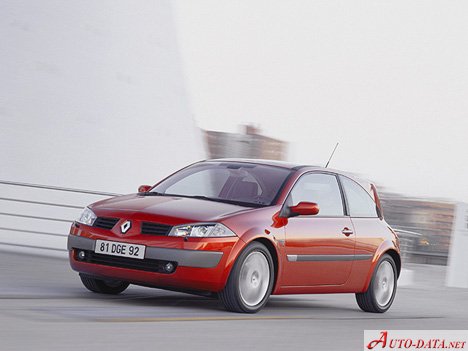
The design of the Renault Megane II Coupe was arguably its most defining characteristic. Carrying over the
bold, avant-garde styling of the Megane II hatchback, the coupe variant further refined its lines into a
sportier, more aggressive form. The most striking element was its distinctive “bustle-back” rear end, featuring
a steeply raked rear window and prominent, vertically stacked taillights. This design, while polarizing,
gave the Megane II an unmistakable identity on the road and set it apart from its more conventionally styled rivals.
The three-door body type emphasized its sporty intentions, appealing to a younger demographic or those seeking
a more dynamic aesthetic.
Despite its coupe designation, the Megane II Coupe remained a practical 5-seater vehicle, offering a surprising
degree of interior space for its class. Its dimensions measured 165.71 inches (4209 mm) in length, 69.96 inches
(1777 mm) in width, and 57.4 inches (1458 mm) in height, with a wheelbase of 103.35 inches (2625 mm).
The trunk space was also commendable, ranging from 11.65 cu. ft. (330 liters) with the rear seats up,
expanding to a generous 42.02 cu. ft. (1190 liters) when folded, enhancing its versatility.
Inside, the Megane II featured an interior that, while not luxurious, was well-appointed for its segment,
with a focus on ergonomics and ease of use. Key features for the era included power steering (electric),
and essential safety systems like ABS (Anti-lock Braking System), which was standard. The front suspension
utilized independent coil springs, while the rear featured a torsion beam setup, a common and cost-effective
solution for compact cars that provided a good balance of ride comfort and handling. Braking was handled by
ventilated discs at the front and solid discs at the rear, ensuring adequate stopping power. The car rode on
195/65 R15 tires mounted on 6J x 15-inch wheels, providing a comfortable ride and predictable handling.
Technical Specifications
| Category | Specification |
|---|---|
| Brand | Renault |
| Model | Megane |
| Generation | Megane II Coupe |
| Type (Engine) | 1.9 dCi (120 Hp) |
| Production Start | 2004 |
| Production End | 2005 |
| Powertrain Architecture | Internal Combustion Engine, Front-Wheel Drive |
| Body Type | Coupe |
| Seats | 5 |
| Doors | 3 |
Performance Specs |
|
| Fuel Consumption (Urban) | 7.1 l/100 km (33.1 US mpg) |
| Fuel Consumption (Extra Urban) | 4.4 l/100 km (53.5 US mpg) |
| Fuel Consumption (Combined) | 5.4 l/100 km (43.6 US mpg) |
| CO2 Emissions | 141 g/km |
| Fuel Type | Diesel |
| Acceleration 0-60 mph | 10 seconds |
| Maximum Speed | 121.79 mph (196 km/h) |
| Emission Standard | Euro 3 |
| Weight-to-Power Ratio | 10.4 kg/Hp (96 Hp/tonne) |
| Weight-to-Torque Ratio | 4.2 kg/Nm (240 Nm/tonne) |
Engine Specs |
|
| Power | 120 Hp @ 4000 rpm |
| Power per liter | 64.2 Hp/l |
| Torque | 221.27 lb.-ft. (300 Nm) @ 2000 rpm |
| Engine Layout | Front, Transverse |
| Engine Model/Code | F9Q |
| Engine Displacement | 1.9 liters (1870 cm³ / 114.11 cu. in.) |
| Number of Cylinders | 4 |
| Engine Configuration | Inline |
| Cylinder Bore | 3.15 in. (80 mm) |
| Piston Stroke | 3.66 in. (93 mm) |
| Compression Ratio | 19:1 |
| Valves per Cylinder | 2 |
| Fuel Injection System | Diesel Commonrail |
| Engine Aspiration | Turbocharger, Intercooler |
| Valvetrain | OHC |
| Engine Oil Capacity | 4.86 US qt (4.6 l) |
| Coolant Capacity | 7.61 US qt (7.2 l) |
Dimensions, Weight & Volume |
|
| Kerb Weight | 2755.78 lbs. (1250 kg) |
| Max. Weight (GVWR) | 3968.32 lbs. (1800 kg) |
| Max Load | 1212.54 lbs. (550 kg) |
| Trunk (Boot) Space (Min) | 11.65 cu. ft. (330 l) |
| Trunk (Boot) Space (Max) | 42.02 cu. ft. (1190 l) |
| Fuel Tank Capacity | 15.85 US gal (60 l) |
| Max. Roof Load | 176.37 lbs. (80 kg) |
| Permitted Trailer Load (with brakes) | 2866.01 lbs. (1300 kg) |
| Permitted Trailer Load (without brakes) | 1433 lbs. (650 kg) |
| Permitted Towbar Download | 165.35 lbs. (75 kg) |
| Length | 165.71 in. (4209 mm) |
| Width | 69.96 in. (1777 mm) |
| Height | 57.4 in. (1458 mm) |
| Wheelbase | 103.35 in. (2625 mm) |
| Front Track | 59.76 in. (1518 mm) |
| Rear Track | 59.61 in. (1514 mm) |
| Drag Coefficient (Cd) | 0.35 |
| Minimum Turning Circle | 34.45 ft. (10.5 m) |
Drivetrain, Brakes & Suspension |
|
| Drive Wheel | Front-Wheel Drive |
| Gearbox | 6-speed manual transmission |
| Front Suspension | Independent coil spring |
| Rear Suspension | Torsion beam |
| Front Brakes | Ventilated discs |
| Rear Brakes | Disc |
| Assisting Systems | ABS (Anti-lock Braking System) |
| Steering Type | Rack and pinion |
| Power Steering | Electric Steering |
| Tires Size | 195/65 R15 |
| Wheel Rims Size | 6J x 15 |
Legacy and Market Impact in Europe
The Renault Megane II Coupe 1.9 dCi (120 Hp), like the broader Megane II range, enjoyed considerable success
in the European market during its production run. Its distinctive styling, particularly the “bustle-back”
rear, was a bold statement that helped Renault stand out in a crowded segment dominated by more conservative
designs. While initially met with mixed reactions, the design ultimately proved influential, paving the way
for more adventurous styling in the compact class. The Coupe variant, with its three doors and sportier profile,
offered a more youthful and dynamic alternative to the standard hatchback, without sacrificing too much
in terms of practicality.
In Europe, the 1.9 dCi engine was a particularly important offering. At a time when diesel fuel was often
cheaper than gasoline and diesel technology was rapidly advancing in terms of efficiency and refinement,
this powertrain made the Megane II Coupe a highly attractive proposition. Its excellent fuel economy and
strong torque made it ideal for both city driving and long-distance highway cruising, which are common
driving patterns across the continent. Competitors in its segment included popular models like the
Volkswagen Golf, Ford Focus, Peugeot 307, and Opel Astra, many of which also offered diesel coupe or
three-door hatchback variants. The Megane II distinguished itself with its unique design and a reputation
for comfortable ride quality.
While the Renault Megane II Coupe 1.9 dCi (120 Hp) never made it to American shores, its impact in Europe
was significant. It showcased Renault’s ability to innovate in design and powertrain technology,
especially in the realm of efficient diesel engines. The Megane II generation as a whole helped solidify
Renault’s position as a leader in the compact segment, known for its emphasis on safety (it was one of the
first cars to achieve a 5-star Euro NCAP rating for occupant protection), comfort, and distinctive styling.
The 1.9 dCi engine, in particular, highlighted the growing sophistication and appeal of diesel power in Europe,
a trend that would continue for many years before the shift towards electrification. Today, the Megane II Coupe
remains a recognizable symbol of early 21st-century European automotive design and engineering, celebrated
for its bold aesthetic and practical performance package.