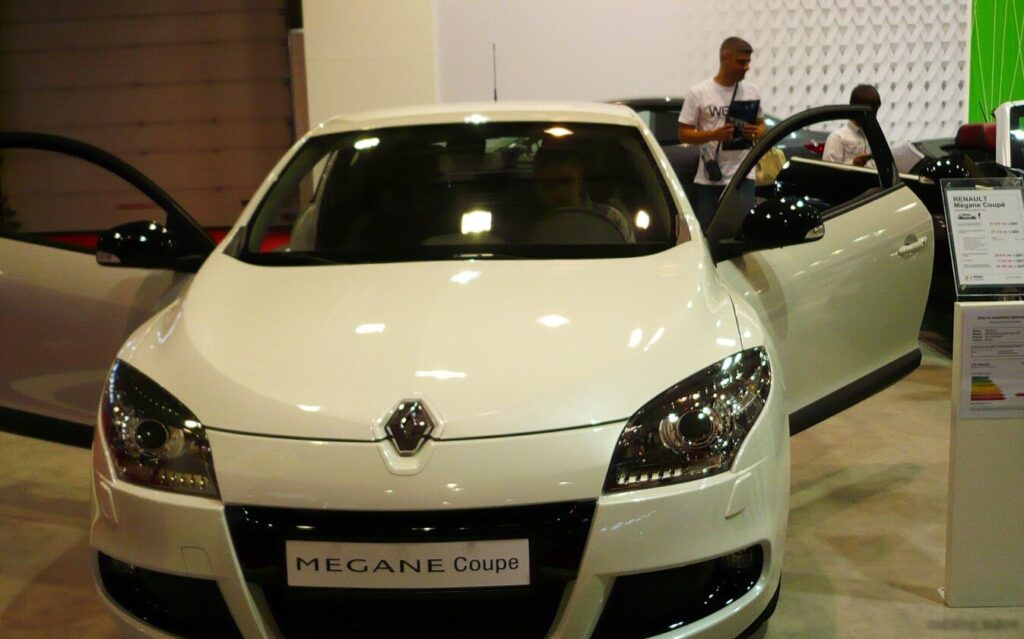
Introduction to the Renault Megane II Coupe (Phase II, 2006)
The automotive landscape of the mid-2000s in Europe was characterized by a strong emphasis on fuel efficiency, practical design, and a growing appreciation for diesel powertrains. Within this context, the Renault Megane II emerged as a significant player in the highly competitive C-segment, or compact car class. Introduced in 2002, the second-generation Megane quickly gained attention for its distinctive, often polarizing, styling and its strong commitment to safety. The specific variant under review, the Renault Megane II Coupe (Phase II, 2006) 1.5 dCi (86 Hp), represents a refined iteration of this successful platform, produced from 2006 to 2008.
While the Megane II was offered in a variety of body styles, including a five-door hatchback, sedan, and convertible, the three-door coupe variant appealed to buyers seeking a sportier aesthetic without fully sacrificing practicality. This particular model, equipped with the 1.5-liter dCi (direct common-rail injection) diesel engine, was a prime example of Renault’s strategy to deliver economical and environmentally conscious vehicles to the mass market. Though never officially imported to the United States, the Megane II Coupe played a crucial role in Renault’s European portfolio, competing against established rivals by offering a unique blend of French design flair, advanced (for its time) technology, and impressive fuel economy. This detailed analysis will delve into the specifications, performance, design, and market impact of this notable European compact coupe.
Engine and Performance of the Renault Megane II Coupe (Phase II, 2006)
At the heart of the Renault Megane II Coupe (Phase II, 2006) 1.5 dCi (86 Hp) lies Renault’s venerable K9K Turbo diesel engine. This 1.5-liter (1461 cm³ or 89.16 cu. in.) inline-four powerplant was a cornerstone of Renault’s smaller vehicle lineup, renowned for its efficiency and reliability. In this specific tune, the engine produced a modest but effective 86 horsepower at 3750 revolutions per minute (rpm), translating to a power-per-liter figure of 58.9 horsepower per liter. More significantly for a diesel engine, it delivered a robust 147.51 lb.-ft. (200 Nm) of torque at a low 1900 rpm. This characteristic low-end torque was instrumental in providing responsive acceleration and a relaxed driving experience, particularly in urban environments and for highway cruising.
The powertrain architecture featured a front, transverse-mounted engine driving the front wheels through a 5-speed manual transmission. This setup was typical for compact cars of the era, offering a good balance of manufacturing cost, packaging efficiency, and driver engagement. The engine benefited from a diesel common rail fuel injection system, a turbocharger, and an intercooler, all technologies designed to maximize power output and fuel efficiency while minimizing emissions.
Performance figures for the 1.5 dCi (86 Hp) variant reflected its economy-focused nature rather than outright speed. It could accelerate from 0 to 60 miles per hour in a calculated 12.1 seconds, with 0 to 62 mph (100 km/h) taking 12.7 seconds. The maximum speed was rated at 108.12 mph (174 km/h). While these numbers might not impress enthusiasts of high-performance vehicles, they were perfectly adequate for everyday European driving conditions, including navigating city streets and maintaining highway speeds.
Where this powertrain truly shone was in its fuel economy and environmental credentials. The Megane II Coupe 1.5 dCi achieved an impressive combined fuel consumption of 52.3 US mpg (4.5 l/100 km), with urban figures reaching 42.8 US mpg (5.5 l/100 km) and extra-urban figures soaring to 58.8 US mpg (4.0 l/100 km). With CO2 emissions of just 120 g/km, it met the Euro 4 emission standard, making it an attractive option for environmentally conscious buyers and benefiting from lower road taxes in many European countries. The large 15.85 US gallon (60 liter) fuel tank, combined with its excellent economy, provided a substantial cruising range, a desirable trait for long-distance European travel.
Design and Features
The design of the Renault Megane II was a radical departure from its predecessor and indeed much of its competition, characterized by its bold, angular lines and distinctive rear styling. The Coupe variant, specifically the Phase II model from 2006, retained much of this avant-garde aesthetic but presented it in a sleeker, more dynamic three-door body. Measuring 165.71 inches (4209 mm) in length, 69.96 inches (1777 mm) in width (79.76 inches or 2026 mm including mirrors), and 57.4 inches (1458 mm) in height, the Megane II Coupe had a compact footprint that made it agile in city traffic and easy to park. Its 103.35-inch (2625 mm) wheelbase contributed to a stable ride and a surprisingly spacious interior for a coupe.
Despite being a coupe, the Megane II offered a practical five-seat layout, making it a viable option for small families or those needing occasional rear passenger capacity. The trunk space was commendable for its class, offering a minimum of 11.65 cu. ft. (330 liters), which could expand significantly to 42.02 cu. ft. (1190 liters) with the rear seats folded, enhancing its utility. The car’s drag coefficient (Cd) was 0.35, a respectable figure for the time, aiding in both fuel efficiency and reduced wind noise.
In terms of chassis and suspension, the Megane II Coupe featured an independent McPherson strut setup at the front, a common and effective design for front-wheel-drive vehicles, providing good handling and ride comfort. The rear utilized a torsion beam suspension, a compact and cost-effective solution often used in this segment, balancing space efficiency with predictable handling. Braking was handled by ventilated discs at the front and solid discs at the rear, complemented by an Anti-lock Braking System (ABS), which was becoming standard safety equipment across Europe by 2006.
The steering system was an electric power-assisted rack and pinion setup, offering light effort for urban maneuvering and providing a degree of feel at higher speeds. Standard tire size was 195/65 R15, mounted on 6J x 15-inch wheel rims, a practical choice that prioritized ride comfort and affordability over aggressive styling. The car’s kerb weight of 2590.43 lbs. (1175 kg) contributed to its nimble feel and further enhanced its fuel economy. Features like a generous 176.37 lbs. (80 kg) maximum roof load capacity and significant trailer towing capabilities (2866.01 lbs. with brakes) also underscored its versatility.
Technical Specifications
| Category | Specification |
|---|---|
| Brand | Renault |
| Model | Megane |
| Generation | Megane II Coupe (Phase II, 2006) |
| Type (Engine) | 1.5 dCi (86 Hp) |
| Production Years | 2006 – 2008 |
| Body Type | Coupe, 3 Doors, 5 Seats |
| Powertrain Architecture | Internal Combustion engine, Front-wheel drive |
| Performance | |
| Fuel Consumption (Urban) | 42.8 US mpg (5.5 l/100 km) |
| Fuel Consumption (Extra Urban) | 58.8 US mpg (4.0 l/100 km) |
| Fuel Consumption (Combined) | 52.3 US mpg (4.5 l/100 km) |
| CO2 Emissions | 120 g/km |
| Fuel Type | Diesel |
| Acceleration 0-60 mph | 12.1 sec (Calculated) |
| Acceleration 0-62 mph (0-100 km/h) | 12.7 sec |
| Maximum Speed | 108.12 mph (174 km/h) |
| Emission Standard | Euro 4 |
| Weight-to-Power Ratio | 13.7 kg/Hp (73.2 Hp/tonne) |
| Weight-to-Torque Ratio | 5.9 kg/Nm (170.2 Nm/tonne) |
| Engine Details | |
| Power | 86 Hp @ 3750 rpm |
| Torque | 147.51 lb.-ft. (200 Nm) @ 1900 rpm |
| Engine Layout | Front, Transverse |
| Engine Model/Code | K9K Turbo |
| Engine Displacement | 1.5 liters (1461 cm³ / 89.16 cu. in.) |
| Number of Cylinders | 4, Inline |
| Valves per Cylinder | 2 |
| Bore x Stroke | 2.99 in. (76 mm) x 3.17 in. (80.5 mm) |
| Compression Ratio | 18.8:1 |
| Fuel Injection System | Diesel Commonrail |
| Engine Aspiration | Turbocharger, Intercooler |
| Engine Oil Capacity | 4.76 US qt (4.5 l) |
| Coolant Capacity | 5.6 US qt (5.3 l) |
| Dimensions, Weights, and Capacities | |
| Length | 165.71 in. (4209 mm) |
| Width | 69.96 in. (1777 mm) |
| Width (incl. mirrors) | 79.76 in. (2026 mm) |
| Height | 57.4 in. (1458 mm) |
| Wheelbase | 103.35 in. (2625 mm) |
| Front Track | 59.76 in. (1518 mm) |
| Rear Track | 59.61 in. (1514 mm) |
| Kerb Weight | 2590.43 lbs. (1175 kg) |
| Max. Weight (GVWR) | 3802.97 lbs. (1725 kg) |
| Max. Load | 1212.54 lbs. (550 kg) |
| Trunk Space (Min/Max) | 11.65 – 42.02 cu. ft. (330 – 1190 l) |
| Fuel Tank Capacity | 15.85 US gal (60 l) |
| Max. Roof Load | 176.37 lbs. (80 kg) |
| Permitted Trailer Load (with brakes) | 2866.01 lbs. (1300 kg) |
| Permitted Trailer Load (without brakes) | 1433 lbs. (650 kg) |
| Permitted Towbar Download | 165.35 lbs. (75 kg) |
| Drag Coefficient (Cd) | 0.35 |
| Minimum Turning Circle | 34.45 ft. (10.5 m) |
| Drivetrain, Brakes, and Suspension | |
| Drive Wheel | Front-wheel drive |
| Gearbox | 5 gears, Manual transmission |
| Front Suspension | Independent type McPherson |
| Rear Suspension | Torsion |
| Front Brakes | Ventilated discs |
| Rear Brakes | Disc |
| Assisting Systems | ABS (Anti-lock braking system) |
| Steering Type | Steering rack and pinion |
| Power Steering | Electric Steering |
| Tires Size | 195/65 R15 |
| Wheel Rims Size | 6J x 15 |
Legacy and Market Impact of the Renault Megane II Coupe
The Renault Megane II, and specifically its Coupe variant, left a distinctive mark on the European compact car segment during its production run. Its most immediate impact stemmed from its audacious design, which, while not universally loved, certainly stood out in a class often criticized for its conservative styling. The “bustle-back” rear of the hatchback was particularly iconic, and while the coupe softened this somewhat, it retained the strong lines and purposeful stance that defined the Megane II generation. This bold approach helped Renault differentiate itself from rivals and attract buyers looking for something beyond the conventional.
Beyond aesthetics, the Megane II gained a strong reputation for its safety. It was one of the first compact cars to achieve a full five-star rating in Euro NCAP crash tests, a significant selling point that resonated with family-oriented buyers. This commitment to safety, combined with comfortable interiors and a generally refined ride quality, contributed to its popularity.
In the context of the European market, the 1.5 dCi engine variant was particularly impactful. At a time when diesel fuel was significantly cheaper than gasoline and fuel efficiency was a paramount concern for many consumers, the Megane II Coupe’s impressive combined fuel economy of 52.3 US mpg (4.5 l/100 km) made it an incredibly cost-effective vehicle to run. Its low CO2 emissions also appealed to a growing segment of environmentally aware buyers and offered tax advantages in several countries. This made the 1.5 dCi a volume seller, contributing substantially to Renault’s overall market share in the compact segment.
The Renault Megane II Coupe (Phase II, 2006) faced fierce competition from a host of established players in Europe. Key rivals included the evergreen Volkswagen Golf, known for its build quality and refinement; the Ford Focus, lauded for its driving dynamics; the Opel Astra, a strong contender in terms of value and practicality; and other French competitors like the Peugeot 307 and Citroën C4, which often shared a similar emphasis on design and comfort. The Megane Coupe differentiated itself by offering a sportier, more individualistic style than its mainstream hatchback siblings, appealing to those who desired a more personal car without sacrificing the everyday usability of a compact.
Its legacy lies in its role as a pioneer in design, a benchmark in safety for its class, and a champion of diesel efficiency during a crucial period for the European automotive industry. While it never graced American showrooms, the Megane II Coupe exemplifies a distinct era of European car manufacturing where character, economy, and safety were expertly balanced, setting the stage for future generations of compact vehicles.