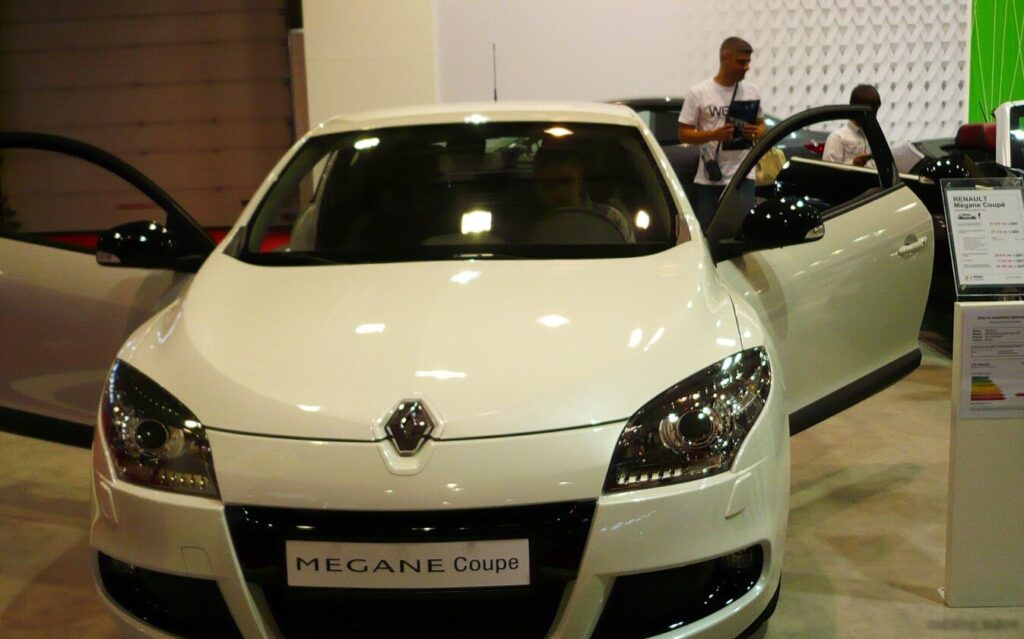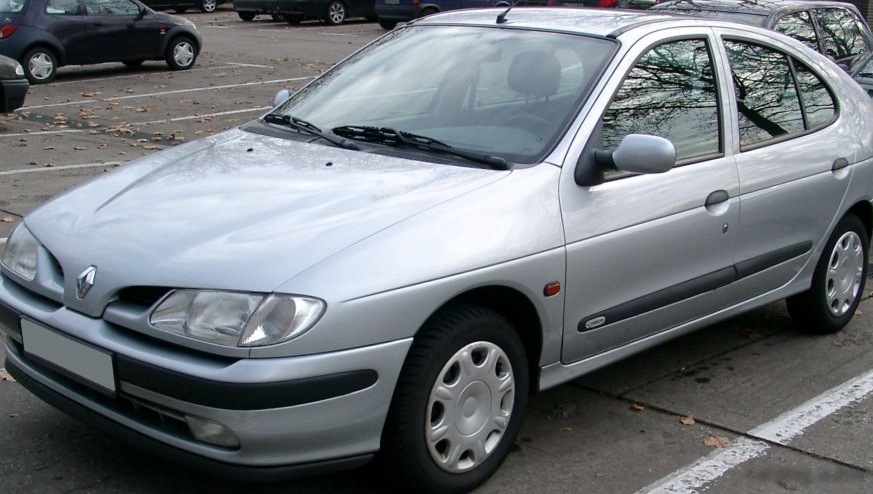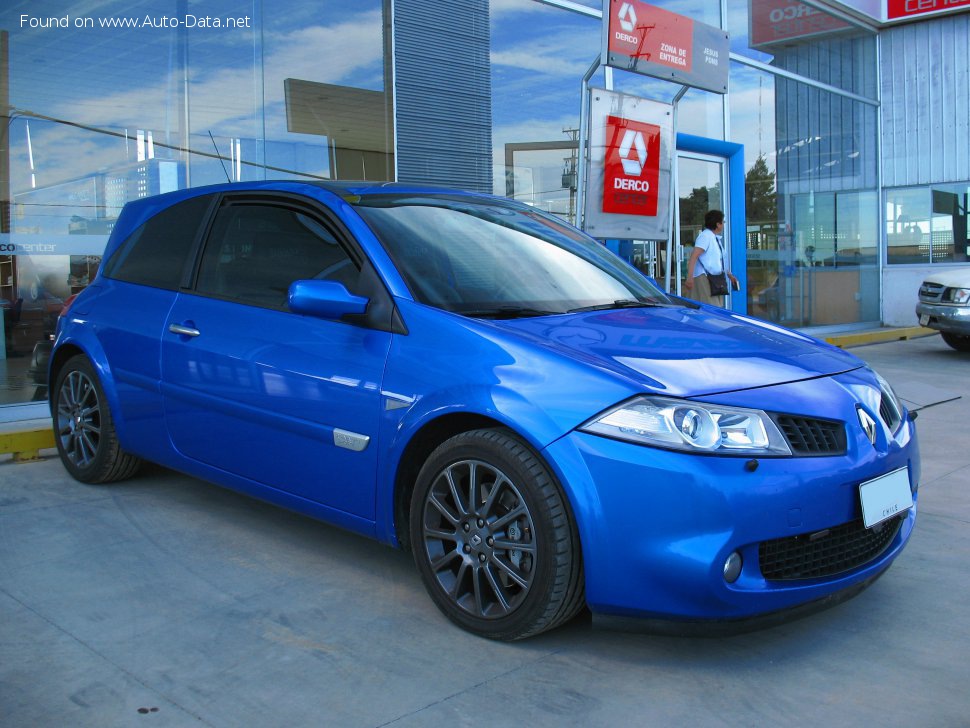
The Renault Megane II Coupe (Phase II, 2006) GT 1.9 dCi (130 Hp) FAP: A European Hot Hatch Coupe
The Renault Megane II Coupe (Phase II, 2006) GT 1.9 dCi (130 Hp) FAP represents a distinctive chapter in the history of compact European automobiles. As part of the second generation of Renault’s popular Megane lineup, the Phase II models, introduced in 2006, brought a refreshed look and updated powertrains to the market. This specific GT 1.9 dCi variant, produced for the 2008 model year, was a compelling offering for European consumers seeking a blend of sporty aesthetics, engaging driving dynamics, and the impressive fuel efficiency inherent to diesel technology. While never officially sold in the United States, the Megane II Coupe was a significant player in the highly competitive European C-segment, where it carved out a niche as a stylish and practical three-door compact, directly challenging rivals from Volkswagen, Ford, and Peugeot with its unique design and robust diesel engine.
The Megane II, first launched in 2002, was renowned for its avant-garde “bustle-back” design, a bold departure from conventional hatchback styling. The Coupe variant further accentuated this distinctiveness, offering a sleeker profile and a more performance-oriented stance. The GT trim, combined with the 1.9 dCi engine, aimed to deliver a “Grand Tourer” experience within a compact package – meaning comfortable long-distance cruising capability coupled with a responsive engine. This particular configuration, with its FAP (Filtre À Particules or Diesel Particulate Filter), also highlighted Renault’s commitment to meeting evolving European emission standards, specifically Euro 4, during a period when diesel engines were at their peak popularity across the continent.
Engine and Performance of the Renault Megane II Coupe (Phase II, 2006) GT 1.9 dCi
At the heart of the Renault Megane II Coupe (Phase II, 2006) GT 1.9 dCi (130 Hp) FAP lies a potent 1.9-liter (1870 cm³, 114.11 cu. in.) F9Q Turbo inline-four diesel engine. This powerplant, a staple in Renault’s lineup, was engineered for both efficiency and spirited performance. Equipped with a turbocharger and intercooler, it delivered a respectable 130 horsepower at 4000 rpm, translating to 69.5 horsepower per liter. More significantly for a diesel, it produced a substantial 300 Nm (221.27 lb.-ft.) of torque at a low 2000 rpm. This ample low-end torque was crucial for the car’s responsive acceleration and flexible in-gear performance, making it a joy to drive in both urban and highway conditions.
Power was sent to the front wheels via a slick-shifting 6-speed manual transmission, offering drivers precise control and the ability to maximize the engine’s power band. This drivetrain architecture contributed to the car’s impressive acceleration figures for a diesel compact of its time: 0 to 60 mph was achieved in a brisk 8.6 seconds, and the car could reach a top speed of 124.27 mph (200 km/h). These numbers placed the GT 1.9 dCi firmly in the “warm hatch” category, balancing everyday usability with a healthy dose of performance.
Beyond raw power, the 1.9 dCi engine was also designed with efficiency in mind. Fuel consumption figures were noteworthy, with an estimated combined economy of 42 US mpg (5.6 l/100 km). Urban driving yielded around 33.6 US mpg (7 l/100 km), while extra-urban cruising could see figures as high as 48 US mpg (4.9 l/100 km). With CO2 emissions of 149 g/km, the vehicle met the Euro 4 emission standard, a testament to its advanced common rail fuel injection system and the integrated Diesel Particulate Filter (FAP), which reduced harmful emissions. The car’s weight-to-power ratio stood at 9.6 kg/Hp (104 Hp/tonne), and its weight-to-torque ratio was 4.2 kg/Nm (240 Nm/tonne), indicating a well-balanced power-to-weight profile for its class.
Design and Features
The Renault Megane II Coupe (Phase II, 2006) GT 1.9 dCi distinguished itself with its striking three-door coupe body style, offering seating for five passengers despite its compact dimensions. Measuring 165.71 inches (4209 mm) in length, 69.96 inches (1777 mm) in width (79.76 inches or 2026 mm including mirrors), and 57.4 inches (1458 mm) in height, the Megane Coupe maintained a sleek and athletic profile. Its 103.35-inch (2625 mm) wheelbase contributed to stable handling and a surprisingly spacious interior for a coupe. The distinctive rear end, often referred to as the “bustle-back,” was a defining characteristic of the Megane II generation, setting it apart from its more conventionally styled rivals. The GT trim likely featured subtle aerodynamic enhancements and unique badging to underscore its sportier intentions.
Underneath its distinctive skin, the Megane II Coupe employed a robust chassis designed for comfort and confident handling. It featured an independent coil spring front suspension and a torsion beam rear suspension, a common and effective setup for front-wheel-drive compacts. Stopping power was provided by ventilated disc brakes at the front and disc brakes at the rear, augmented by an Anti-lock Braking System (ABS) for enhanced safety and control during emergency braking. The steering system utilized an electric rack and pinion setup, offering light and precise control, particularly beneficial in urban environments. The car rode on 195/65 R15 tires mounted on 6J x 15 wheel rims, providing a good balance of grip and ride comfort.
Inside, the Megane II Coupe offered a cabin that blended modern design with practical features for its era. While specific interior features for the GT trim aren’t detailed in the provided data, typical amenities for a European compact of this period would include air conditioning, power windows, remote central locking, and a quality audio system. The focus on safety was also paramount for Renault, with the Megane II having achieved high ratings in Euro NCAP crash tests, reflecting the brand’s commitment to occupant protection. Practicality was also considered, with a minimum trunk space of 11.65 cu. ft. (330 liters) expandable to a generous 42.02 cu. ft. (1190 liters) with the rear seats folded, making it versatile for a coupe.
Technical Specifications: Renault Megane II Coupe (Phase II, 2006) GT 1.9 dCi (130 Hp) FAP
| Category | Specification | Metric / US Equivalent |
|---|---|---|
| General Information | ||
| Brand | Renault | |
| Model | Megane | |
| Generation | Megane II Coupe (Phase II, 2006) | |
| Type (Engine) | GT 1.9 dCi (130 Hp) FAP | |
| Start of Production | 2008 year | |
| End of Production | 2008 year | |
| Powertrain Architecture | Internal Combustion engine | |
| Body type | Coupe | 3 Doors, 5 Seats |
| Performance Specs | ||
| Fuel consumption (economy) – urban | 7 l/100 km | 33.6 US mpg |
| Fuel consumption (economy) – extra urban | 4.9 l/100 km | 48 US mpg |
| Fuel consumption (economy) – combined | 5.6 l/100 km | 42 US mpg |
| CO2 emissions | 149 g/km | Euro 4 |
| Fuel Type | Diesel | |
| Acceleration 0 – 60 mph | 8.6 sec | |
| Acceleration 0 – 100 km/h | 9 sec | |
| Maximum speed | 200 km/h | 124.27 mph |
| Weight-to-power ratio | 9.6 kg/Hp | 104 Hp/tonne |
| Weight-to-torque ratio | 4.2 kg/Nm | 240 Nm/tonne |
| Engine Specs | ||
| Power | 130 Hp @ 4000 rpm | |
| Power per liter | 69.5 Hp/l | |
| Torque | 300 Nm @ 2000 rpm | 221.27 lb.-ft. @ 2000 rpm |
| Engine layout | Front, Transverse | |
| Engine Model/Code | F9Q Turbo | |
| Engine displacement | 1870 cm3 | 1.9 Liters / 114.11 cu. in. |
| Number of cylinders | 4 | Inline |
| Cylinder Bore | 80 mm | 3.15 in. |
| Piston Stroke | 93 mm | 3.66 in. |
| Compression ratio | 19:1 | |
| Number of valves per cylinder | 2 | |
| Fuel injection system | Diesel Commonrail | |
| Engine aspiration | Turbocharger, Intercooler | |
| Valvetrain | OHC | |
| Engine oil capacity | 4.5 l | 4.76 US qt |
| Coolant | 7.9 l | 8.35 US qt |
| Engine systems | Particulate filter | |
| Space, Volume and Weights | ||
| Kerb Weight | 1250 kg | 2755.78 lbs. |
| Max. weight | 1800 kg | 3968.32 lbs. |
| Max load | 550 kg | 1212.54 lbs. |
| Trunk (boot) space – minimum | 330 l | 11.65 cu. ft. |
| Trunk (boot) space – maximum | 1190 l | 42.02 cu. ft. |
| Fuel tank capacity | 60 l | 15.85 US gal |
| Max. roof load | 80 kg | 176.37 lbs. |
| Permitted trailer load with brakes (12%) | 1300 kg | 2866.01 lbs. |
| Permitted trailer load without brakes | 650 kg | 1433 lbs. |
| Permitted towbar download | 75 kg | 165.35 lbs. |
| Dimensions | ||
| Length | 4209 mm | 165.71 in. |
| Width | 1777 mm | 69.96 in. |
| Width including mirrors | 2026 mm | 79.76 in. |
| Height | 1458 mm | 57.4 in. |
| Wheelbase | 2625 mm | 103.35 in. |
| Front track | 1518 mm | 59.76 in. |
| Rear (Back) track | 1514 mm | 59.61 in. |
| Front overhang | 842 mm | 33.15 in. |
| Rear overhang | 742 mm | 29.21 in. |
| Drag coefficient (Cd) | 0.35 | |
| Minimum turning circle (turning diameter) | 10.5 m | 34.45 ft. |
| Drivetrain, Brakes and Suspension Specs | ||
| Drivetrain Architecture | Internal Combustion engine drives the front wheels | Front Wheel Drive |
| Drive wheel | Front wheel drive | |
| Number of gears and type of gearbox | 6 gears, manual transmission | |
| Front suspension | Independent coil spring | |
| Rear suspension | Torsion | |
| Front brakes | Ventilated discs | |
| Rear brakes | Disc | |
| Assisting systems | ABS (Anti-lock braking system) | |
| Steering type | Steering rack and pinion | |
| Power steering | Electric Steering | |
| Tires size | 195/65 R15 | |
| Wheel rims size | 6J x 15 |
Legacy and Market Impact
The Renault Megane II Coupe (Phase II, 2006) GT 1.9 dCi (130 Hp) FAP, despite its relatively short production run for this specific variant, played a significant role within the broader Megane II family, which was a sales success for Renault in Europe. The Megane II generation, in general, was lauded for its safety, distinctive styling, and comfort. The Coupe, and particularly the GT diesel variant, offered a unique proposition in the competitive European compact segment.
Its primary competitors included models like the Volkswagen Golf GTD (though the GTD was typically more powerful and positioned slightly higher), Ford Focus, Opel Astra, and Peugeot 307/308. What set the Megane II GT 1.9 dCi apart was its blend of bold, almost unconventional design with the practical benefits of a torquey, fuel-efficient diesel engine. For many European drivers, diesel engines offered an unbeatable combination of low running costs, substantial torque for effortless cruising, and impressive range, making the GT 1.9 dCi an attractive “everyday performance” car.
The reputation of the Megane II was mixed, largely due to its polarizing design and some early concerns regarding electronic reliability, a common challenge for many complex cars of that era. However, the Phase II facelift, and models like the GT 1.9 dCi, often benefited from improvements in quality and refinement. The GT designation itself aimed to elevate the Megane beyond a standard compact, offering a sportier suspension tune and more engaging driving experience than the base models, without venturing into the full-blown Renault Sport territory.
Historically, the Megane II Coupe GT 1.9 dCi represents a period when diesel engines were not only seen as economical but also as viable options for performance-oriented vehicles in Europe. It showcased Renault’s engineering prowess in developing robust and efficient diesel powertrains that could deliver both power and impressive fuel economy. While the global automotive landscape has shifted significantly since 2008, with a decline in diesel popularity, this model stands as a testament to an era when such vehicles offered a compelling argument for sophisticated, high-torque, and efficient motoring within the compact segment, leaving a legacy as a distinctive and capable European coupe.