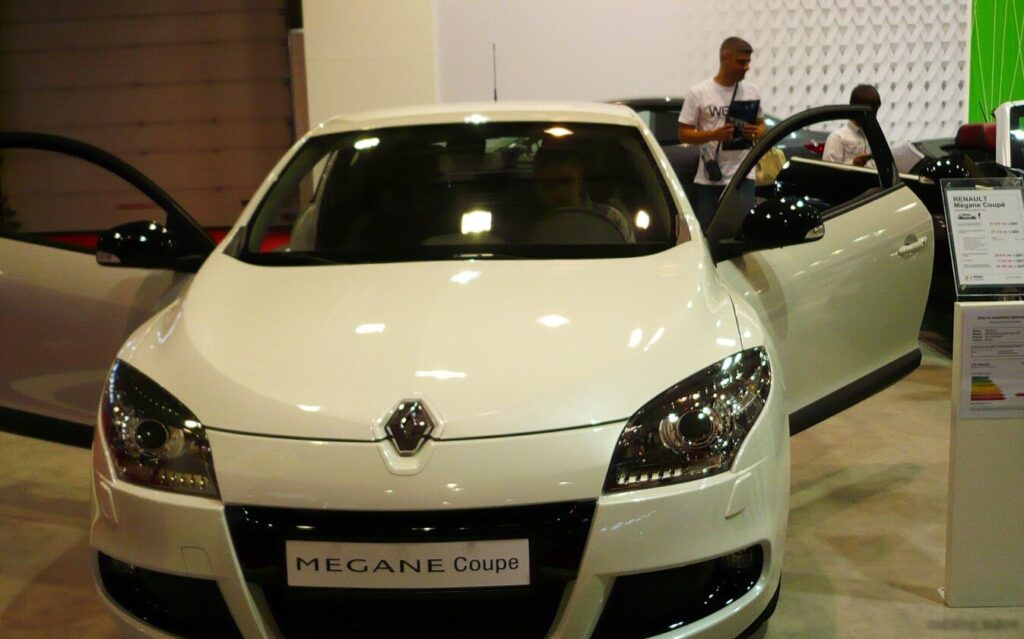
Introduction to the Renault Megane II Coupe (Phase II, 2006) GT 1.9 dCi (130 Hp) FAP Automatic
The Renault Megane II Coupe (Phase II, 2006) GT 1.9 dCi (130 Hp) FAP Automatic represents a unique blend of style, efficiency, and performance within the compact segment of the European market. Launched as part of the Megane II’s mid-cycle refresh in 2006, this specific GT variant, produced for the 2008 model year, showcased Renault’s commitment to offering diverse body styles and advanced diesel powertrains. The Megane II generation, known for its bold and unconventional “bustle-back” design, sought to differentiate itself from traditional segment rivals. The Coupe variant further amplified this distinctive styling, offering a sportier and more dynamic aesthetic compared to its hatchback sibling, while retaining practical elements.
Primarily targeting European consumers who valued fuel economy, low emissions, and a distinctive design, the Megane II Coupe GT 1.9 dCi combined a potent yet economical turbodiesel engine with an automatic transmission. This configuration made it an appealing choice for both urban commuting and longer-distance touring, providing a comfortable and effortless driving experience. While never officially sold in the United States, this particular model highlights the technological and design trends prevalent in the European automotive landscape of the late 2000s, particularly the widespread adoption of diesel engines and the increasing demand for stylish, compact coupes. Its role was to inject a dose of sportiness and premium feel into the popular Megane lineup, appealing to buyers looking for something beyond the conventional.
Engine and Performance: The Heart of the Renault Megane II Coupe (Phase II, 2006)
Powertrain Architecture and Dynamics
At the core of the Renault Megane II Coupe (Phase II, 2006) GT 1.9 dCi (130 Hp) FAP Automatic lies a robust and efficient 1.9-liter (1870 cm3) F9Q Turbo inline-four diesel engine. This powerplant, a staple in Renault’s lineup during this era, was engineered to deliver a compelling balance of power, torque, and fuel economy. With 130 horsepower available at 4000 rpm, the engine provided ample motivation for the compact coupe. More significantly for a diesel, it produced a substantial 221.27 lb.-ft. of torque at a low 2000 rpm, ensuring strong off-the-line acceleration and flexible in-gear performance, ideal for navigating city traffic or cruising on the highway.
The engine’s advanced features included a common rail direct fuel injection system, a turbocharger, and an intercooler, all working in concert to optimize combustion efficiency and power delivery. A compression ratio of 19:1 further underscored its diesel pedigree. Crucially for its time, this GT variant was equipped with a Diesel Particulate Filter (FAP), an early adoption of technology aimed at reducing harmful soot emissions, allowing it to meet the stringent Euro 4 emission standards. Power was channeled to the front wheels via a 4-speed automatic transmission, prioritizing smooth shifts and ease of driving over outright performance, a common preference in the European market for daily drivers.
In terms of raw performance, the Megane II Coupe GT 1.9 dCi was capable of accelerating from 0 to 60 mph in a respectable 10.1 seconds, with a top speed reaching 122.41 mph. These figures, while not groundbreaking for a “GT” badge by modern standards, were competitive for a diesel-powered compact coupe in 2008, especially one fitted with an automatic transmission. The real-world benefit lay in its impressive fuel economy: a combined rating of 35.6 US mpg, dropping to 26.1 US mpg in urban settings and soaring to 45.2 US mpg on the highway. This made the Megane an exceptionally economical choice for European drivers facing high fuel prices, embodying the efficiency for which European diesels became renowned. The combination of strong torque, a smooth automatic, and excellent fuel efficiency made it a practical yet engaging option for its target demographic.
Design and Features
Distinctive Styling and Practicality
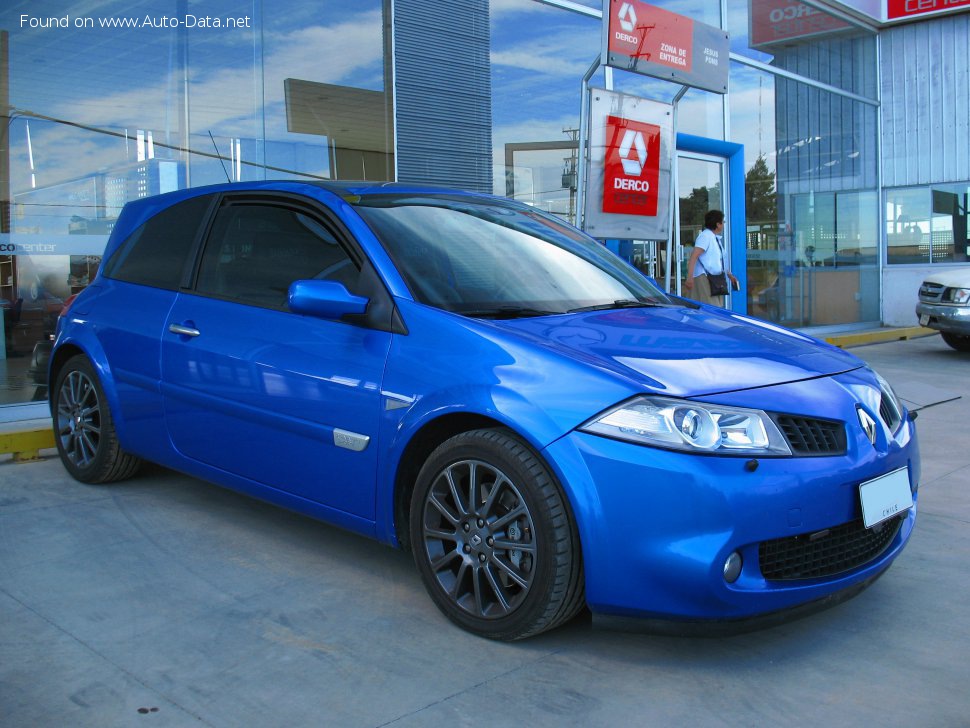
The Renault Megane II Coupe (Phase II, 2006) GT 1.9 dCi (130 Hp) FAP Automatic stood out with its bold and controversial design, a hallmark of the second-generation Megane. The “bustle-back” rear styling, characterized by its prominent, almost vertical rear window and high trunk line, was particularly striking on the 3-door coupe body. This design language, a significant departure from its predecessor, aimed to give the Megane a distinctive and modern appearance, challenging conventional automotive aesthetics. The Phase II refresh in 2006 brought subtle updates, including revised front and rear fascias, new headlight designs, and improved interior materials, keeping the design fresh for its final production years.
Measuring 165.71 inches in length, 69.96 inches in width (79.76 inches including mirrors), and 57.4 inches in height, with a wheelbase of 103.35 inches, the Megane Coupe maintained compact dimensions suitable for European city driving. Despite its coupe designation, it offered a surprising amount of practicality, featuring a 5-seat cabin and a generous trunk space ranging from 11.65 cubic feet to a maximum of 42.02 cubic feet with the rear seats folded. This versatility allowed it to serve as more than just a stylish two-seater, accommodating passengers and cargo for various needs. The GT trim level typically included sportier exterior accents, unique alloy wheels (15-inch with 195/65 R15 tires in this configuration), and potentially upgraded interior finishes, reinforcing its more dynamic character.
Safety and Comfort Amenities
Renault, a pioneer in automotive safety, equipped the Megane II Coupe with a comprehensive suite of features. Standard safety systems included ABS (Anti-lock Braking System) for enhanced braking control. The braking system itself comprised ventilated discs at the front and solid discs at the rear, providing reliable stopping power. The steering system utilized an electric power steering rack and pinion setup, offering light and precise control, particularly beneficial in urban environments. The suspension setup featured an independent coil spring system at the front and a torsion beam at the rear, a common configuration for front-wheel-drive compacts, balancing ride comfort with competent handling. While the data doesn’t specify all interior comfort features, vehicles of this class in 2008 would typically include air conditioning, power windows, central locking, and a basic audio system, with higher trims offering more advanced options. The focus remained on delivering a comfortable and secure driving experience, characteristic of Renault’s family-oriented design philosophy, even in a sportier coupe package.
Technical Specifications
| Category | Specification | Value |
|---|---|---|
| Brand | Renault | |
| Model | Megane | |
| Generation | Megane II Coupe (Phase II, 2006) | |
| Type (Engine) | GT 1.9 dCi (130 Hp) FAP Automatic | |
| Start of production | 2008 year | |
| End of production | 2008 year | |
| Powertrain Architecture | Internal Combustion engine | |
| Body type | Coupe | |
| Seats | 5 | |
| Doors | 3 | |
| Performance Specs | ||
| Fuel consumption (economy) – urban | 26.1 US mpg (9 l/100 km) | |
| Fuel consumption (economy) – extra urban | 45.2 US mpg (5.2 l/100 km) | |
| Fuel consumption (economy) – combined | 35.6 US mpg (6.6 l/100 km) | |
| CO2 emissions | 175 g/km | |
| Fuel Type | Diesel | |
| Acceleration 0 – 60 mph | 10.1 sec | |
| Maximum speed | 122.41 mph (197 km/h) | |
| Emission standard | Euro 4 | |
| Weight-to-power ratio | 9.7 kg/Hp, 102.8 Hp/tonne | |
| Weight-to-torque ratio | 4.2 kg/Nm, 237.2 Nm/tonne | |
| Engine Specs | ||
| Power | 130 Hp @ 4000 rpm. | |
| Power per liter | 69.5 Hp/l | |
| Torque | 221.27 lb.-ft. @ 2000 rpm (300 Nm) | |
| Engine layout | Front, Transverse | |
| Engine Model/Code | F9Q Turbo | |
| Engine displacement | 1.9 Liters (1870 cm3 / 114.11 cu. in.) | |
| Number of cylinders | 4 | |
| Engine configuration | Inline | |
| Cylinder Bore | 3.15 in. (80 mm) | |
| Piston Stroke | 3.66 in. (93 mm) | |
| Compression ratio | 19:1 | |
| Number of valves per cylinder | 2 | |
| Fuel injection system | Diesel Commonrail | |
| Engine aspiration | Turbocharger, Intercooler | |
| Valvetrain | OHC | |
| Engine oil capacity | 4.76 US qt (4.5 l) | |
| Coolant | 8.35 US qt (7.9 l) | |
| Engine systems | Particulate filter | |
| Space, Volume and Weights | ||
| Kerb Weight | 2788.85 lbs. (1265 kg) | |
| Max. weight | 4001.39 lbs. (1815 kg) | |
| Max load | 1212.54 lbs. (550 kg) | |
| Trunk (boot) space – minimum | 11.65 cu. ft. (330 l) | |
| Trunk (boot) space – maximum | 42.02 cu. ft. (1190 l) | |
| Fuel tank capacity | 15.85 US gal (60 l) | |
| Max. roof load | 176.37 lbs. (80 kg) | |
| Permitted trailer load with brakes (12%) | 2976.24 lbs. (1350 kg) | |
| Permitted trailer load without brakes | 1433 lbs. (650 kg) | |
| Permitted towbar download | 165.35 lbs. (75 kg) | |
| Dimensions | ||
| Length | 165.71 in. (4209 mm) | |
| Width | 69.96 in. (1777 mm) | |
| Width including mirrors | 79.76 in. (2026 mm) | |
| Height | 57.4 in. (1458 mm) | |
| Wheelbase | 103.35 in. (2625 mm) | |
| Front track | 59.76 in. (1518 mm) | |
| Rear (Back) track | 59.61 in. (1514 mm) | |
| Front overhang | 33.15 in. (842 mm) | |
| Rear overhang | 29.21 in. (742 mm) | |
| Drag coefficient (Cd) | 0.35 | |
| Minimum turning circle (turning diameter) | 34.45 ft. (10.5 m) | |
| Drivetrain, Brakes and Suspension Specs | ||
| Drivetrain Architecture | The Internal combustion engine (ICE) drives the front wheels of the vehicle. | |
| Drive wheel | Front wheel drive | |
| Number of gears and type of gearbox | 4 gears, automatic transmission | |
| Front suspension | Independent coil spring | |
| Rear suspension | Torsion | |
| Front brakes | Ventilated discs | |
| Rear brakes | Disc | |
| Assisting systems | ABS (Anti-lock braking system) | |
| Steering type | Steering rack and pinion | |
| Power steering | Electric Steering | |
| Tires size | 195/65 R15 | |
| Wheel rims size | 6J x 15 | |
Legacy and Market Impact
A European Contender with Distinctive Flair
The Renault Megane II, and particularly its Coupe variant, played a significant role in the highly competitive European compact car market during the mid-2000s. The Renault Megane II Coupe (Phase II, 2006) GT 1.9 dCi (130 Hp) FAP Automatic, though a specific niche within the broader Megane lineup, contributed to the model’s reputation for distinctive design, robust safety, and efficient powertrain options. In Europe, the Megane II was a direct competitor to established giants like the Volkswagen Golf, Opel Astra (Vauxhall Astra in the UK), Ford Focus, and Peugeot 307. While these rivals often offered more conservative styling, the Megane stood out with its avant-garde aesthetics, attracting buyers looking for a car that made a statement.
The Megane II was widely praised for its advanced safety features, earning a top 5-star rating in Euro NCAP crash tests, a significant selling point for family-oriented buyers. The introduction of the Phase II refresh in 2006 helped maintain its appeal against newer competitors, refining its design and addressing early production quirks. The 1.9 dCi engine, in its various power outputs, was a cornerstone of the Megane’s success, providing the fuel efficiency and low-end torque highly valued by European consumers. The GT trim, combined with the Coupe body and the 130 HP diesel engine, offered a compelling package for those seeking a balance of sporty looks, reasonable performance, and excellent running costs. The automatic transmission further broadened its appeal, catering to a growing segment of buyers who preferred the convenience of an auto.
Historically, the Megane II generation cemented Renault’s reputation for pushing design boundaries and integrating advanced technology into mainstream vehicles. The Coupe, with its 3-door layout and emphasis on style, served as an aspirational model within the range, demonstrating that practicality didn’t have to come at the expense of flair. Its impact was felt in its ability to capture a segment of the market that desired something different from the norm, contributing to Renault’s strong sales figures in countries like France, Germany, and the UK. While its distinctive design was polarizing for some, it ultimately carved out a memorable place in automotive history, showcasing a period when European manufacturers were experimenting boldly with form and function, particularly with the integration of efficient diesel technologies. The Megane II Coupe GT 1.9 dCi remains a testament to Renault’s engineering prowess and design courage during the early 21st century.