The Renault Megane II Grandtour 1.5 dCi (106 Hp): A European Workhorse
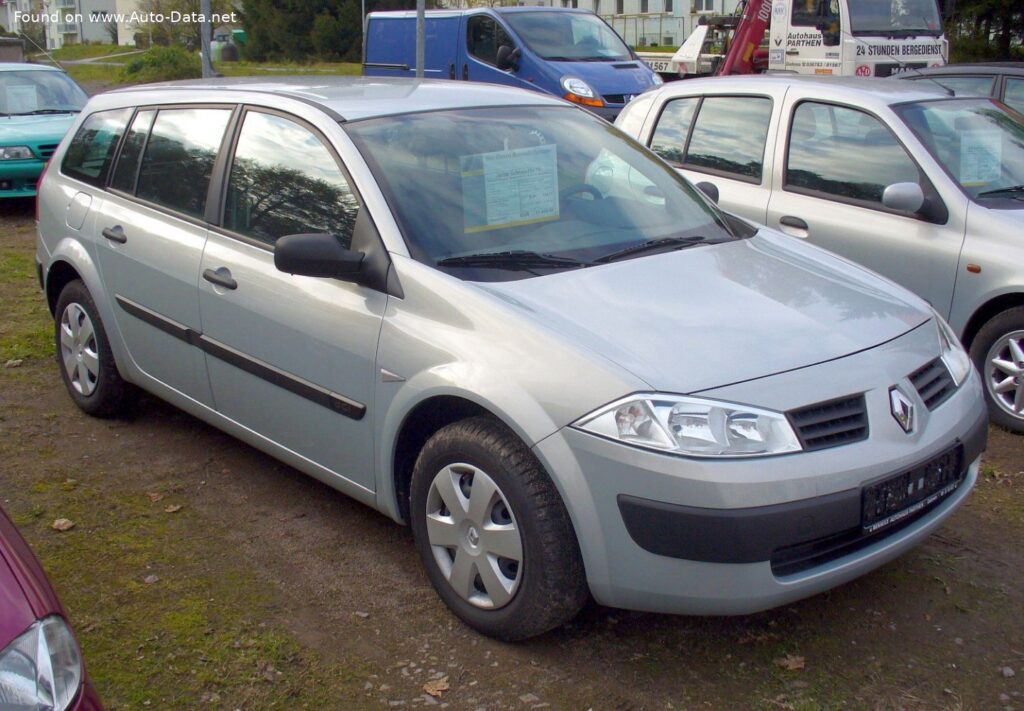
The Renault Megane II Grandtour 1.5 dCi (106 Hp), produced specifically for the 2005 model year, represents a quintessential example of a practical and efficient compact family vehicle tailored for the European market. As part of the second generation of Renault’s highly successful Megane line, the Grandtour variant offered enhanced versatility and cargo capacity in a stylish station wagon (or “estate” in European parlance) body style. This particular iteration, powered by Renault’s renowned K9K 1.5-liter dCi diesel engine, was designed to deliver an optimal balance of fuel economy, low emissions, and sufficient performance for daily driving across the continent. While never officially imported to the United States, this model highlights key differences in automotive preferences and market demands between Europe and North America, where smaller diesel wagons were (and largely remain) a niche offering. Its focus on efficiency and utility made it a strong contender in the highly competitive European C-segment.
Engine & Performance: The Efficient 1.5 dCi Heart of the Renault Megane II Grandtour
At the core of the 2005 Renault Megane II Grandtour 1.5 dCi (106 Hp) lies the K9K engine, a 1.5-liter (1461 cm3 or 89.16 cu. in.) inline four-cylinder diesel unit. This engine, celebrated for its robust design and fuel efficiency, was equipped with a common rail fuel injection system and a turbocharger with an intercooler, allowing it to produce a respectable 106 horsepower at 4000 rpm. More significantly for a diesel, it generated a robust 177.01 lb.-ft. (240 Nm) of torque, available across a broad and usable band from 2000 to 2500 rpm. This low-end torque was crucial for effortless acceleration, particularly when carrying passengers or cargo, and contributed to a pleasant driving experience in both urban and highway conditions.
Power was delivered to the front wheels via a smooth-shifting 6-speed manual transmission, a choice that further optimized fuel consumption and allowed the driver to keep the engine in its most efficient operating range. Performance figures for the Megane II Grandtour 1.5 dCi were competitive for its class: it could accelerate from 0 to 60 mph in an estimated 10.8 seconds (0-100 km/h in 11.4 seconds) and reach a top speed of 114.95 mph (185 km/h).
However, where this powertrain truly shone was in its fuel economy. The official combined fuel consumption figure was an impressive 50 US mpg (4.7 l/100 km), with extra-urban driving potentially yielding up to 57.4 US mpg (4.1 l/100 km). Urban driving saw figures around 40.6 US mpg (5.8 l/100 km). These numbers were exceptional for the time, making the Megane II Grandtour an economical choice for families and commuters alike. Furthermore, with CO2 emissions rated at just 124 g/km, the vehicle met the Euro 4 emission standard, demonstrating Renault’s commitment to environmental responsibility during that era. The engine’s layout was front-transverse, driving the front wheels, a common and efficient setup for compact cars.
Design & Features of the Megane II Grandtour
The Renault Megane II, launched in 2002, was notable for its distinctive and somewhat polarizing design, particularly the “bustle-back” rear styling of the hatchback variant. The Grandtour, or station wagon, however, adopted a more conventional yet still elegant profile, extending the roofline to maximize cargo volume. Measuring 177.17 inches (4500 mm) in length, 69.96 inches (1777 mm) in width, and 57.76 inches (1467 mm) in height, the Megane II Grandtour offered a substantial footprint for its segment, translating into generous interior space.
With a wheelbase of 105.75 inches (2686 mm), the cabin comfortably accommodated five occupants across its two rows of seating. The true highlight of the Grandtour’s design was its cargo capacity. With all seats in place, it offered a substantial 18.36 cu. ft. (520 liters) of trunk space. Folding the rear seats expanded this volume to an impressive 56.5 cu. ft. (1600 liters), making it highly practical for family trips, hauling luggage, or transporting larger items. The kerb weight of the vehicle was 2777.82 lbs. (1260 kg), contributing to its agile handling and fuel efficiency.
Features for the 2005 model year typically included a range of comfort and convenience items that were standard or optional in European models. Safety was a strong point for the Megane II generation, which achieved a five-star Euro NCAP crash test rating. Standard safety features included ABS (Anti-lock Braking System), and depending on the trim, could also include multiple airbags and electronic stability control. The steering system utilized electric power steering, providing light and precise control, especially beneficial for urban maneuvering. The suspension setup consisted of an independent McPherson strut system at the front and a torsion beam axle at the rear, a common and effective combination for compact vehicles, offering a good balance between ride comfort and handling dynamics. The car was fitted with 205/50 R17 tires on 6.5J X 17-inch wheel rims, providing good grip and a refined aesthetic.
Technical Specifications: Renault Megane II Grandtour 1.5 dCi (106 Hp)
| Category | Specification | US Equivalent |
|---|---|---|
| General Information | ||
| Brand | Renault | |
| Model | Megane | |
| Generation | Megane II Grandtour | |
| Type (Engine) | 1.5 dCi (106 Hp) | |
| Start of Production | 2005 year | |
| End of Production | 2005 year | |
| Powertrain Architecture | Internal Combustion engine | |
| Body type | Station wagon (estate) | |
| Seats | 5 | |
| Doors | 5 | |
| Performance Specs | ||
| Fuel consumption (economy) – urban | 5.8 l/100 km | 40.6 US mpg |
| Fuel consumption (economy) – extra urban | 4.1 l/100 km | 57.4 US mpg |
| Fuel consumption (economy) – combined | 4.7 l/100 km | 50 US mpg |
| CO2 emissions | 124 g/km | |
| Fuel Type | Diesel | |
| Acceleration 0 – 60 mph | 10.8 sec | |
| Acceleration 0 – 100 km/h | 11.4 sec | |
| Maximum speed | 185 km/h | 114.95 mph |
| Emission standard | Euro 4 | |
| Weight-to-power ratio | 11.9 kg/Hp | 84.1 Hp/tonne |
| Weight-to-torque ratio | 5.3 kg/Nm | 190.5 Nm/tonne |
| Engine Specs | ||
| Power | 106 Hp @ 4000 rpm | |
| Power per liter | 72.6 Hp/l | |
| Torque | 240 Nm @ 2000-2500 rpm | 177.01 lb.-ft. @ 2000-2500 rpm |
| Engine layout | Front, Transverse | |
| Engine Model/Code | K9K | |
| Engine displacement | 1461 cm3 | 89.16 cu. in. |
| Number of cylinders | 4 | |
| Engine configuration | Inline | |
| Cylinder Bore | 76 mm | 2.99 in. |
| Piston Stroke | 80.5 mm | 3.17 in. |
| Compression ratio | 15.6:1 | |
| Number of valves per cylinder | 2 | |
| Fuel injection system | Diesel Commonrail | |
| Engine aspiration | Turbocharger, Intercooler | |
| Engine oil capacity | 4.5 l | 4.76 US qt |
| Engine oil specification | Not specified | |
| Coolant | 7.5 l | 7.93 US qt |
| Space, Volume and Weights | ||
| Kerb Weight | 1260 kg | 2777.82 lbs. |
| Max. weight | 1840 kg | 4056.51 lbs. |
| Max load | 580 kg | 1278.68 lbs. |
| Trunk (boot) space – minimum | 520 l | 18.36 cu. ft. |
| Trunk (boot) space – maximum | 1600 l | 56.5 cu. ft. |
| Fuel tank capacity | 60 l | 15.85 US gal |
| Max. roof load | 80 kg | 176.37 lbs. |
| Permitted trailer load with brakes (12%) | 1300 kg | 2866.01 lbs. |
| Permitted trailer load without brakes | 650 kg | 1433 lbs. |
| Permitted towbar download | 75 kg | 165.35 lbs. |
| Dimensions | ||
| Length | 4500 mm | 177.17 in. |
| Width | 1777 mm | 69.96 in. |
| Width including mirrors | 2026 mm | 79.76 in. |
| Height | 1467 mm | 57.76 in. |
| Wheelbase | 2686 mm | 105.75 in. |
| Front track | 1518 mm | 59.76 in. |
| Rear (Back) track | 1514 mm | 59.61 in. |
| Front overhang | 842 mm | 33.15 in. |
| Rear overhang | 972 mm | 38.27 in. |
| Minimum turning circle (turning diameter) | 11 m | 36.09 ft. |
| Drivetrain, Brakes and Suspension Specs | ||
| Drivetrain Architecture | The Internal combustion engine (ICE) drives the front wheels of the vehicle. | |
| Drive wheel | Front wheel drive | |
| Number of gears and type of gearbox | 6 gears, manual transmission | |
| Front suspension | Independent type McPherson | |
| Rear suspension | Torsion | |
| Front brakes | Ventilated discs | |
| Rear brakes | Disc | |
| Assisting systems | ABS (Anti-lock braking system) | |
| Steering type | Steering rack and pinion | |
| Power steering | Electric Steering | |
| Tires size | 205/50 R17 | |
| Wheel rims size | 6.5J X 17 | |
Legacy & Market Impact: The Renault Megane II Grandtour in its Element
The Renault Megane II Grandtour 1.5 dCi (106 Hp) carved out a significant niche in the European compact segment during its production run. It competed directly with other popular family wagons such as the Volkswagen Golf Variant, Opel Astra Estate, Ford Focus Estate, and Peugeot 307 SW. What set the Megane II Grandtour apart was its blend of distinctive French design, practicality, and the highly efficient dCi diesel engine. While the Megane II hatchback’s styling was often a talking point, the Grandtour offered a more universally appealing, functional aesthetic that resonated with families and professionals needing extra space without opting for a larger, more expensive vehicle.
The K9K 1.5 dCi engine itself became a cornerstone of Renault’s powertrain strategy, widely used across many of its models and even by other manufacturers. Its reputation for excellent fuel economy and reasonable running costs made it a popular choice in markets where diesel fuel was readily available and often more affordable than gasoline, and where tax incentives favored low CO2 emissions. The 106 hp variant struck a sweet spot, offering enough power for comfortable highway cruising and confident overtaking, while maintaining the frugality expected of a small diesel.
In terms of historical significance, the Megane II generation, including the Grandtour, was instrumental in solidifying Renault’s position in the fiercely competitive C-segment. It introduced innovative features like the “Renault Card” keyless entry and start system and maintained high safety standards. The Grandtour’s success underscored the enduring appeal of the station wagon body style in Europe, a stark contrast to the SUV-dominated landscape in the United States. For American audiences, this vehicle serves as a prime example of the diverse automotive tastes and engineering priorities that define different global markets. The focus on high-efficiency, small-displacement diesel engines and practical wagon bodies allowed European consumers to enjoy a combination of utility and economy that was less common on American roads at the time. Its legacy is one of a dependable, economical, and family-friendly vehicle that successfully met the specific demands of its primary market.