Introduction to the Renault Megane II Grandtour (Phase II, 2006)
The Renault Megane II Grandtour (Phase II, 2006) represents a significant iteration of the French automaker’s popular compact family car, specifically its highly practical station wagon (also known as “estate” in European markets) variant. Launched in 2006 as part of the mid-cycle refresh for the second-generation Megane, this model aimed to build upon its predecessor’s success by offering enhanced styling, improved features, and a continued focus on efficiency and passenger comfort. While never officially sold in the United States, the Megane II Grandtour was a cornerstone of Renault’s lineup across Europe and other international markets, competing fiercely in the C-segment with its blend of distinctive design, advanced safety features, and a range of economical powertrains.
The “Grandtour” designation specifically referred to the station wagon body style, which offered considerably more cargo capacity and versatility compared to its hatchback and sedan siblings. This particular variant, equipped with the 1.5 dCi (103 Hp) diesel engine, epitomized the European trend towards highly fuel-efficient diesel powertrains in everyday family vehicles. Produced from 2006 until 2009, the Phase II update brought subtle but impactful changes, ensuring the Megane remained competitive and appealing to a broad demographic seeking a practical, comfortable, and economical vehicle.
Engine and Performance: The Efficient 1.5 dCi in the Renault Megane II Grandtour (Phase II, 2006)
Powertrain Overview
At the heart of the Renault Megane II Grandtour (Phase II, 2006) discussed here is the renowned K9K Turbo 1.5-liter dCi (direct Commonrail injection) diesel engine. This inline four-cylinder unit, with an engine displacement of 1461 cubic centimeters (89.16 cu. in.), was a testament to Renault’s expertise in developing small, efficient diesel engines. It produced a respectable 103 horsepower at 4000 rpm, which, while not designed for outright speed, provided ample power for daily driving and highway cruising. More critically, the engine delivered a robust 240 Nm (177.01 lb.-ft.) of torque at a low 2000 rpm, ensuring strong pulling power and flexibility, particularly useful for a family station wagon often laden with passengers and cargo.
The engine’s architecture featured a front, transverse layout, driving the front wheels through a 6-speed manual transmission. This combination was optimized for fuel efficiency and smooth power delivery. The use of a turbocharger and intercooler significantly enhanced performance, improving both power output and responsiveness across the rev range, which was crucial for an engine of this displacement. With a compression ratio of 15.6:1 and a two-valves-per-cylinder configuration, the K9K engine was engineered for durability and efficiency, utilizing a diesel common rail fuel injection system for precise fuel delivery.
Performance Metrics and Efficiency
In terms of performance, the 1.5 dCi Grandtour was capable of accelerating from 0 to 60 mph in a respectable 10.8 seconds, with a maximum speed of 114.95 mph (185 km/h). These figures underscored its role as a practical family vehicle rather than a performance-oriented model. However, where this powertrain truly shined was in its fuel economy. The Megane II Grandtour 1.5 dCi achieved an impressive combined fuel consumption of 4.7 liters per 100 kilometers, translating to approximately 50 US miles per gallon. Urban consumption was rated at 5.8 l/100 km (40.6 US mpg), while extra-urban driving saw figures as low as 4.1 l/100 km (57.4 US mpg).
Complementing its excellent fuel economy, the vehicle also boasted low CO2 emissions of 124 g/km, adhering to the Euro 4 emission standard, which was highly competitive for its time. This made the Megane II Grandtour an attractive option for environmentally conscious buyers and those looking to minimize running costs in markets with stringent emissions regulations and fuel taxes.
Design and Features: Practicality and European Flair
Body Design and Dimensions
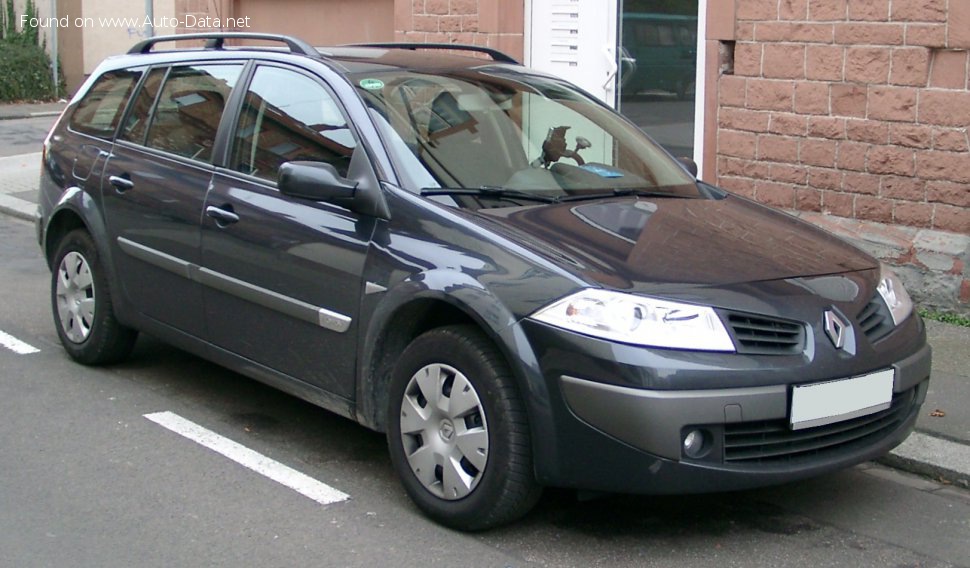
The Renault Megane II Grandtour (Phase II, 2006) embraced a 5-door station wagon (estate) body type, meticulously designed to offer maximum utility without sacrificing aesthetic appeal. Its exterior styling, while retaining the distinctive “face” of the Megane II, featured a more conventional rear profile compared to the controversial “bustle-back” design of the hatchback. The Phase II facelift introduced subtle refinements, including updated front and rear fascias, revised lighting, and new wheel designs, keeping the car looking fresh and modern during its production run.
Dimensions were carefully calibrated for its segment, with a total length of 177.17 inches (4500 mm), a width of 69.96 inches (1777 mm), and a height of 57.76 inches (1467 mm). A generous wheelbase of 105.75 inches (2686 mm) contributed to a comfortable ride and stable handling, while also maximizing interior space. The turning circle of 36.09 feet (11 m) made it maneuverable in urban environments. The vehicle rode on 205/50 R17 tires mounted on 6.5J X 17-inch wheel rims, providing a good balance of grip and ride comfort.
Interior and Practicality
Inside, the Megane II Grandtour was designed with family practicality in mind, offering comfortable seating for five occupants. The real highlight, however, was its cargo capacity. With the rear seats in place, the trunk (boot) offered a substantial 18.36 cubic feet (520 liters) of space. Folding down the rear seats expanded this volume dramatically to a cavernous 56.5 cubic feet (1600 liters), making it highly versatile for carrying luggage, sports equipment, or larger items. This emphasis on cargo flexibility was a key differentiator for the Grandtour in the competitive European market.
Key features for the era included an electric power steering system, which provided light and responsive steering for urban driving and enhanced stability at higher speeds. The suspension system comprised an independent McPherson type setup at the front and a torsion beam axle at the rear, a common and effective configuration for compact cars, balancing ride comfort with competent handling. Braking duties were handled by ventilated discs at the front and solid discs at the rear, augmented by an Anti-lock Braking System (ABS) for enhanced safety during emergency stops. The car’s kerb weight of 2656.57 lbs (1205 kg) contributed to its nimble feel and efficiency, while a maximum load capacity of 1190.5 lbs (540 kg) underscored its utility.
Technical Specifications
| Category | Specification | Value |
|---|---|---|
| General Information | ||
| Brand | Renault | |
| Model | Megane II Grandtour (Phase II, 2006) | |
| Type (Engine) | 1.5 dCi (103 Hp) | |
| Production Years | 2006 – 2009 | |
| Body Type | Station wagon (estate) | |
| Doors / Seats | 5 / 5 | |
| Performance Specifications | ||
| Power | 103 Hp @ 4000 rpm | |
| Torque | 240 Nm (177.01 lb.-ft.) @ 2000 rpm | |
| Acceleration 0-60 mph | 10.8 sec | |
| Maximum Speed | 114.95 mph (185 km/h) | |
| Fuel Type | Diesel | |
| Fuel Economy (Combined) | 50 US mpg (4.7 l/100 km) | |
| CO2 Emissions | 124 g/km | |
| Emission Standard | Euro 4 | |
| Engine Specifications | ||
| Engine Model/Code | K9K Turbo | |
| Engine Displacement | 1461 cm3 (89.16 cu. in.) | |
| Cylinders / Configuration | 4 / Inline | |
| Valves per Cylinder | 2 | |
| Fuel Injection System | Diesel Commonrail | |
| Engine Aspiration | Turbocharger, Intercooler | |
| Engine Layout | Front, Transverse | |
| Space, Volume and Weights | ||
| Kerb Weight | 2656.57 lbs (1205 kg) | |
| Maximum Weight | 3847.07 lbs (1745 kg) | |
| Maximum Load | 1190.5 lbs (540 kg) | |
| Trunk Space (Min/Max) | 18.36 cu. ft. (520 l) / 56.5 cu. ft. (1600 l) | |
| Fuel Tank Capacity | 15.85 US gal (60 l) | |
| Dimensions | ||
| Length | 177.17 in (4500 mm) | |
| Width (w/o mirrors) | 69.96 in (1777 mm) | |
| Height | 57.76 in (1467 mm) | |
| Wheelbase | 105.75 in (2686 mm) | |
| Ground Clearance | 4.72 in (120 mm) | |
| Minimum Turning Circle | 36.09 ft (11 m) | |
| Drivetrain, Brakes and Suspension | ||
| Drive Wheel | Front-wheel drive | |
| Gearbox | 6-speed manual transmission | |
| Front Suspension | Independent type McPherson | |
| Rear Suspension | Torsion | |
| Front Brakes | Ventilated discs | |
| Rear Brakes | Disc | |
| Assisting Systems | ABS (Anti-lock braking system) | |
| Steering Type | Steering rack and pinion (Electric Steering) | |
| Tires Size | 205/50 R17 | |
| Wheel Rims Size | 6.5J X 17 | |
Legacy and Market Impact
The Renault Megane II Grandtour, particularly in its Phase II iteration with the 1.5 dCi engine, carved out a significant niche in the highly competitive European compact segment. It was a strong contender against rivals such as the Volkswagen Golf Variant (known as Jetta SportWagen in some markets), Opel Astra Sports Tourer, Ford Focus Estate, and the Peugeot 307 SW. Its success can be attributed to several factors that resonated with European consumers.
Firstly, the Grandtour’s emphasis on practicality and versatility made it an ideal choice for families. The expansive and easily accessible cargo space, combined with comfortable seating for five, addressed the core needs of buyers looking for a dependable daily driver capable of handling family trips and hauling duties. Renault’s reputation for safety, often achieving top Euro NCAP ratings for the Megane II generation, further bolstered its appeal, providing peace of mind to parents.
Secondly, the 1.5 dCi engine was a standout feature. In an era where diesel powertrains dominated the European market due to their superior fuel economy and torque characteristics, this engine offered an exceptional balance of performance and miserly fuel consumption. Its ability to achieve 50 US mpg (combined) with low CO2 emissions was a significant selling point, especially as environmental awareness and fuel costs began to rise. This efficiency made it not only attractive to private buyers but also a popular choice for fleet operators and company car schemes.
The distinctive design of the Megane II, while somewhat polarizing in its hatchback form, translated well to the Grandtour, offering a unique aesthetic that helped it stand out from more conservatively styled competitors. The Phase II updates ensured its design remained contemporary throughout its production run, extending its appeal.
In terms of historical significance, the Renault Megane II Grandtour (Phase II, 2006) contributed to the widespread adoption and acceptance of compact diesel station wagons as a mainstream family vehicle in Europe. It demonstrated that a car could be practical, efficient, safe, and stylish all at once, setting a benchmark for future models in its class. Its enduring legacy is a testament to Renault’s ability to innovate and deliver vehicles that precisely met the demands of its target market, even if it never graced American showrooms, where the segment for compact wagons was already dwindling by the mid-2000s.