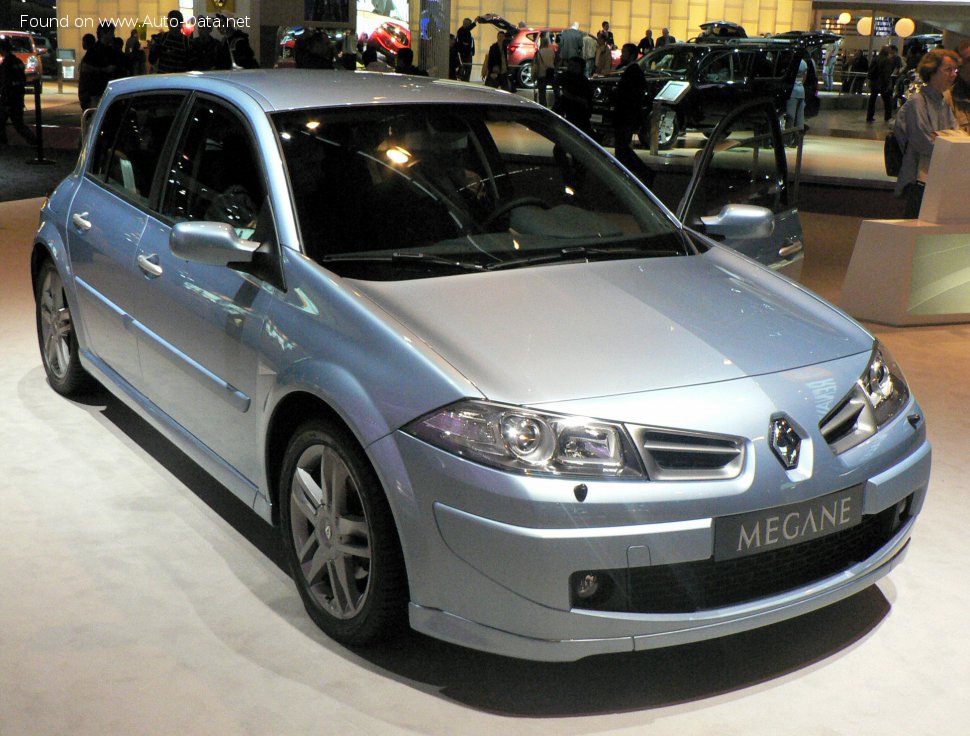
Introduction to the Renault Megane II (Phase II, 2006) GT 1.9 dCi (130 Hp) FAP Automatic
The Renault Megane II, specifically the Phase II model introduced in 2006, represented a pivotal moment for the French automaker in the highly competitive European C-segment. Known for its distinctive styling and innovative features, the Megane II built upon the success of its predecessor while pushing boundaries in design and technology. The particular variant under scrutiny, the Renault Megane II (Phase II, 2006) GT 1.9 dCi (130 Hp) FAP Automatic, showcased Renault’s commitment to offering a blend of performance, efficiency, and comfort in a practical five-door hatchback package. While the Megane line was a staple across Europe and other international markets, it was not officially sold in the United States, making its technical specifications and market impact particularly interesting from an American expert’s perspective, highlighting divergent automotive trends.
Launched in 2002, the second generation Megane quickly garnered attention, earning the coveted European Car of the Year award in 2003. The Phase II refresh in 2006 brought subtle exterior enhancements, updated interior trim, and refinements to its powertrain lineup, including more sophisticated diesel options. The GT designation typically indicated a sportier trim level, often accompanied by specific styling cues and a more performance-oriented setup, even in a diesel variant. This 1.9 dCi model, equipped with a Diesel Particulate Filter (FAP) and an automatic transmission, was designed to appeal to buyers seeking a balance of spirited driving dynamics, superior fuel economy, and reduced emissions, crucial factors in the European automotive landscape of the mid-2000s.
Engine and Performance: The 1.9 dCi Heart of the Renault Megane II (Phase II, 2006) GT
Under the hood of the Renault Megane II (Phase II, 2006) GT 1.9 dCi (130 Hp) FAP Automatic lies a robust 1.9-liter (1870 cm3 or 114.11 cu. in.) inline four-cylinder diesel engine, designated by Renault as the F9Q Turbo. This powerplant was a cornerstone of Renault’s diesel offerings, celebrated for its strong torque delivery and commendable fuel efficiency. With a power output of 130 horsepower at 4000 rpm and a substantial 221.27 lb.-ft. (300 Nm) of torque available at a low 2000 rpm, the engine provided ample motivation for the hatchback, making it well-suited for both urban commuting and highway cruising.
The engine’s architecture featured a common-rail direct fuel injection system, a critical technology for modern diesels that allows for precise fuel metering and improved combustion, leading to better efficiency and lower emissions. Coupled with a turbocharger and intercooler, the engine’s aspiration system ensured a healthy power band and responsive acceleration. The OHC (Overhead Camshaft) valvetrain with two valves per cylinder, combined with a high compression ratio of 19:1, further optimized the combustion process for diesel fuel.
Performance figures for this variant were respectable for its class: an acceleration time from 0 to 60 mph in 10.1 seconds and a top speed of 122.41 mph (197 km/h). These numbers demonstrate that while efficiency was a priority, the GT model still offered a degree of driving enjoyment. Crucially, the integration of a Diesel Particulate Filter (FAP) highlighted Renault’s proactive approach to meeting stricter European emission standards, specifically Euro 4, which were becoming increasingly stringent during this period. The FAP system was designed to trap and periodically burn off harmful particulate matter from the exhaust gases, a significant step towards cleaner diesel technology.
The powertrain was mated to a 4-speed automatic transmission, driving the front wheels. While a 4-speed automatic might seem somewhat dated by today’s standards, it was a common offering in the C-segment at the time, providing smooth and convenient shifting for daily use. The combined fuel economy was rated at an impressive 35.6 US mpg (6.6 l/100 km), with extra-urban driving achieving an even better 45.2 US mpg (5.2 l/100 km), underscoring the inherent efficiency advantages of a modern diesel engine. This blend of performance, efficiency, and emissions control made the 1.9 dCi GT a compelling choice for European consumers.
Design and Features
The Megane II’s design was arguably its most striking feature upon its debut, famously characterized by its distinctive “bustle-back” rear end and angular styling, a departure from the more conventional lines of its competitors. The Phase II refresh retained this iconic silhouette, applying subtle changes to the front grille, headlights, and taillights to give it a fresh, modern appeal. As a five-door hatchback, the Megane II GT offered practical versatility, capable of seating five occupants comfortably while providing a respectable amount of cargo space.
Measuring 165.71 inches (4209 mm) in length, 69.96 inches (1777 mm) in width, and 57.4 inches (1458 mm) in height, with a wheelbase of 103.35 inches (2625 mm), the Megane II GT was dimensionally competitive within its segment. Its compact footprint made it maneuverable in urban environments, aided by a minimum turning circle of 34.45 feet (10.5 meters). The car’s kerb weight of 2832.94 lbs. (1285 kg) contributed to its agile handling characteristics.
Inside, the Megane II was known for its comfortable cabin and innovative features for its era. While specific trim details for the GT variant are not fully detailed in the provided data, the Megane II generally offered a well-appointed interior with quality materials and thoughtful ergonomics. Safety was a strong point for Renault, and the Megane II was one of the first cars in its class to achieve a five-star Euro NCAP safety rating, a testament to its robust structure and comprehensive safety features. Standard safety equipment included an Anti-lock Braking System (ABS), which was crucial for maintaining control during emergency braking.
The car featured independent coil spring front suspension and a torsion beam rear suspension, a common and cost-effective setup for front-wheel-drive C-segment cars, providing a balance of ride comfort and handling stability. Braking duties were handled by ventilated discs at the front and solid discs at the rear, offering confident stopping power. Steering was managed by an electric power-assisted rack and pinion system, contributing to lighter steering effort at low speeds and improved fuel economy compared to traditional hydraulic systems. The car rode on 195/65 R15 tires mounted on 6.5J x 15-inch wheel rims, providing a comfortable ride and adequate grip. The hatchback design also offered practical cargo versatility, with a minimum trunk space of 10.59 cu. ft. (300 liters) expandable to 42.02 cu. ft. (1190 liters) with the rear seats folded, making it suitable for a variety of transport needs.
Technical Specifications
| Category | Specification | US Equivalent |
|---|---|---|
General Information |
||
| Brand | Renault | |
| Model | Megane | |
| Generation | Megane II (Phase II, 2006) | |
| Type (Engine) | GT 1.9 dCi (130 Hp) FAP Automatic | |
| Production Start | 2006 | |
| Production End | 2008 | |
| Powertrain Architecture | Internal Combustion engine | |
| Body Type | Hatchback | |
| Seats | 5 | |
| Doors | 5 | |
Performance Specifications |
||
| Fuel Consumption (Urban) | 9 l/100 km | 26.1 US mpg |
| Fuel Consumption (Extra Urban) | 5.2 l/100 km | 45.2 US mpg |
| Fuel Consumption (Combined) | 6.6 l/100 km | 35.6 US mpg |
| CO2 Emissions | 175 g/km | |
| Fuel Type | Diesel | |
| Acceleration 0-60 mph | 10.1 sec | |
| Maximum Speed | 197 km/h | 122.41 mph |
| Emission Standard | Euro 4 | |
| Weight-to-power ratio | 9.9 kg/Hp | |
| Weight-to-torque ratio | 4.3 kg/Nm | |
Engine Specifications |
||
| Power | 130 Hp @ 4000 rpm | |
| Torque | 300 Nm @ 2000 rpm | 221.27 lb.-ft. @ 2000 rpm |
| Engine Layout | Front, Transverse | |
| Engine Model/Code | F9Q Turbo | |
| Engine Displacement | 1870 cm3 | 1.9 Liters (114.11 cu. in.) |
| Number of Cylinders | 4 | |
| Engine Configuration | Inline | |
| Cylinder Bore | 80 mm | 3.15 in. |
| Piston Stroke | 93 mm | 3.66 in. |
| Compression Ratio | 19:1 | |
| Valves per Cylinder | 2 | |
| Fuel Injection System | Diesel Commonrail | |
| Engine Aspiration | Turbocharger, Intercooler | |
| Valvetrain | OHC | |
| Engine Oil Capacity | 4.5 l | 4.76 US qt |
| Coolant Capacity | 7.9 l | 8.35 US qt |
| Engine Systems | Particulate filter | |
Space, Volume and Weights |
||
| Kerb Weight | 1285 kg | 2832.94 lbs. |
| Max. Weight | 1835 kg | 4045.48 lbs. |
| Max Load | 550 kg | 1212.54 lbs. |
| Trunk (boot) space – minimum | 300 l | 10.59 cu. ft. |
| Trunk (boot) space – maximum | 1190 l | 42.02 cu. ft. |
| Fuel Tank Capacity | 60 l | 15.85 US gal |
| Max. Roof Load | 80 kg | 176.37 lbs. |
| Permitted Trailer Load with Brakes (12%) | 1300 kg | 2866.01 lbs. |
| Permitted Trailer Load without Brakes | 650 kg | 1433 lbs. |
| Permitted Towbar Download | 75 kg | 165.35 lbs. |
Dimensions |
||
| Length | 4209 mm | 165.71 in. |
| Width | 1777 mm | 69.96 in. |
| Width Including Mirrors | 2026 mm | 79.76 in. |
| Height | 1458 mm | 57.4 in. |
| Wheelbase | 2625 mm | 103.35 in. |
| Front Track | 1518 mm | 59.76 in. |
| Rear (Back) Track | 1514 mm | 59.61 in. |
| Front Overhang | 842 mm | 33.15 in. |
| Rear Overhang | 742 mm | 29.21 in. |
| Minimum Turning Circle (Turning Diameter) | 10.5 m | 34.45 ft. |
Drivetrain, Brakes and Suspension Specs |
||
| Drivetrain Architecture | The Internal combustion engine (ICE) drives the front wheels of the vehicle. | |
| Drive Wheel | Front wheel drive | |
| Number of Gears and Type of Gearbox | 4 gears, automatic transmission | |
| Front Suspension | Independent coil spring | |
| Rear Suspension | Torsion | |
| Front Brakes | Ventilated discs | |
| Rear Brakes | Disc | |
| Assisting Systems | ABS (Anti-lock braking system) | |
| Steering Type | Steering rack and pinion | |
| Power Steering | Electric Steering | |
| Tires Size | 195/65 R15 | |
| Wheel Rims Size | 6.5J x 15 | |
Legacy and Market Impact
The Renault Megane II, and particularly its diesel variants like the GT 1.9 dCi (130 Hp) FAP Automatic, played a significant role in solidifying Renault’s position in the fiercely competitive European C-segment during the mid-2000s. Its bold styling, which initially polarized opinions, ultimately helped it stand out in a crowd dominated by more conservative designs from rivals. In its primary markets, the Megane II was a direct competitor to established stalwarts such as the Volkswagen Golf, Ford Focus, Opel Astra (Vauxhall Astra in the UK), and Peugeot 307.
The Megane II’s reputation was built on several pillars: innovative design, strong safety credentials (being one of the first to achieve a 5-star Euro NCAP rating), and a diverse range of efficient powertrains, with diesel engines being particularly popular in Europe due to their lower fuel costs and better mileage. The 1.9 dCi engine, with its balance of power and efficiency, was a popular choice for both private buyers and fleet operators. The inclusion of a Diesel Particulate Filter (FAP) in this Phase II model was also forward-thinking, addressing growing environmental concerns and anticipating future emission regulations, which was a key selling point in markets where environmental consciousness was rising.
From a global perspective, the Megane II’s success highlights the divergence in automotive preferences between Europe and North America. While diesel passenger cars like the Megane were commonplace and highly regarded for their efficiency and torque in Europe, they struggled to gain significant traction in the United States market, where gasoline engines remained dominant, and diesel was primarily associated with heavy-duty trucks. The distinctive styling of the Megane II, while well-received in Europe, might also have been perceived as too unconventional for American tastes had it been offered.
The automatic transmission in this specific 1.9 dCi GT variant also contributed to its appeal, offering ease of driving in congested urban areas, a feature that was increasingly sought after even in a segment traditionally dominated by manual transmissions. Although a 4-speed automatic, it provided a smooth driving experience, albeit not as refined or efficient as the multi-speed units that would become standard in later years.
Ultimately, the Renault Megane II, especially in its Phase II iteration with advanced diesel powertrains, cemented its place as a significant vehicle in European automotive history. It showcased Renault’s ability to innovate in design, safety, and powertrain technology, setting benchmarks for its segment and leaving a lasting legacy as a distinctive and practical family car that successfully navigated the evolving demands of the European market. Its continued presence on European roads today is a testament to its durability and original appeal.