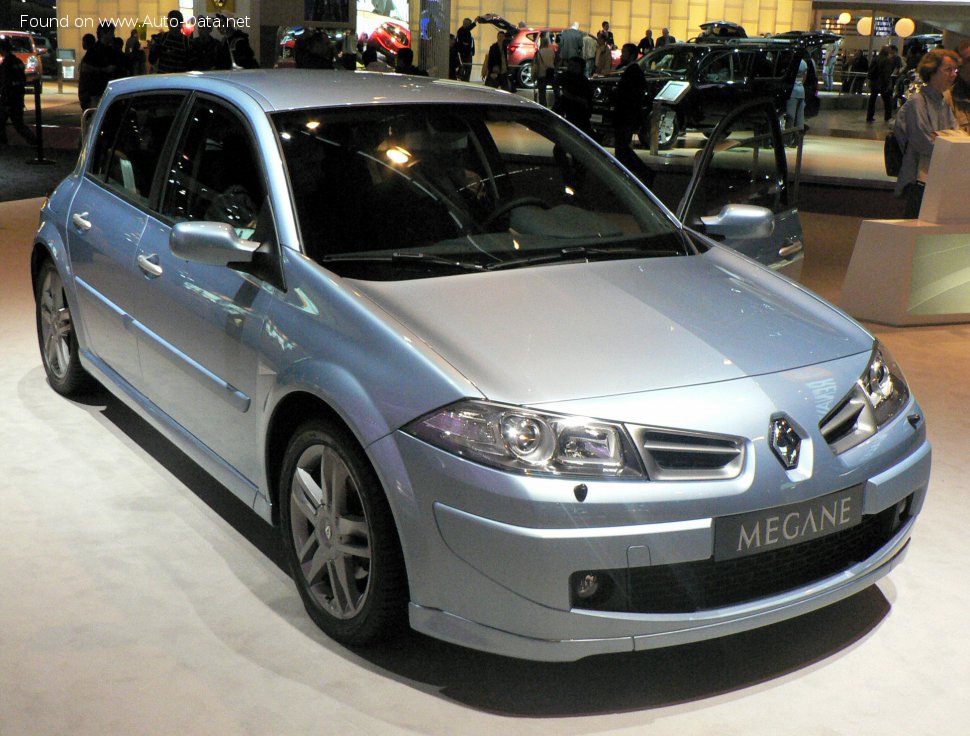
The Renault Megane II, specifically the Phase II refresh launched in 2006, represented a significant evolution of Renault’s popular compact car. Among its diverse lineup, the Renault Megane II (Phase II, 2006) GT 2.0 dCi (150 Hp) FAP stood out as a compelling proposition for the European market, blending sporty aspirations with the formidable efficiency and torque of a modern diesel engine. This particular variant, a five-door hatchback, was a prime example of Renault’s innovative approach to design and engineering in the competitive C-segment, a class dominated by vehicles like the Volkswagen Golf and Ford Focus.
Produced between 2006 and 2008, the Megane II (Phase II) GT 2.0 dCi was not offered for sale in the United States, but it carved out a strong niche in its primary European markets. It embodied a period when diesel technology was rapidly advancing, offering performance figures that rivaled gasoline engines while delivering superior fuel economy and lower CO2 emissions. The GT trim signaled a more dynamic driving experience, combining a powerful diesel powertrain with a refined chassis, making it an attractive option for drivers seeking both exhilaration and practicality in their daily commute.
Engine & Performance: The Heart of the Renault Megane II (Phase II, 2006) GT 2.0 dCi (150 Hp) FAP
At the core of this particular Megane GT was Renault’s M9R Turbo engine, a sophisticated 2.0-liter (1995 cm3 or 121.74 cu. in.) inline four-cylinder diesel unit. This powertrain architecture, featuring a front, transverse layout, was designed to deliver a potent blend of power and remarkable fuel efficiency. It generated a robust 150 horsepower at 4000 rpm, which, for a compact car of its era, provided ample motivation. More impressive, however, was its torque output: a substantial 250.77 lb-ft (340 Nm) available at a low 2000 rpm. This characteristic low-end torque was a hallmark of modern diesel engines and contributed significantly to the car’s responsive acceleration and flexible driving dynamics.
The engine’s advanced design included a common rail direct fuel injection system, a turbocharger, and an intercooler, all working in concert to optimize combustion and maximize power delivery. With four valves per cylinder and an overhead camshaft (OHC) valvetrain, the engine was engineered for smooth operation and efficiency. A high compression ratio of 16:1 further enhanced the diesel’s inherent thermodynamic advantages.
Performance figures for the Megane II GT 2.0 dCi were quite respectable for its class. It could accelerate from 0 to 60 mph in an estimated 8.3 seconds, with 0 to 100 km/h achieved in 8.7 seconds. Its top speed was rated at 130.49 mph (210 km/h). Power was sent to the front wheels via a slick-shifting 6-speed manual transmission, offering drivers engaging control over the engine’s power band. The weight-to-power ratio stood at 8.8 kg/Hp (114.1 Hp/tonne), indicating a well-balanced performance package.
Fuel efficiency was a major selling point for this diesel variant. The combined fuel consumption was an impressive 5.5 liters per 100 kilometers, translating to approximately 42.8 US mpg. Even in urban driving, it managed 34.1 US mpg, while extra-urban cruising yielded an outstanding 50 US mpg. These figures, coupled with CO2 emissions of 146 g/km and Euro 4 emission standard compliance, underscored Renault’s commitment to environmental responsibility during a period when diesel technology was actively being promoted for its lower carbon footprint, further enhanced by the inclusion of a Diesel Particulate Filter (FAP).
Design & Features
The Renault Megane II, particularly its Phase II iteration, was instantly recognizable for its distinctive and somewhat polarizing design language. The five-door hatchback body style showcased Renault’s willingness to push aesthetic boundaries, most notably with its “bustle-back” rear end and prominent vertical taillights. The Phase II refresh, introduced in 2006, subtly refined these elements, offering updated front and rear bumpers, revised headlamps, and new interior trim options, giving the car a more contemporary and polished look without losing its unique character. The GT designation typically implied sportier exterior cues, such as unique alloy wheel designs, subtle body kits, and specific badging, enhancing its dynamic appeal.
Inside, the Megane II focused on occupant comfort and ergonomic design, a hallmark of French automotive philosophy. While specific interior features for the GT trim aren’t detailed in the provided data, Renault generally equipped its vehicles with user-friendly controls, comfortable seating for five, and a practical layout. The hatchback configuration offered significant versatility, with a minimum trunk space of 10.59 cu. ft. (300 liters) that could expand to a generous 42.02 cu. ft. (1190 liters) with the rear seats folded, making it suitable for both daily commuting and longer trips with luggage.
In terms of chassis and handling, the Megane II GT was engineered to provide a balanced ride. It featured an independent coil spring front suspension for precise steering and comfort, complemented by a torsion beam rear suspension designed to optimize space and provide predictable handling. The car was equipped with ventilated disc brakes at the front and disc brakes at the rear, coupled with an Anti-lock Braking System (ABS) for assured stopping power. Electric power steering, a modern convenience for its time, offered light effort at low speeds for easy maneuvering and firmer feedback at higher speeds for greater stability. The standard tire size was 195/65 R15 on 6.5J x 15 wheel rims, providing a good balance of grip and ride comfort.
Technical Specifications
| Category | Specification | US Equivalent / Notes |
|---|---|---|
General Information |
||
| Brand | Renault | |
| Model | Megane | |
| Generation | Megane II (Phase II, 2006) | |
| Type (Engine) | GT 2.0 dCi (150 Hp) FAP | |
| Start of production | 2006 year | |
| End of production | 2008 year | |
| Powertrain Architecture | Internal Combustion engine | |
| Body type | Hatchback | |
| Seats | 5 | |
| Doors | 5 | |
Performance Specs |
||
| Fuel consumption (economy) – urban | 6.9 l/100 km | 34.1 US mpg |
| Fuel consumption (economy) – extra urban | 4.7 l/100 km | 50 US mpg |
| Fuel consumption (economy) – combined | 5.5 l/100 km | 42.8 US mpg |
| CO2 emissions | 146 g/km | |
| Fuel Type | Diesel | |
| Acceleration 0 – 60 mph | 8.3 sec | |
| Acceleration 0 – 100 km/h | 8.7 sec | |
| Maximum speed | 210 km/h | 130.49 mph |
| Emission standard | Euro 4 | |
| Weight-to-power ratio | 8.8 kg/Hp | 114.1 Hp/tonne |
| Weight-to-torque ratio | 3.9 kg/Nm | 258.6 Nm/tonne |
Engine Specs |
||
| Power | 150 Hp @ 4000 rpm | |
| Power per liter | 75.2 Hp/l | |
| Torque | 340 Nm @ 2000 rpm | 250.77 lb.-ft. @ 2000 rpm |
| Engine layout | Front, Transverse | |
| Engine Model/Code | M9R Turbo | |
| Engine displacement | 1995 cm3 | 2.0 liters / 121.74 cu. in. |
| Number of cylinders | 4 | |
| Engine configuration | Inline | |
| Cylinder Bore | 84 mm | 3.31 in. |
| Piston Stroke | 90 mm | 3.54 in. |
| Compression ratio | 16:1 | |
| Number of valves per cylinder | 4 | |
| Fuel injection system | Diesel Commonrail | |
| Engine aspiration | Turbocharger, Intercooler | |
| Valvetrain | OHC | |
| Engine oil capacity | 6.6 l | 6.97 US qt |
| Coolant | 7.5 l | 7.93 US qt |
| Engine systems | Particulate filter (FAP) | |
Space, Volume and Weights |
||
| Kerb Weight | 1315 kg | 2899.08 lbs. |
| Max. weight | 1840 kg | 4056.51 lbs. |
| Max load | 525 kg | 1157.43 lbs. |
| Trunk (boot) space – minimum | 300 l | 10.59 cu. ft. |
| Trunk (boot) space – maximum | 1190 l | 42.02 cu. ft. |
| Fuel tank capacity | 60 l | 15.85 US gal |
| Max. roof load | 80 kg | 176.37 lbs. |
| Permitted trailer load with brakes (12%) | 1300 kg | 2866.01 lbs. |
| Permitted trailer load without brakes | 650 kg | 1433 lbs. |
| Permitted towbar download | 75 kg | 165.35 lbs. |
Dimensions |
||
| Length | 4209 mm | 165.71 in. |
| Width | 1777 mm | 69.96 in. |
| Width including mirrors | 2026 mm | 79.76 in. |
| Height | 1458 mm | 57.4 in. |
| Wheelbase | 2625 mm | 103.35 in. |
| Front track | 1518 mm | 59.76 in. |
| Rear (Back) track | 1514 mm | 59.61 in. |
| Front overhang | 842 mm | 33.15 in. |
| Rear overhang | 742 mm | 29.21 in. |
| Minimum turning circle (turning diameter) | 10.5 m | 34.45 ft. |
Drivetrain, Brakes and Suspension Specs |
||
| Drivetrain Architecture | Internal combustion engine drives front wheels | Front-wheel drive (FWD) |
| Drive wheel | Front wheel drive | |
| Number of gears and type of gearbox | 6 gears, manual transmission | |
| Front suspension | Independent coil spring | |
| Rear suspension | Torsion | |
| Front brakes | Ventilated discs | |
| Rear brakes | Disc | |
| Assisting systems | ABS (Anti-lock braking system) | |
| Steering type | Steering rack and pinion | |
| Power steering | Electric Steering | |
| Tires size | 195/65 R15 | |
| Wheel rims size | 6.5J x 15 | |
Legacy & Market Impact
The Renault Megane II, and particularly its Phase II refresh, left a significant mark on the European compact car segment. Its bold and unconventional styling, especially the distinctive rear end, was a major talking point and helped it stand out in a crowded market. While its design was initially polarizing, it ultimately contributed to the Megane II’s strong identity and commercial success, earning it the prestigious European Car of the Year award in 2003.
The Renault Megane II (Phase II, 2006) GT 2.0 dCi (150 Hp) FAP played a crucial role in shaping the perception of performance diesel vehicles in Europe. In an era where “hot hatch” traditionally meant a gasoline engine, this GT variant demonstrated that a diesel powertrain could deliver impressive acceleration and engaging driving dynamics without sacrificing the fuel economy and low running costs that made diesels so popular. It offered a compelling alternative to gasoline-powered sporty compacts, appealing to a segment of buyers who desired performance but also demanded efficiency for longer commutes or family use.
Competitors in its class included well-established models such as the Volkswagen Golf TDI, Ford Focus TDCi, Opel Astra CDTI, and Peugeot 307 HDi. The Megane II GT 2.0 dCi differentiated itself through its unique styling, advanced diesel technology, and a strong emphasis on safety, achieving a 5-star Euro NCAP safety rating that was a benchmark for its time. Renault’s reputation for innovation, comfort, and a distinctive driving experience helped the Megane II maintain a strong presence against these formidable rivals.
The M9R 2.0 dCi engine itself became a highly regarded unit across the Renault-Nissan Alliance, known for its refinement, reliability, and strong performance. Its inclusion in the Megane GT showcased the versatility and potential of modern diesel technology, contributing to a broader acceptance and demand for performance-oriented diesels across Europe. The Megane II, in all its iterations, highlighted Renault’s ability to blend avant-garde design with practical engineering and a focus on driver and passenger well-being, cementing its legacy as a key player in the compact car segment.