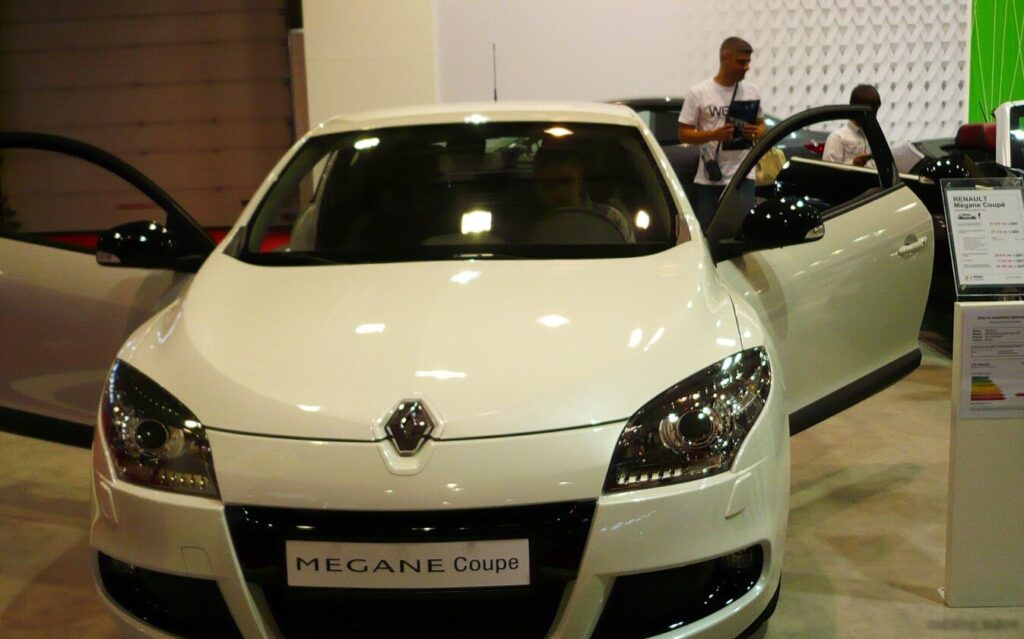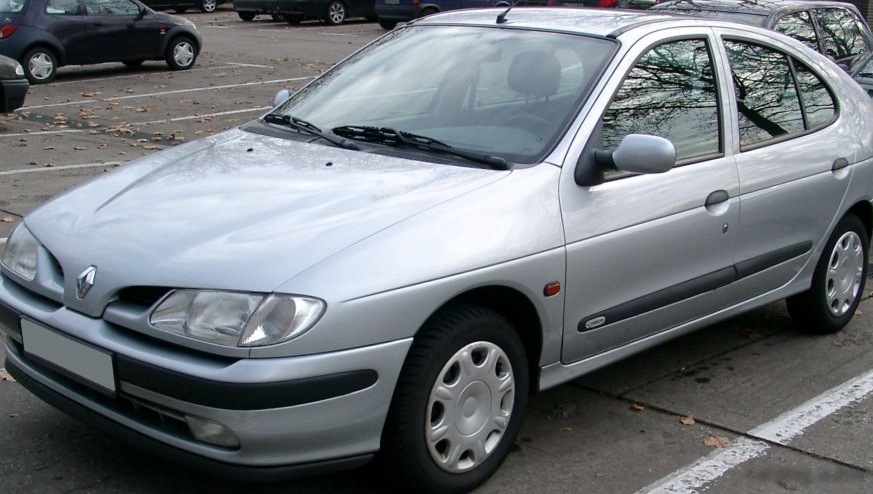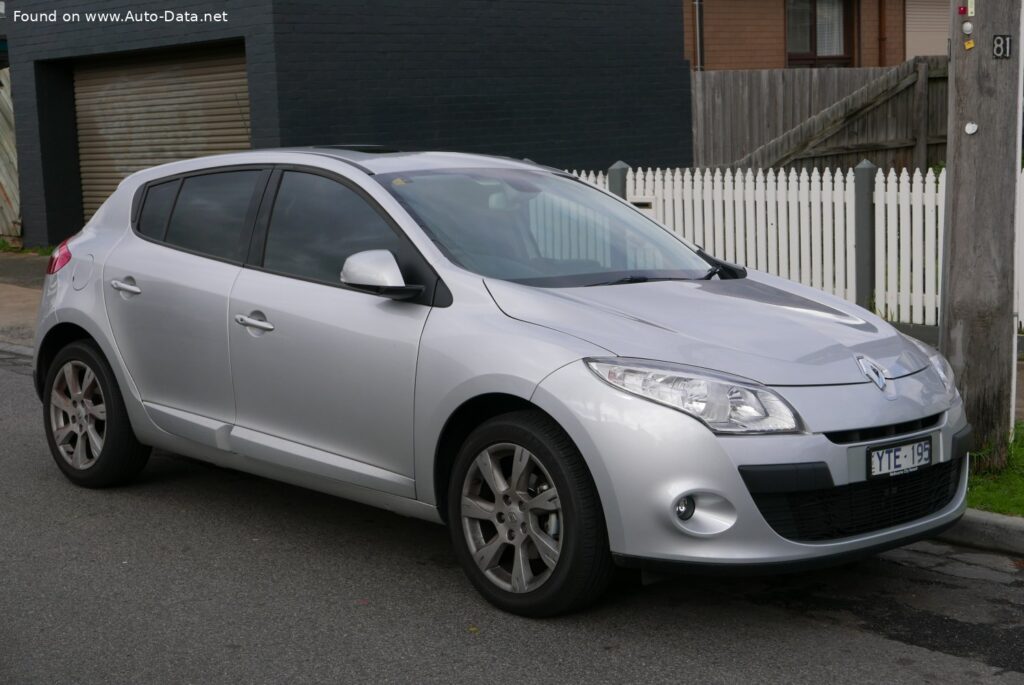
The Renault Megane III 2.0 16V (140 Hp) CVT: A European Compact Contender
The Renault Megane III 2.0 16V (140 Hp) CVT represents a key offering in the highly competitive European C-segment, a market segment characterized by compact family cars that blend practicality, efficiency, and driving dynamics. Produced from 2009 to 2012, this particular variant of the third-generation Megane hatchback showcased Renault’s commitment to providing accessible, comfortable, and well-equipped vehicles for the mass market. As a five-door, five-seat hatchback, it was designed to appeal to a broad demographic, from young families to urban commuters, seeking a versatile daily driver with a focus on ride comfort and modern features. While not officially sold in the United States, the Megane III played a crucial role in solidifying Renault’s position as a dominant force in the European automotive landscape, embodying the brand’s philosophy of “Vivre avec son temps” – living with one’s time – by offering contemporary design and technology.
Engine and Performance of the Renault Megane III
Powertrain Configuration and Dynamics
Under the hood, the Renault Megane III 2.0 16V (140 Hp) CVT featured a naturally aspirated 2.0-liter (1997 cm3 or 121.86 cu. in.) inline four-cylinder petrol engine, designated by the code M4R 711. This robust powerplant was configured in a front, transverse layout, driving the front wheels. It delivered a respectable 140 horsepower at 6000 rpm, providing a lively yet refined driving experience for its class. Peak torque stood at 195 Nm (143.82 lb-ft) at a relatively accessible 3750 rpm, ensuring decent pulling power in everyday driving scenarios.
The engine’s architecture included a 10:1 compression ratio and a multi-port manifold injection system, coupled with four valves per cylinder, optimizing combustion efficiency and power delivery. This setup enabled the Megane III to accelerate from 0 to 60 mph in a competitive 9.8 seconds (0-100 km/h in 10.3 seconds), with a top speed of 121.17 mph (195 km/h).
A distinctive feature of this particular Megane variant was its Continuously Variable Transmission (CVT). Unlike traditional geared automatics, the CVT offered seamless power delivery and a smooth, uninterrupted acceleration curve. While some enthusiasts might prefer the direct feel of a manual or a conventional automatic, the CVT was chosen to enhance fuel economy and provide a relaxed driving experience, particularly in urban environments where its smooth operation was a significant advantage. This combination contributed to a combined fuel consumption rating of 7.6 l/100 km, translating to an impressive 30.9 US mpg, positioning it as an economical choice within its segment. Its CO2 emissions were rated at 175 g/km, adhering to the Euro 5 emission standard prevalent during its production years.
Design and Features of the Megane III
Exterior Aesthetics and Interior Practicality
The third-generation Renault Megane, launched in 2008, marked a significant design evolution from its polarizing predecessor. The Megane III adopted a more conventional yet elegantly sculpted aesthetic, characterized by smoother lines, a more cohesive front fascia, and a generally more sophisticated appearance. The hatchback body style, with its five doors and five seats, offered excellent practicality, a hallmark of the compact segment. Its dimensions were carefully balanced for urban maneuverability and highway stability: 169.09 inches (4295 mm) in length, 71.18 inches (1808 mm) in width (80.2 inches or 2037 mm including mirrors), and 57.91 inches (1471 mm) in height. The wheelbase of 103.98 inches (2641 mm) contributed to a comfortable ride and ample interior space.
Inside, the Megane III focused on driver and passenger comfort, with an emphasis on quality materials and ergonomic design. The cabin provided generous space for five occupants, and the hatchback configuration offered versatile cargo solutions. Minimum trunk space stood at 14.3 cu. ft. (405 liters), expandable to a substantial 41.04 cu. ft. (1162 liters) with the rear seats folded, making it highly adaptable for various hauling needs.
Key features for its era included standard safety systems such as ABS (Anti-lock Braking System), enhancing braking control. The steering system was a rack and pinion setup with electric power steering, providing light and precise maneuverability. The suspension system comprised an independent McPherson-type front suspension and a torsion beam rear suspension, a common and effective combination for compact cars, balancing ride comfort with competent handling. Braking power was supplied by ventilated discs at the front and solid discs at the rear, ensuring confident stopping performance. The vehicle rode on 205/50 R17 tires mounted on 6.5J x 17-inch wheel rims, contributing to both its visual appeal and road holding.
Technical Specifications
| Category | Specification |
|---|---|
| General Information | |
| Brand | Renault |
| Model | Megane |
| Generation | Megane III |
| Type (Engine) | 2.0 16V (140 Hp) CVT |
| Production Start | 2009 year |
| Production End | 2012 year |
| Powertrain Architecture | Internal Combustion engine |
| Body type | Hatchback |
| Seats | 5 |
| Doors | 5 |
| Performance Specs | |
| Fuel Consumption (Urban) | 10.2 l/100 km (23.1 US mpg) |
| Fuel Consumption (Extra Urban) | 6.1 l/100 km (38.6 US mpg) |
| Fuel Consumption (Combined) | 7.6 l/100 km (30.9 US mpg) |
| CO2 Emissions | 175 g/km |
| Fuel Type | Petrol (Gasoline) |
| Acceleration 0 – 60 mph | 9.8 sec |
| Acceleration 0 – 100 km/h | 10.3 sec |
| Maximum Speed | 195 km/h (121.17 mph) |
| Emission Standard | Euro 5 |
| Weight-to-Power Ratio | 9.2 kg/Hp (109.3 Hp/tonne) |
| Weight-to-Torque Ratio | 6.6 kg/Nm (152.2 Nm/tonne) |
| Engine Specs | |
| Power | 140 Hp @ 6000 rpm |
| Power per liter | 70.1 Hp/l |
| Torque | 195 Nm @ 3750 rpm (143.82 lb-ft @ 3750 rpm) |
| Engine Layout | Front, Transverse |
| Engine Model/Code | M4R 711 |
| Engine Displacement | 1997 cm3 (121.86 cu. in.) |
| Number of Cylinders | 4 |
| Engine Configuration | Inline |
| Cylinder Bore | 84 mm (3.31 in.) |
| Piston Stroke | 90.1 mm (3.55 in.) |
| Compression Ratio | 10:1 |
| Valves per Cylinder | 4 |
| Fuel Injection System | Multi-port manifold injection |
| Engine Aspiration | Naturally aspirated engine |
| Engine Oil Capacity | 3.5 l (3.7 US qt) |
| Coolant Capacity | 6.8 l (7.19 US qt) |
| Space, Volume and Weights | |
| Kerb Weight | 1281 kg (2824.12 lbs) |
| Max. Weight | 1783 kg (3930.84 lbs) |
| Max Load | 502 kg (1106.72 lbs) |
| Trunk Space (Minimum) | 405 l (14.3 cu. ft.) |
| Trunk Space (Maximum) | 1162 l (41.04 cu. ft.) |
| Fuel Tank Capacity | 60 l (15.85 US gal) |
| Max. Roof Load | 80 kg (176.37 lbs) |
| Permitted Trailer Load (with brakes) | 1300 kg (2866.01 lbs) |
| Permitted Trailer Load (without brakes) | 675 kg (1488.12 lbs) |
| Permitted Towbar Download | 75 kg (165.35 lbs) |
| Dimensions | |
| Length | 4295 mm (169.09 in.) |
| Width | 1808 mm (71.18 in.) |
| Width (including mirrors) | 2037 mm (80.2 in.) |
| Height | 1471 mm (57.91 in.) |
| Wheelbase | 2641 mm (103.98 in.) |
| Front Track | 1546 mm (60.87 in.) |
| Rear Track | 1547 mm (60.91 in.) |
| Front Overhang | 862 mm (33.94 in.) |
| Rear Overhang | 792 mm (31.18 in.) |
| Ride Height (Ground Clearance) | 120 mm (4.72 in.) |
| Minimum Turning Circle | 10.95 m (35.93 ft) |
| Drivetrain, Brakes and Suspension Specs | |
| Drivetrain Architecture | Front-wheel drive, Internal Combustion Engine |
| Drive Wheel | Front wheel drive |
| Gearbox Type | 1 gear, automatic transmission CVT |
| Front Suspension | Independent type McPherson |
| Rear Suspension | Torsion |
| Front Brakes | Ventilated discs |
| Rear Brakes | Disc |
| Assisting Systems | ABS (Anti-lock braking system) |
| Steering Type | Steering rack and pinion |
| Power Steering | Electric Steering |
| Tire Size | 205/50 R17 91 H |
| Wheel Rims Size | 6.5J x 17 |
Legacy and Market Impact
The Renault Megane III, including the 2.0 16V (140 Hp) CVT variant, carved out a significant niche in the European compact car market during its production run. It faced stiff competition from segment leaders such as the Volkswagen Golf, Ford Focus, Opel Astra, Peugeot 308, and Citroën C4. Despite this intense rivalry, the Megane III distinguished itself through its emphasis on comfort, safety, and distinctive French styling.
Renault has always prioritized passenger safety, and the Megane III was no exception, achieving excellent Euro NCAP crash test ratings for its time. This focus, combined with a generally smooth and compliant ride quality, made it a popular choice for families and those seeking a less overtly sporty but more refined driving experience. The CVT transmission, while perhaps not the choice for driving enthusiasts, certainly contributed to its reputation for effortless urban cruising and improved fuel economy, an increasingly important factor for European buyers.
Historically, the Megane III represented a period of design maturity for Renault, moving away from some of the more avant-garde styling choices of the early 2000s towards a universally appealing aesthetic. Its impact was primarily felt in Europe, where it was consistently among the top-selling compact cars. It reinforced Renault’s brand image as a producer of reliable, practical, and stylish vehicles that offered good value for money. While its absence from the North American market means it’s less known to American consumers, the Megane III’s success in its primary markets underscores its significance as a well-engineered and competitive compact car of its generation. Its blend of a capable engine, comfortable ride, and practical hatchback design ensured its lasting legacy as a competent and beloved family car across the continent.