The Renault Megane III CC: A European Convertible Experience
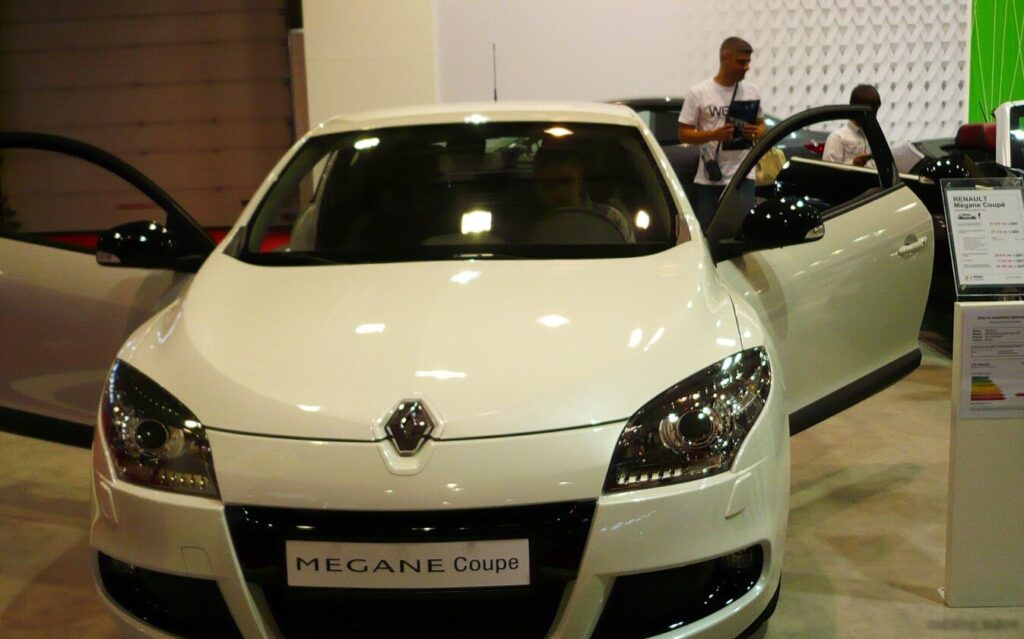
The Renault Megane III CC (Phase III, 2014) represents a compelling chapter in the history of the compact coupe-cabriolet, a segment that enjoyed significant popularity in Europe during the early 21st century. As a product of the French automaker Renault, this iteration of the Megane CC, produced from 2014 to 2016, was part of the third generation’s mid-cycle refresh. Positioned within the competitive European C-segment, the Renault Megane III CC was designed to offer the best of both worlds: the security and refinement of a coupe combined with the exhilarating open-air freedom of a convertible, all thanks to its sophisticated retractable hardtop roof.
While never officially imported or sold in the United States, the Megane III CC played a significant role in Renault’s European lineup, catering to a niche of buyers seeking style, comfort, and versatility. This particular variant, equipped with the 2.0 16V (140 Hp) engine and a Continuously Variable Transmission (CVT), emphasized smooth, relaxed cruising and everyday usability over outright performance. It embodied the French approach to automotive design, blending practicality with a distinctive aesthetic appeal, making it a recognizable sight on European roads during its production run.
Powertrain and Performance Characteristics
At the heart of this particular Renault Megane III CC model is a robust 2.0-liter (1997 cm3 or 121.86 cu. in.) naturally aspirated inline-four gasoline engine, internally designated as the M4R. This engine, featuring a 16-valve cylinder head (4 valves per cylinder) and multi-port manifold injection, was engineered to deliver a balanced blend of power and efficiency suitable for its intended market. It produces a respectable 140 horsepower at 6000 rpm, providing adequate motivation for the coupe-cabriolet’s 3441.42 lbs. (1561 kg) curb weight. Torque output stands at 143.82 lb.-ft. (195 Nm) peaking at 3750 rpm, ensuring a flexible powerband for daily driving.
Power is channeled to the front wheels via a Continuously Variable Transmission (CVT). This automatic transmission is notable for its seamless power delivery, eliminating traditional gear shifts and contributing to a smooth, unruffled driving experience. While a CVT might not be the choice for enthusiasts seeking a highly engaging drive, it excels in urban environments and highway cruising, prioritizing comfort and fuel economy. The combination of the 2.0-liter engine and CVT propels the Megane III CC from 0 to 60 mph in 11.1 seconds, with a top speed of 121.17 mph (195 km/h). These figures underscore its positioning as a comfortable cruiser rather than a high-performance machine.
Fuel efficiency for the Renault Megane III CC 2.0 16V CVT was rated competitively for its class and era. Combined fuel economy is estimated between 28.7 and 29.4 US mpg (8.0-8.2 l/100 km). In urban settings, it achieved 21.2 to 21.6 US mpg (10.9-11.1 l/100 km), while extra-urban driving saw figures of 36.8 to 37.3 US mpg (6.3-6.4 l/100 km). With CO2 emissions ranging from 184-188 g/km, the vehicle complied with the Euro 5b emission standard, reflecting its adherence to prevailing environmental regulations in its primary markets. The 15.85 US gallon (60 liter) fuel tank provided a decent cruising range, making it suitable for longer journeys across the continent.
Design, Features, and Engineering
Body and Exterior Design
The Renault Megane III CC (Phase III) is characterized by its elegant coupe-cabriolet body style, featuring two doors and seating for four occupants. The most distinctive feature is its retractable hardtop, a sophisticated mechanism that transforms the car from a rigid-roofed coupe to an open-top convertible at the touch of a button. This system offered enhanced security and refinement compared to traditional soft-top convertibles, particularly in terms of noise insulation and weather protection. The Phase III facelift, introduced in 2014, brought subtle but impactful updates to the Megane CC’s exterior. These typically included revised front fascias, updated headlamp and taillamp designs with LED elements, and new wheel options, aligning its styling with Renault’s contemporary design language. The car’s dimensions—176.57 inches (4485 mm) long, 71.3 inches (1811 mm) wide (81.57 inches including mirrors), and 56.46 inches (1434 mm) tall—gave it a substantial yet manageable footprint. Its drag coefficient (Cd) of 0.310 indicated a reasonably aerodynamic profile for a convertible.
Interior and Practicality
Inside, the Megane III CC offered a comfortable and well-appointed cabin, designed to accommodate four passengers, though rear legroom was typical for a compact 2+2 convertible—best suited for shorter trips or children. The trunk space varied significantly depending on the roof’s position: a generous 14.73 cu. ft. (417 liters) with the top up, shrinking to 7.45 cu. ft. (211 liters) when the hardtop was stowed, a common trade-off for retractable roof designs. Despite this, the ability to enjoy both coupe practicality and convertible exhilaration was a key selling point.
Chassis and Safety
The Megane III CC employed a front-wheel-drive architecture, a common and cost-effective layout for compact cars. Its suspension system featured an independent McPherson strut setup at the front, known for its balance of comfort and handling, while the rear utilized a semi-independent design with coil springs. This configuration provided a compliant ride quality, suitable for varying road conditions found in Europe. Braking was handled by ventilated discs at the front, offering strong stopping power, complemented by drum brakes at the rear—a somewhat dated choice for a 2014 model, but functional. Safety systems included standard ABS (Anti-lock Braking System), and it’s reasonable to assume other passive safety features like multiple airbags and likely Electronic Stability Control (ESC) were standard for a vehicle of this vintage and market. Steering was managed by an electric power-assisted rack and pinion system, contributing to ease of maneuverability, particularly in urban settings, with a minimum turning circle of 35.93 ft. (10.95 m).
Technical Specifications
General Information |
|
| Brand | Renault |
| Model | Megane |
| Generation | Megane III CC (Phase III, 2014) |
| Type (Engine) | 2.0 16V (140 Hp) CVT |
| Start of Production | 2014 year |
| End of Production | 2016 year |
| Powertrain Architecture | Internal Combustion Engine |
| Body Type | Coupe – Cabriolet |
| Seats | 4 |
| Doors | 2 |
Performance Specifications |
|
| Fuel Consumption (Urban) | 10.9-11.1 l/100 km (21.6 – 21.2 US mpg) |
| Fuel Consumption (Extra Urban) | 6.3-6.4 l/100 km (37.3 – 36.8 US mpg) |
| Fuel Consumption (Combined) | 8.0-8.2 l/100 km (29.4 – 28.7 US mpg) |
| CO2 Emissions | 184-188 g/km |
| Fuel Type | Petrol (Gasoline) |
| Acceleration 0 – 62 mph (0 – 100 km/h) | 11.7 sec |
| Acceleration 0 – 60 mph (Calculated) | 11.1 sec |
| Maximum Speed | 121.17 mph (195 km/h) |
| Emission Standard | Euro 5 b |
| Weight-to-Power Ratio | 11.2 kg/Hp (89.7 Hp/tonne) |
| Weight-to-Torque Ratio | 8 kg/Nm (124.9 Nm/tonne) |
Engine Specifications |
|
| Power | 140 Hp @ 6000 rpm |
| Power per Liter | 70.1 Hp/l |
| Torque | 143.82 lb.-ft. @ 3750 rpm (195 Nm @ 3750 rpm) |
| Engine Layout | Front, Transverse |
| Engine Model/Code | M4R |
| Engine Displacement | 2.0 liters (1997 cm3 / 121.86 cu. in.) |
| Number of Cylinders | 4 |
| Engine Configuration | Inline |
| Cylinder Bore | 3.31 in. (84 mm) |
| Piston Stroke | 3.55 in. (90.1 mm) |
| Compression Ratio | 10.2:1 |
| Number of Valves per Cylinder | 4 |
| Fuel Injection System | Multi-port manifold injection |
| Engine Aspiration | Naturally aspirated engine |
| Engine Oil Capacity | 5.81 US qt (5.5 l) |
| Engine Oil Specification | Not provided in data |
Space, Volume, and Weights |
|
| Kerb Weight | 3441.42 lbs. (1561 kg) |
| Max. Weight | 4369.56 lbs. (1982 kg) |
| Max Load | 928.15 lbs. (421 kg) |
| Trunk (Boot) Space – Minimum | 7.45 cu. ft. (211 l) |
| Trunk (Boot) Space – Maximum | 14.73 cu. ft. (417 l) |
| Fuel Tank Capacity | 15.85 US gal (60 l) |
| Permitted Trailer Load with Brakes (12%) | 1653.47 lbs. (750 kg) |
| Permitted Trailer Load without Brakes | 1653.47 lbs. (750 kg) |
Dimensions |
|
| Length | 176.57 in. (4485 mm) |
| Width | 71.3 in. (1811 mm) |
| Width Including Mirrors | 81.57 in. (2072 mm) |
| Height | 56.46 in. (1434 mm) |
| Wheelbase | 102.72 in. (2609 mm) |
| Front Track | 60.87 in. (1546 mm) |
| Rear (Back) Track | 60.91 in. (1547 mm) |
| Front Overhang | 33.94 in. (862 mm) |
| Rear Overhang | 39.92 in. (1014 mm) |
| Ride Height (Ground Clearance) | 4.72 in. (120 mm) |
| Drag Coefficient (Cd) | 0.310 |
| Minimum Turning Circle (Turning Diameter) | 35.93 ft. (10.95 m) |
Drivetrain, Brakes, and Suspension Specifications |
|
| Drivetrain Architecture | Internal combustion engine (ICE) drives the front wheels. |
| Drive Wheel | Front wheel drive |
| Number of Gears and Type of Gearbox | 1 gear (Continuously Variable), automatic transmission CVT |
| Front Suspension | Independent type McPherson |
| Rear Suspension | Semi-independent, coil spring |
| Front Brakes | Ventilated discs |
| Rear Brakes | Drum |
| Assisting Systems | ABS (Anti-lock Braking System) |
| Steering Type | Steering rack and pinion |
| Power Steering | Electric Steering |
| Tires Size | 205/55 R16; 205/50 R17; 225/40 R18 |
| Wheel Rims Size | 6.5J x 16; 7J x 17; 7.5J x 18 |
Legacy and Market Positioning
The Renault Megane III CC, particularly the Phase III model, holds a distinct place in the European automotive landscape. It was part of a trend initiated in the late 1990s and early 2000s by manufacturers like Mercedes-Benz (with the SLK) and Peugeot (with the 206 CC), bringing the retractable hardtop concept to more accessible segments. The Megane CC’s reputation was built on its stylish design, comfortable ride, and the unique flexibility offered by its folding hardtop. It wasn’t designed to be a sports car, but rather a chic and practical convertible for those who desired open-air motoring without the compromises often associated with fabric roofs, such as noise, security, and durability.
In its primary European markets, the Megane III CC faced competition from a relatively small but dedicated group of rivals. Key competitors included the Peugeot 308 CC, another French offering with a similar philosophy, and the Volkswagen Eos, which provided a more premium German alternative. Other contenders, such as the Opel Astra TwinTop, also vied for market share in this niche. The Megane CC distinguished itself with its distinctive French styling, comfortable interior, and generally competitive pricing.
The historical significance of the Megane CC, and indeed the entire compact coupe-cabriolet segment, lies in its attempt to democratize the convertible experience. By offering a year-round usable vehicle that could switch between coupe and convertible modes, these cars aimed to broaden the appeal of open-top driving beyond traditional enthusiasts. However, the segment’s popularity began to wane in the mid-2010s. Factors contributing to this decline included the inherent complexity and cost of retractable hardtop mechanisms, the resulting weight penalty, and perhaps most significantly, the surging global demand for crossovers and SUVs, which began to dominate consumer preferences for versatile vehicles.
For the North American market, the Renault Megane III CC, like most Renault passenger vehicles of its era, was not available. Renault had withdrawn from the U.S. market in the late 1980s, and the brand’s focus remained firmly on Europe and other international markets. Importing and homologating a niche model like the Megane CC for the U.S. would have been economically unfeasible, given the high costs and the relatively small potential sales volume in a market dominated by domestic brands and established Japanese and German luxury imports.
Ultimately, the production of the Megane III CC concluded in 2016, marking the end of Renault’s journey in the compact coupe-cabriolet segment. While the segment itself has largely disappeared, the Renault Megane III CC remains a testament to an era when automakers explored innovative ways to offer versatile, stylish, and enjoyable cars, providing a blend of practicality and leisure that resonated with a specific European clientele.