The Renault Megane III Coupe (Phase II, 2012) 1.5 dCi (110 Hp) EDC: An Overview
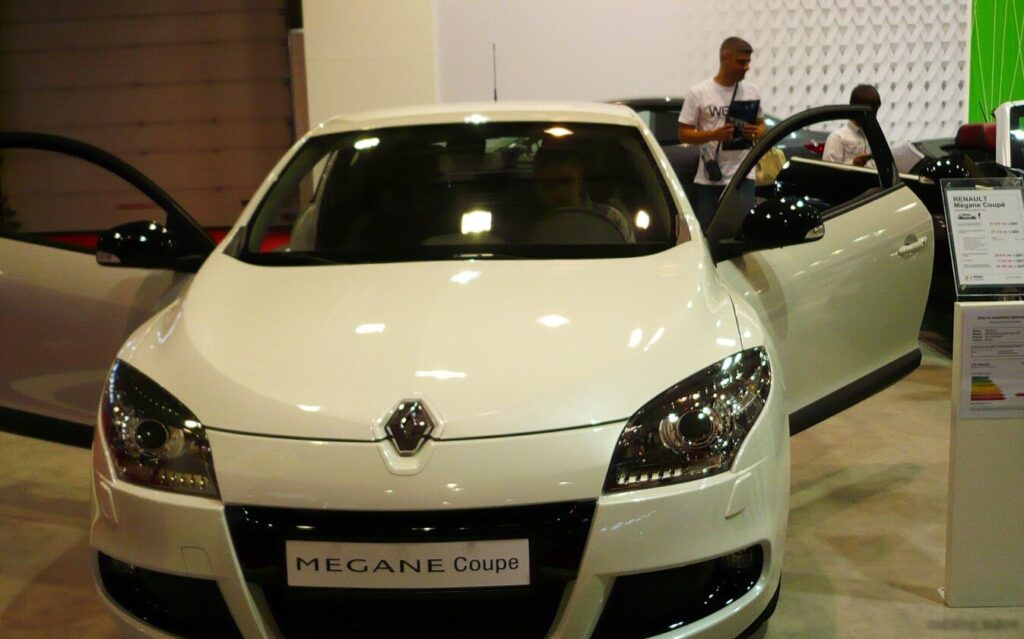
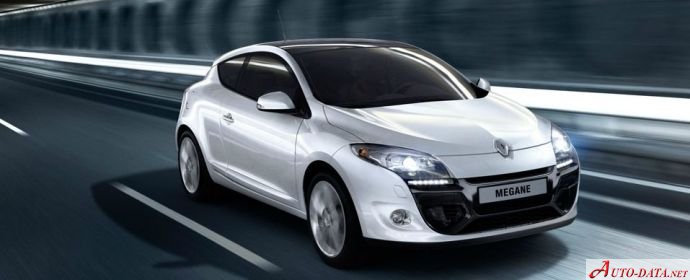
The Renault Megane III Coupe (Phase II, 2012) 1.5 dCi (110 Hp) EDC represents a significant iteration within the third generation of Renault’s popular compact car line. Launched in 2012, this specific model year marked the “Phase II” facelift for the Megane III, bringing subtle yet impactful updates to its design, technology, and powertrain offerings. As a stylish three-door coupe, it carved out a niche in the highly competitive European C-segment, offering a blend of distinctive aesthetics, practical everyday usability, and exceptional fuel efficiency, particularly with its well-regarded 1.5-liter dCi diesel engine paired with an advanced automatic transmission. While the Megane line has been a staple in European markets for decades, this particular coupe variant, with its focus on sporty appeal and economic diesel power, was never officially imported to the United States, making it a distinct example of European automotive engineering and market preferences.
Produced for a relatively short period between 2012 and 2013, the Megane III Coupe (Phase II) aimed to refresh Renault’s presence in the compact coupe segment, competing against rivals like the Opel Astra GTC and Volkswagen Scirocco. It embodied Renault’s design philosophy of the early 2010s, characterized by fluid lines and a dynamic stance. The combination of a robust common-rail diesel engine and a sophisticated dual-clutch automatic gearbox made it a compelling option for European buyers seeking a balance of performance, refinement, and low running costs.
Engine and Performance of the Renault Megane III Coupe (Phase II, 2012)
At the heart of this particular Megane III Coupe lies Renault’s ubiquitous K9K 657 engine, a 1.5-liter (1461 cm3 or 89.16 cu. in.) inline four-cylinder turbodiesel unit. Renowned for its efficiency and reliability across a wide range of Renault and Nissan vehicles, this engine in the Megane III Coupe (Phase II) configuration delivers a respectable 110 horsepower at 4000 rpm. Its power per liter stands at 75.3 horsepower per liter, indicating a well-optimized and potent small-displacement diesel.
More impressive than its peak horsepower is the engine’s torque output: a robust 240 Nm (177.01 lb.-ft.) available from a remarkably low 1750 rpm. This broad and accessible torque band is characteristic of modern turbodiesel engines and significantly contributes to the car’s effortless drivability and strong mid-range acceleration. The engine utilizes a common-rail fuel injection system and is boosted by a turbocharger with an intercooler, ensuring efficient combustion and robust power delivery across the rev range. It also features a particulate filter, crucial for meeting the Euro 5 emission standards prevalent during its production years.
Power is transmitted to the front wheels via an automatic EDC (Efficient Dual Clutch) transmission. While the provided data curiously lists “1 gear,” the EDC system typically refers to a multi-speed dual-clutch automatic gearbox designed for smooth shifts and enhanced fuel economy, making the “1 gear” notation an anomaly likely related to data interpretation rather than the transmission’s actual functionality. This advanced automatic transmission contributes to a smooth and responsive driving experience. In terms of outright performance, the Megane III Coupe (Phase II) 1.5 dCi accelerates from 0 to 60 mph in a respectable 11.1 seconds, with a top speed of 118.06 mph (190 km/h).
Fuel economy is a standout feature, a primary draw for diesel powertrains in Europe. The combined fuel consumption is an impressive 4.2 liters per 100 km, translating to approximately 56 US mpg. Even in urban driving, it achieves 5.1 l/100 km (46.1 US mpg), while extra-urban driving sees consumption drop to 3.7 l/100 km (63.6 US mpg). These figures, coupled with CO2 emissions of 110 g/km, highlight its commitment to efficiency and environmental responsibility for its era.
Design and Features
The Renault Megane III Coupe (Phase II, 2012) is defined by its distinctive three-door coupe body style, which sets it apart from its five-door hatchback and wagon siblings. Its design language, refined during the Phase II update, includes subtle revisions to the front fascia, headlamps, and possibly taillights, giving it a sharper and more contemporary look. With a length of 169.25 inches (4299 mm), a width of 70.28 inches (1785 mm), and a height of 56.02 inches (1423 mm), it maintains a sleek and low-slung profile. The wheelbase of 103.94 inches (2640 mm) contributes to a stable ride and well-proportioned aesthetics.
Despite its coupe designation, the Megane III Coupe (Phase II) offers seating for five occupants, though rear-seat access and comfort are naturally more constrained than in a conventional hatchback. The interior, typical of Renault during this period, focused on ergonomic design, quality materials, and user-friendly interfaces. Standard features for the segment would have included air conditioning, power windows, and a comprehensive infotainment system, though specific trim levels would dictate the full suite of amenities.
Practicality is surprisingly good for a coupe, with a minimum trunk (boot) space of 13.31 cubic feet (377 liters), which can expand to a generous 35 cubic feet (991 liters) with the rear seats folded down. This flexibility makes it suitable for varied lifestyles, from daily commuting to weekend getaways. The vehicle’s kerb weight is 2656.57 lbs (1205 kg), contributing to its agile handling characteristics. Its suspension setup features an independent McPherson type in the front and a torsion beam at the rear, a common and effective arrangement for compact cars, providing a balance of comfort and dynamic stability. Stopping power is provided by ventilated disc brakes at the front and disc brakes at the rear, augmented by an Anti-lock Braking System (ABS) for enhanced safety.
The vehicle is equipped with 195/65 R15 91H tires on 6.5J x 15-inch wheel rims, providing a comfortable ride and adequate grip. Electric power steering, a rack and pinion system, ensures light and precise steering inputs, making urban maneuvering and parking straightforward.
Technical Specifications: Renault Megane III Coupe (Phase II, 2012) 1.5 dCi (110 Hp) EDC
| Category | Specification |
|---|---|
| General Information | |
| Brand | Renault |
| Model | Megane |
| Generation | Megane III Coupe (Phase II, 2012) |
| Type (Engine) | 1.5 dCi (110 Hp) EDC |
| Start of Production | 2012 year |
| End of Production | 2013 year |
| Powertrain Architecture | Internal Combustion engine |
| Body Type | Coupe |
| Seats | 5 |
| Doors | 3 |
| Performance Specs | |
| Fuel Consumption (Economy) – Urban | 5.1 l/100 km (46.1 US mpg) |
| Fuel Consumption (Economy) – Extra Urban | 3.7 l/100 km (63.6 US mpg) |
| Fuel Consumption (Economy) – Combined | 4.2 l/100 km (56 US mpg) |
| CO2 Emissions | 110 g/km |
| Fuel Type | Diesel |
| Acceleration 0 – 60 mph | 11.1 sec |
| Acceleration 0 – 62 mph (0 – 100 km/h) | 11.7 sec |
| Maximum Speed | 118.06 mph (190 km/h) |
| Emission Standard | Euro 5 |
| Weight-to-Power Ratio | 11 kg/Hp (91.3 Hp/tonne) |
| Weight-to-Torque Ratio | 5 kg/Nm (199.2 Nm/tonne) |
| Engine Specs | |
| Power | 110 Hp @ 4000 rpm |
| Power per liter | 75.3 Hp/l |
| Torque | 240 Nm @ 1750 rpm (177.01 lb.-ft. @ 1750 rpm) |
| Engine Layout | Front, Transverse |
| Engine Model/Code | K9K 657 |
| Engine Displacement | 1461 cm3 (89.16 cu. in.) |
| Number of Cylinders | 4 |
| Engine Configuration | Inline |
| Cylinder Bore | 76 mm (2.99 in.) |
| Piston Stroke | 80.5 mm (3.17 in.) |
| Compression Ratio | 15.2:1 |
| Number of Valves per Cylinder | 2 |
| Fuel Injection System | Diesel Commonrail |
| Engine Aspiration | Turbocharger, Intercooler |
| Engine Oil Capacity | 4.5 l (4.76 US qt) |
| Engine Oil Specification | Not Specified |
| Coolant Capacity | 6.5 l (6.87 US qt) |
| Engine Systems | Particulate filter |
| Space, Volume and Weights | |
| Kerb Weight | 1205 kg (2656.57 lbs) |
| Max. Weight | 1829 kg (4032.25 lbs) |
| Max Load | 624 kg (1375.68 lbs) |
| Trunk (Boot) Space – Minimum | 377 l (13.31 cu. ft.) |
| Trunk (Boot) Space – Maximum | 991 l (35 cu. ft.) |
| Fuel Tank Capacity | 60 l (15.85 US gal) |
| Permitted Trailer Load with Brakes (12%) | 1300 kg (2866.01 lbs) |
| Permitted Trailer Load without Brakes | 635 kg (1399.94 lbs) |
| Dimensions | |
| Length | 4299 mm (169.25 in.) |
| Width | 1785 mm (70.28 in.) |
| Height | 1423 mm (56.02 in.) |
| Wheelbase | 2640 mm (103.94 in.) |
| Front Track | 1546 mm (60.87 in.) |
| Rear (Back) Track | 1547 mm (60.91 in.) |
| Front Overhang | 862 mm (33.94 in.) |
| Rear Overhang | 797 mm (31.38 in.) |
| Ride Height (Ground Clearance) | 120 mm (4.72 in.) |
| Minimum Turning Circle (Turning Diameter) | 10.95 m (35.93 ft.) |
| Drivetrain, Brakes and Suspension Specs | |
| Drivetrain Architecture | The Internal combustion engine (ICE) drives the front wheels of the vehicle. |
| Drive Wheel | Front wheel drive |
| Number of Gears and Type of Gearbox | 1 gears, automatic transmission EDC |
| Front Suspension | Independent type McPherson |
| Rear Suspension | Torsion |
| Front Brakes | Ventilated discs |
| Rear Brakes | Disc |
| Assisting Systems | ABS (Anti-lock braking system) |
| Steering Type | Steering rack and pinion |
| Power Steering | Electric Steering |
| Tires Size | 195/65 R15 91H |
| Wheel Rims Size | 6.5J x 15 |
Legacy and Market Impact
The Renault Megane III Coupe (Phase II, 2012) 1.5 dCi (110 Hp) EDC played a specific role in the European automotive landscape. It was positioned as a stylish, fuel-efficient, and relatively affordable compact coupe, targeting younger buyers or those seeking a sportier aesthetic without sacrificing practicality or economy. In a market where diesel power was (and to some extent still is) highly valued for its efficiency and lower running costs, this Megane variant offered a compelling package.
Its primary competitors in Europe included other three-door compacts and coupes such as the Opel Astra GTC, the Volkswagen Scirocco, and possibly the SEAT Leon SC. While the Scirocco often commanded a premium for its more overtly sporty image and VW badge, the Megane Coupe aimed for a balance, offering distinctive French styling and competitive value. The 1.5 dCi engine, in particular, was a cornerstone of Renault’s strategy, widely praised for its refinement, strong torque delivery, and class-leading fuel economy, making it a popular choice for high-mileage drivers across the continent.
The “Phase II” updates ensured the Megane Coupe remained fresh against newer rivals, incorporating minor cosmetic tweaks and potentially updated infotainment or safety features to maintain its competitive edge. Its compliance with Euro 5 emission standards was also crucial, reflecting the increasing environmental regulations in Europe during that period.
While never officially sold in the North American market, the Megane III Coupe is a testament to the diversity of vehicle preferences globally. Its existence highlights the European emphasis on smaller, efficient diesel engines and diverse body styles beyond the sedan and SUV dominance seen in the U.S. Its legacy is one of a well-executed compact coupe that offered a compelling blend of design, efficiency, and everyday usability within its intended market, solidifying Renault’s reputation as a leader in practical and stylish compact vehicles. The Megane nameplate continues to evolve, but this third-generation coupe, especially in its efficient diesel guise, remains a notable chapter in its history, remembered for its distinctive looks and economical performance.