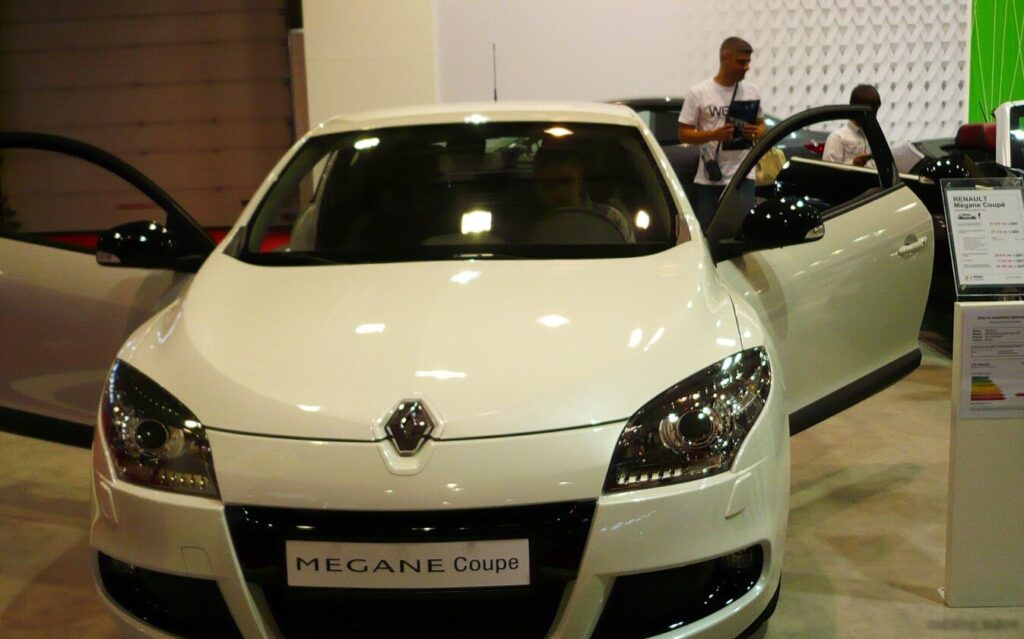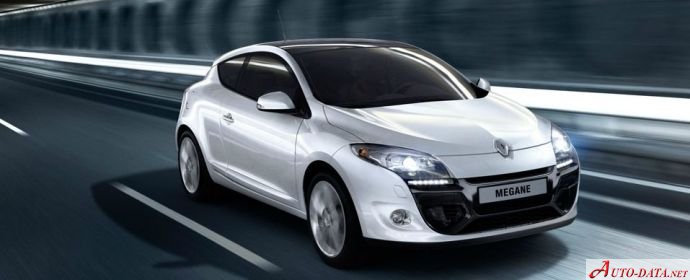
As an international automotive expert, I’m here to provide an in-depth analysis of a significant European compact, the Renault Megane III Coupe (Phase II, 2012) 1.5 dCi (90 Hp) FAP. This particular iteration represents a critical phase in the Megane’s third generation, specifically the stylish two-door coupe body style, benefiting from a mid-cycle refresh. Launched in 2012, this model was a staple in the highly competitive European C-segment, catering to buyers who desired a blend of distinctive design, practical functionality, and, crucially, exceptional fuel efficiency through its advanced diesel powertrain.
While the Renault Megane was never officially sold in the United States, its impact across Europe and other global markets was substantial. This Phase II Coupe, with its 1.5-liter dCi engine, epitomized the European automotive landscape of the early 2010s: a focus on downsizing, turbo-diesel technology for economy, and stringent emissions compliance, all wrapped in a visually appealing package. It offered a compelling alternative to more traditional hatchbacks, appealing to a younger demographic or those seeking a sportier aesthetic without compromising on everyday usability or running costs.
Engine & Performance: The Renault Megane III Coupe (Phase II, 2012) 1.5 dCi (90 Hp) FAP Powertrain
At the heart of this particular Renault Megane III Coupe lies the highly regarded K9K 834 engine, a 1.5-liter (1461 cm3 or 89.16 cu. in.) inline four-cylinder turbo-diesel unit. This powerplant was a cornerstone of Renault’s smaller vehicle offerings, renowned for its balance of efficiency and usable torque. In this configuration, it produced a respectable 90 horsepower at 4000 rpm, which, while not designed for outright speed, was more than adequate for daily driving in urban and highway conditions. More importantly, it generated a robust 147.51 lb.-ft. (200 Nm) of torque from a low 1750 rpm, providing excellent low-end pull and making the car feel responsive in city traffic and on inclines.
Power was delivered to the front wheels via a smooth-shifting 5-speed manual transmission, a common setup for economy-focused models of this era. This drivetrain architecture, combined with the engine’s characteristics, resulted in impressive fuel economy figures. The combined cycle consumption was rated at a remarkable 4 liters per 100 kilometers, translating to approximately 58.8 US miles per gallon. Even in urban driving, it achieved 49 US mpg, making it an incredibly cost-effective vehicle to operate. Its extra-urban consumption peaked at an outstanding 65.3 US mpg, underscoring its long-distance cruising efficiency.
Performance metrics reflect its economical nature rather than a sporting pedigree. The Megane III Coupe 1.5 dCi accelerated from 0 to 60 mph in a calculated 11.9 seconds, with 0-62 mph (0-100 km/h) taking 12.5 seconds. Its top speed was electronically limited to 111.85 mph (180 km/h). The inclusion of a Diesel Particulate Filter (FAP) ensured compliance with Euro 5 emission standards, with CO2 emissions rated at a low 104 g/km, which was highly competitive for its segment and contributed to lower road taxes in many European countries.
Design & Features of the Megane III Coupe
The Renault Megane III Coupe stood out in the compact class with its distinctly sporty and flowing design. Unlike its hatchback sibling, the coupe featured a lower roofline, a more aggressive stance, and a sleeker profile that gave it a dynamic presence. The Phase II refresh, introduced in 2012, brought subtle but effective updates, primarily to the front fascia, including redesigned headlights and a revised grille, aligning its aesthetics with Renault’s contemporary design language.
Despite its coupe designation, the Megane III Coupe was a surprisingly practical 3-door, 5-seater vehicle. While rear passenger access and headroom were naturally more constrained than in a five-door hatchback, it still offered usable space for adults on shorter journeys and was perfectly suited for families with younger children. The trunk (boot) space was commendable for a coupe, offering a minimum of 13.31 cubic feet (377 liters), expandable to a generous 35 cubic feet (991 liters) with the rear seats folded down, making it capable of handling significant cargo.
Inside, the cabin reflected Renault’s focus on ergonomic design and quality materials for its segment. Features typical for a 2012 European compact included air conditioning, an audio system, and various power amenities. Safety was a strong point, with standard features like ABS (Anti-lock Braking System) and multiple airbags. The car also benefited from an electric power steering system, offering light and precise control, particularly useful for urban maneuvering and parking. The suspension setup, featuring an independent McPherson type at the front and a torsion beam at the rear, provided a comfortable ride while maintaining composed handling characteristics.
With a length of 169.25 inches, a width of 70.28 inches, and a height of 56.02 inches, the Megane Coupe maintained compact dimensions, making it agile in tight European city streets. Its wheelbase of 103.94 inches contributed to stable highway cruising, while a minimum turning circle of 35.93 feet ensured good maneuverability. The 195/65 R15 tires provided a good balance of grip, comfort, and low rolling resistance, further contributing to the car’s fuel efficiency.
Technical Specifications
| Specification | Value |
|---|---|
| Brand | Renault |
| Model | Megane |
| Generation | Megane III Coupe (Phase II, 2012) |
| Type (Engine) | 1.5 dCi (90 Hp) FAP |
| Start of production | 2012 year |
| End of production | 2013 year |
| Powertrain Architecture | Internal Combustion engine |
| Body type | Coupe |
| Seats | 5 |
| Doors | 3 |
| Fuel consumption (economy) – urban | 4.8 l/100 km (49 US mpg) |
| Fuel consumption (economy) – extra urban | 3.6 l/100 km (65.3 US mpg) |
| Fuel consumption (economy) – combined | 4 l/100 km (58.8 US mpg) |
| CO2 emissions | 104 g/km |
| Fuel Type | Diesel |
| Acceleration 0 – 60 mph | 11.9 sec |
| Acceleration 0 – 100 km/h | 12.5 sec |
| Maximum speed | 180 km/h (111.85 mph) |
| Emission standard | Euro 5 |
| Weight-to-power ratio | 13.4 kg/Hp (74.7 Hp/tonne) |
| Weight-to-torque ratio | 6 kg/Nm (166 Nm/tonne) |
| Power | 90 Hp @ 4000 rpm |
| Power per liter | 61.6 Hp/l |
| Torque | 200 Nm @ 1750 rpm (147.51 lb.-ft.) |
| Engine layout | Front, Transverse |
| Engine Model/Code | K9K 834 |
| Engine displacement | 1461 cm3 (89.16 cu. in.) |
| Number of cylinders | 4 |
| Engine configuration | Inline |
| Cylinder Bore | 76 mm (2.99 in.) |
| Piston Stroke | 80.5 mm (3.17 in.) |
| Compression ratio | 15.2:1 |
| Number of valves per cylinder | 2 |
| Fuel injection system | Diesel Commonrail |
| Engine aspiration | Turbocharger, Intercooler |
| Engine oil capacity | 4.5 l (4.76 US qt) |
| Coolant capacity | 6.5 l (6.87 US qt) |
| Engine systems | Particulate filter |
| Kerb Weight | 1205 kg (2656.57 lbs.) |
| Max. weight | 1760 kg (3880.14 lbs.) |
| Max load | 555 kg (1223.57 lbs.) |
| Trunk (boot) space – minimum | 377 l (13.31 cu. ft.) |
| Trunk (boot) space – maximum | 991 l (35 cu. ft.) |
| Fuel tank capacity | 60 l (15.85 US gal) |
| Permitted trailer load with brakes (12%) | 1300 kg (2866.01 lbs.) |
| Permitted trailer load without brakes | 640 kg (1410.96 lbs.) |
| Length | 4299 mm (169.25 in.) |
| Width | 1785 mm (70.28 in.) |
| Height | 1423 mm (56.02 in.) |
| Wheelbase | 2640 mm (103.94 in.) |
| Front track | 1546 mm (60.87 in.) |
| Rear (Back) track | 1547 mm (60.91 in.) |
| Front overhang | 862 mm (33.94 in.) |
| Rear overhang | 797 mm (31.38 in.) |
| Ride height (ground clearance) | 120 mm (4.72 in.) |
| Minimum turning circle (turning diameter) | 10.95 m (35.93 ft.) |
| Drivetrain Architecture | Front wheel drive, Internal Combustion engine |
| Drive wheel | Front wheel drive |
| Number of gears and type of gearbox | 5 gears, manual transmission |
| Front suspension | Independent type McPherson |
| Rear suspension | Torsion |
| Front brakes | Ventilated discs |
| Rear brakes | Disc |
| Assisting systems | ABS (Anti-lock braking system) |
| Steering type | Steering rack and pinion |
| Power steering | Electric Steering |
| Tires size | 195/65 R15 91H |
| Wheel rims size | 6.5J x 15 |
Legacy & Market Impact in Europe
The Renault Megane III Coupe, particularly with its efficient 1.5 dCi engine, carved a significant niche for itself in the European market during its production run from 2012 to 2013 for this specific Phase II model. In a segment dominated by practical hatchbacks, the Coupe offered a more emotionally driven choice without straying into the impracticality or high running costs often associated with sportier vehicles. It presented an attractive proposition to buyers who valued style and individuality but still demanded the low operating expenses and environmental consciousness that small diesel engines provided.
Competitors in its home market included other compact coupes or sportier variants of C-segment cars, such as the Volkswagen Scirocco, Opel Astra GTC, and potentially even the Peugeot RCZ, though the latter often commanded a higher price point and was positioned more upmarket. The Megane Coupe differentiated itself by offering a strong balance of design flair, a comfortable ride, and highly competitive fuel economy, especially with the 1.5 dCi powerplant. Renault’s long-standing reputation for safety (often achieving high Euro NCAP ratings) and innovative features also contributed to its appeal.
The legacy of this Megane generation, and particularly the Coupe, lies in its ability to adapt to evolving market demands. During a period when diesel powertrains were at their peak in Europe, this model exemplified how a stylish vehicle could also be remarkably frugal and environmentally responsible (for its time). It demonstrated Renault’s commitment to offering diverse body styles within its popular Megane lineup, catering to a broader spectrum of customer preferences. While the automotive landscape has since shifted away from small diesels, the Megane III Coupe 1.5 dCi remains a testament to an era when efficiency and distinctive design could coexist harmoniously in the mainstream compact segment.