The Renault Megane III Coupe (Phase II, 2012) 1.6 16V (110 Hp) Ethanol: A European Flex-Fuel Contender
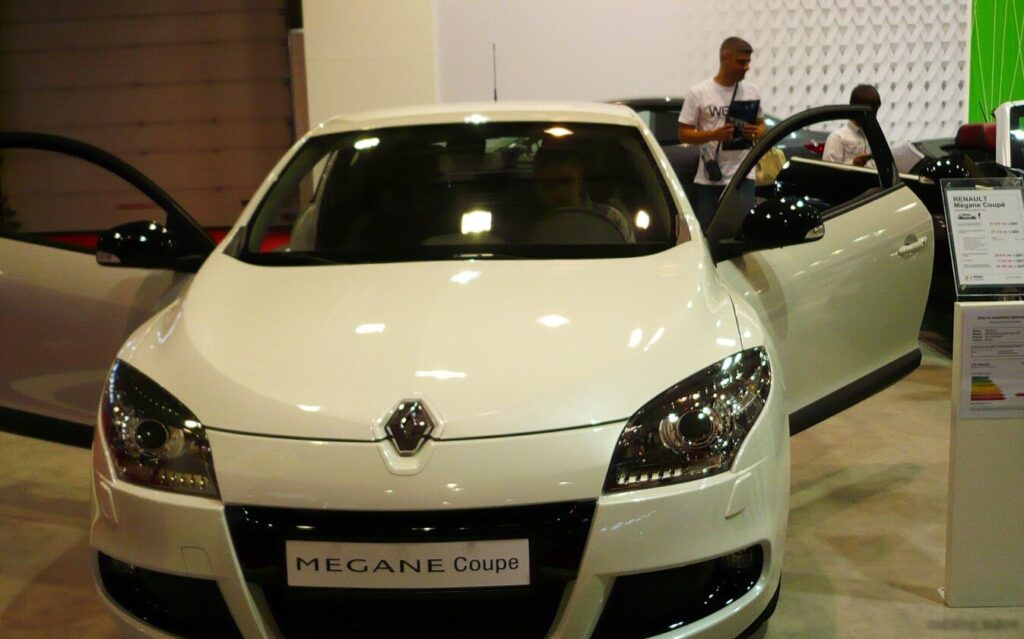
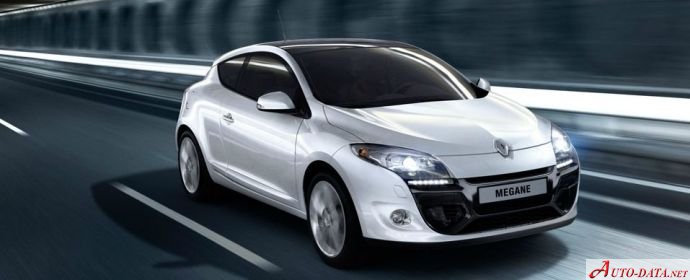
The Renault Megane III Coupe (Phase II, 2012) 1.6 16V (110 Hp) Ethanol represents a distinctive chapter in the third generation of Renault’s popular compact car, tailored specifically for the European market and showcasing the brand’s commitment to alternative fuels. Unveiled as part of the Phase II facelift in 2012, this iteration of the Megane Coupe refined the already sleek and sporty design of its predecessor while introducing powertrain options optimized for efficiency and reduced emissions. Unlike many of its counterparts, this particular model was engineered to run on E85 ethanol, a flex-fuel capability that was gaining traction in various European nations as an environmentally friendlier alternative to conventional gasoline. As such, the Megane III Coupe was never officially sold in the United States, where its unique blend of compact dimensions, three-door coupe styling, and flex-fuel technology would have faced a different set of market demands and regulatory landscapes. Instead, it carved out its niche in Europe, appealing to drivers seeking a stylish, practical, and somewhat eco-conscious compact coupe with a distinct French flair.
The third-generation Megane, launched in 2008, marked a significant departure from the polarizing design of the Megane II. The Coupe variant, in particular, was celebrated for its more aggressive stance, sculpted lines, and a rear design that truly distinguished it from its hatchback sibling. The Phase II update, introduced for the 2012 model year, brought subtle but impactful changes, including updated front fascias, new wheel designs, and enhanced interior materials and technology, ensuring the Megane remained competitive in a fiercely contested segment. This specific 1.6 16V Ethanol model, produced from 2012 to 2013, highlighted Renault’s forward-thinking approach to powertrain development, offering a blend of performance and fuel versatility that resonated with a segment of the European automotive audience.
Engine and Performance of the Renault Megane III Coupe (Phase II, 2012) 1.6 16V (110 Hp) Ethanol
At the heart of this particular Megane Coupe lies the robust K4M 866 engine, a naturally aspirated 1.6-liter (1598 cm³ or 97.52 cubic inches) inline four-cylinder unit. This powerplant, a familiar and well-regarded engine in Renault’s lineup, was specifically adapted for flex-fuel operation, allowing it to run on both standard gasoline and E85 ethanol. With a compression ratio of 9.7:1 and a multi-port manifold injection system, the engine delivers a respectable 110 horsepower at 6000 rpm. Its power per liter stands at 68.8 Hp/l, showcasing a balanced approach to output for a naturally aspirated compact engine of its time.
Torque output for the 1.6 16V engine is 151 Nm (111.37 lb-ft) delivered at 4250 rpm, providing a smooth and accessible powerband suitable for daily driving and highway cruising. This engine’s power is efficiently channeled to the front wheels via a six-speed manual transmission, a choice that emphasizes driver engagement and allows for optimal control over the engine’s output. While not a performance-oriented powerhouse, the Megane III Coupe with this engine offers brisk acceleration for its class, achieving 0 to 60 mph in a calculated 10 seconds (0-100 km/h in 10.5 seconds). The maximum speed is rated at 190 km/h, which translates to approximately 118.06 mph, making it perfectly capable for European autobahns and motorways.
Fuel efficiency was a key consideration, especially with its flex-fuel capability. When running on ethanol or gasoline, the combined fuel consumption is rated at 6.9 liters per 100 km, which equates to an impressive 34.1 US miles per gallon. Urban driving yields approximately 25.3 US mpg (9.3 l/100 km), while extra-urban conditions see figures as high as 42.8 US mpg (5.5 l/100 km). With CO2 emissions of 158 g/km, this model met the Euro 5 emission standard, reflecting its relatively clean operation for its period. The flex-fuel capability offered drivers the choice of a potentially more sustainable fuel source, depending on local availability and pricing, underscoring Renault’s commitment to environmental responsibility in its primary markets.
Design and Features
The Megane III Coupe, especially in its Phase II guise, was a testament to Renault’s evolving design language, moving towards more elegant and less controversial aesthetics. The three-door coupe body type presented a sportier, more dynamic profile compared to the conventional hatchback. Its sleek lines, pronounced wheel arches, and a distinctive rear end with elongated taillights gave it a strong visual presence. The Phase II refresh brought subtle but effective updates, including a revised front bumper, new headlight internals, and a more prominent Renault badge, aligning its face with the contemporary Renault design identity.
Despite its coupe designation, the Megane III Coupe was designed with practicality in mind, offering seating for five occupants. While rear-seat access typical of a three-door vehicle required some maneuvering, the interior was well-appointed and focused on driver comfort. Features for this era often included automatic climate control, a comprehensive infotainment system (though not as advanced as today’s touchscreens, typically featuring a display screen and physical controls), power windows, and a range of driver aids. Safety was a strong point for the Megane range, often achieving high ratings in Euro NCAP crash tests, thanks to a robust chassis, multiple airbags, and standard ABS (Anti-lock Braking System). The steering system utilized electric power steering, offering a balance between light effort at low speeds for urban maneuvering and increased feedback at higher speeds.
The suspension setup featured an independent McPherson type at the front and a torsion beam at the rear, a common and effective configuration for compact cars that provides a good balance of ride comfort and handling dynamics. Braking was handled by ventilated discs at the front and solid discs at the rear, ensuring confident stopping power. The vehicle rode on 195/65 R15 91H tires mounted on 6.5J x 15-inch wheel rims, a practical choice offering a comfortable ride quality and reasonable tire replacement costs. The trunk space was generous for a coupe, ranging from 13.31 cubic feet (377 liters) with the rear seats up, expandable to a substantial 35 cubic feet (991 liters) with the rear seats folded, enhancing its versatility for carrying luggage or larger items.
Technical Specifications
| Category | Specification | Metric Unit | US/Imperial Unit |
|---|---|---|---|
| General Information | |||
| Brand | Renault | ||
| Model | Megane III Coupe (Phase II, 2012) 1.6 16V (110 Hp) Ethanol | ||
| Generation | Megane III Coupe (Phase II, 2012) | ||
| Start of Production | 2012 year | ||
| End of Production | 2013 year | ||
| Powertrain Architecture | Internal Combustion engine | ||
| Body Type | Coupe | ||
| Seats | 5 | ||
| Doors | 3 | ||
| Performance Specifications | |||
| Fuel Consumption (Urban) | 9.3 l/100 km | – | 25.3 US mpg |
| Fuel Consumption (Extra Urban) | 5.5 l/100 km | – | 42.8 US mpg |
| Fuel Consumption (Combined) | 6.9 l/100 km | – | 34.1 US mpg |
| CO2 Emissions | 158 g/km | – | – |
| Fuel Type | Petrol / Ethanol – E85 | ||
| Acceleration 0-60 mph | – | – | 10 sec |
| Acceleration 0-100 km/h | 10.5 sec | – | – |
| Maximum Speed | 190 km/h | – | 118.06 mph |
| Emission Standard | Euro 5 | ||
| Weight-to-Power Ratio | 11 kg/Hp | – | 91.3 Hp/tonne |
| Weight-to-Torque Ratio | 8 kg/Nm | – | 125.3 Nm/tonne |
| Engine Specifications | |||
| Power | 110 Hp @ 6000 rpm | – | – |
| Power per Liter | 68.8 Hp/l | – | – |
| Torque | 151 Nm @ 4250 rpm | – | 111.37 lb-ft @ 4250 rpm |
| Engine Layout | Front, Transverse | ||
| Engine Model/Code | K4M 866 | ||
| Engine Displacement | 1598 cm³ | – | 97.52 cu. in. |
| Number of Cylinders | 4 | ||
| Engine Configuration | Inline | ||
| Cylinder Bore | 79.5 mm | – | 3.13 in. |
| Piston Stroke | 80.5 mm | – | 3.17 in. |
| Compression Ratio | 9.7:1 | ||
| Valves per Cylinder | 4 | ||
| Fuel Injection System | Multi-port manifold injection | ||
| Engine Aspiration | Naturally aspirated engine | ||
| Engine Oil Capacity | 4.8 l | – | 5.07 US qt |
| Coolant Capacity | 5.3 l | – | 5.6 US qt |
| Space, Volume and Weights | |||
| Kerb Weight | 1205 kg | – | 2656.57 lbs |
| Maximum Weight | 1746 kg | – | 3849.27 lbs |
| Maximum Load | 541 kg | – | 1192.7 lbs |
| Trunk (Boot) Space – Minimum | 377 l | – | 13.31 cu. ft. |
| Trunk (Boot) Space – Maximum | 991 l | – | 35 cu. ft. |
| Fuel Tank Capacity | 60 l | – | 15.85 US gal |
| Permitted Trailer Load with Brakes (12%) | 1300 kg | – | 2866.01 lbs |
| Permitted Trailer Load without Brakes | 640 kg | – | 1410.96 lbs |
| Dimensions | |||
| Length | 4299 mm | – | 169.25 in. |
| Width | 1785 mm | – | 70.28 in. |
| Height | 1423 mm | – | 56.02 in. |
| Wheelbase | 2640 mm | – | 103.94 in. |
| Front Track | 1546 mm | – | 60.87 in. |
| Rear (Back) Track | 1547 mm | – | 60.91 in. |
| Front Overhang | 862 mm | – | 33.94 in. |
| Rear Overhang | 797 mm | – | 31.38 in. |
| Ride Height (Ground Clearance) | 120 mm | – | 4.72 in. |
| Minimum Turning Circle (Turning Diameter) | 10.95 m | – | 35.93 ft. |
| Drivetrain, Brakes and Suspension Specifications | |||
| Drivetrain Architecture | Internal combustion engine (ICE) drives the front wheels. | ||
| Drive Wheel | Front wheel drive | ||
| Number of Gears and Type of Gearbox | 6 gears, manual transmission | ||
| Front Suspension | Independent type McPherson | ||
| Rear Suspension | Torsion beam | ||
| Front Brakes | Ventilated discs | ||
| Rear Brakes | Disc | ||
| Assisting Systems | ABS (Anti-lock braking system) | ||
| Steering Type | Steering rack and pinion | ||
| Power Steering | Electric Steering | ||
| Tires Size | 195/65 R15 91H | ||
| Wheel Rims Size | 6.5J x 15 | ||
Legacy and Market Impact
The Renault Megane III Coupe, particularly in its Phase II iteration, solidified Renault’s position in the highly competitive European C-segment. While not a volume seller like its hatchback sibling, the coupe offered a more emotive and stylish option for buyers looking for something beyond the typical family car. Its primary competitors in the European market included other compact coupes and sporty hatchbacks such as the Volkswagen Scirocco, Opel Astra GTC, Peugeot RCZ (though positioned slightly more upmarket), and even three-door versions of mainstream hatchbacks like the Ford Focus and SEAT Leon.
The 1.6 16V (110 Hp) Ethanol variant, though a niche offering, played an important role in showcasing Renault’s commitment to diversified fuel options. In countries like France and Brazil (where flex-fuel technology is widespread), ethanol-compatible vehicles provided consumers with greater flexibility and often lower running costs, depending on the fluctuating prices of gasoline and ethanol. While E85 infrastructure was not universally robust across all of Europe, its availability in certain regions made this Megane a relevant choice for eco-conscious drivers or those seeking economic advantages.
The Megane III Coupe’s overall reputation was one of a well-rounded vehicle: stylish, comfortable, safe, and reasonably engaging to drive. Its design, especially the Phase II updates, aged gracefully, maintaining a contemporary look for several years after its production ceased. The K4M engine, known for its reliability and longevity, contributed to the car’s practical appeal. While the Megane III Coupe never achieved the iconic status of some legendary sports coupes, it carved out a respectable place in the compact coupe segment, offering a compelling blend of French design flair, practical features, and, in this specific variant, a forward-thinking approach to fuel flexibility. Its legacy is one of a solid, attractive, and technologically relevant option for European consumers during its production run, underscoring Renault’s ability to cater to diverse market demands within its core regions.