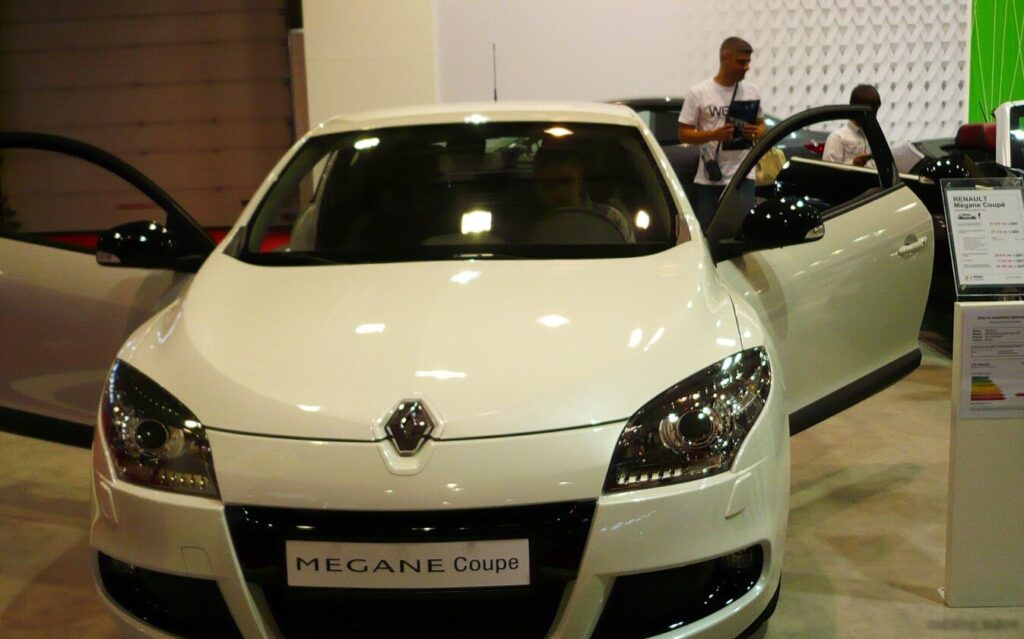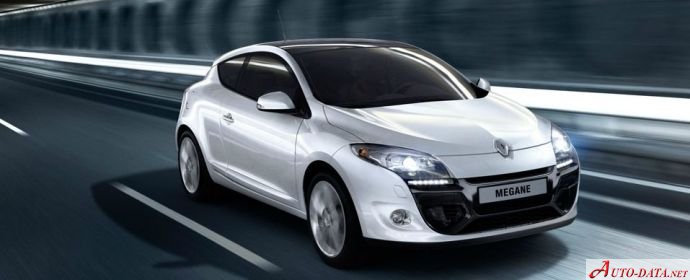
Introduction to the Renault Megane III Coupe (Phase II, 2012)
The Renault Megane III Coupe (Phase II, 2012) 1.6 Energy dCi (130 Hp) Start/Stop represents a compelling iteration of the French automaker’s popular compact car, specifically tailored for the European market. Unveiled as part of the third-generation Megane’s mid-cycle refresh, known as Phase II, this particular model, produced from 2012 to 2013, highlighted Renault’s commitment to combining distinctive styling with advanced powertrain technology and impressive fuel efficiency. While never officially sold in the United States, the Megane has been a cornerstone of Renault’s global lineup, competing fiercely in the highly contested European C-segment.
This specific variant, with its three-door coupe body style, aimed to attract buyers seeking a sportier and more dynamic aesthetic compared to the standard hatchback, without sacrificing everyday practicality. The “Energy dCi” designation signaled a focus on sophisticated diesel engine technology, incorporating features like Start/Stop to optimize fuel economy and reduce emissions. For European consumers, the Megane III Coupe offered a stylish, comfortable, and remarkably economical package, distinguishing itself with a blend of French flair and engineering prowess. Its role in its primary markets was to offer a premium feel and advanced features in a compact, accessible format, emphasizing efficiency and driving enjoyment.
Powertrain and Performance of the Renault Megane III Coupe (Phase II, 2012)
Engine Technology and Efficiency
At the heart of the Renault Megane III Coupe (Phase II, 2012) 1.6 Energy dCi (130 Hp) Start/Stop lies a highly advanced 1.6-liter (1598 cm³ or 97.52 cu. in.) inline four-cylinder diesel engine, designated R9M 414. This powertrain was a testament to Renault’s engineering capabilities in developing efficient yet potent diesel units. Utilizing a common rail fuel injection system, a turbocharger, and an intercooler, the engine delivered a robust 130 horsepower at 4000 rpm. More impressively, it generated a substantial 236.02 lb.-ft. (320 Nm) of torque at a remarkably low 1750 rpm, providing excellent low-end grunt and flexible everyday driving performance. This torque output, paired with a weight-to-torque ratio of 4.1 kg/Nm (242.4 Nm/tonne), ensured responsive acceleration and effortless highway cruising.
The “Energy” moniker in the engine’s name was not merely a marketing term; it reflected a suite of technologies designed to maximize efficiency. Key among these was the Start/Stop system, which automatically shut off the engine when the vehicle was stationary and restarted it seamlessly when the driver released the brake or engaged the clutch. This feature significantly contributed to reduced fuel consumption in urban driving conditions and lowered CO2 emissions. Further enhancing its environmental credentials, the engine was equipped with a particulate filter and met the stringent Euro 5 emission standard.
Performance figures for this diesel coupe were competitive for its class. The vehicle could accelerate from 0 to 60 mph in an estimated 9.3 seconds (0-100 km/h in 9.8 seconds) and reach a top speed of 124.27 mph (200 km/h). However, its most striking attribute was its fuel economy. The 1.6 Energy dCi engine achieved an impressive combined fuel consumption of 58.8 US mpg (4 liters per 100 km), with even higher figures on the highway at 65.3 US mpg (3.6 liters per 100 km). Urban consumption was rated at 49 US mpg (4.8 liters per 100 km). These figures, coupled with CO2 emissions of just 104 g/km, positioned the Megane III Coupe as an exceptionally economical and environmentally conscious choice for discerning European buyers. Power was sent to the front wheels via a smooth-shifting 6-speed manual transmission, offering an engaging driving experience while optimizing fuel efficiency across various speeds.
Design, Features, and Ergonomics
Interior and Safety Innovations
The Renault Megane III Coupe (Phase II, 2012) stood out with its distinctive and sporty design, a clear departure from the more conservative styling of some of its competitors. As a three-door coupe, it featured sleek, flowing lines, a sloping roofline, and a more aggressive stance compared to its hatchback sibling. The Phase II refresh brought subtle refinements, typically including updated lighting signatures, revised grille designs, and minor interior trim enhancements, keeping the car fresh and appealing. Despite its sporty coupe designation, the Megane III Coupe offered seating for five, though the rear accommodations were, as expected, more suited for shorter journeys or smaller occupants.
Measuring 169.25 inches (4299 mm) in length, 70.28 inches (1785 mm) in width, and 56.02 inches (1423 mm) in height, the Megane Coupe maintained compact dimensions suitable for navigating European city streets while offering a stable road presence. The wheelbase of 103.94 inches (2640 mm) contributed to both ride comfort and handling agility. The trunk space was practical for a coupe, offering 13.31 cubic feet (377 liters) with the rear seats up, expandable to a generous 35 cubic feet (991 liters) when the rear seats were folded down, making it surprisingly versatile for luggage or larger items.
In terms of features, the Megane III Coupe was well-equipped for its era. It boasted an electric power steering system, offering a balance of ease in parking and responsiveness at higher speeds. The suspension system comprised an independent McPherson setup at the front and a torsion beam axle at the rear, a common and effective combination for compact cars, providing a comfortable ride without compromising handling dynamics. Braking duties were handled by ventilated discs at the front and solid discs at the rear, complemented by an Anti-lock Braking System (ABS) for enhanced safety during emergency stops. While specific advanced driver-assistance systems (ADAS) like lane departure warning or blind-spot monitoring were just emerging or optional at this time, the Megane would have included standard passive safety features such as multiple airbags and electronic stability control (ESP) to meet European safety standards and ensure occupant protection. The vehicle rode on 205/55 R16 91H tires mounted on 6.5J x 16-inch alloy wheels, providing a good balance of grip, comfort, and visual appeal.
Comprehensive Technical Specifications
| Category | Specification | Value |
|---|---|---|
| General Information | ||
| Brand | Renault | |
| Model | Megane | |
| Generation | Megane III Coupe (Phase II, 2012) | |
| Type (Engine) | 1.6 Energy dCi (130 Hp) Start/Stop | |
| Start of Production | 2012 year | |
| End of Production | 2013 year | |
| Powertrain Architecture | Internal Combustion engine | |
| Body Type | Coupe | |
| Seats | 5 | |
| Doors | 3 | |
| Performance Specifications | ||
| Fuel Consumption (Urban) | 49 US mpg (4.8 l/100 km) | |
| Fuel Consumption (Extra Urban) | 65.3 US mpg (3.6 l/100 km) | |
| Fuel Consumption (Combined) | 58.8 US mpg (4 l/100 km) | |
| CO2 Emissions | 104 g/km | |
| Fuel Type | Diesel | |
| Acceleration 0 – 60 mph | 9.3 sec | |
| Acceleration 0 – 100 km/h | 9.8 sec | |
| Maximum Speed | 124.27 mph (200 km/h) | |
| Emission Standard | Euro 5 | |
| Weight-to-Power Ratio | 10.2 kg/Hp (98.5 Hp/tonne) | |
| Weight-to-Torque Ratio | 4.1 kg/Nm (242.4 Nm/tonne) | |
| Engine Specifications | ||
| Power | 130 Hp @ 4000 rpm | |
| Power per Liter | 81.4 Hp/l | |
| Torque | 236.02 lb.-ft. @ 1750 rpm (320 Nm @ 1750 rpm) | |
| Engine Layout | Front, Transverse | |
| Engine Model/Code | R9M 414 | |
| Engine Displacement | 1.6 liters (1598 cm³, 97.52 cu. in.) | |
| Number of Cylinders | 4 | |
| Engine Configuration | Inline | |
| Cylinder Bore | 3.15 in. (80 mm) | |
| Piston Stroke | 3.13 in. (79.5 mm) | |
| Compression Ratio | 15.4:1 | |
| Number of Valves per Cylinder | 4 | |
| Fuel Injection System | Diesel Commonrail | |
| Engine Aspiration | Turbocharger, Intercooler | |
| Engine Oil Capacity | 5.81 US qt (5.5 l) | |
| Coolant Capacity | 7.08 US qt (6.7 l) | |
| Engine Systems | Start & Stop System, Particulate filter | |
| Space, Volume, and Weights | ||
| Kerb Weight | 2910.1 lbs. (1320 kg) | |
| Max. Weight (GVWR) | 4076.35 lbs. (1849 kg) | |
| Max Load | 1166.25 lbs. (529 kg) | |
| Trunk (Boot) Space – Minimum | 13.31 cu. ft. (377 l) | |
| Trunk (Boot) Space – Maximum | 35 cu. ft. (991 l) | |
| Fuel Tank Capacity | 15.85 US gal (60 l) | |
| Permitted Trailer Load with Brakes (12%) | 2866.01 lbs. (1300 kg) | |
| Permitted Trailer Load without Brakes | 1532.21 lbs. (695 kg) | |
| Dimensions | ||
| Length | 169.25 in. (4299 mm) | |
| Width | 70.28 in. (1785 mm) | |
| Height | 56.02 in. (1423 mm) | |
| Wheelbase | 103.94 in. (2640 mm) | |
| Front Track | 60.87 in. (1546 mm) | |
| Rear Track | 60.91 in. (1547 mm) | |
| Front Overhang | 33.94 in. (862 mm) | |
| Rear Overhang | 31.38 in. (797 mm) | |
| Ride Height (Ground Clearance) | 4.72 in. (120 mm) | |
| Minimum Turning Circle (Turning Diameter) | 35.93 ft. (10.95 m) | |
| Drivetrain, Brakes, and Suspension | ||
| Drivetrain Architecture | The Internal combustion engine (ICE) drives the front wheels of the vehicle. | |
| Drive Wheel | Front wheel drive | |
| Number of Gears and Type of Gearbox | 6 gears, manual transmission | |
| Front Suspension | Independent type McPherson | |
| Rear Suspension | Torsion | |
| Front Brakes | Ventilated discs | |
| Rear Brakes | Disc | |
| Assisting Systems | ABS (Anti-lock braking system) | |
| Steering Type | Steering rack and pinion | |
| Power Steering | Electric Steering | |
| Tires Size | 205/55 R16 91H | |
| Wheel Rims Size | 6.5J x 16 | |
Legacy and Market Competitiveness
The Renault Megane III Coupe (Phase II, 2012) 1.6 Energy dCi (130 Hp) Start/Stop carved out a significant niche for itself in the highly competitive European compact car segment. While not offered in the North American market, this model was a key player for Renault in its home continent and other international markets where compact diesel vehicles were highly valued. Its primary appeal stemmed from a compelling combination of distinctive styling, a comfortable ride, and outstanding fuel economy, particularly with the 1.6 Energy dCi powertrain.
In Europe, the Megane Coupe faced a strong array of rivals. Competitors included the Volkswagen Scirocco, which offered a more premium and sportier image, the Opel Astra GTC, another stylish three-door coupe from Germany, and various compact hatchbacks like the Ford Focus, Peugeot 308, and even entry-level versions of premium compacts like the BMW 1 Series. Against these contenders, the Megane III Coupe distinguished itself with its unique French design flair, often perceived as offering a softer, more compliant ride quality than some German rivals, without sacrificing engaging handling.
The 1.6 Energy dCi engine was a particular highlight, demonstrating Renault’s prowess in developing highly efficient and clean diesel technology. Its blend of 130 horsepower and impressive torque, combined with exceptional fuel economy figures and low CO2 emissions, made it a smart choice for both private owners and fleet operators looking to minimize running costs and environmental impact. The Start/Stop system, while common today, was a notable efficiency feature in 2012, showcasing Renault’s commitment to modern automotive technology.
The Megane III Coupe’s legacy is one of a stylish and practical compact car that successfully blended sporty aesthetics with everyday usability. It represented a period when three-door coupes were still a popular choice for buyers seeking a more individualistic statement than a conventional five-door hatchback. As the automotive market evolved, consumer preferences gradually shifted towards more versatile five-door designs and eventually towards SUVs, leading to the gradual phasing out of many three-door coupe models, including the Megane Coupe in subsequent generations. However, this specific Phase II model remains a testament to Renault’s ability to offer a well-rounded package that was both aesthetically pleasing and mechanically sophisticated, leaving a lasting impression on the European automotive landscape as a stylish, economical, and comfortable compact cruiser.