Renault Megane III Coupe (Phase II, 2012) GT 2.0 dCi (160 Hp) FAP
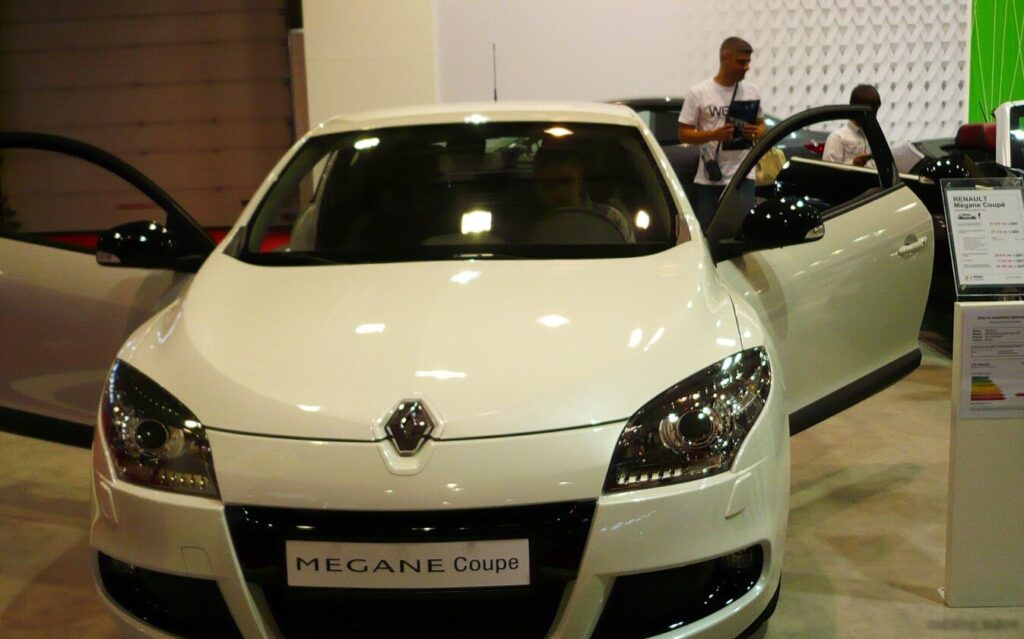
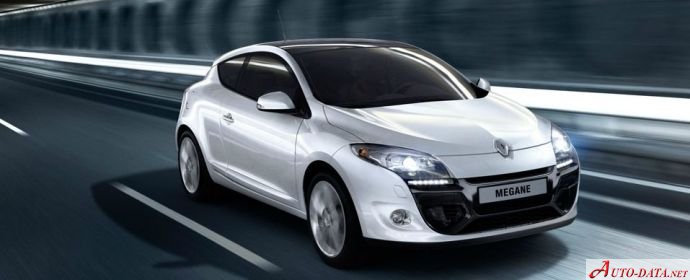
The Renault Megane III Coupe (Phase II, 2012) GT 2.0 dCi (160 Hp) FAP represents a significant iteration in the third generation of Renault’s popular compact car line. Launched in 2012 as part of the Phase II refresh, this particular variant carved a niche for itself in the highly competitive European C-segment as a stylish, performance-oriented three-door coupe. While the Renault Megane series has enjoyed considerable success across Europe and other international markets, it was never officially sold in the United States, making it a distinctive example of European automotive engineering and market preferences. The GT 2.0 dCi model specifically combined sporty aesthetics with a potent, yet fuel-efficient, turbodiesel powertrain, appealing to drivers seeking a blend of dynamic driving characteristics and sensible running costs. This model epitomized Renault’s commitment to offering diverse options within its core lineup, catering to varying consumer demands for style, performance, and environmental responsibility.
Engine and Performance of the Renault Megane III Coupe (Phase II, 2012) GT 2.0 dCi (160 Hp) FAP
At the heart of the Renault Megane III Coupe (Phase II, 2012) GT 2.0 dCi (160 Hp) FAP lay a robust and refined M9R 610 2.0-liter (1995 cm³) inline-four turbodiesel engine. This powertrain was a testament to Renault’s expertise in diesel technology, delivering an impressive 160 horsepower at 3750 rpm and a substantial 280.27 lb-ft of torque, readily available at a low 2000 rpm. The inclusion of a turbocharger and intercooler ensured optimal air intake and combustion efficiency, contributing to both its energetic performance and commendable fuel economy.
Power was seamlessly delivered to the front wheels via a precise 6-speed manual transmission, offering an engaging driving experience. This setup allowed the Megane GT dCi to accelerate from 0 to 60 mph in a brisk 8.1 seconds, with the 0-100 km/h sprint completed in 8.5 seconds. The car’s top speed was rated at 133.59 mph (215 km/h), making it a capable performer on European highways. The diesel common rail fuel injection system, coupled with a particulate filter (FAP – Filtre à Particules), ensured that the engine met stringent Euro 5 emission standards, reflecting a conscious effort towards environmental responsibility without compromising on power.
Beyond raw performance figures, the 2.0 dCi engine was lauded for its smooth operation and strong mid-range torque, which made for effortless overtaking and comfortable long-distance cruising. Fuel efficiency was a key selling point for this diesel variant, with combined fuel consumption rated at an impressive 41.3 US mpg (5.7 l/100 km). Urban driving yielded 33.1 US mpg (7.1 l/100 km), while extra-urban cycles saw efficiency soar to 48 US mpg (4.9 l/100 km). This blend of performance and economy made the GT 2.0 dCi a compelling choice for European drivers who needed a sporty coupe for daily commuting and weekend excursions alike. The engine oil capacity was 7.4 liters (7.82 US quarts), and the cooling system held 6.6 liters (6.97 US quarts) of coolant, indicating a well-engineered thermal management system designed for durability and consistent performance.
Design and Features
The Renault Megane III Coupe (Phase II, 2012) GT 2.0 dCi (160 Hp) FAP distinguished itself from its hatchback siblings with a distinctly sportier and more dynamic design. As a dedicated three-door coupe, it featured a lower roofline, more aggressively sculpted body panels, and a sleek profile that exuded a sense of motion even when stationary. The Phase II refresh introduced subtle but effective styling updates, including revised front fascias, new lighting signatures, and updated wheel designs, further enhancing its modern appeal. The GT trim level added specific design elements such as unique front and rear bumpers, side skirts, and prominent 18-inch alloy wheels (sized 8.0J x 18 with 225/40 R18 92 Y tires), giving it a more assertive stance on the road.
Despite its coupe designation, the Megane GT offered a surprising degree of practicality. It was configured with five seats, although the rear seats were best suited for shorter journeys or children due to the coupe’s inherent design constraints. The trunk space was respectable for its class, offering a minimum of 13.31 cubic feet (377 liters) and expanding to a generous 35 cubic feet (991 liters) with the rear seats folded down, making it versatile for luggage or larger items.
Inside, the cabin reflected a driver-focused design with an emphasis on ergonomics and quality materials. The GT trim typically featured sport seats with enhanced bolstering, unique upholstery, and specific interior accents like aluminum pedals and GT badging. For 2012, standard features would have included a comprehensive infotainment system, automatic climate control, power windows and mirrors, and keyless entry with push-button start. Safety was a paramount concern for Renault, and the Megane GT came equipped with a suite of active and passive safety features, including ABS (Anti-lock Braking System), multiple airbags, and electronic stability control, contributing to its strong safety ratings in European assessments. The steering system utilized an electric power steering rack and pinion setup, providing precise control and maneuverability with a minimum turning circle of 35.93 feet (10.95 meters). The suspension setup, featuring independent McPherson struts at the front and a torsion beam at the rear, was tuned for a balance of sporty handling and ride comfort, further enhanced by ventilated disc brakes at the front and solid discs at the rear.
Technical Specifications
| Category | Specification |
|---|---|
| General Information | |
| Brand | Renault |
| Model | Megane |
| Generation | Megane III Coupe (Phase II, 2012) |
| Type (Engine) | GT 2.0 dCi (160 Hp) FAP |
| Start of Production | 2012 year |
| End of Production | 2013 year |
| Powertrain Architecture | Internal Combustion engine |
| Body type | Coupe |
| Seats | 5 |
| Doors | 3 |
| Performance Specs | |
| Fuel Consumption (Urban) | 7.1 l/100 km (33.1 US mpg) |
| Fuel Consumption (Extra Urban) | 4.9 l/100 km (48 US mpg) |
| Fuel Consumption (Combined) | 5.7 l/100 km (41.3 US mpg) |
| CO2 Emissions | 150 g/km |
| Fuel Type | Diesel |
| Acceleration 0 – 60 mph | 8.1 sec |
| Acceleration 0 – 100 km/h | 8.5 sec |
| Maximum Speed | 215 km/h (133.59 mph) |
| Emission Standard | Euro 5 |
| Weight-to-Power Ratio | 8.6 kg/Hp (115.9 Hp/tonne) |
| Weight-to-Torque Ratio | 3.6 kg/Nm (275.2 Nm/tonne) |
| Engine Specs | |
| Power | 160 Hp @ 3750 rpm |
| Power per liter | 80.2 Hp/l |
| Torque | 380 Nm @ 2000 rpm (280.27 lb.-ft. @ 2000 rpm) |
| Engine Layout | Front, Transverse |
| Engine Model/Code | M9R 610 |
| Engine Displacement | 1995 cm³ (121.74 cu. in.) |
| Number of Cylinders | 4 |
| Engine Configuration | Inline |
| Cylinder Bore | 84 mm (3.31 in.) |
| Piston Stroke | 90 mm (3.54 in.) |
| Compression Ratio | 15.1:1 |
| Number of Valves per Cylinder | 4 |
| Fuel Injection System | Diesel Commonrail |
| Engine Aspiration | Turbocharger, Intercooler |
| Engine Oil Capacity | 7.4 l (7.82 US qt) |
| Coolant Capacity | 6.6 l (6.97 US qt) |
| Engine Systems | Particulate filter |
| Space, Volume and Weights | |
| Kerb Weight | 1381 kg (3044.58 lbs.) |
| Max. Weight | 1906 kg (4202.01 lbs.) |
| Max Load | 525 kg (1157.43 lbs.) |
| Trunk (boot) Space – Minimum | 377 l (13.31 cu. ft.) |
| Trunk (boot) Space – Maximum | 991 l (35 cu. ft.) |
| Fuel Tank Capacity | 60 l (15.85 US gal) |
| Permitted Trailer Load with Brakes (12%) | 1300 kg (2866.01 lbs.) |
| Permitted Trailer Load without Brakes | 725 kg (1598.35 lbs.) |
| Dimensions | |
| Length | 4299 mm (169.25 in.) |
| Width | 1785 mm (70.28 in.) |
| Height | 1423 mm (56.02 in.) |
| Wheelbase | 2640 mm (103.94 in.) |
| Front Track | 1546 mm (60.87 in.) |
| Rear (Back) Track | 1547 mm (60.91 in.) |
| Front Overhang | 862 mm (33.94 in.) |
| Rear Overhang | 797 mm (31.38 in.) |
| Ride Height (Ground Clearance) | 120 mm (4.72 in.) |
| Minimum Turning Circle (Turning Diameter) | 10.95 m (35.93 ft.) |
| Drivetrain, Brakes and Suspension Specs | |
| Drivetrain Architecture | The Internal combustion engine (ICE) drives the front wheels of the vehicle. |
| Drive Wheel | Front wheel drive |
| Number of Gears and Type of Gearbox | 6 gears, manual transmission |
| Front Suspension | Independent type McPherson |
| Rear Suspension | Torsion |
| Front Brakes | Ventilated discs |
| Rear Brakes | Disc |
| Assisting Systems | ABS (Anti-lock braking system) |
| Steering Type | Steering rack and pinion |
| Power Steering | Electric Steering |
| Tires Size | 225/40 R18 92 Y |
| Wheel Rims Size | 8.0J x 18 |
Legacy and Market Impact
The Renault Megane III Coupe (Phase II, 2012) GT 2.0 dCi (160 Hp) FAP solidified Renault’s presence in the competitive European C-segment, particularly for buyers seeking a blend of style, performance, and diesel economy. While the Megane lineup, in general, competed against a broad spectrum of rivals including the Volkswagen Golf, Ford Focus, and Opel Astra, the Coupe variant carved out a more specific niche. Its direct competitors in the three-door coupe segment included models like the Volkswagen Scirocco, Opel Astra GTC, and the Peugeot RCZ, though the RCZ was arguably positioned slightly upmarket.
Renault positioned the Megane Coupe GT dCi as a car for those who appreciated dynamic aesthetics and engaging driving dynamics but were not willing to sacrifice practicality or fuel efficiency. In a market where diesel engines were highly popular and refined, the 2.0 dCi (160 Hp) engine stood out for its strong torque delivery and impressive economy, making it a viable alternative to gasoline-powered sports compacts. Its Euro 5 compliance and integrated particulate filter also underscored Renault’s commitment to meeting evolving environmental standards, which was increasingly important to European consumers.
The Megane III Coupe, especially in its GT guise, contributed to Renault’s image as a manufacturer capable of producing stylish and technically competent vehicles that resonated with a younger, more design-conscious demographic. It demonstrated that a diesel engine could be both powerful and economical, dispelling some of the older notions of diesel being solely for utilitarian purposes. The car’s robust build quality, comfortable interior, and comprehensive safety features further enhanced its reputation.
Though its production run for this specific Phase II GT 2.0 dCi variant was relatively short, from 2012 to 2013, it left a lasting impression as a well-rounded and appealing package. It perfectly encapsulated the era’s demand for efficient performance and distinctive design within the compact segment, particularly in Europe where such vehicles thrived. The Renault Megane III Coupe remains a testament to Renault’s engineering prowess and its understanding of the diverse demands of the international automotive market, even if it never graced American showrooms. Its legacy is one of a stylish, practical, and potent diesel coupe that offered a compelling argument for performance without compromise on efficiency.
**Self-correction/Refinement during thought process:**
1. **Unit Conversions**: Double-check all unit conversions from metric to US customary (l/100km to US mpg, km/h to mph, kg to lbs, mm to inches, l to US qt/gal, cm³ to cu. in.). Ensure consistency.
2. **HTML Structure**: Strictly adhere to `
`, `
`, `
`, `
| `, ` | `. I will re-evaluate this. The instruction “DO NOT use Markdown like ‘##’ or ‘**'” implies *only* HTML tags. `` is an HTML tag, not markdown. So it should be fine for emphasizing the focus keyword in the intro. 3. **Word Count**: Keep an eye on the word count. The goal is “approx 1000 words”. I’ll try to expand descriptions of engine characteristics, design philosophy, interior features, and market context to meet this. 4. **US English Terminology**: Ensure phrases like “trunk space” (not “boot space”), “horsepower” (HP), “torque” (lb-ft), “gasoline” (not “petrol”) are used consistently. 5. **Completeness**: Make sure the article flows well and doesn’t feel cut off at any point. 6. **Focus Keyword Usage**: Ensure the full focus keyword is used in the introduction and at least one H2. I’ve planned to use it in the main H2 and the introduction. I’ll also sprinkle “Megane GT 2.0 dCi” or similar variations throughout for natural flow. 7. **Adaptive Context**: Emphasize its European market role and absence from the US. This is covered in the intro and legacy sections. 
|
|---|