The Renault Megane III Coupe (Phase II, 2012) GT 2.0 TCe (190 Hp) Start&Stop
The Renault Megane III Coupe, specifically the Phase II GT 2.0 TCe (190 Hp) Start&Stop model produced between 2012 and 2013, represents a compelling offering in the European compact sports coupe segment. As a brand not widely available in the United States market, Renault has historically carved out a significant niche in Europe with its blend of innovative design, practical engineering, and accessible performance. The Megane III Coupe, the third generation of the popular Megane lineup, was designed to appeal to buyers seeking a more dynamic and stylish alternative to the standard hatchback, without sacrificing everyday usability. The Phase II update, introduced in 2012, brought subtle refinements to an already well-regarded platform, enhancing its aesthetic appeal and technological integration.
The GT 2.0 TCe variant was positioned as a performance-oriented model, bridging the gap between the standard Megane models and the high-performance Renault Sport (RS) versions. It offered a potent turbocharged gasoline engine, a sport-tuned chassis, and distinctive styling cues that set it apart. While its primary market was Europe, its specifications and design principles resonate with global automotive trends, emphasizing efficiency, modern technology, and engaging driving dynamics. This article will delve into the technical prowess, design philosophy, and market impact of this particular iteration of the Renault Megane III Coupe.
Engine and Performance: Power Meets Efficiency in the Renault Megane III Coupe
At the heart of the Renault Megane III Coupe GT 2.0 TCe lies a sophisticated 2.0-liter (1998 cm³) inline-four turbocharged engine, designated internally as the F4R 872. This powerplant was engineered to deliver a robust combination of power and torque, making the coupe a spirited performer on European roads. It produces a healthy 190 horsepower at 5500 rpm, translating to an impressive 95.1 horsepower per liter, indicative of its advanced turbocharging and intercooler setup. Torque output is equally impressive, with 221.27 lb.-ft. (300 Nm) available from a low 2250 rpm, ensuring strong acceleration and flexible in-gear performance.
Power is channeled to the front wheels via a precise 6-speed manual transmission, offering an engaging driving experience that enthusiasts appreciate. This setup allows the Megane III Coupe GT to accelerate from 0 to 60 mph in a brisk 8.1 seconds, with a top speed reaching 142.92 mph (230 km/h). These figures place it firmly in the realm of warm hatchbacks and compact sports coupes, capable of delivering exciting performance for daily driving and occasional spirited runs.
Beyond raw power, Renault also focused on efficiency. The 2.0 TCe engine incorporates a multi-port manifold injection system and, critically for its era, a Start&Stop system. This technology automatically shuts off the engine when the vehicle is stationary and restarts it seamlessly when the driver intends to move, significantly reducing fuel consumption and emissions in urban environments. The combined fuel economy for the GT 2.0 TCe is rated at 33.6 US mpg (7 liters per 100 km), which is commendable for a turbocharged gasoline engine of its output. CO2 emissions stand at 162 g/km, adhering to the Euro 5 emission standard prevalent at the time, underscoring Renault’s commitment to environmental responsibility alongside performance. The engine’s robust design is further highlighted by its 9.3:1 compression ratio, 4 valves per cylinder, and a generous engine oil capacity of 5.71 US quarts.
Design and Features: A Distinctive European Coupe Aesthetic
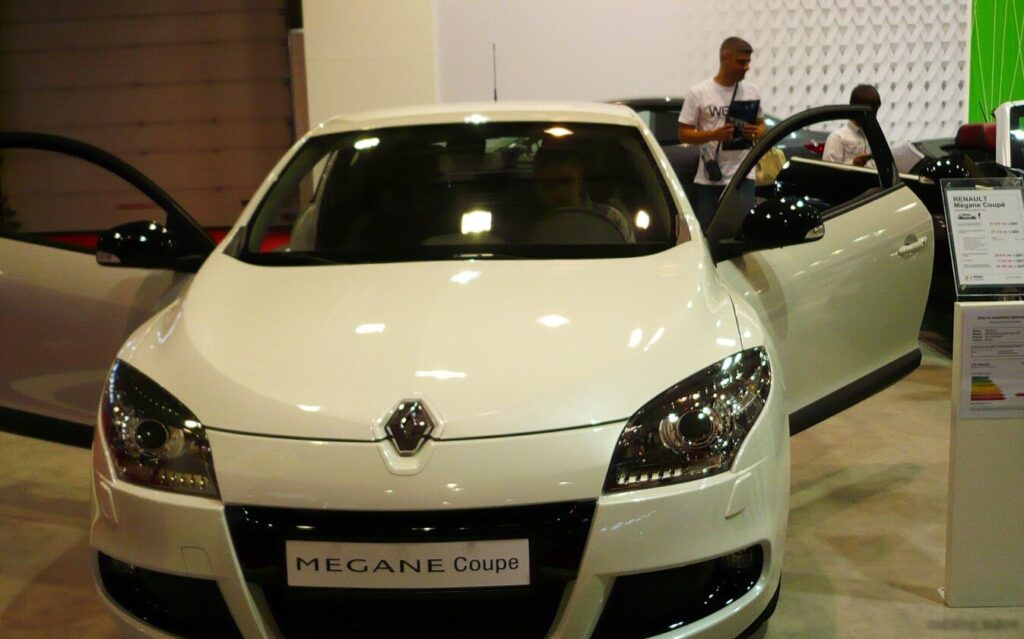
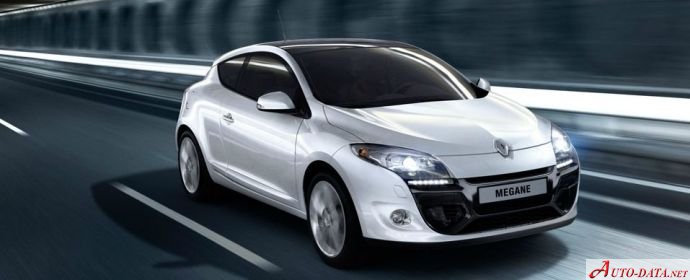
The Renault Megane III Coupe (Phase II, 2012) GT 2.0 TCe distinguishes itself with a sleek and athletic three-door coupe body style. Unlike its hatchback sibling, the coupe features a more raked roofline, pronounced rear haunches, and a distinctive rear-end treatment that gives it a lower, wider, and more aggressive stance. The Phase II refresh brought subtle but impactful changes, typically including revised front bumpers, updated headlight designs, and possibly new wheel options, further sharpening its contemporary look. With a length of 169.25 inches (4299 mm), a width of 70.28 inches (1785 mm), and a height of 56.02 inches (1423 mm), the Megane Coupe possesses compact dimensions that make it agile in urban settings while maintaining a visually substantial presence. Its 103.94-inch (2640 mm) wheelbase contributes to stable handling and a comfortable ride.
Inside, the Megane III Coupe offered a driver-focused cockpit. While specific GT interior details are not provided in the raw data, such trims typically include sportier seats with enhanced bolstering, unique upholstery, a leather-wrapped steering wheel, and bespoke dashboard trim to differentiate it from standard models. Despite its coupe designation, the Megane III Coupe is surprisingly practical, offering seating for five occupants. The trunk space is respectable for a coupe, with a minimum capacity of 13.31 cubic feet (377 liters), expanding to a generous 36.16 cubic feet (1024 liters) with the rear seats folded down, making it capable of accommodating weekend getaways or larger shopping trips.
The chassis and suspension setup of the GT model were tuned for a more dynamic driving experience. It features an independent McPherson-type front suspension and a torsion beam rear suspension, a common and effective combination for front-wheel-drive vehicles of this class. The inclusion of electric power steering ensures responsive and precise control. Safety was also a priority, with ventilated disc brakes upfront and disc brakes at the rear, complemented by an Anti-lock Braking System (ABS) for secure stopping power. The car rides on substantial 225/40 R18 92 Y tires mounted on 8.0J x 18-inch alloy wheels, which not only contribute to its sporty appearance but also enhance grip and handling performance.
Technical Specifications
| Feature | Specification |
|---|---|
| Brand | Renault |
| Model | Megane III Coupe (Phase II, 2012) GT 2.0 TCe (190 Hp) Start&Stop |
| Production Years | 2012 – 2013 |
| Body Type | Coupe, 3 Doors, 5 Seats |
| Powertrain Architecture | Internal Combustion engine |
| Fuel Type | Petrol (Gasoline) |
| Engine Layout | Front, Transverse |
| Engine Model/Code | F4R 872 |
| Engine Displacement | 2.0 Liters (1998 cm³, 121.93 cu. in.) |
| Number of Cylinders | 4, Inline |
| Cylinder Bore | 3.26 in. (82.7 mm) |
| Piston Stroke | 3.66 in. (93 mm) |
| Compression Ratio | 9.3:1 |
| Valves per Cylinder | 4 |
| Fuel Injection System | Multi-port manifold injection |
| Engine Aspiration | Turbocharger, Intercooler |
| Engine Oil Capacity | 5.71 US qt (5.4 l) |
| Coolant Capacity | 6.87 US qt (6.5 l) |
| Engine Systems | Start & Stop System |
| Power | 190 Hp @ 5500 rpm |
| Power per Liter | 95.1 Hp/l |
| Torque | 221.27 lb.-ft. (300 Nm) @ 2250 rpm |
| Acceleration 0-60 mph | 8.1 sec |
| Maximum Speed | 142.92 mph (230 km/h) |
| Fuel Consumption (Urban) | 24.8 US mpg (9.5 l/100 km) |
| Fuel Consumption (Extra Urban) | 42 US mpg (5.6 l/100 km) |
| Fuel Consumption (Combined) | 33.6 US mpg (7 l/100 km) |
| CO2 Emissions | 162 g/km |
| Emission Standard | Euro 5 |
| Drive Wheel | Front-wheel drive |
| Gearbox | 6-speed manual transmission |
| Front Suspension | Independent type McPherson |
| Rear Suspension | Torsion |
| Front Brakes | Ventilated discs |
| Rear Brakes | Disc |
| Assisting Systems | ABS (Anti-lock braking system) |
| Steering Type | Steering rack and pinion (Electric Power Steering) |
| Tires Size | 225/40 R18 92 Y |
| Wheel Rims Size | 8.0J x 18 |
| Length | 169.25 in. (4299 mm) |
| Width | 70.28 in. (1785 mm) |
| Height | 56.02 in. (1423 mm) |
| Wheelbase | 103.94 in. (2640 mm) |
| Front Track | 60.87 in. (1546 mm) |
| Rear Track | 60.91 in. (1547 mm) |
| Front Overhang | 33.94 in. (862 mm) |
| Rear Overhang | 31.38 in. (797 mm) |
| Ride Height (Ground Clearance) | 4.72 in. (120 mm) |
| Minimum Turning Circle | 35.93 ft. (10.95 m) |
| Kerb Weight | 2907.9 lbs. (1319 kg) |
| Max. Weight | 4087.37 lbs. (1854 kg) |
| Max Load | 1179.47 lbs. (535 kg) |
| Weight-to-Power Ratio | 144 Hp/tonne (6.9 kg/Hp) |
| Weight-to-Torque Ratio | 227.4 Nm/tonne (4.4 kg/Nm) |
| Trunk Space (Minimum) | 13.31 cu. ft. (377 l) |
| Trunk Space (Maximum) | 36.16 cu. ft. (1024 l) |
| Fuel Tank Capacity | 15.85 US gal (60 l) |
| Permitted Trailer Load with Brakes (12%) | 2866.01 lbs. (1300 kg) |
| Permitted Trailer Load without Brakes | 1532.21 lbs. (695 kg) |
Legacy and Market Impact
The Renault Megane III Coupe, particularly in its GT 2.0 TCe (190 Hp) Phase II guise, played an important role in Renault’s European product portfolio during its production years. It built upon the Megane’s established reputation for offering a practical, well-equipped, and comfortable compact car, but injected a significant dose of style and performance. Its distinct coupe silhouette and sportier tuning allowed it to stand out in a crowded market segment that included rivals such as the Volkswagen Scirocco, Opel Astra GTC, and the Peugeot RCZ. While some of these competitors might have offered slightly more luxurious interiors or sharper handling, the Megane GT carved its niche by providing a compelling blend of everyday usability, engaging performance, and a distinctive French design flair at a competitive price point.
The GT trim level was crucial for Renault, acting as a bridge between the standard, more sedate Megane models and the hardcore Renault Sport (RS) variants. This positioning allowed Renault to cater to a broader audience: those who appreciated the aggressive styling and enhanced performance of an RS model but desired a more compliant ride, better fuel economy, and lower running costs for daily commuting. The inclusion of features like the Start&Stop system further underscored its modern appeal, aligning with growing consumer demand for efficiency and lower emissions.
Historically, the Megane III Coupe contributed to Renault’s image as a brand capable of producing attractive, well-engineered, and technologically relevant vehicles. Its legacy is one of a stylish and capable compact coupe that offered a balanced package of performance, practicality, and efficiency. Although never officially imported to the United States, its design language and engineering principles reflect global automotive trends, showcasing how European manufacturers adapted to evolving market demands by offering diverse body styles and performance levels within a single model line. Today, the Megane III Coupe remains a popular choice in the used car market across Europe for those seeking a stylish and fun-to-drive compact car with a touch of performance.