Introduction to the Renault Megane III Coupe (Phase III, 2014) 1.5 dCi (110 Hp) FAP
The Renault Megane III Coupe (Phase III, 2014) 1.5 dCi (110 Hp) FAP represents a significant iteration within the third generation of Renault’s popular compact car line. Launched in 2014 as part of the “Phase III” refresh, this particular model highlighted Renault’s commitment to efficiency and dynamic styling in the highly competitive European C-segment. While the Renault Megane series has been a staple across Europe and other international markets, it was not officially sold in the United States, making its role primarily focused on meeting the diverse needs of European consumers who valued a blend of fuel economy, practical performance, and distinctive design.
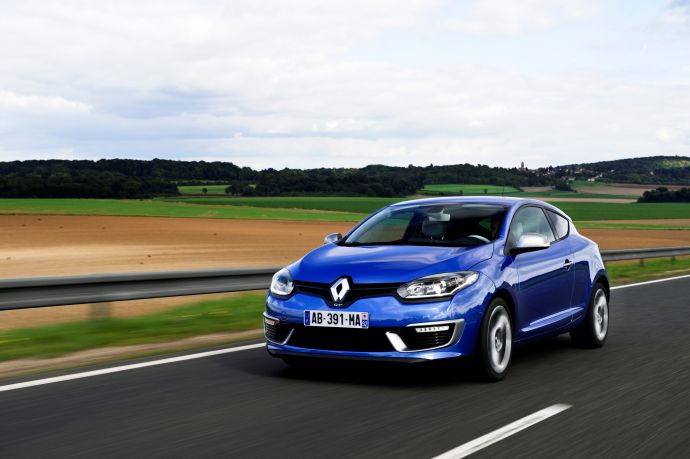
The Megane III Coupe, produced from 2014 to 2016, stood out from its hatchback and wagon counterparts with its sportier, three-door body style. This specific variant, powered by the renowned 1.5-liter dCi turbodiesel engine, offered a compelling package for drivers seeking lower running costs without sacrificing too much in terms of driving enjoyment. The inclusion of a Diesel Particulate Filter (FAP) underscored its adherence to increasingly stringent European emission standards, specifically Euro 5. This article delves into the technical specifications, design philosophy, and market impact of this unique European offering.
Engine and Performance: The 1.5 dCi Heart of the Renault Megane III Coupe (Phase III, 2014)
At the core of this Renault Megane III Coupe (Phase III, 2014) 1.5 dCi (110 Hp) FAP model was the venerable K9K 836 engine, a 1.5-liter (1461 cm³ or 89.16 cu. in.) inline four-cylinder turbodiesel unit. This engine was a testament to Renault’s expertise in developing efficient and reliable diesel powertrains, widely used across many of its models and even shared with alliance partner Nissan. It delivered a respectable 110 horsepower at 4000 rpm, translating to a power-to-liter ratio of 75.3 horsepower per liter, which was competitive for its class at the time.
More impressive than its peak horsepower was the engine’s torque output: 240 Nm (177.01 lb.-ft.) available at a low 1750 rpm. This characteristic low-end torque was crucial for everyday drivability, providing strong pulling power from low engine speeds, which is typical and highly desirable for diesel engines. The power was delivered to the front wheels via a precise 6-speed manual transmission, offering drivers engaging control over the powertrain.
Performance figures for the Megane III Coupe 1.5 dCi were practical rather than outright sporty. It could accelerate from 0 to 60 mph in a calculated 10.3 seconds (0-100 km/h in 10.8 seconds) and reach a maximum speed of 118.06 mph (190 km/h). These figures positioned it as a capable cruiser suitable for both urban commuting and longer highway journeys.
Fuel efficiency was a major selling point for this diesel variant. The combined fuel consumption was an impressive 4.4 liters per 100 kilometers, translating to approximately 53.5 US mpg. Urban driving yielded 5.1 l/100 km (46.1 US mpg), while extra-urban (highway) driving could achieve an outstanding 4.0 l/100 km (58.8 US mpg). These figures, combined with CO2 emissions of 114 g/km, highlighted its environmental consciousness and cost-effectiveness, appealing strongly to European buyers facing high fuel prices and emission-based taxation. The presence of a Diesel Particulate Filter (FAP) was key to meeting the Euro 5 emission standard, reducing harmful soot emissions.
Design and Features
The Megane III Coupe (Phase III, 2014) distinguished itself with a sleek, three-door coupe body. Unlike the more utilitarian hatchback, the coupe offered a more rakish roofline and sculpted profile, aiming for a sportier aesthetic. Its dimensions measured 169.25 inches (4299 mm) in length, 70.28 inches (1785 mm) in width, and 56.02 inches (1423 mm) in height, with a wheelbase of 103.94 inches (2640 mm). These proportions contributed to its agile appearance and handling characteristics.
Despite its coupe designation, the Megane III Coupe was designed to accommodate five occupants, though rear-seat access and comfort were naturally more constrained than in a five-door hatchback. The trunk space was practical for its class, offering 12.15 cu. ft. (344 liters) with the rear seats up, expandable to a generous 35 cu. ft. (991 liters) when folded down, making it surprisingly versatile for a compact coupe.
The vehicle featured a front-wheel-drive architecture, typical for compact cars, paired with an independent McPherson strut front suspension and a torsion beam rear suspension. This setup provided a good balance of ride comfort and handling precision. Braking was handled by ventilated discs at the front and solid discs at the rear, augmented by an Anti-lock Braking System (ABS) for enhanced safety. Electric power steering offered ease of maneuverability, particularly in urban environments, with a minimum turning circle of 35.93 feet (10.95 meters). Standard tire sizes ranged from 195/65 R15 to 205/50 R17, depending on the trim level, mounted on 15- to 17-inch wheel rims.
Technical Specifications
| Category | Specification | Value |
|---|---|---|
| General Information | ||
| Brand | Renault | |
| Model | Megane | |
| Generation | Megane III Coupe (Phase III, 2014) | |
| Type (Engine) | 1.5 dCi (110 Hp) FAP | |
| Start of production | 2014 year | |
| End of production | 2016 year | |
| Powertrain Architecture | Internal Combustion engine | |
| Body type | Coupe | |
| Seats | 5 | |
| Doors | 3 | |
| Performance Specs | ||
| Fuel consumption (economy) – urban | 5.1 l/100 km (46.1 US mpg) | |
| Fuel consumption (economy) – extra urban | 4 l/100 km (58.8 US mpg) | |
| Fuel consumption (economy) – combined | 4.4 l/100 km (53.5 US mpg) | |
| CO2 emissions | 114 g/km | |
| Fuel Type | Diesel | |
| Acceleration 0 – 60 mph | 10.3 sec | |
| Acceleration 0 – 100 km/h | 10.8 sec | |
| Maximum speed | 190 km/h (118.06 mph) | |
| Emission standard | Euro 5 | |
| Weight-to-power ratio | 11 kg/Hp (91.3 Hp/tonne) | |
| Weight-to-torque ratio | 5 kg/Nm (199.2 Nm/tonne) | |
| Engine Specs | ||
| Power | 110 Hp @ 4000 rpm | |
| Power per liter | 75.3 Hp/l | |
| Torque | 240 Nm @ 1750 rpm (177.01 lb.-ft.) | |
| Engine layout | Front, Transverse | |
| Engine Model/Code | K9K 836 | |
| Engine displacement | 1461 cm³ (89.16 cu. in.) | |
| Number of cylinders | 4 | |
| Engine configuration | Inline | |
| Cylinder Bore | 76 mm (2.99 in.) | |
| Piston Stroke | 80.5 mm (3.17 in.) | |
| Compression ratio | 15.2:1 | |
| Number of valves per cylinder | 2 | |
| Fuel injection system | Diesel Commonrail | |
| Engine aspiration | Turbocharger, Intercooler | |
| Engine oil capacity | 4.5 l (4.76 US qt) | |
| Coolant | 6.5 l (6.87 US qt) | |
| Engine systems | Particulate filter | |
| Space, Volume and Weights | ||
| Kerb Weight | 1205 kg (2656.57 lbs.) | |
| Max. weight | 1795 kg (3957.3 lbs.) | |
| Max load | 590 kg (1300.73 lbs.) | |
| Trunk (boot) space – minimum | 344 l (12.15 cu. ft.) | |
| Trunk (boot) space – maximum | 991 l (35 cu. ft.) | |
| Fuel tank capacity | 60 l (15.85 US gal) | |
| Max. roof load | 80 kg (176.37 lbs.) | |
| Permitted trailer load with brakes (12%) | 1300 kg (2866.01 lbs.) | |
| Permitted trailer load without brakes | 635 kg (1399.94 lbs.) | |
| Permitted towbar download | 75 kg (165.35 lbs.) | |
| Dimensions | ||
| Length | 4299 mm (169.25 in.) | |
| Width | 1785 mm (70.28 in.) | |
| Height | 1423 mm (56.02 in.) | |
| Wheelbase | 2640 mm (103.94 in.) | |
| Front track | 1546 mm (60.87 in.) | |
| Rear (Back) track | 1547 mm (60.91 in.) | |
| Front overhang | 862 mm (33.94 in.) | |
| Rear overhang | 797 mm (31.38 in.) | |
| Ride height (ground clearance) | 120 mm (4.72 in.) | |
| Minimum turning circle (turning diameter) | 10.95 m (35.93 ft.) | |
| Drivetrain, Brakes and Suspension Specs | ||
| Drivetrain Architecture | The Internal combustion engine (ICE) drives the front wheels of the vehicle. | |
| Drive wheel | Front wheel drive | |
| Number of gears and type of gearbox | 6 gears, manual transmission | |
| Front suspension | Independent type McPherson | |
| Rear suspension | Torsion | |
| Front brakes | Ventilated discs | |
| Rear brakes | Disc | |
| Assisting systems | ABS (Anti-lock braking system) | |
| Steering type | Steering rack and pinion | |
| Power steering | Electric Steering | |
| Tires size | 195/65 R15 91T; 205/55 R16 91H; 205/50 R17 89V | |
| Wheel rims size | 6.5J x 15; 6.5J x 16; 6.5J x 17 | |
Legacy and Market Impact
The Renault Megane III Coupe (Phase III, 2014) 1.5 dCi (110 Hp) FAP cemented its place in the European compact car segment as a stylish and economical choice. Its primary market was Europe, where diesel engines held a significant market share due to their superior fuel economy and favorable taxation in many countries. The Megane III, in all its body styles, was a volume seller for Renault, consistently ranking among the top contenders in the highly competitive C-segment.
In its home market and across Europe, the Megane III Coupe faced stiff competition from rivals such as the Volkswagen Golf, Ford Focus, Peugeot 308, Opel Astra, and Fiat Tipo. While the Golf was often lauded for its refinement and build quality, and the Focus for its driving dynamics, the Megane carved out its niche with distinctive French styling, a comfortable ride, and a reputation for strong value. The coupe variant, in particular, appealed to buyers looking for a more individualistic statement than the ubiquitous hatchbacks, without stepping into a more expensive premium segment.
The 1.5 dCi engine, specifically, was a cornerstone of the Megane’s success. Its balance of performance and outstanding fuel economy made it a practical choice for a wide range of drivers, from young professionals to small families. The inclusion of the Diesel Particulate Filter (FAP) and its Euro 5 compliance were crucial for its longevity in a market increasingly focused on environmental regulations. This engine’s widespread use across Renault-Nissan Alliance vehicles also spoke to its robustness and cost-effectiveness in manufacturing.
Historically, the Megane III built upon the strong foundation laid by its predecessors, continuing Renault’s tradition of producing accessible, well-engineered compact cars. While not globally recognized in the same way as some Japanese or German rivals due to its limited presence in markets like North America, its impact in Europe was undeniable. It contributed significantly to Renault’s brand image as an innovator in design and powertrain efficiency. The Phase III update ensured the Megane remained fresh and competitive in its final years of production before the introduction of the fourth-generation Megane, solidifying its legacy as a strong contender in a challenging segment. The Renault Megane III Coupe (Phase III, 2014) 1.5 dCi (110 Hp) FAP remains a testament to European automotive engineering focused on practicality, efficiency, and style.