Introduction to the Renault Megane III Grandtour 1.6 16V (110 Hp) Ethanol
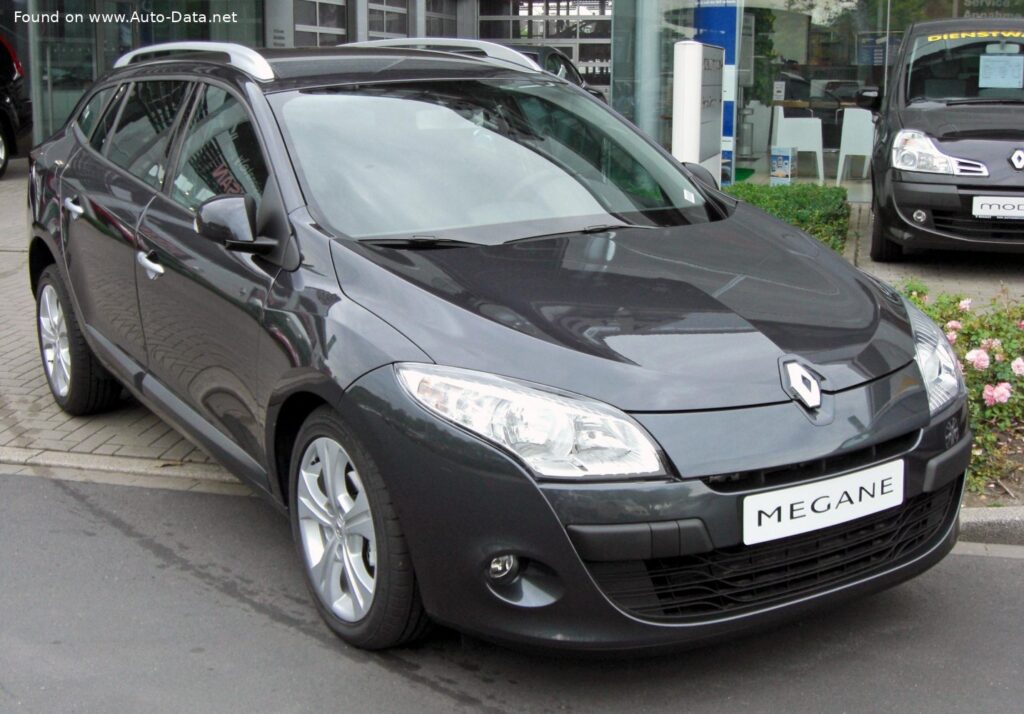
The Renault Megane III Grandtour 1.6 16V (110 Hp) Ethanol represents a significant offering within the third generation of Renault’s popular compact car, specifically tailored for European markets with a focus on practicality and alternative fuel capability. Introduced for the 2009 model year and produced through 2010, this particular variant of the Megane III Grandtour combined the versatility of a station wagon (known as an estate in Europe) with the environmental and economic benefits of an E85 ethanol-compatible powertrain. The third-generation Megane, launched in 2008, marked a pivotal moment for Renault, moving towards a more conventional and universally appealing design language after the polarizing aesthetics of its predecessor. The Grandtour body style, with its extended roofline and generous cargo capacity, was a cornerstone of the Megane lineup, catering to families and individuals who prioritized space and utility without compromising on a compact footprint.
As a key player in the highly competitive European C-segment, the Megane III Grandtour aimed to strike a balance between comfort, efficiency, and driving dynamics. The inclusion of an ethanol-compatible engine option underscored Renault’s commitment to offering flexible fuel solutions, responding to growing environmental concerns and varying fuel prices across different European countries. This variant, while not sold in the United States, played a crucial role in Renault’s portfolio, showcasing the brand’s engineering prowess in developing robust, adaptable powertrains for its primary markets.
Engine and Performance of the Renault Megane III Grandtour 1.6 16V (110 Hp) Ethanol
At the heart of the Renault Megane III Grandtour 1.6 16V (110 Hp) Ethanol lies a naturally aspirated 1.6-liter (1598 cm3 or 97.52 cubic inches) inline-four engine, designated by Renault as the K4M 858. This 16-valve unit was engineered to run efficiently on both standard gasoline and E85 ethanol, providing drivers with flexibility at the pump. The engine produces a respectable 110 horsepower at 6000 rpm, delivering a balanced blend of power for everyday driving conditions. Torque output stands at 111.37 lb.-ft. (151 Nm) at 4250 rpm, ensuring adequate pulling power, especially when fully loaded or navigating varied terrain.
Power is delivered to the front wheels via a smooth and precise 6-speed manual transmission, a choice that emphasizes driver engagement and allows for optimized fuel efficiency across different speeds. This powertrain configuration enables the Megane III Grandtour to accelerate from 0 to 60 mph in a competitive 10.3 seconds, with a top speed reaching 118 mph (190 km/h). While not a performance-oriented vehicle, these figures are more than adequate for a family-focused station wagon in its class.
Fuel economy for the ethanol-capable variant was a significant selling point in its time. The vehicle achieved an estimated 26.1 US mpg (9 l/100 km) in combined driving, with urban consumption around 19.4 US mpg (12.1 l/100 km) and extra-urban figures reaching 32.2 US mpg (7.3 l/100 km). These numbers reflected a concerted effort by Renault to offer a practical vehicle with reasonable running costs. Furthermore, the engine complied with the Euro 4 emission standard, emitting 163 g/km of CO2, which was competitive for a compact station wagon of its era and fuel type.
The engine’s architecture features a front, transverse layout, utilizing a multi-port manifold injection system for precise fuel delivery. With a compression ratio of 10:1 and a bore of 3.13 inches (79.5 mm) and stroke of 3.17 inches (80.5 mm), the K4M 858 engine was a well-proven unit within the Renault-Nissan alliance, known for its reliability and smooth operation. The flex-fuel capability, indicated by its “Ethanol” designation, allowed drivers in markets with E85 infrastructure to potentially reduce their fuel costs and carbon footprint, making it an appealing option for environmentally conscious buyers.
Design and Features
The Renault Megane III Grandtour adopted a more conventional yet sophisticated design compared to its more avant-garde predecessor. The Grandtour, specifically, was engineered to maximize utility, presenting a sleek and cohesive station wagon profile. With a length of 179.49 inches (4559 mm), a width of 69.53 inches (1766 mm), and a height of 57.52 inches (1461 mm), it struck a balance between a compact footprint and generous interior space. Its wheelbase of 106.42 inches (2703 mm) contributed to a stable ride and ample legroom for rear passengers.
The five-door, five-seat configuration made it an ideal family vehicle. Cargo capacity was a strong suit, offering a substantial 18.5 cubic feet (524 liters) with all seats in place, expanding to an impressive 56.33 cubic feet (1595 liters) when the rear seats were folded down. This versatility was crucial for its market segment, allowing owners to easily transport luggage, groceries, or larger items for recreational activities.
In terms of chassis and dynamics, the Megane III Grandtour featured an independent McPherson strut front suspension and a torsion beam rear suspension, a common and cost-effective setup for front-wheel-drive compact cars that provided a comfortable ride and predictable handling. Stopping power was handled by ventilated disc brakes at the front and disc brakes at the rear, complemented by an Anti-lock Braking System (ABS) for enhanced safety. The electric power steering system offered light and responsive control, making urban maneuvers and parking effortless. The vehicle rode on 17-inch wheel rims fitted with 205/50 R17 tires, providing a good balance of grip and ride comfort.
Inside, the Megane III Grandtour featured a well-appointed cabin with thoughtful ergonomics. While specific features could vary by trim level, standard equipment for a European compact car of this era would typically include air conditioning, power windows, central locking, and a basic audio system. Safety was a priority, with multiple airbags, seatbelt pretensioners, and the aforementioned ABS as standard. The design focused on user-friendliness and quality materials, aiming to provide a pleasant and durable environment for occupants.
Technical Specifications
| Category | Specification |
|---|---|
| Brand | Renault |
| Model | Megane |
| Generation | Megane III Grandtour |
| Type (Engine) | 1.6 16V (110 Hp) Ethanol |
| Production Start | 2009 |
| Production End | 2010 |
| Powertrain Architecture | Internal Combustion Engine |
| Body Type | Station Wagon (Estate) |
| Seats | 5 |
| Doors | 5 |
| Performance Specifications | |
| Fuel Consumption (Urban) | 19.4 US mpg (12.1 l/100 km) |
| Fuel Consumption (Extra Urban) | 32.2 US mpg (7.3 l/100 km) |
| Fuel Consumption (Combined) | 26.1 US mpg (9 l/100 km) |
| CO2 Emissions | 163 g/km |
| Fuel Type | Petrol / Ethanol – E85 |
| Acceleration 0-60 mph | 10.3 sec |
| Maximum Speed | 118.06 mph (190 km/h) |
| Emission Standard | Euro 4 |
| Weight-to-Power Ratio | 11.6 kg/Hp, 86.3 Hp/tonne |
| Weight-to-Torque Ratio | 8.4 kg/Nm, 118.4 Nm/tonne |
| Engine Specifications | |
| Power | 110 Hp @ 6000 rpm |
| Power per Liter | 68.8 Hp/l |
| Torque | 111.37 lb.-ft. (151 Nm) @ 4250 rpm |
| Engine Layout | Front, Transverse |
| Engine Model/Code | K4M 858 |
| Engine Displacement | 1.6 liters (1598 cm3 / 97.52 cu. in.) |
| Number of Cylinders | 4 |
| Engine Configuration | Inline |
| Cylinder Bore | 3.13 in. (79.5 mm) |
| Piston Stroke | 3.17 in. (80.5 mm) |
| Compression Ratio | 10:1 |
| Valves per Cylinder | 4 |
| Fuel Injection System | Multi-port manifold injection |
| Engine Aspiration | Naturally Aspirated |
| Engine Oil Capacity | 5.07 US qt (4.8 l) |
| Coolant Capacity | 5.6 US qt (5.3 l) |
| Space, Volume, and Weights | |
| Kerb Weight | 2810.89 lbs. (1275 kg) |
| Max. Weight (GVWR) | 3924.23 lbs. (1780 kg) |
| Max Load | 1113.33 lbs. (505 kg) |
| Trunk Space (Minimum) | 18.5 cu. ft. (524 l) |
| Trunk Space (Maximum) | 56.33 cu. ft. (1595 l) |
| Fuel Tank Capacity | 15.85 US gal (60 l) |
| Max. Roof Load | 176.37 lbs. (80 kg) |
| Permitted Trailer Load with Brakes (12%) | 2866.01 lbs. (1300 kg) |
| Permitted Trailer Load without Brakes | 1488.12 lbs. (675 kg) |
| Permitted Towbar Download | 165.35 lbs. (75 kg) |
| Dimensions | |
| Length | 179.49 in. (4559 mm) |
| Width | 69.53 in. (1766 mm) |
| Height | 57.52 in. (1461 mm) |
| Wheelbase | 106.42 in. (2703 mm) |
| Front Track | 60.87 in. (1546 mm) |
| Rear Track | 60.91 in. (1547 mm) |
| Front Overhang | 33.94 in. (862 mm) |
| Rear Overhang | 39.13 in. (994 mm) |
| Ride Height (Ground Clearance) | 4.72 in. (120 mm) |
| Drag Coefficient (Cd) | 0.32 |
| Minimum Turning Circle | 36.25 ft. (11.05 m) |
| Drivetrain, Brakes, and Suspension | |
| Drivetrain Architecture | Front-wheel drive, Internal Combustion Engine |
| Drive Wheel | Front Wheel Drive |
| Number of Gears & Type | 6 gears, Manual Transmission |
| Front Suspension | Independent type McPherson |
| Rear Suspension | Torsion |
| Front Brakes | Ventilated Discs |
| Rear Brakes | Disc |
| Assisting Systems | ABS (Anti-lock Braking System) |
| Steering Type | Steering rack and pinion |
| Power Steering | Electric Steering |
| Tires Size | 205/50 R17 |
| Wheel Rims Size | 17 inches |
Legacy and Market Impact
The Renault Megane III Grandtour 1.6 16V (110 Hp) Ethanol, though a niche variant, contributed to the broader success and reputation of the third-generation Megane in Europe. Its primary market was Europe, where station wagons are highly valued for their practicality, and where alternative fuels like E85 ethanol had governmental support and a developing infrastructure in certain regions. For Renault, offering a flex-fuel option was a strategic move to cater to evolving environmental regulations and consumer demand for more sustainable or economically viable fuel choices.
The Megane III Grandtour carved out its niche by offering a compelling package of space, comfort, and sensible running costs. It competed directly with a host of well-established rivals in the European compact wagon segment, including the Volkswagen Golf Variant, Ford Focus Wagon, Opel Astra Sports Tourer, Peugeot 308 SW, and Skoda Octavia Combi. Against these competitors, the Megane often stood out for its distinctive French styling, comfortable ride quality, and competitive pricing. The E85 variant, in particular, offered a unique selling proposition for buyers in countries like France, Sweden, and Germany, where E85 was more readily available and often subject to favorable tax treatment.
The car’s reputation was generally positive, known for being a reliable, practical, and comfortable daily driver. While not lauded for its outright performance, its balanced dynamics and compliant suspension made it well-suited for varied European road conditions, from bustling city streets to long-distance highway cruises. The large trunk space and flexible seating arrangements cemented its status as an ideal family vehicle, capable of handling everything from weekly shopping trips to extended road vacations.
Historically, the Megane III Grandtour 1.6 16V (110 Hp) Ethanol represents a snapshot of the automotive industry’s early efforts to integrate alternative fuels into mainstream models. While E85 never achieved widespread adoption on the scale of, for instance, diesel in Europe, its presence in models like the Megane demonstrated a commitment from manufacturers to explore diverse energy solutions. This particular model, therefore, is significant not just as a practical family car but also as an example of Renault’s adaptive engineering in response to environmental and market pressures of the late 2000s, solidifying its legacy as a versatile and forward-thinking option in its segment.