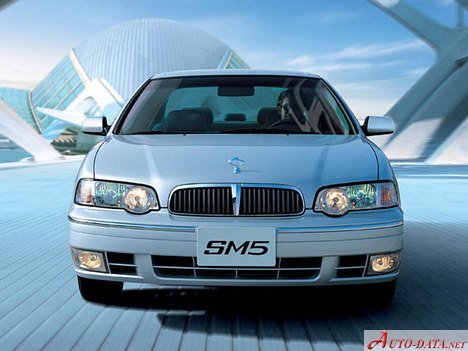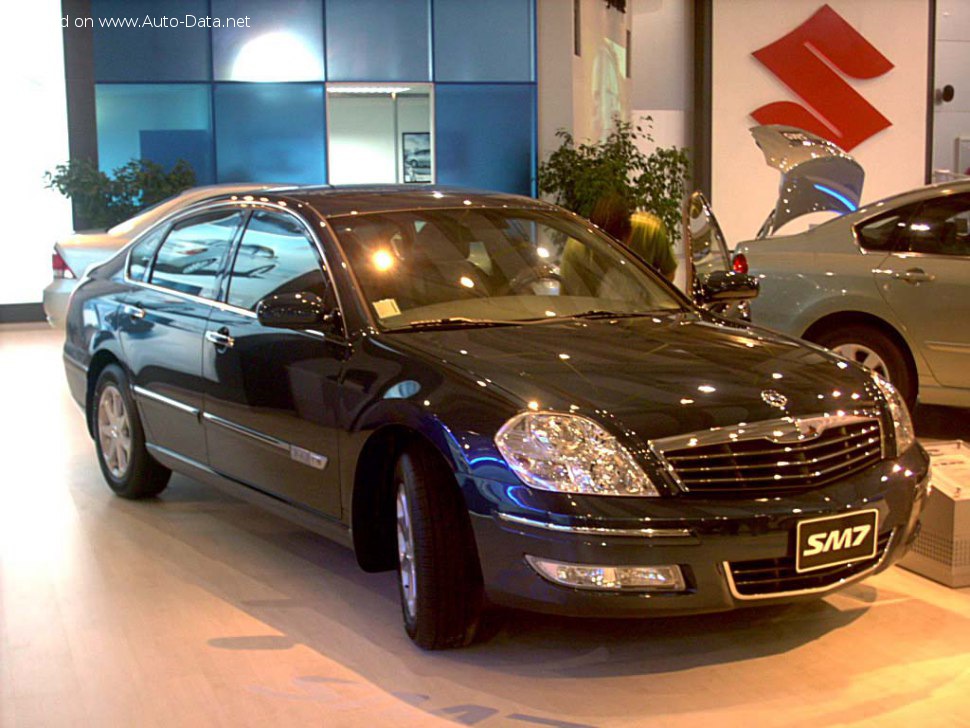
The Renault Samsung SM7 I (EX2) stands as a notable entry in the executive sedan segment, representing the first generation of Renault Samsung Motors’ flagship offering. Produced from 2004 to 2008, this vehicle was a testament to the strategic partnership between French automaker Renault and South Korean conglomerate Samsung, leveraging Nissan’s proven platforms and powertrains. Positioned as a premium, full-size sedan, the Renault Samsung SM7 I (EX2) was primarily aimed at the discerning South Korean market, where it competed fiercely with domestic and imported luxury models. It offered a sophisticated blend of comfort, robust engineering, and a feature set designed to appeal to executives and families seeking an upscale driving experience.
The Renault Samsung SM7 I (EX2): A Korean Executive Sedan
Renault Samsung Motors, a subsidiary of Renault, was established to strengthen the French brand’s presence in the competitive Asian automotive landscape. The SM7, specifically the SM7 I (EX2) generation, was a cornerstone of this strategy. Built upon the Nissan J31 platform, which also underpinned the successful Nissan Teana (known as the Nissan Maxima in some markets) and the Nissan Cefiro, the SM7 I (EX2) benefited from a foundation renowned for its reliability, refined ride quality, and spacious interior. This platform sharing allowed Renault Samsung to quickly introduce a sophisticated vehicle to market, combining Korean manufacturing prowess with Japanese engineering and a touch of French design sensibility.
In its primary market, the SM7 I (EX2) was designed to convey prestige and comfort. Its styling, while perhaps conservative by some international standards, was elegant and understated, perfectly aligning with the preferences of executive sedan buyers. The vehicle’s dimensions, notably its length of 194.69 inches and a generous wheelbase of 109.25 inches, ensured a commanding road presence and an expansive cabin. The four-door, five-seat configuration made it an ideal choice for both business use and family transport, providing ample legroom and headroom for all occupants. The strategic use of a proven global platform not only ensured mechanical dependability but also facilitated a comfortable and stable driving experience, crucial for a vehicle in its class.
Engine and Performance
At the heart of the Renault Samsung SM7 I (EX2) 3.5 i V6 24V (218 Hp) variant was a powerhouse of an engine: the VQ35DE. This engine, a staple in Nissan’s lineup and widely acclaimed for its smooth operation and robust power delivery, was a significant asset for the SM7. It is a 3.5-liter (3498 cm3 or 213.46 cubic inches) V6 engine, configured with 24 valves, meaning four valves per cylinder, optimizing airflow for enhanced performance and efficiency. As a naturally aspirated engine, it delivered power linearly and predictably, a characteristic often preferred in luxury vehicles for its refined feel.
The engine produced a healthy 218 horsepower at 5600 rpm, providing ample thrust for highway cruising and confident overtakes. Peak torque stood at 314 Newton-meters (equivalent to 231.59 lb.-ft.) at a relatively low 3500 rpm. This substantial torque figure at mid-range revolutions translated into strong acceleration from a standstill and responsive in-gear performance, making the SM7 feel effortless in daily driving. The multi-port manifold injection system ensured precise fuel delivery, contributing to the engine’s efficiency and smooth running characteristics. With a compression ratio of 9.8:1, the engine was designed for optimal combustion using conventional gasoline.
The powertrain architecture featured a front, transverse engine layout, driving the front wheels. This front-wheel-drive configuration, common in many executive sedans of its era, offered predictable handling and good traction in varied conditions. The vehicle’s curb weight of 3483.3 lbs. (1580 kg) resulted in a weight-to-power ratio of 7.2 kg/Hp (138 Hp/tonne) and a weight-to-torque ratio of 5 kg/Nm (198.7 Nm/tonne). These figures indicate a well-balanced power-to-weight profile for a car of its size, ensuring respectable performance without compromising on comfort or fuel economy for its class. The 18.49 US gallons (70 liters) fuel tank capacity provided a commendable cruising range, suitable for long journeys.
Design and Features
The design philosophy of the Renault Samsung SM7 I (EX2) centered on understated elegance and functional luxury. As a four-door sedan with five seats, its primary goal was to provide a comfortable and refined environment for its occupants. The exterior styling was clean and contemporary for its time, featuring smooth lines and a dignified stance that appealed to a mature demographic. Its overall length of 194.69 inches (4945 mm), width of 70.47 inches (1790 mm), and height of 58.07 inches (1475 mm) gave it substantial proportions, indicative of its executive class.
Inside, the SM7 offered a spacious cabin designed for comfort. The generous wheelbase of 109.25 inches (2775 mm) contributed significantly to the interior volume, providing ample legroom for both front and rear passengers. The trunk space, at 15.89 cubic feet (450 liters), was competitive for its segment, easily accommodating luggage for family trips or business excursions. While specific interior features like infotainment systems or material choices are not detailed in the provided data, a vehicle of this caliber from 2004-2008 would typically include premium upholstery, automatic climate control, a sophisticated audio system, and a range of power-operated amenities.
Underneath its refined exterior, the SM7 I (EX2) featured a well-engineered chassis designed for comfort and stability. Both the front and rear suspensions utilized a spring strut configuration, a common and effective setup that balanced ride comfort with competent handling. For braking, the vehicle was equipped with ventilated discs at the front and solid discs at the rear, providing reliable stopping power. An Anti-lock Braking System (ABS) was a standard assisting system, enhancing safety by preventing wheel lock-up during hard braking. The steering system was a responsive rack and pinion type, offering precise control. The vehicle rode on 17-inch wheel rims, fitted with 215/55 R17 tires, a size that contributed to both ride comfort and grip, completing the package for a well-rounded executive sedan.
| Brand | Renault Samsung |
| Model | SM7 |
| Generation | SM7 I (EX2) |
| Type (Engine) | 3.5 i V6 24V (218 Hp) |
| Start of production | 2004 year |
| End of production | 2008 year |
| Powertrain Architecture | Internal Combustion engine |
| Body type | Sedan |
| Seats | 5 |
| Doors | 4 |
| Fuel Type | Petrol (Gasoline) |
| Weight-to-power ratio | 7.2 kg/Hp, 138 Hp/tonne |
| Weight-to-torque ratio | 5 kg/Nm, 198.7 Nm/tonne |
| Power | 218 Hp @ 5600 rpm. |
| Power per liter | 62.3 Hp/l |
| Torque | 314 Nm @ 3500 rpm. (231.59 lb.-ft.) |
| Engine layout | Front, Transverse |
| Engine Model/Code | VQ35DE |
| Engine displacement | 3498 cm3 (213.46 cu. in.) |
| Number of cylinders | 6 |
| Engine configuration | V-engine |
| Cylinder Bore | 95.5 mm (3.76 in.) |
| Piston Stroke | 81.4 mm (3.2 in.) |
| Compression ratio | 9.8:1 |
| Number of valves per cylinder | 4 |
| Fuel injection system | Multi-port manifold injection |
| Engine aspiration | Naturally aspirated engine |
| Engine oil capacity | 4.7 l (4.97 US qt | 4.14 UK qt) |
| Kerb Weight | 1580 kg (3483.3 lbs.) |
| Trunk (boot) space – minimum | 450 l (15.89 cu. ft.) |
| Fuel tank capacity | 70 l (18.49 US gal | 15.4 UK gal) |
| Length | 4945 mm (194.69 in.) |
| Width | 1790 mm (70.47 in.) |
| Height | 1475 mm (58.07 in.) |
| Wheelbase | 2775 mm (109.25 in.) |
| Front track | 1540 mm (60.63 in.) |
| Rear (Back) track | 1545 mm (60.83 in.) |
| Drivetrain Architecture | The Internal combustion engine (ICE) drives the front wheels of the vehicle. |
| Drive wheel | Front wheel drive |
| Front suspension | Spring Strut |
| Rear suspension | Spring Strut |
| Front brakes | Ventilated discs |
| Rear brakes | Disc |
| Assisting systems | ABS (Anti-lock braking system) |
| Steering type | Steering rack and pinion |
| Tires size | 215/55 R17 |
| Wheel rims size | 17 |