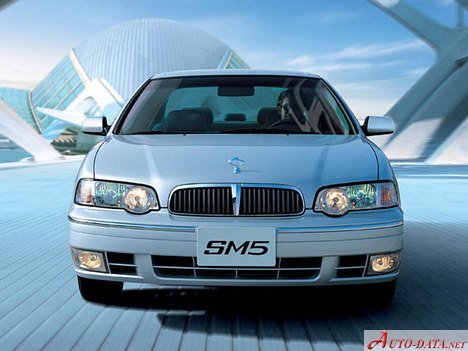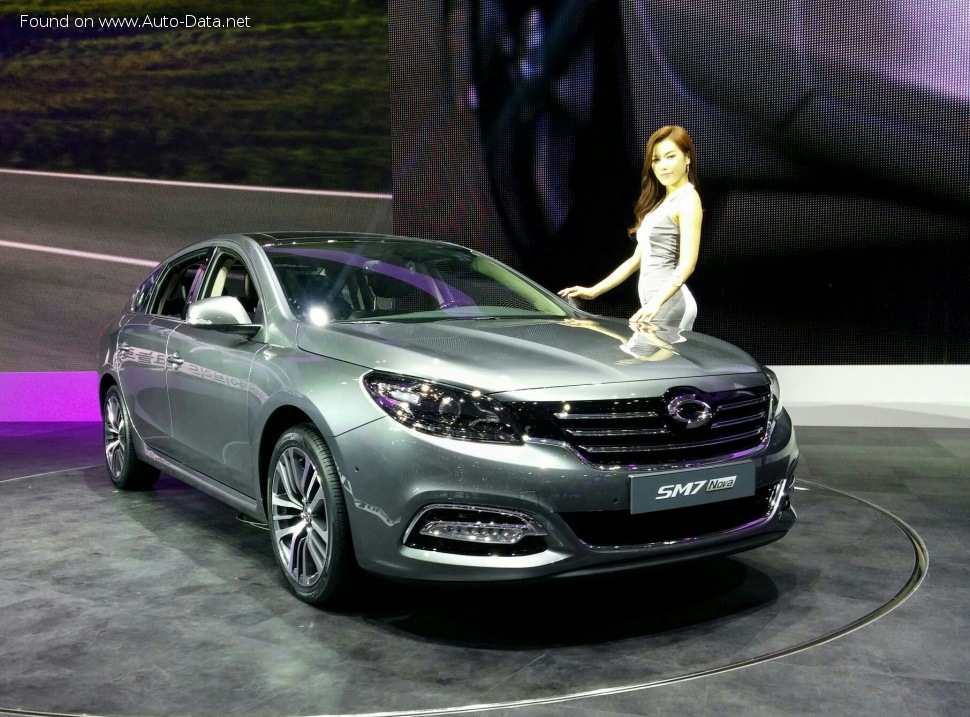
The Renault Samsung SM7 II (L47), particularly in its 2014 facelift iteration, represents a significant offering in the competitive full-size sedan segment within the South Korean market. As a flagship model for Renault Samsung Motors, a subsidiary of the French automaker Renault, the SM7 II (L47) was engineered to provide a blend of executive comfort, sophisticated design, and practical efficiency tailored for its primary Asian clientele. The specific variant, the 2.0 LPe V6 (140 Hp) Automatic, stands out due to its innovative Liquid Petroleum Gas (LPG) powertrain, a strategic choice to meet regional environmental regulations and consumer demand for lower running costs, especially for fleet operators and taxi services in South Korea. This generation, launched initially in 2011 and updated in 2014, aimed to solidify Renault Samsung’s presence against domestic rivals by emphasizing refinement, advanced technology, and a premium driving experience.
The Renault Samsung SM7 II (L47): A Refined Korean Executive Sedan
The 2014 facelift of the Renault Samsung SM7 II (L47) brought a refreshed aesthetic and subtle enhancements to its already established platform. Positioned as a large, comfortable sedan, it catered to buyers seeking a vehicle that combined a spacious interior with a powerful yet economical engine. While not directly sold in North America, its engineering and design principles reflect global automotive trends, prioritizing passenger comfort, advanced safety features, and a refined driving experience. The SM7 II (L47) distinguishes itself with its V6 engine configuration, a rarity in the 2.0-liter class, further emphasizing its premium aspirations within its market segment. Its comprehensive package made it a compelling option for discerning customers looking for a sophisticated and economically sensible executive vehicle.
Powertrain and Performance Characteristics
At the heart of the 2014 Renault Samsung SM7 II (L47) 2.0 LPe V6 Automatic lies a transversely mounted, naturally aspirated 2.0-liter V6 engine, a distinctive choice for a vehicle primarily focused on efficiency. This 1998 cubic centimeter (121.93 cubic inch) powerplant is configured with six cylinders in a ‘V’ arrangement, featuring four valves per cylinder and utilizing a direct injection fuel system. This setup contributes to its smooth operation and responsive power delivery. The engine generates a respectable 140 horsepower at 6000 revolutions per minute, providing ample power for daily driving and highway cruising. Torque output is rated at 193 Newton-meters (142.35 lb.-ft.) at 3700 rpm, ensuring robust acceleration from lower speeds and confident overtaking maneuvers. The power-to-liter ratio stands at 70.1 horsepower per liter, indicative of a well-tuned, naturally aspirated engine.
A key aspect of this particular SM7 variant is its dual-fuel capability, running on both gasoline and Liquid Petroleum Gas (LPe). The LPe system offers significant advantages in terms of fuel economy and reduced emissions, particularly relevant in markets with strong incentives for cleaner fuels. The automatic transmission, a continuously variable transmission (CVT) known as Xtronic, is meticulously paired with the engine to optimize both performance and fuel efficiency. This CVT system provides seamless power delivery without the traditional shift points of a conventional automatic, contributing to a smoother and quieter ride. In terms of fuel economy, the SM7 II (L47) 2.0 LPe V6 achieves a combined rating of 8.6 liters per 100 kilometers, translating to an impressive 27.4 US miles per gallon. Urban driving yields 9.9 liters per 100 kilometers (23.8 US mpg), while extra-urban conditions see figures as low as 7.8 liters per 100 kilometers (30.2 US mpg). These figures underscore the vehicle’s commitment to economical operation, further supported by its CO2 emissions of 151 grams per kilometer, positioning it as an environmentally conscious choice in its class.
Design, Dimensions, and Interior Appointments
The design philosophy of the Renault Samsung SM7 II (L47) emphasizes executive presence and understated elegance. As a full-size, four-door sedan with seating for five occupants, its exterior dimensions convey a sense of gravitas and spaciousness. The vehicle measures an imposing 4995 millimeters (196.65 inches) in length, with a width of 1870 millimeters (73.62 inches) and a height of 1480 millimeters (58.27 inches). A substantial wheelbase of 2810 millimeters (110.63 inches) is critical for providing a comfortable ride and generous interior volume, particularly for rear-seat passengers. The balanced proportions, coupled with the facelifted styling, give the SM7 a sophisticated and contemporary look that aligns with its executive positioning. The front and rear tracks, both measuring 1565 millimeters (61.61 inches), contribute to the vehicle’s stable stance and confident road presence.
Inside, the SM7 II (L47) is designed to offer a comfortable and refined cabin environment. While specific interior features are not detailed, a vehicle in this segment and era would typically include premium materials, ergonomic seating, and a host of convenience technologies. Expect features such as automatic climate control, a comprehensive infotainment system, and power-adjustable seating designed to enhance the driving and passenger experience. The focus on a spacious cabin, coupled with effective sound insulation, ensures a serene environment conducive to long journeys or daily commutes. The kerb weight of 1535 kilograms (3384.1 lbs.) further attests to the robust construction and substantial feel of the vehicle, contributing to both occupant safety and ride quality. The availability of 17-inch or 18-inch wheel rims, shod with 225/50 R17 or 225/45 R18 tires respectively, allows for customization in terms of aesthetics and dynamic performance, balancing ride comfort with handling precision.
Chassis, Safety, and Driving Dynamics
The driving dynamics of the Renault Samsung SM7 II (L47) are engineered to deliver a comfortable and predictable ride, befitting its executive sedan status. The chassis architecture features an independent suspension system both front and rear. Up front, a MacPherson strut configuration is employed, known for its compact design and effective wheel control. At the rear, an independent multi-link suspension system is utilized, which offers superior ride comfort and handling stability by allowing each wheel to react independently to road imperfections. This sophisticated setup helps to absorb road irregularities, providing a smooth and composed ride even over varied surfaces.
Braking performance is handled by a robust system comprising ventilated discs on the front axle and solid discs at the rear, ensuring effective stopping power. These are complemented by an Anti-lock Braking System (ABS), a crucial active safety feature that helps drivers maintain steering control during emergency braking maneuvers. The steering system is a rack-and-pinion type, enhanced with electric power steering. This electric assist not only reduces the effort required to steer at low speeds, making parking and maneuvering easier, but also contributes to improved fuel economy compared to traditional hydraulic systems. The front-wheel-drive architecture, where the internal combustion engine drives the front wheels, provides predictable handling characteristics and good traction in various conditions. Overall, the combination of a well-tuned suspension, reliable braking system, and precise steering ensures that the Renault Samsung SM7 II (L47) delivers a secure, comfortable, and confident driving experience.
Technical Specifications
| Brand | Renault Samsung |
| Model | SM7 |
| Generation | SM7 II (L47) (facelift 2014) |
| Type (Engine) | 2.0 LPe V6 (140 Hp) Automatic |
| Start of production | 2014 year |
| Powertrain Architecture | Internal Combustion engine |
| Body type | Sedan |
| Seats | 5 |
| Doors | 4 |
| Fuel consumption (economy) – urban | 9.9 l/100 km (23.8 US mpg) |
| Fuel consumption (economy) – extra urban | 7.8 l/100 km (30.2 US mpg) |
| Fuel consumption (economy) – combined | 8.6 l/100 km (27.4 US mpg) |
| CO2 emissions | 151 g/km |
| Fuel Type | Petrol / LPG |
| Weight-to-power ratio | 11 kg/Hp (91.2 Hp/tonne) |
| Weight-to-torque ratio | 8 kg/Nm (125.7 Nm/tonne) |
| Power | 140 Hp @ 6000 rpm |
| Power per litre | 70.1 Hp/l |
| Torque | 193 Nm @ 3700 rpm (142.35 lb.-ft. @ 3700 rpm) |
| Engine layout | Front, Transverse |
| Engine displacement | 1998 cm3 (121.93 cu. in.) |
| Number of cylinders | 6 |
| Engine configuration | V-engine |
| Number of valves per cylinder | 4 |
| Fuel injection system | Direct injection |
| Engine aspiration | Naturally aspirated engine |
| Kerb Weight | 1535 kg (3384.1 lbs.) |
| Length | 4995 mm (196.65 in.) |
| Width | 1870 mm (73.62 in.) |
| Height | 1480 mm (58.27 in.) |
| Wheelbase | 2810 mm (110.63 in.) |
| Front track | 1565 mm (61.61 in.) |
| Rear (Back) track | 1565 mm (61.61 in.) |
| Drivetrain Architecture | The Internal combustion engine (ICE) drives the front wheels of the vehicle. |
| Drive wheel | Front wheel drive |
| Number of gears and type of gearbox | automatic transmission CVT Xtronic |
| Front suspension | Independent type McPherson |
| Rear suspension | Independent multi-link suspension |
| Front brakes | Ventilated discs |
| Rear brakes | Disc |
| Assisting systems | ABS (Anti-lock braking system) |
| Steering type | Steering rack and pinion |
| Power steering | Electric Steering |
| Tires size | 225/50 R17; 225/45 R18 |
| Wheel rims size | 17; 18 |