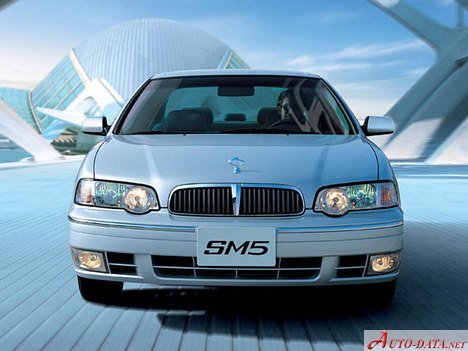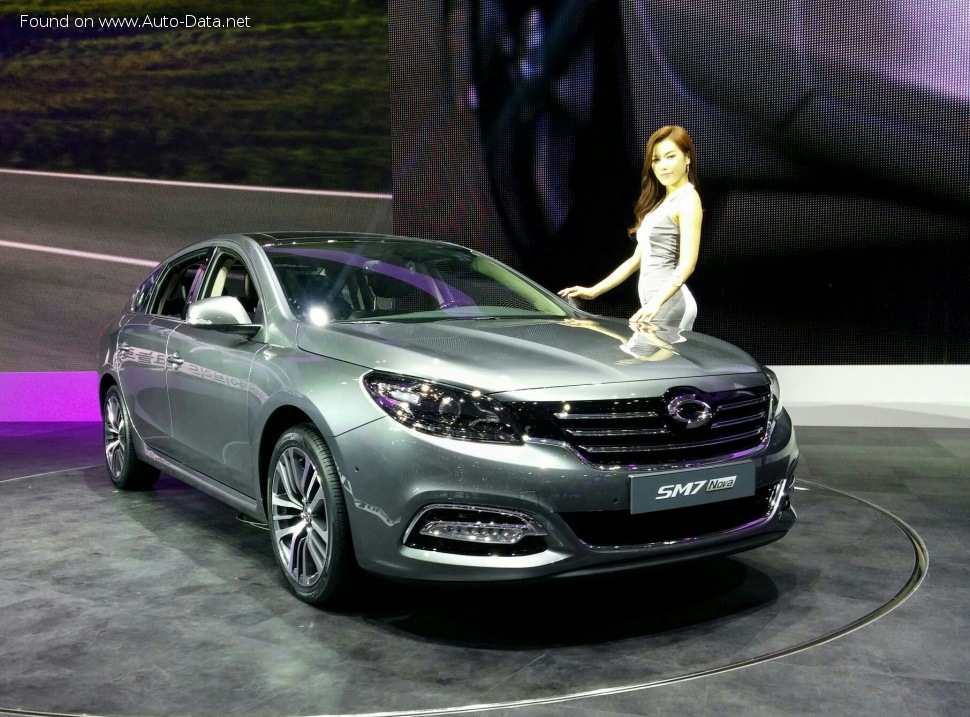
The Renault Samsung SM7 II (L47) (facelift 2014) represents a sophisticated evolution in the full-size executive sedan segment, a hallmark of the South Korean automotive landscape. Produced by Renault Samsung Motors, a subsidiary of the French automaker Renault, this vehicle was primarily designed and marketed for the discerning Asian consumer, particularly in its home market of South Korea. While not sold in the United States, the SM7 II (L47) offers a compelling blend of design, comfort, and performance that aligns with global luxury sedan standards. This particular iteration, featuring the 2014 facelift, brought refreshed aesthetics and refined engineering to an already established platform, aiming to solidify its position against domestic rivals and imported premium offerings. The SM7 II (L47) served as the flagship model for Renault Samsung, embodying their commitment to advanced technology and a premium ownership experience. Its role was to provide a spacious, comfortable, and well-appointed vehicle for executives and families seeking a higher level of refinement and prestige than typical mid-size sedans. The inclusion of a robust 2.5-liter V6 engine paired with an automatic transmission underscored its focus on smooth, effortless power delivery and a refined driving experience, catering to drivers who prioritized comfort and quiet operation over outright sportiness.
Powertrain and Performance of the Renault Samsung SM7 II (L47) (facelift 2014)
At the heart of the 2014 facelifted Renault Samsung SM7 II (L47) lies a potent 2.5-liter V6 engine, designated with the model code VQ25DE. This naturally aspirated gasoline engine is a testament to smooth and reliable power delivery, a characteristic highly valued in the executive sedan class. With a displacement of 2495 cubic centimeters (152.25 cubic inches), this V-engine configuration boasts six cylinders and four valves per cylinder, optimizing airflow and combustion efficiency. The fuel injection system utilizes multi-port manifold injection, ensuring precise fuel delivery for responsive throttle input and efficient operation. This sophisticated powertrain generates a respectable 190 horsepower at 6000 rpm, providing ample thrust for highway cruising and confident overtakes. Peak torque is equally impressive, reaching 243 Newton-meters (179.23 lb.-ft.) at a accessible 4400 rpm, translating into strong low-end and mid-range pulling power. The engine’s power per liter stands at 76.2 Hp/l, indicating a well-balanced design focused on refinement and longevity.
Power is seamlessly transferred to the front wheels via a 6-speed automatic transmission, a configuration that emphasizes smooth shifts and driver comfort. This drivetrain architecture, where the internal combustion engine drives the front wheels, contributes to predictable handling characteristics and efficient packaging. The SM7 II (L47)’s performance metrics are further highlighted by its weight-to-power ratio of 8.6 kg/Hp (116.2 Hp/tonne) and a weight-to-torque ratio of 6.7 kg/Nm (148.6 Nm/tonne). These figures suggest a vehicle that feels responsive and capable in various driving conditions, providing a solid foundation for its executive aspirations.
Fuel efficiency, a critical consideration even in the premium segment, is managed effectively by the 2.5i V6 engine. The combined fuel consumption is rated at 9.1 liters per 100 kilometers, which translates to approximately 25.8 US miles per gallon. For urban driving, the consumption stands at 11.2 l/100 km (21 US mpg), while extra-urban cruising sees an improved 7.9 l/100 km (29.8 US mpg). These figures, combined with CO2 emissions of 189 g/km, position the SM7 II (L47) as a reasonably efficient choice for its class and engine size, balancing performance with environmental considerations for its time. The engine oil capacity is 4 liters (4.23 US quarts), indicating standard maintenance requirements for this V6 unit.
Design and Engineering of the Renault Samsung SM7 II (L47) (facelift 2014)
The Renault Samsung SM7 II (L47) (facelift 2014) embodies a design philosophy centered on understated elegance and a commanding road presence. As a 4-door, 5-seat sedan, it adheres to the classic executive vehicle proportions, offering generous interior space and a dignified exterior. The 2014 facelift brought subtle yet impactful changes, refining the front fascia, lighting signatures, and other exterior elements to give it a more contemporary and sophisticated appeal. Its length of 4995 mm (196.65 inches), width of 1870 mm (73.62 inches), and height of 1480 mm (58.27 inches) contribute to a substantial footprint, conveying a sense of stability and luxury. The long wheelbase of 2810 mm (110.63 inches) is a key factor in both its spacious cabin and its composed ride quality, allowing for ample legroom for all occupants, particularly those in the rear.
Underneath its refined exterior, the SM7 II (L47) features a well-engineered chassis designed to deliver a comfortable yet confident driving experience. The suspension system is a sophisticated setup, with an independent McPherson type at the front and an independent multi-link suspension at the rear. This combination is crucial for isolating road imperfections, providing a smooth ride, and maintaining excellent body control during cornering. The front and rear tracks, both measuring 1565 mm (61.61 inches), contribute to the vehicle’s stable stance and balanced handling characteristics. Braking performance is handled by ventilated discs at the front and solid discs at the rear, augmented by an Anti-lock Braking System (ABS) for enhanced safety and control during emergency stops. This system ensures strong, consistent stopping power, a vital attribute for a vehicle of this size and weight.
Steering is managed by a responsive rack and pinion system, complemented by electric power steering. This electric assist not only reduces the effort required for low-speed maneuvers, making parking and city driving easier, but also contributes to improved fuel economy by eliminating the parasitic drag of a traditional hydraulic pump. The choice of tires and wheel rims further underscores the balance between comfort and performance. Standard tire sizes include 225/50 R17, with an option for larger 225/45 R18 tires, mounted on corresponding 17-inch or 18-inch wheel rims. These specifications ensure adequate grip, precise steering feel, and a cushioned ride, even on less-than-perfect road surfaces. With a kerb weight of 1635 kg (3604.56 lbs.), the SM7 II (L47) feels substantial and planted on the road, reinforcing its premium character and commitment to occupant safety and comfort.
Technical Specifications of the Renault Samsung SM7 II (L47) (facelift 2014)
| Brand | Renault Samsung |
| Model | SM7 |
| Generation | SM7 II (L47) (facelift 2014) |
| Type (Engine) | 2.5i V6 (190 Hp) Automatic |
| Start of Production | 2014 year |
| Powertrain Architecture | Internal Combustion engine |
| Body Type | Sedan |
| Seats | 5 |
| Doors | 4 |
| Fuel Consumption (Economy) – Urban | 11.2 l/100 km (21 US mpg) |
| Fuel Consumption (Economy) – Extra Urban | 7.9 l/100 km (29.8 US mpg) |
| Fuel Consumption (Economy) – Combined | 9.1 l/100 km (25.8 US mpg) |
| CO2 Emissions | 189 g/km |
| Fuel Type | Petrol (Gasoline) |
| Weight-to-Power Ratio | 8.6 kg/Hp (116.2 Hp/tonne) |
| Weight-to-Torque Ratio | 6.7 kg/Nm (148.6 Nm/tonne) |
| Power | 190 Hp @ 6000 rpm |
| Power per Liter | 76.2 Hp/l |
| Torque | 243 Nm @ 4400 rpm (179.23 lb.-ft. @ 4400 rpm) |
| Engine Layout | Front, Transverse |
| Engine Model/Code | VQ25DE |
| Engine Displacement | 2495 cm3 (152.25 cu. in.) |
| Number of Cylinders | 6 |
| Engine Configuration | V-engine |
| Number of Valves per Cylinder | 4 |
| Fuel Injection System | Multi-port manifold injection |
| Engine Aspiration | Naturally aspirated engine |
| Engine Oil Capacity | 4 l (4.23 US qt) |
| Kerb Weight | 1635 kg (3604.56 lbs.) |
| Length | 4995 mm (196.65 in.) |
| Width | 1870 mm (73.62 in.) |
| Height | 1480 mm (58.27 in.) |
| Wheelbase | 2810 mm (110.63 in.) |
| Front Track | 1565 mm (61.61 in.) |
| Rear (Back) Track | 1565 mm (61.61 in.) |
| Drivetrain Architecture | The Internal combustion engine (ICE) drives the front wheels of the vehicle. |
| Drive Wheel | Front wheel drive |
| Number of Gears and Type of Gearbox | 6 gears, automatic transmission |
| Front Suspension | Independent type McPherson |
| Rear Suspension | Independent multi-link suspension |
| Front Brakes | Ventilated discs |
| Rear Brakes | Disc |
| Assisting Systems | ABS (Anti-lock braking system) |
| Steering Type | Steering rack and pinion |
| Power Steering | Electric Steering |
| Tires Size | 225/50 R17; 225/45 R18 |
| Wheel Rims Size | 17; 18 |