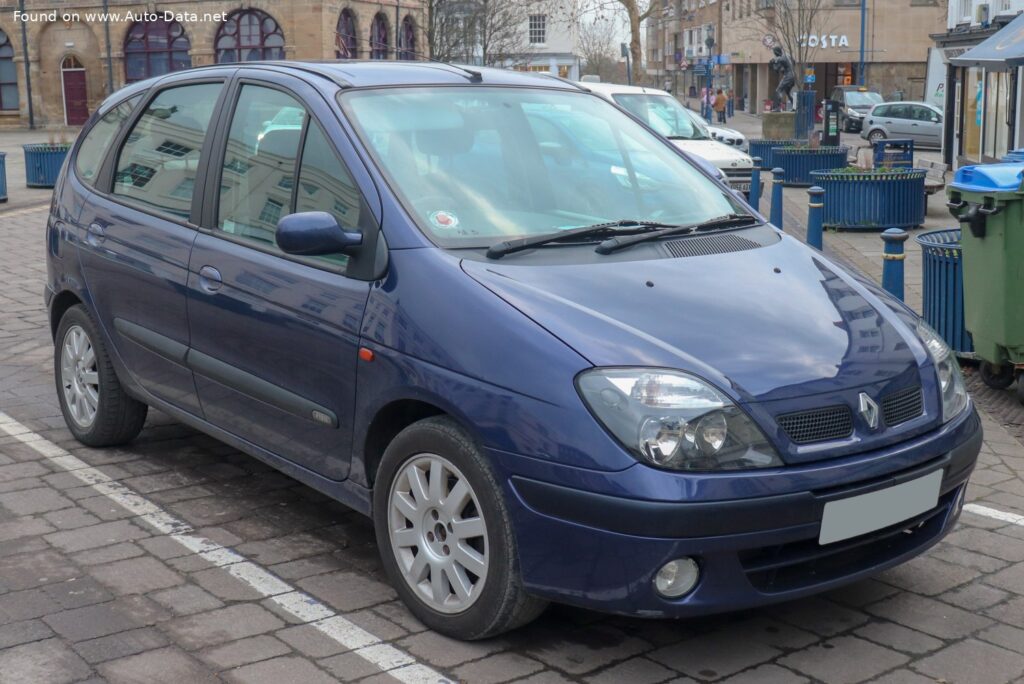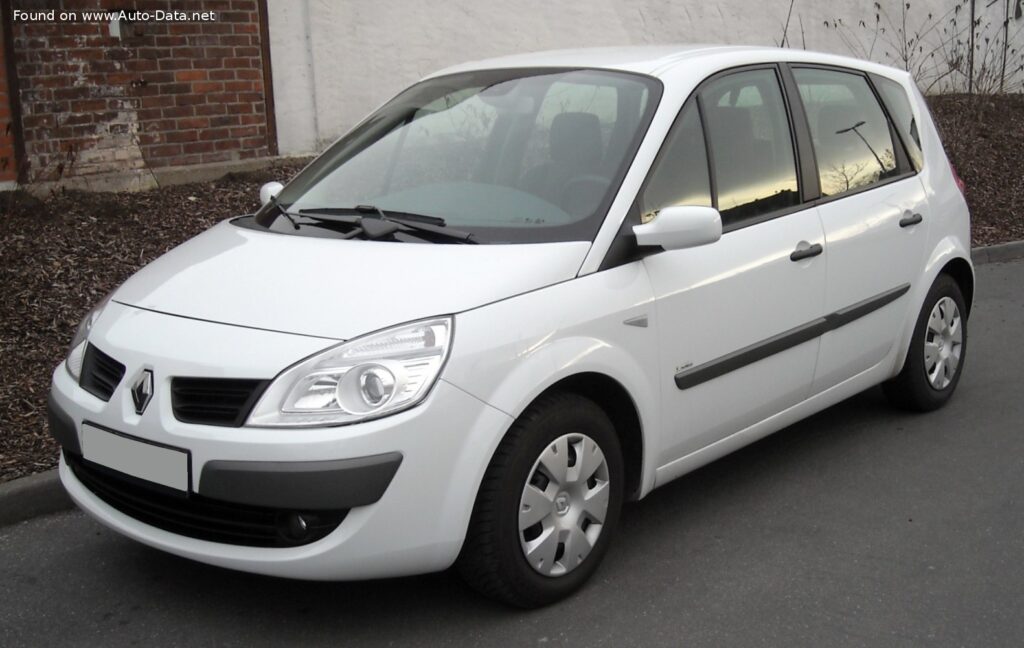
The Renault Scenic II (Phase II) 2.0 i 16V, produced from 2006 to 2009, represents a significant evolution of Renault’s popular compact minivan. Positioned as a family vehicle, the Scenic II aimed to provide practicality, comfort, and a degree of style within the European market. While not officially sold in the United States, the Scenic series, and particularly the second generation, was a key player in establishing the modern compact MPV (Multi-Purpose Vehicle) segment in Europe. This version, equipped with a 2.0-liter 16-valve gasoline engine producing 135 horsepower, offered a balance between performance and fuel economy for the time. The Phase II updates included cosmetic refinements and minor mechanical improvements over the initial Scenic II release.
Renault Scenic II (Phase II): A Detailed Overview
The Scenic II, and specifically the Phase II iteration, built upon the success of the original Scenic, which pioneered the compact MPV concept. Renault recognized a growing demand for vehicles that offered the space and versatility of a larger minivan, but in a more manageable and fuel-efficient package. The Phase II model refined the design and addressed some of the criticisms of the original, enhancing its appeal to families and individuals seeking a practical and comfortable vehicle. It competed with vehicles like the Citroën Xsara Picasso, Opel/Vauxhall Zafira, and Ford Focus C-Max.
Engine & Performance
The heart of the Scenic II 2.0 i 16V is a naturally aspirated 1998 cc (121.93 cu. in.) inline-four cylinder gasoline engine. This engine, designated the F4R, delivers 135 horsepower at 5500 rpm and 191 Nm (140.87 lb.-ft.) of torque at 3750 rpm. Power is delivered to the front wheels via a six-speed manual transmission. Acceleration from 0 to 100 km/h (0-62 mph) takes 10.3 seconds, while 0 to 60 mph is achieved in approximately 9.8 seconds. The top speed is rated at 195 km/h (121.17 mph). The engine’s specific output is 67.6 horsepower per liter, reflecting a reasonable level of performance for its displacement and era. Fuel economy figures are rated at 8.0 l/100 km (29.4 US mpg) combined, with 10.9 l/100 km (21.6 US mpg) in urban driving and 6.4 l/100 km (36.8 US mpg) on the extra-urban cycle. CO2 emissions are rated at 192 g/km, placing it within the Euro 4 emission standard.
Design & Features
The Renault Scenic II Phase II is a five-door minivan designed to comfortably accommodate five passengers. Its body style emphasizes practicality and space efficiency. Key design features include a relatively high roofline, large windows for good visibility, and a versatile interior layout. The Phase II updates included subtle styling changes to the front and rear fascias, as well as interior trim enhancements. The interior is characterized by its modularity, with sliding rear seats and a configurable cargo area. The trunk offers a minimum capacity of 406 liters (14.34 cu. ft.), expanding to a substantial 1840 liters (64.98 cu. ft.) with the rear seats folded down. Safety features, typical for the mid-2000s, include ABS (Anti-lock Braking System) and driver/passenger airbags. The vehicle’s dimensions are 4263 mm (167.83 in.) in length, 1805 mm (71.06 in.) in width, and 1620 mm (63.78 in.) in height. The wheelbase measures 2685 mm (105.71 in.).
Technical Specifications
| Brand | Renault |
| Model | Scenic |
| Generation | Scenic II (Phase II) |
| Type (Engine) | 2.0 i 16V (135 Hp) |
| Start of production | 2006 |
| End of production | 2009 |
| Powertrain Architecture | Internal Combustion engine |
| Body type | Minivan |
| Seats | 5 |
| Doors | 5 |
| Fuel consumption (urban) | 10.9 l/100 km (21.6 US mpg) |
| Fuel consumption (extra urban) | 6.4 l/100 km (36.8 US mpg) |
| Fuel consumption (combined) | 8.0 l/100 km (29.4 US mpg) |
| CO2 emissions | 192 g/km |
| Fuel Type | Petrol (Gasoline) |
| Acceleration 0 – 100 km/h | 10.3 sec |
| Acceleration 0 – 62 mph | 10.3 sec |
| Acceleration 0 – 60 mph | 9.8 sec |
| Maximum speed | 195 km/h (121.17 mph) |
| Emission standard | Euro 4 |
| Weight-to-power ratio | 10.4 kg/Hp |
| Power | 135 Hp @ 5500 rpm |
| Torque | 191 Nm @ 3750 rpm (140.87 lb.-ft. @ 3750 rpm) |
| Engine layout | Front, Transverse |
| Engine Model/Code | F4R |
| Engine displacement | 1998 cm3 (121.93 cu. in.) |
| Number of cylinders | 4 |
| Engine configuration | Inline |
| Cylinder Bore | 82.7 mm (3.26 in.) |
| Piston Stroke | 93 mm (3.66 in.) |
| Number of valves per cylinder | 4 |
| Fuel injection system | Multi-port manifold injection |
| Engine aspiration | Naturally aspirated |
| Engine oil capacity | 5.4 l (5.71 US qt | 4.75 UK qt) |
| Coolant | 6 l (6.34 US qt | 5.28 UK qt) |
| Kerb Weight | 1400 kg (3086.47 lbs.) |
| Max. weight | 1955 kg (4310.04 lbs.) |
| Max load | 555 kg (1223.57 lbs.) |
| Trunk (boot) space – minimum | 406 l (14.34 cu. ft.) |
| Trunk (boot) space – maximum | 1840 l (64.98 cu. ft.) |
| Fuel tank capacity | 60 l (15.85 US gal | 13.2 UK gal) |
| Max. roof load | 80 kg (176.37 lbs.) |
| Permitted trailer load with brakes (12%) | 1300 kg (2866.01 lbs.) |
| Permitted trailer load without brakes | 650 kg (1433 lbs.) |
| Permitted towbar download | 75 kg (165.35 lbs.) |
| Length | 4263 mm (167.83 in.) |
| Width | 1805 mm (71.06 in.) |
| Width including mirrors | 2087 mm (82.17 in.) |
| Height | 1620 mm (63.78 in.) |
| Wheelbase | 2685 mm (105.71 in.) |
| Front track | 1514 mm (59.61 in.) |
| Rear track | 1514 mm (59.61 in.) |
| Ride height (ground clearance) | 130 mm (5.12 in.) |
| Minimum turning circle | 10.7 m (35.1 ft.) |
| Drivetrain | Front wheel drive |
| Number of gears | 6 gears, manual transmission |
| Front suspension | Independent type McPherson |
| Rear suspension | Elastic beam |
| Front brakes | Ventilated discs, 300 mm |
| Rear brakes | Disc, 270 mm |
| Steering type | Steering rack and pinion |
| Power steering | Electric |
| Tires size | 205/60 R16 |
| Wheel rims size | 16 |