
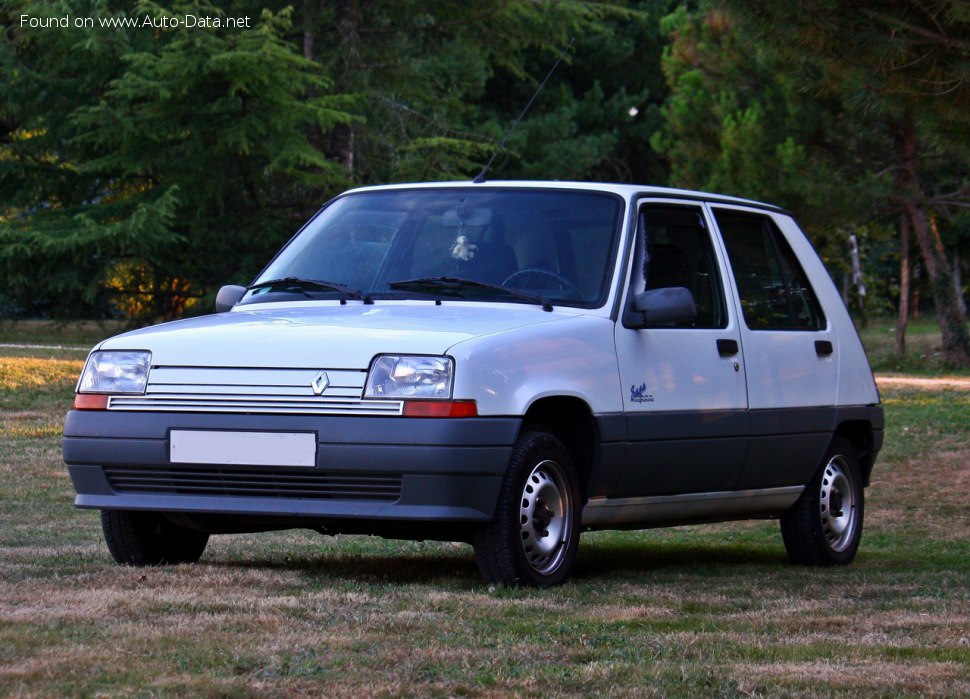
The Renault Super 5 (B/C40) 1.4 (B/C40J) (67 Hp) represents a pivotal chapter in European automotive history, serving as the second generation of Renault’s highly successful compact car line, the Renault 5. Launched in 1984 as a successor to the original and iconic Renault 5, the Super 5, internally codenamed B/C40, quickly established itself as a staple on European roads. This particular variant, produced between 1987 and 1989, features a 1.4-liter engine delivering 67 horsepower, embodying the era’s focus on practical, economical, and agile transportation. While not widely sold in the United States, the Super 5’s influence in its primary European markets cannot be overstated, where it competed fiercely in the supermini segment against rivals like the Peugeot 205, Fiat Uno, and Ford Fiesta, defining the expectations for small, versatile hatchbacks for a generation of drivers.
The Renault Super 5 (B/C40): A European Icon
The Renault Super 5 (B/C40) was a significant evolution from its predecessor, retaining the original’s charm and compact dimensions while introducing modern design, improved aerodynamics, and enhanced interior space and comfort. Its design, penned by Marcello Gandini, was a masterful blend of sleek lines and functional aesthetics, giving it a more contemporary and sophisticated appearance compared to the somewhat quirky original R5. The Super 5’s widespread appeal stemmed from its ability to offer a compelling package of low running costs, ease of maneuverability in congested urban environments, and surprising practicality for its size. This particular 1.4-liter variant, with its 67 horsepower output, was positioned as a robust and reliable choice for buyers seeking a balance between performance and fuel efficiency, suitable for both city commutes and longer journeys across the European continent. Its production run from 1987 to 1989 for this specific engine type highlights its role within the broader Super 5 lineup, which saw numerous engine options and trim levels catering to a diverse customer base.
Engine and Performance: The Heart of the Renault Super 5 (B/C40) 1.4
At the core of the Renault Super 5 (B/C40) 1.4 (B/C40J) (67 Hp) lies its 1.4-liter internal combustion engine, designated with the model code C2J. This powerplant, a naturally aspirated petrol (gasoline) unit, was a workhorse for Renault, known for its simplicity and robustness. Delivering 67 horsepower, it provided adequate motivation for the lightweight Super 5, allowing for spirited city driving and comfortable cruising on European highways. The naturally aspirated design meant predictable power delivery and lower complexity compared to turbocharged engines, which were beginning to emerge in the market. This made the 1.4-liter variant a popular choice for its reliability and ease of maintenance, crucial factors for everyday drivers. The engine’s modest power output was perfectly suited to the car’s intended purpose as an economical compact, offering a commendable balance between performance and fuel consumption for its era. With an engine oil capacity of 3.5 liters (3.7 US quarts) and a coolant capacity of 5.8 liters (6.13 US quarts), it was designed for straightforward servicing, contributing to its reputation as an affordable car to own and operate. The fuel tank capacity of 43 liters (11.36 US gallons) provided a decent range, making it practical for various driving needs without frequent stops for refueling.
Design and Features: Practicality and Style
The design of the Renault Super 5 (B/C40) was a significant departure from its predecessor, yet it retained the fundamental characteristics that made the Renault 5 a success: compact dimensions, a practical hatchback body, and an emphasis on interior space. This specific variant features a 5-door hatchback configuration, which was a key selling point for families and individuals needing easier access to the rear seats and cargo area. The five seats provided comfortable accommodation for typical European families, making it a versatile choice for daily errands, school runs, and weekend trips. The Super 5’s exterior styling, with its smoother lines and more integrated bumpers, gave it a more modern and aerodynamic appearance than many of its contemporaries. Inside, the focus was on functionality and ergonomics, with a driver-centric dashboard layout and logical control placement. While not equipped with the advanced technological features found in modern vehicles, for its time, the Super 5 offered a comfortable and user-friendly cabin. Safety features, typical for the late 1980s, included basic seatbelts and a robust body structure designed to meet European safety standards. The car’s compact footprint, combined with its excellent visibility and light controls, made it exceptionally easy to park and maneuver in tight urban environments, a crucial attribute for city dwellers across Europe.
Legacy and Market Impact
The Renault Super 5 (B/C40) carved out a significant legacy for itself, becoming one of Europe’s best-selling cars during its production run. Its success was not merely a continuation of the original R5’s popularity but a testament to its own merits. The Super 5 managed to modernize the compact hatchback concept while retaining the core values of affordability and practicality. The 1.4-liter 67 HP variant played a crucial role in this success, offering a sweet spot in the range that appealed to a broad demographic. It was a car that could be seen everywhere, from bustling city centers to quiet rural roads, reflecting its versatility and widespread acceptance. The Super 5 was also notable for its numerous special editions and performance variants, such as the legendary GT Turbo, which further cemented its place in automotive culture. However, this particular 1.4-liter model focused on the everyday driver, providing reliable, no-nonsense transportation. Its robust mechanicals and simple design meant many examples remained on the road for decades, a testament to Renault’s engineering and the car’s inherent durability. The Super 5’s tenure eventually concluded with the introduction of the Renault Clio in 1990, but its influence on subsequent generations of compact cars, particularly in terms of packaging efficiency and driving dynamics, is undeniable. For many in Europe, the Super 5 remains a nostalgic symbol of accessible and enjoyable motoring from a bygone era.
Technical Specifications: Renault Super 5 (B/C40) 1.4 (B/C40J) (67 Hp)
| Brand | Renault |
| Model | Super 5 |
| Generation | Super 5 (B/C40) |
| Type (Engine) | 1.4 (B/C40J) (67 Hp) |
| Start of production | 1987 year |
| End of production | 1989 year |
| Powertrain Architecture | Internal Combustion engine |
| Body type | Hatchback |
| Seats | 5 |
| Doors | 5 |
| Fuel Type | Petrol (Gasoline) |
| Power | 67 Hp |
| Engine Model/Code | C2J |
| Engine aspiration | Naturally aspirated engine |
| Engine oil capacity | 3.5 l (3.7 US qt | 3.08 UK qt) |
| Engine oil specification | Specific blend not available in data |
| Coolant | 5.8 l (6.13 US qt | 5.1 UK qt) |
| Fuel tank capacity | 43 l (11.36 US gal | 9.46 UK gal) |
