
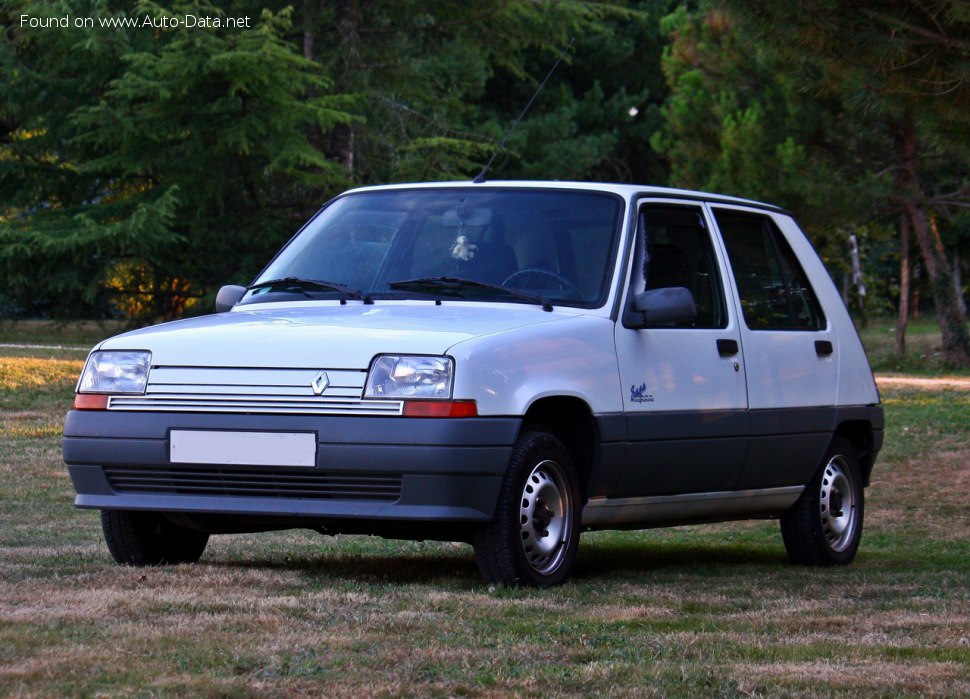
The Renault Super 5 (B/C40), a pivotal model in the European automotive landscape, represented a significant evolution of the original, much-loved Renault 5. Launched in 1984, this second-generation supermini quickly established itself as a benchmark for practicality, efficiency, and urban maneuverability across the continent. While never officially imported to the United States, its impact in Europe was profound, cementing its status as one of the best-selling cars of its era. The specific variant, the Renault Super 5 (B/C40) 1.6 D (B/C/S404) (55 Hp), introduced in 1987 and produced until 1995, exemplified the growing demand for economical diesel powertrains in the compact car segment. This model offered a compelling blend of low running costs and robust performance, making it a popular choice for budget-conscious families and commuters in its primary markets.
Engine and Performance: The Renault Super 5 (B/C40) 1.6 D
At the heart of the Renault Super 5 (B/C40) 1.6 D (B/C/S404) lies a durable 1.6-liter naturally aspirated diesel engine, identified by the F8MA-720 engine code. This powertrain was engineered for reliability and fuel efficiency, characteristics highly valued in the European market during the late 1980s and early 1990s. With an output of 55 horsepower, the engine provided adequate motivation for the compact hatchback, prioritizing economy over outright speed. While 55 HP may seem modest by today’s standards, it was a respectable figure for a non-turbocharged diesel in a car of this size and era, ensuring comfortable cruising at typical European highway speeds and nimble performance in city traffic.
The naturally aspirated design contributed to its simplicity and robustness, requiring less complex maintenance compared to early turbocharged units. Fueling the engine was a 43-liter (11.36 US gallon) tank, which, combined with the diesel engine’s inherent efficiency, offered an impressive driving range between fill-ups—a crucial factor for drivers facing higher fuel prices in Europe. The engine oil capacity stood at 5.3 liters (5.6 US quarts), and the cooling system required 6.5 liters (6.87 US quarts) of coolant, indicating a well-proportioned and adequately cooled powertrain for sustained operation. This particular 1.6 D variant played a significant role in broadening the appeal of the Super 5, offering a diesel alternative to the numerous gasoline engines available across the range, and further solidifying Renault’s reputation for producing practical, economical vehicles.
Design and Features of the Renault Super 5
The Renault Super 5 (B/C40) inherited the iconic silhouette of its predecessor but introduced a more modern and aerodynamic design, penned by the renowned Italian designer Marcello Gandini. The car’s distinctive profile, characterized by its rounded edges and integrated bumpers, was a departure from the angular styling prevalent in the early 1980s. The 1.6 D variant, like many others in the Super 5 range, was offered as a practical 5-door hatchback, a configuration that maximized versatility and passenger accessibility. This body style, along with its compact footprint, made the Super 5 an ideal vehicle for navigating crowded European city streets and tight parking spaces, while still offering enough interior volume for small families or weekend trips.
Inside, the Super 5 was designed with functionality and user-friendliness in mind. The 5-seat layout provided reasonable comfort for its class, with a focus on durable materials and straightforward ergonomics. While luxury features were sparse in this economical diesel trim, the cabin prioritized clear instrumentation, easy-to-reach controls, and practical storage solutions. The hatchback design meant a flexible cargo area, which could be expanded by folding down the rear seats, further enhancing its utility. Safety features, typical for the period, included seatbelts for all occupants and a robust body structure designed to meet contemporary European crash standards. The enduring popularity of the Super 5 was a testament to its clever packaging, efficient use of space, and timeless design, which remained fresh throughout its production run from 1987 to 1995.
Technical Specifications
| Brand | Renault |
| Model | Super 5 |
| Generation | Super 5 (B/C40) |
| Type (Engine) | 1.6 D (B/C/S404) (55 Hp) |
| Start of production | 1987 year |
| End of production | 1995 year |
| Powertrain Architecture | Internal Combustion engine |
| Body type | Hatchback |
| Seats | 5 |
| Doors | 5 |
| Fuel Type | Diesel |
| Power | 55 Hp |
| Engine Model/Code | F8MA-720 |
| Engine aspiration | Naturally aspirated engine |
| Engine oil capacity | 5.3 l (5.6 US qt) |
| Engine oil specification | Not provided |
| Coolant | 6.5 l (6.87 US qt) |
| Fuel tank capacity | 43 l (11.36 US gal) |
