
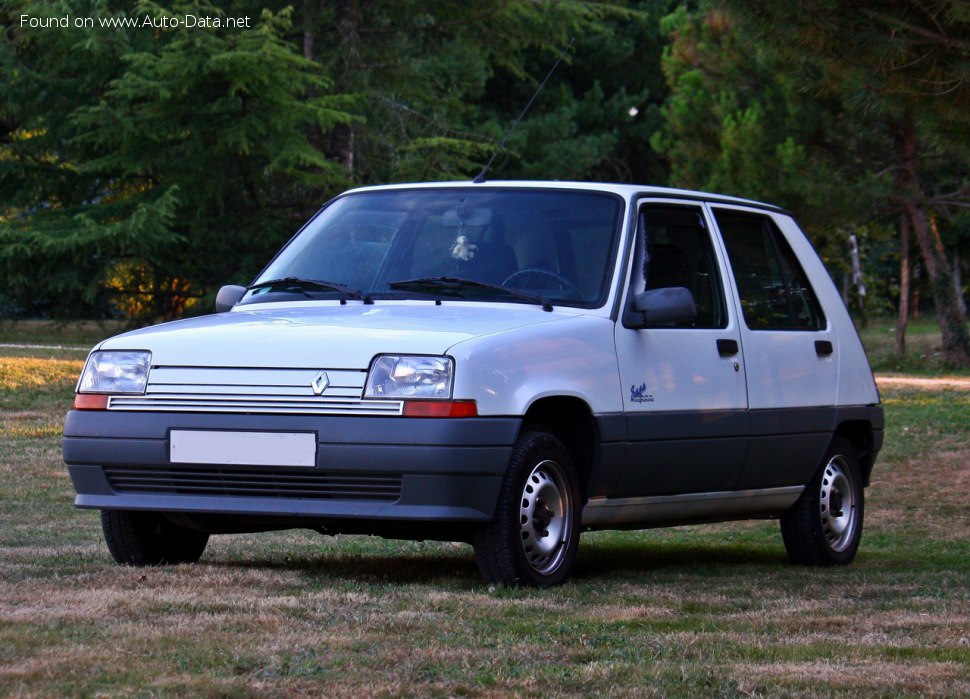
The Renault Super 5 (B/C40) 1.7 (B/C408) (73 Hp) represents a significant chapter in the history of European compact automobiles, embodying the spirit of practical, economical, and stylish motoring that defined the late 20th century. Launched in 1986 as part of the second generation of the iconic Super 5 series, this particular variant carved out a niche for itself as a robust and versatile five-door hatchback. While never officially imported to the United States, the Super 5, known affectionately as the “Supercinq” in its home market, succeeded the immensely popular original Renault 5, a car that had already established Renault’s reputation for innovative small car design. The B/C40 generation built upon this legacy, offering enhanced comfort, improved aerodynamics, and a more modern aesthetic, all while retaining the fundamental charm and agility that made its predecessor a best-seller across Europe. This specific 1.7-liter iteration, with its respectable 73 horsepower output, positioned itself as a compelling option for drivers seeking a balance of performance suitable for both urban commuting and longer journeys, without sacrificing the crucial attributes of fuel efficiency and low running costs. Its production run from 1986 to 1995 solidified its status as a ubiquitous sight on European roads, a testament to its enduring appeal and functional design.
Engine and Performance: The Heart of the Renault Super 5 (B/C40) 1.7 (B/C408) (73 Hp)
At the core of the Renault Super 5 (B/C40) 1.7 (B/C408) (73 Hp) lies a naturally aspirated internal combustion engine, designated by the code F2N. This powerplant, a staple in Renault’s lineup during the period, was renowned for its straightforward design and reliability. With a displacement of 1.7 liters, the engine delivered a respectable 73 horsepower, an output that, while modest by today’s standards, was entirely competitive and more than adequate for a compact hatchback of its era. This power was channeled effectively through its drivetrain architecture, providing a driving experience characterized by predictable handling and sufficient acceleration for everyday European traffic conditions. The F2N engine was designed with an emphasis on longevity and ease of maintenance, crucial factors for a vehicle intended for mass-market appeal and extensive use. Its naturally aspirated nature meant a linear power delivery, making the car easy to drive and forgiving, particularly for new or less experienced drivers. The engine’s modest power output also contributed to its commendable fuel efficiency, a key selling point for European consumers facing fluctuating fuel prices. The Super 5’s lightweight construction further amplified the engine’s capabilities, allowing the 73 horsepower to translate into lively performance around town and comfortable cruising speeds on highways. This balance of power, economy, and reliability made the 1.7-liter variant a popular choice within the Super 5 range, offering a compelling upgrade from smaller engine options without venturing into the more performance-oriented (and typically thirstier) GT Turbo models. The engine oil capacity of 5.2 liters (5.49 US quarts) and a coolant capacity of 5.5 liters (5.81 US quarts) further highlight its conventional, robust engineering, designed for practical ownership.
Design and Features: Practicality Meets European Style
The design philosophy behind the Renault Super 5 (B/C40) was a masterclass in evolving a beloved icon while retaining its core identity. The Super 5 shed the somewhat angular lines of its predecessor for a softer, more aerodynamic silhouette, a characteristic feature of 1980s automotive design. The 1.7 (B/C408) (73 Hp) variant, specifically offered as a five-door hatchback, epitomized practical versatility. This body type was particularly popular in Europe, offering an ideal blend of compact dimensions for urban maneuverability and generous interior space for passengers and cargo. With seating for five occupants, the Super 5 was a genuine family car, capable of accommodating daily commutes, school runs, and weekend excursions with ease. The five-door configuration significantly enhanced accessibility to the rear seats, making it a more user-friendly option compared to its three-door counterpart, especially for families. The design was characterized by its large glass area, contributing to excellent visibility and a bright, airy cabin feel, which was a significant comfort feature for the time. From an aesthetic standpoint, the Super 5 adopted a more cohesive and modern appearance, with integrated bumpers and smoother body panels that improved its coefficient of drag, thereby benefiting both fuel economy and reducing wind noise at higher speeds. While not laden with the advanced technological features found in modern vehicles, the Super 5’s interior was thoughtfully laid out, focusing on ergonomic controls and durable materials designed to withstand years of use. Safety features, typical for its era, would have included basic seatbelts and a robust body structure designed to meet contemporary European crash standards. The car’s relatively light weight and agile chassis provided a responsive driving experience, making it enjoyable on winding country roads as well as in congested city environments. Its compact footprint, combined with a generous 43-liter (11.36 US gallon) fuel tank capacity, ensured that the Super 5 was well-suited for long-distance travel across European countries, requiring fewer stops for refueling.
The Super 5’s Enduring Legacy and Market Impact
The Renault Super 5 (B/C40) 1.7 (B/C408) (73 Hp) played a crucial role in maintaining Renault’s dominance in the highly competitive European supermini segment throughout the late 1980s and early 1990s. Its combination of a proven, reliable engine, practical five-door hatchback body, and appealing design ensured its widespread adoption. This model was not just a means of transport; it became a cultural icon in many European countries, synonymous with affordable and stylish personal mobility. Its success paved the way for future Renault compact cars, demonstrating the manufacturer’s ability to innovate and adapt to changing consumer demands while staying true to its heritage of producing small, efficient vehicles. The Super 5’s mechanical simplicity also contributed to its longevity, with many examples still gracing roads decades after their production ceased, a testament to their robust construction and the availability of parts. While the American market never experienced the Super 5 directly, its influence on global automotive design and engineering principles for compact cars is undeniable. It showcased how a small car could be both economical and engaging, a blueprint that many manufacturers would follow. The 73-horsepower 1.7-liter variant, in particular, offered a sweet spot in the range, providing enough power for comfortable driving without incurring excessive running costs, making it a pragmatic choice for a broad spectrum of buyers, from young professionals to small families. The Super 5 remains a cherished classic for enthusiasts, celebrated for its character, driving dynamics, and its significant place in automotive history as one of Europe’s most beloved and successful small cars.
Technical Specifications
| Brand | Renault |
| Model | Super 5 |
| Generation | Super 5 (B/C40) |
| Type (Engine) | 1.7 (B/C408) (73 Hp) |
| Start of production | 1986 year |
| End of production | 1995 year |
| Powertrain Architecture | Internal Combustion engine |
| Body type | Hatchback |
| Seats | 5 |
| Doors | 5 |
| Fuel Type | Petrol (Gasoline) |
| Power | 73 Hp |
| Engine Model/Code | F2N |
| Engine aspiration | Naturally aspirated engine |
| Engine oil capacity | 5.2 l (5.49 US qt | 4.58 UK qt) |
| Coolant | 5.5 l (5.81 US qt | 4.84 UK qt) |
| Fuel tank capacity | 43 l (11.36 US gal | 9.46 UK gal) |
