
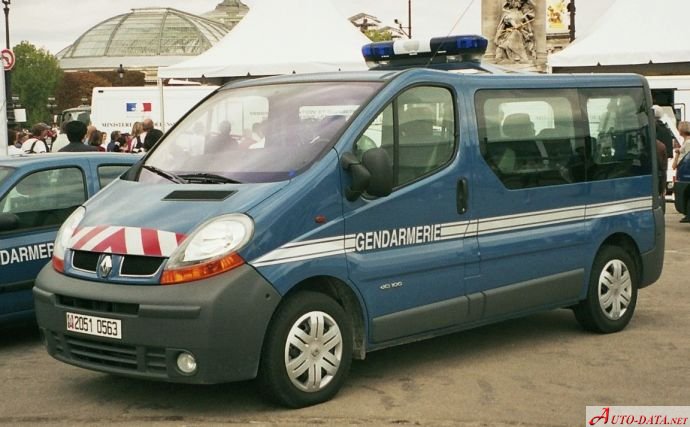
The Renault Trafic II (Phase I) 2.0 (120 Hp) L1H1, produced between 2001 and 2006, represents the second generation of Renault’s popular light commercial vehicle. This model, a minivan configuration, served as a crucial component of Renault’s commercial lineup in Europe, offering a versatile platform for both cargo and passenger transport. While not directly sold in the United States, understanding the Trafic II provides insight into the European van market and Renault’s approach to practicality and efficiency. The “L1H1” designation refers to the vehicle’s body length and roof height, indicating a shorter wheelbase and standard roof configuration. This particular variant, equipped with a 2.0-liter gasoline engine producing 120 horsepower, was designed to balance performance with fuel economy for a variety of commercial and personal applications.
Renault Trafic II (Phase I): Overview and Market Position
The Trafic II was a collaborative effort between Renault, Opel (Vauxhall), and Nissan, resulting in vehicles sharing a common platform and many components. This collaboration allowed for economies of scale and broadened market reach for all three manufacturers. In Europe, the Trafic competed directly with vans like the Volkswagen Transporter, Ford Transit, and Mercedes-Benz Vito. The Trafic II aimed to provide a compelling alternative with its focus on practicality, affordability, and a relatively comfortable driving experience. The Phase I models, produced from 2001 to 2006, established the foundation for the second-generation Trafic, with subsequent phases introducing refinements and updated features.
Engine & Performance
The Renault Trafic II (Phase I) 2.0 (120 Hp) L1H1 is powered by a 1.998-liter, inline four-cylinder gasoline engine, designated the F4R. This naturally aspirated engine delivers a maximum power output of 120 horsepower at 4,700 rpm and a torque of 190 Nm (140.14 lb.-ft.) at 3750 rpm. The engine utilizes a multi-port fuel injection system to optimize fuel delivery and combustion. Power is sent to the front wheels via a six-speed manual transmission. Performance figures indicate a 0-100 km/h (0-62 mph) acceleration time of 12.6 seconds and a top speed of 163 km/h (101.28 mph). The weight-to-power ratio of 14.8 kg/Hp and weight-to-torque ratio of 9.3 kg/Nm suggest a reasonable level of performance for its intended purpose. Fuel consumption is rated at 12.9 l/100 km (18.2 US mpg) in urban conditions, 8.6 l/100 km (27.4 US mpg) on the extra-urban cycle, and 10.2 l/100 km (23.1 US mpg) combined.
Design & Features
The Trafic II (Phase I) features a functional and utilitarian design typical of light commercial vehicles. The L1H1 configuration offers a compact footprint, making it relatively easy to maneuver in urban environments. The body style is a traditional minivan with four doors and seating for up to nine passengers. The interior is designed with practicality in mind, prioritizing space and durability over luxury. Key features included a driver’s airbag, ABS (Anti-lock Braking System), and a steering rack and pinion system for responsive handling. The vehicle’s dimensions – 4782 mm (188.27 in.) in length, 1904 mm (74.96 in.) in width, and 1940 mm (76.38 in.) in height – provide a substantial cargo or passenger volume. The wheelbase measures 3098 mm (121.97 in.), contributing to a stable ride. The vehicle’s kerb weight is 1775 kg (3913.21 lbs), with a maximum permissible weight of 2745 kg (6051.69 lbs), allowing for a maximum load capacity of 970 kg (2138.48 lbs).
Technical Specifications
| Brand | Renault |
| Model | Trafic |
| Generation | Trafic II (Phase I) |
| Type (Engine) | 2.0 (120 Hp) L1H1 |
| Start of production | 2001 |
| End of production | 2006 |
| Powertrain Architecture | Internal Combustion engine |
| Body type | Minivan |
| Seats | 9 |
| Doors | 4 |
| Fuel consumption (urban) | 12.9 l/100 km (18.2 US mpg) |
| Fuel consumption (extra urban) | 8.6 l/100 km (27.4 US mpg) |
| Fuel consumption (combined) | 10.2 l/100 km (23.1 US mpg) |
| Fuel Type | Petrol (Gasoline) |
| Acceleration 0 – 100 km/h | 12.6 sec |
| Acceleration 0 – 62 mph | 12.6 sec |
| Acceleration 0 – 60 mph | 12 sec |
| Maximum speed | 163 km/h (101.28 mph) |
| Weight-to-power ratio | 14.8 kg/Hp |
| Weight-to-torque ratio | 9.3 kg/Nm |
| Power | 120 Hp @ 4700 rpm |
| Torque | 190 Nm @ 3750 rpm (140.14 lb.-ft.) |
| Engine layout | Front, Transverse |
| Engine Model/Code | F4R |
| Engine displacement | 1998 cm3 (121.93 cu. in.) |
| Engine configuration | Inline |
| Number of valves per cylinder | 4 |
| Fuel injection system | Multi-port manifold injection |
| Engine oil capacity | 5.25 l (5.55 US qt | 4.62 UK qt) |
| Coolant capacity | 6.5 l (6.87 US qt | 5.72 UK qt) |
| Kerb Weight | 1775 kg (3913.21 lbs) |
| Max. weight | 2745 kg (6051.69 lbs) |
| Max load | 970 kg (2138.48 lbs) |
| Fuel tank capacity | 90 l (23.78 US gal | 19.8 UK gal) |
| Length | 4782 mm (188.27 in) |
| Width | 1904 mm (74.96 in) |
| Height | 1940 mm (76.38 in) |
| Wheelbase | 3098 mm (121.97 in) |
| Front track | 1615 mm (63.58 in) |
| Rear track | 1630 mm (64.17 in) |
| Drivetrain | Front wheel drive |
| Number of gears | 6 gears, manual transmission |
| Front brakes | Ventilated discs |
| Rear brakes | Disc |
| Tires size | 195/65 R16 |
| Wheel rims size | 16 |
The Renault Trafic II (Phase I) 2.0 (120 Hp) L1H1, while not a vehicle commonly found on American roads, represents a significant example of European light commercial vehicle design. Its blend of practicality, efficiency, and affordability made it a popular choice for businesses and families alike, solidifying Renault’s position in the competitive European van market.
