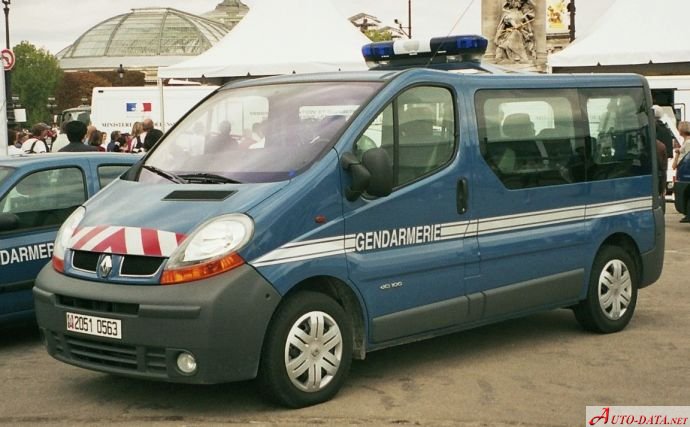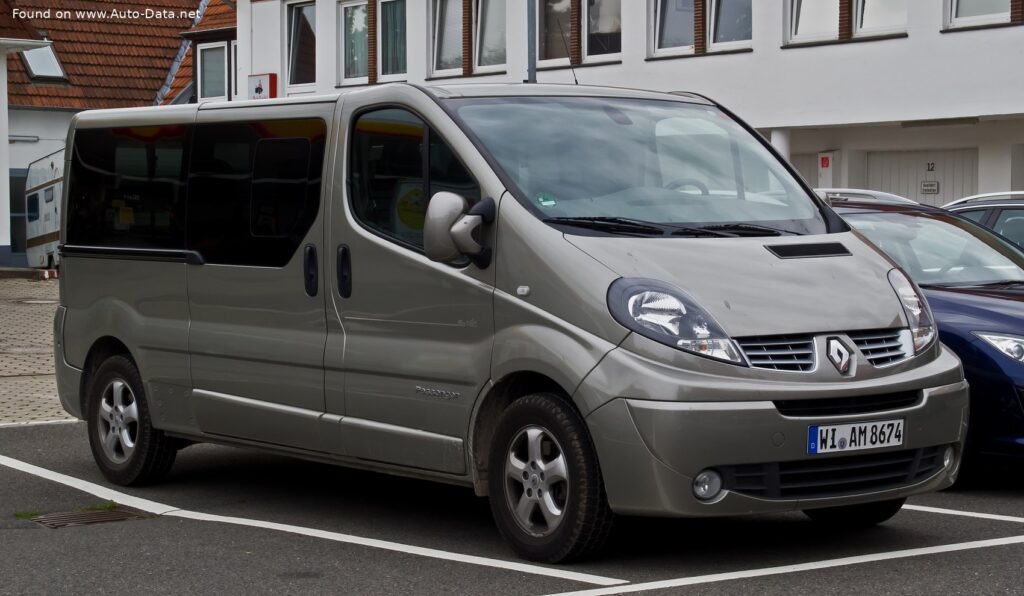
The Renault Trafic II (Phase II) 2.0 dCi (115 Hp) L1H1, produced from 2006 to 2013, represents a significant iteration of Renault’s popular light commercial vehicle. This model, a mid-size van, served as a crucial workhorse for businesses and families across Europe, offering a blend of practicality, efficiency, and affordability. While not directly sold in the United States, understanding the Trafic II provides insight into the European van market and Renault’s engineering capabilities during this period. The “L1H1” designation refers to the van’s body length and roof height, indicating a compact configuration within the Trafic II range. It primarily competed with vehicles like the Volkswagen Transporter, Ford Transit, and Citroën Dispatch.
Renault Trafic II (Phase II): A Detailed Overview
The Trafic II, launched in 2001, received a substantial facelift in 2006, marking the beginning of the Phase II production run. This refresh included updated styling, improved interior materials, and, crucially, the introduction of more efficient and powerful diesel engines. The 2.0 dCi engine, producing 115 horsepower, became a mainstay of the lineup, offering a good balance between performance and fuel economy for commercial applications. The Phase II updates aimed to enhance the Trafic’s appeal in a competitive segment, addressing criticisms of the earlier model regarding refinement and engine performance.
Engine & Performance
At the heart of the Renault Trafic II (Phase II) 2.0 dCi (115 Hp) L1H1 lies a 1996cc (121.8 cu. in.) inline four-cylinder diesel engine, designated the M9R. This engine utilizes a turbocharger with an intercooler and a diesel commonrail fuel injection system to deliver 115 horsepower at 3500 rpm and a robust 290 Nm (213.89 lb.-ft.) of torque at 1600 rpm. This torque output, readily available at relatively low engine speeds, makes the Trafic II well-suited for carrying loads and navigating varied terrain. The engine’s power-to-weight ratio is 16.9 kg/Hp, or 59.3 Hp/tonne, while the torque-to-weight ratio is 6.7 kg/Nm, or 149.5 Nm/tonne. The engine’s specific output is 57.6 Hp per liter, demonstrating a reasonable level of efficiency for a diesel engine of this era. Power is delivered to the front wheels via a six-speed manual transmission. Fuel economy figures are respectable for a vehicle of its size and type, achieving approximately 9.3 l/100 km (25.3 US mpg) in urban driving, 6.7 l/100 km (35.1 US mpg) on the extra-urban cycle, and a combined consumption of 7.6 l/100 km (30.9 US mpg).
Design & Features
The Renault Trafic II (Phase II) L1H1 is a four-door minivan capable of seating up to eight passengers, although it was more commonly configured as a cargo van. Its body style is characterized by a functional, utilitarian design, prioritizing interior space and load-carrying capacity. The L1H1 configuration represents the shorter wheelbase and lower roof height option, making it more maneuverable in urban environments. The Phase II facelift brought subtle styling changes, including a revised front grille, headlights, and bumper. Inside, the cabin was designed with practicality in mind, featuring durable materials and a straightforward layout. Safety features for the time included ABS (Anti-lock Braking System). The vehicle’s dimensions are 4782 mm (188.27 in.) in length, 1904 mm (74.96 in.) in width, and 1962 mm (77.24 in.) in height, with a wheelbase of 3098 mm (121.97 in.). The kerb weight is 1940 kg (4276.97 lbs), with a maximum permissible weight of 2940 kg (6481.59 lbs), allowing for a maximum load capacity of 1000 kg (2204.62 lbs). A 90-liter (23.78 US gal) fuel tank provides a substantial range for commercial use.
Technical Specifications
| Brand | Renault |
| Model | Trafic |
| Generation | Trafic II (Phase II) |
| Type (Engine) | 2.0 dCi (115 Hp) L1H1 |
| Start of production | 2006 |
| End of production | 2013 |
| Powertrain Architecture | Internal Combustion engine |
| Body type | Minivan |
| Seats | 8 |
| Doors | 4 |
| Fuel consumption (urban) | 9.3 l/100 km (25.3 US mpg) |
| Fuel consumption (extra urban) | 6.7 l/100 km (35.1 US mpg) |
| Fuel consumption (combined) | 7.6 l/100 km (30.9 US mpg) |
| Fuel Type | Diesel |
| Weight-to-power ratio | 16.9 kg/Hp |
| Weight-to-torque ratio | 6.7 kg/Nm |
| Power | 115 Hp @ 3500 rpm |
| Torque | 290 Nm @ 1600 rpm (213.89 lb.-ft. @ 1600 rpm) |
| Engine layout | Front, Transverse |
| Engine Model/Code | M9R |
| Engine displacement | 1996 cm3 (121.8 cu. in.) |
| Number of cylinders | 4 |
| Engine configuration | Inline |
| Number of valves per cylinder | 4 |
| Fuel injection system | Diesel Commonrail |
| Engine oil capacity | 6.6 l (6.97 US qt | 5.81 UK qt) |
| Coolant capacity | 6.3 l (6.66 US qt | 5.54 UK qt) |
| Kerb Weight | 1940 kg (4276.97 lbs.) |
| Max. weight | 2940 kg (6481.59 lbs.) |
| Max load | 1000 kg (2204.62 lbs.) |
| Fuel tank capacity | 90 l (23.78 US gal | 19.8 UK gal) |
| Length | 4782 mm (188.27 in.) |
| Width | 1904 mm (74.96 in.) |
| Height | 1962 mm (77.24 in.) |
| Wheelbase | 3098 mm (121.97 in.) |
| Number of gears | 6 |
| Gearbox type | Manual transmission |
The Renault Trafic II (Phase II) 2.0 dCi (115 Hp) L1H1, while not a vehicle commonly found on American roads, represents a significant example of European light commercial vehicle design. Its blend of practicality, efficiency, and affordability made it a popular choice for businesses and families alike, solidifying Renault’s position in the competitive van market.